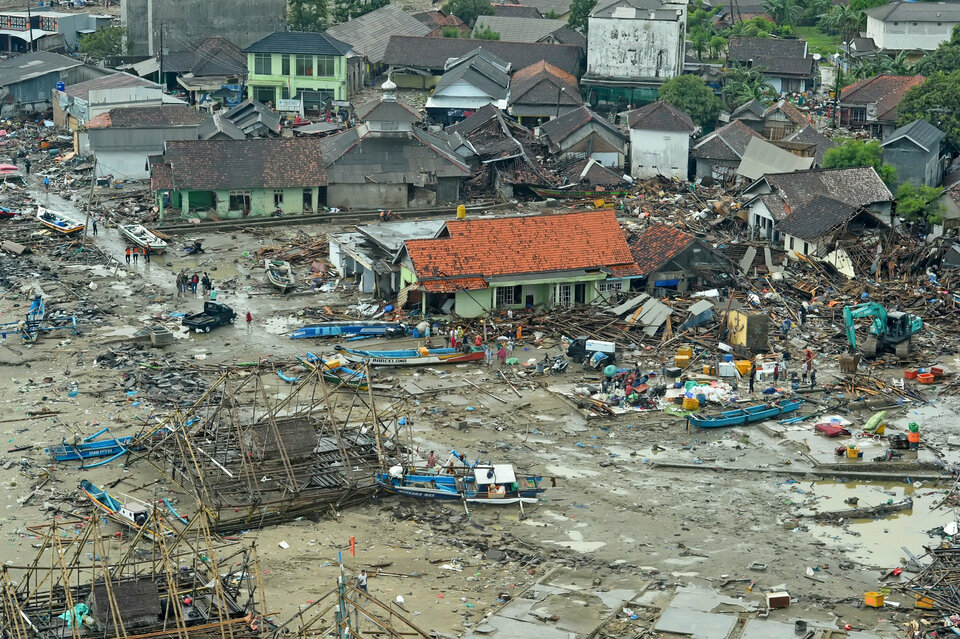
 Media memiliki peran yang signifikan sebagai sumber informasi bagi masyarakat untuk mempersiapkan diri menghadapi bencana dan membantu meminimalkan risiko bencana. Meneliti bagaimana media membingkai informasi bencana membantu memahami kuantitas dan kualitas informasi tentang bencana. Gempa bumi dan Tsunami di Indonesia merupakan bencana yang menimbulkan kerugian dan duka yang sangat besar, dan bagaimana media menggambarkan dan membingkai tragedi tersebut telah mempengaruhi persepsi dan perilaku masyarakat terhadap bencana. Penelitian ini bertujuan untuk membandingkan bagaimana media lokal membingkai informasi tentang Gempa dan Tsunami yang terjadi di Aceh dan Palu dengan menggunakan model framing Urs Dahinden untuk menganalisis tema bingkai di media massa. Temuan menunjukkan liputan bencana lebih negatif, lebih fokus pada jumlah korban, kerugian material, dan ketidakmampuan pemerintah dalam tanggap bencana. Kesiapsiagaan bencana dibingkai melalui lensa perspektif agama dan kurang pada pengetahuan ilmiah atau bagaimana menanggapi bencana di masa depan dengan lebih baik. Artikel ini dipublikasikan pada 2023 di International Journal of Disaster Management
Reportase Pertemuan Pendampingan Penyusunan Hospital Disaster Plan (HDP)

Reportase
Pertemuan Pendampingan Penyusunan Hospital Disaster Plan (HDP)
Selasa, 5 Oktober 2023: Pemaparan Dokumen Rencana HDP Masing-Masing RS
Sesi kali ini merupakan pertemuan terakhir dimana seluruh peserta mempresentasikan dokumen HDP masing-masing rumah sakit yang telah disusun selama pendampingan bersama tim Divisi Manajemen Bencana Kesehatan PKMK FK-KMK UGM.
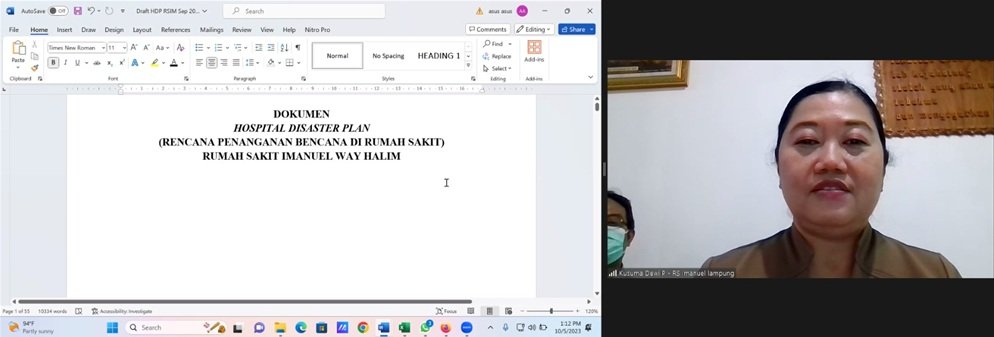
Dok. PKMK FK-KMK UGM “Presentasi Dokumen HDP RS Imanuel Way Halim”
Sesi presentasi dibagi dalam 3 tahap, dimana masing-masing tahap terdiri dari 2 rumah sakit yang dipilih berurutan oleh tim fasilitator pendampingan. Setelah melakukan presentasi, seluruh fasilitator memberikan masukan atas dokumen yang dipresentasikan baik oleh fasilitator yang telah mendampingi secara langsung maupun fasilitator dari kelompok lain. Para peserta juga dapat saling memberikan masukan sembari saling mengoreksi dengan dokumen yang sudah disusun. Masukan dari fasilitator banyak menyoroti terkait sistem pengorganisasian, analisis risiko, pengembangan skenario dan fasilitas. Kejelasan struktur organisasi RS Imanuel Way Halim, kelengkapan analisis skenario RSAB Harapan Kita dan Narasi Pengembangan Skenario RSUD Cibinong menjadi contoh yang baik untuk perbaikan dokumen. Harapannya seluruh rencana tindak lanjut yang dituliskan dalam dokumen dapat terlaksana sehingga dokumen ini mendapat perhatian dari seluruh pihak rumah sakit.
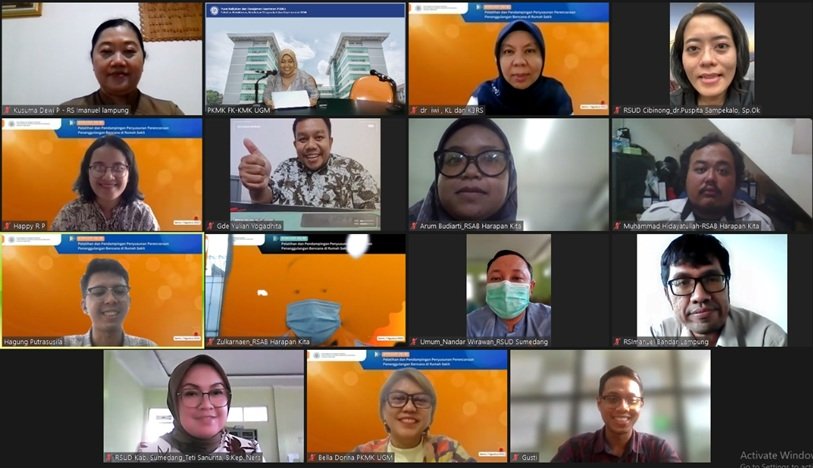
Dok. PKMK FK-KMK UGM “Peserta Pelatihan”
Kendala yang dihadapi selama sesi adalah sinyal yang kurang stabil dari RSUD Sumedang sehingga dokumen tidak dapat dipaparkan hingga akhir sesi dan adanya kegiatan lain dari RSU Handayani sehingga tidak dapat memaparkan dokumen. Meskipun demikian, komunikasi dengan RSUD Sumedang masih bisa dilakukan melalui chat room dan telpon langsung, sementara pemaparan RSUD Sumedang digantikan oleh fasilitator pendamping. Di akhir sesi, dilakukan pengerjaan post-test sebagai upaya menilai ulang pemahaman seluruh peserta setelah mengikuti pelatihan dan pendampingan bersama. Peserta kemudian mendapatkan sertifikat terakreditasi yang dikirimkan secara personal. Secara keseluruhan kegiatan berjalan dengan baik, sangat terlihat jelas perubahan dokumen sebelum dan setelah mengikuti pelatihan. Tim dari rumah sakit aktif untuk melakukan diskusi dengan fasilitator selama mengerjakan penugasan. Meski pelatihan dan pendampingan telah usai, rumah sakit tetap dapat menghubungi para fasilitator dan mendapatkan bantuan perbaikan dokumen.
Reportase: dr. Alif Indiralarasati (Divisi Manajemen Bencana Kesehatan PKMK UGM-)
Reportase Kegiatan Earthquake Experience at a University Hospital in Türkiye: Response to an Unexpected and Devastating Event

Reportase Kegiatan
Earthquake Experience at a University Hospital in Türkiye: Response to an Unexpected and Devastating Event
PKMK – Pada Selasa, 26 September 2023 pukul 11:00 Zona Waktu Tengah telah dilaksanakan webinar bertajuk “Earthquake Experience at a University Hospital in Türkiye: Response to an Unexpected and Devastating Event” oleh World Association for Disaster and Emergency Medicine. Webinar ini membahas tentang pengalaman para panelis terhadap manajemen bencana kesehatan saat Gempa Turki 2023 utamanya dalam memanajemen pasien anak-anak.

Para panelis menyoroti sisi pelayanan pasien pediatri. Di mana sistem manajemen gawat darurat untuk pasien pediatri lebih berkembang dibandingkan dengan Indonesia. Beberapa poin penting dari sistem layanan gawat darurat pediatri adalah kerjasama tim, sistem rujukan yang komprehensif, dan pelayanan yang lengkap tidak hanya pra hospital namun juga intra hospital. Anak-anak adalah kelompok rentan dan bukan merupakan orang dewasa yang bertubuh kecil, sehingga tatalaksananya berbeda. Mempersiapkan surge capacity dan buffer stock menjadi penting dalam memenuhi kebutuhan pelayanan.
Belajar dari pengalaman Turki, meskipun sistem sudah ada, namun tidak didukung dengan rujukan dan jaringan yang baik, maka akan menjadi tantangan besar. Integrasi layanan sangat dibutuhkan untuk dikembangkan, khususnya pada layanan pasien anak-anak. Selanjutnya, menarik untuk kita dapat mengkaji data anak-anak yang terdampak akibat bencana di Indonesia.
Reportase: dr. Alif Indiralarasati
Reportase Pertemuan Keempat Pelatihan dan Pendampingan Penyusunan Perencanaan Penanggulangan Bencana di RS

Reportase
PELATIHAN DAN PENDAMPINGAN PENYUSUNAN PERENCANAAN PENANGGULANGAN BENCANA DI RS
{tab title=”Pertemuan ke 1″ class=”blue”}
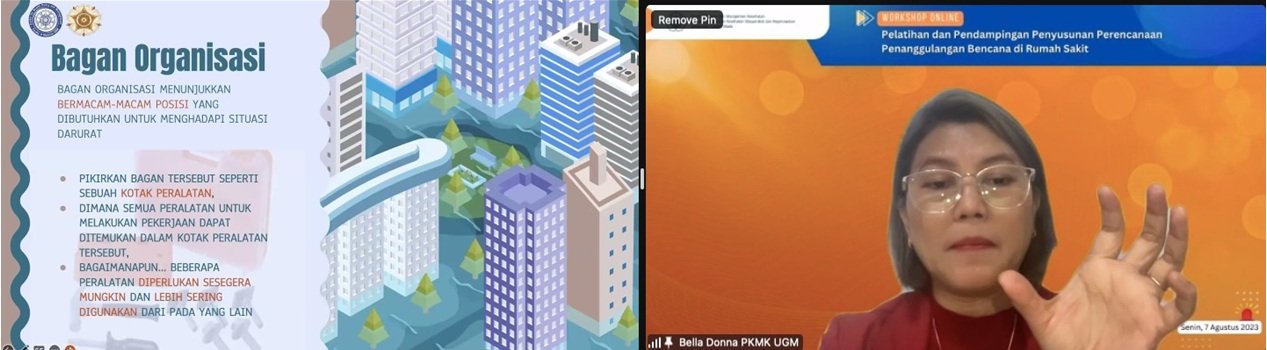
Dok. PKMK FK-KMK UGM “Penyampaian Materi Komponen HDP dan Sistem Pengorganisasian”
PKMK-Yogya. Peserta pelatihan sebanyak 25 orang yang berasal dari RSAB Harapan Kita, RSUD Cibinong, RSU Handayani, RS Immanuel Way Halim, dan RSUD Sumedang. Pertemuan pertama fokus pada review dokumen HDP yang sudah dimiliki rumah sakit dan penyampaian materi tentang komponen HDP dan sistem pengorganisasian. Moderator yang bertugas Happy R Pangaribuan, MPH membuka sesi dengan menyampaikan tujuan dan metode pelatihan dimana masing-masing rumah sakit akan didampingi langsung oleh fasilitator dalam penyusunan dokumen HDP. dr. Hendro Wartatmo, Sp.B-KBD menyampaikan pengantar dan membuka acara dengan menekankan bahwa rumah sakit melalui pelatihan ini dapat menyusun dokumen HDP tidak hanya untuk keperluan akreditasi semata, namun benar-benar menjadi satu dokumen yang operasional dan efektif digunakan rumah sakit saat menghadapi bencana.
Selanjutnya masing-masing rumah sakit menyampaikan dokumen HDP, sistem pengorganisasian saat bencana dan SOP yang sudah ada. Secara keseluruhan rumah sakit sudah memiliki dokumen, namun yang menjadi kendala dan tantangan RS adalah dokumen disusun berdasarkan referensi pencarian dari Google atau rumah sakit lainnya; belum disosialisasikan kepada bidang terkait sehingga isi dokumen belum dapat dengan maksimal serta rotasi pegawai juga menjadi tantangan bagi rumah sakit. Beberapa rumah sakit sudah pernah melakukan simulasi.

Dok. PKMK FK-KMK UGM “Pendampingan Penugasan Penyusunan Pengorganisasian”
dr. Bella Donna, M.Kes menjelaskan apa saja yang dibutuhkan dalam menyusun HDP berdasarkan penilaian akreditasi HDP; komponen HDP, Konsep pengorganisasian ICS dan Kartu Tugas. Penyusunan pengorganisasian saat bencana bukan pembentukan organisasi yang baru tetapi pengembangan organisasi sehari-hari. Bella Donna menampilkan bagaimana pengembangan pengorganisasian tersebut menggunakan metode crosswalk artinya susunan posisi posisi yang memiliki tugas harian yang ditemukan dalam kartu tugas. Misalnya jika dalam tugas sehari-hari berperan untuk mengurus logsitik medis maka pada struktur pengorganisasian bencana juga melakukan tugas manajemen logistik medis. Sistem pengorganisasian menggunakan pendekatan konsep Incident Command System akan membagi habis tugas pada setiap personil, terdapat kejelasan alur komando dan komunikasi serta memungkinkan pengembangan operasi bila diperlukan.
Sesi diakhiri dengan mebagi peserta menjadi 3 room, didampingi oleh narasumber dan fasilitator Madelina Ariani, MPH ; Gde Yulian Yogadhita, Apt, M. Epid ; Happy R Pangaribuan, MPH dan dr. Bella Donna, M.Kes. Dalam ruangan zoom fasilitator dan peserta fokus mengerjakan sistem pengorganisasian dan tupoksi. Pendampingan penyusunan akan berlanjut via jarak jauh dan komunikasi terbangun melalui WhatsApp. Pertemuan selanjutnya akan dilaksanakan pada 18 Agustus 2023.
Reporter : Happy R Pangaribuan, MPH
Div. Manajemen Bencana Kesehatan PKMK FK-KMK UGM
{tab title=”Pertemuan ke 2″ class=”red”}
Senin, 21 Agustus 2023

Dok. PKMK FK-KMK UGM “Pemaparan materi analisis risiko bencana”
Pertemuan kedua fokus membahas analisis risiko bencana dengan menggunakan tools HSI dan HVA. Namun sebelumnya masing-masing RS menyampaikan bagaimana progress penugasan penyusunan struktur organisasi dan tupoksi, seluruh sesi dimoderatori oleh Gde Yulian Yogadhita, Apt, M.Epid. Rumah sakit menyampaikan beberapa pertanyaan dan hal yang belum dipahami selama menyusun struktur organisasi, diantaranya terkait bagaimana menyusun struktur supaya lebih mudah dipahami pembaca dengan menuliskan jabatan pada struktur organisasi. Perbaikan ke depannya adalah penyusunan tupoksi tersinkronisasi dengan semua bidang yang ada di struktur organisasi, harus jelas siapa melakukan apa dan koordinasi kepada siapa. Terkait pelimpahan wewenang untuk komandan dan penanggung jawab masing-masing bidang bisa dilakukan sampai 3 layer, namun tetap tergantung pada kapasitas rumah sakit. Pematangan penyusunan struktur organisasi masih berlanjut melalui pendampingan jarak jauh dengan fasilitator.
Pada sesi analisis risiko Madelina Ariani, MPH mengawali materi dengan menekankan kembali mengapa dokumen HDP ini penting untuk disusun dan bagaimana analisis risiko menjadi satu komponen penting yang harus dihitung dan dituliskan dalam dokumen. Melalui analisis risiko, rumah sakit akan mendapatkan jenis bencana yang menjadi prioritas penanganan bencana, yang menjadi prioritans untuk pengembangan skenario dan perhitungan kapasitas kebutuhan penanganan bencana tersebut. Banyak tool yang dapat digunakan untuk analisis risiko bencana di rumah sakit diantaranya tools Hazard and Vulnerability Asseement (HVA) dan Hospital Safety Index (HSI). Kedua tools tersebut tujuannya sama untuk menganalisis risiko bencana apa yang menjadi prioritas penanganan. Pada modul 4 form checklist HSI mengidentifikasi manajemen emergensi dan bencana, modul inilah yang menjadi komponen atau penting dimasukkan dalam dokumen hospital disaster plan. Madelina Ariani, menjelaskan tabel ceklist HSI dan bagaimana cara menghitungnya.

Dok. PKMK FK-KMK UGM “Pendampingan penugasan Analisis Skenario”
Sesi diakhiri dengan membagi peserta menjadi 3 room, didampingi oleh narasumber dan fasilitator Madelina Ariani, MPH ; Gde Yulian Yogadhita, Apt, M. Epid ; Happy R Pangaribuan, MPH dan dr. Bella Donna, M.Kes. Dalam ruangan zoom ,fasilitator memberi kesempatan kembali untu peserta review singkat revisi penugasan struktur pengorganisasian, dilanjutkan dengan menampilkan HVA dan HSI yang sudah pernah dihitung rumah sakit. Pendampingan penyusunan akan berlanjut via jarak jauh dan komunikasi terbangun melalui WhatsApps, diharapkan rumah sakit selesai dulu mengerjakan penugasan struktur pengorganisasian, tupoksi kemudian melanjutkan penugasan analisis risiko.
Reporter : Happy R Pangaribuan, MPH
Div. Manajemen Bencana Kesehatan PKMK FK-KMK UGM
{tab title=”Pertemuan ke 3″ class=”red”}
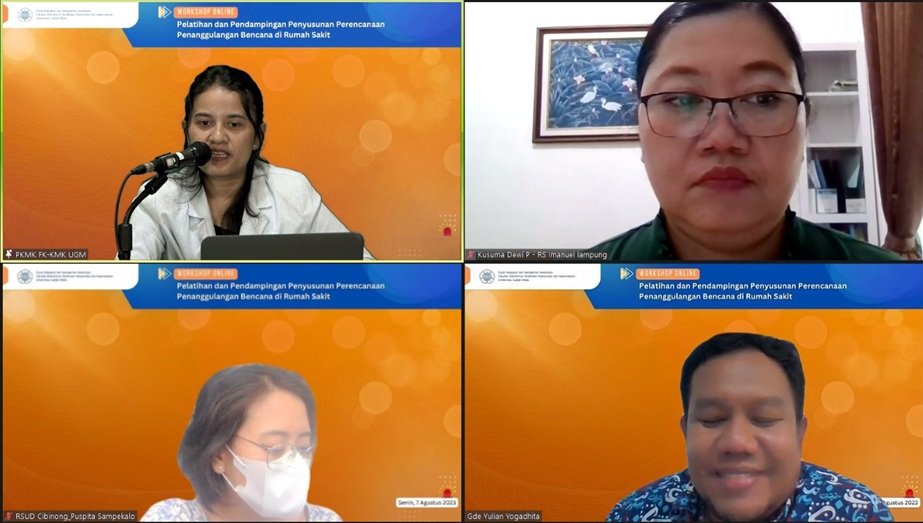
Pertemuan ketiga telah dilaksanakan pada Kamis, 7 September 2023 pukul 13.00 – 15.00 WIB. Pada sesi kali ini, lebih ditekankan terkait, pembahasan perencanaan surge capacity, peta risiko, dan SOP dalam HDP. Para peserta pelatihan telah dijelaskan mengenai pengorganisasian dan analisis risiko pada pertemuan sebelumnya. Peserta pun telah mengerjakan penugasan analisis risiko menggunakan HVA dan HSI. Setelah menganalisis risiko masing-masing RS sesuai daerahnya, maka tahap selanjutnya adalah Bagaimana mendeskripsikan hasil analisis tersebut dengan narasi dan mengelaborasi risiko tertinggi menjadi sebuah skenario yang kemudian disertai dengan tahap-tahap respon yang dilakukan RS sesuai dokumen yang telah dibuat. Seluruh kegiatan ini dimoderatori oleh Happy R Pangaribuan, MPH.
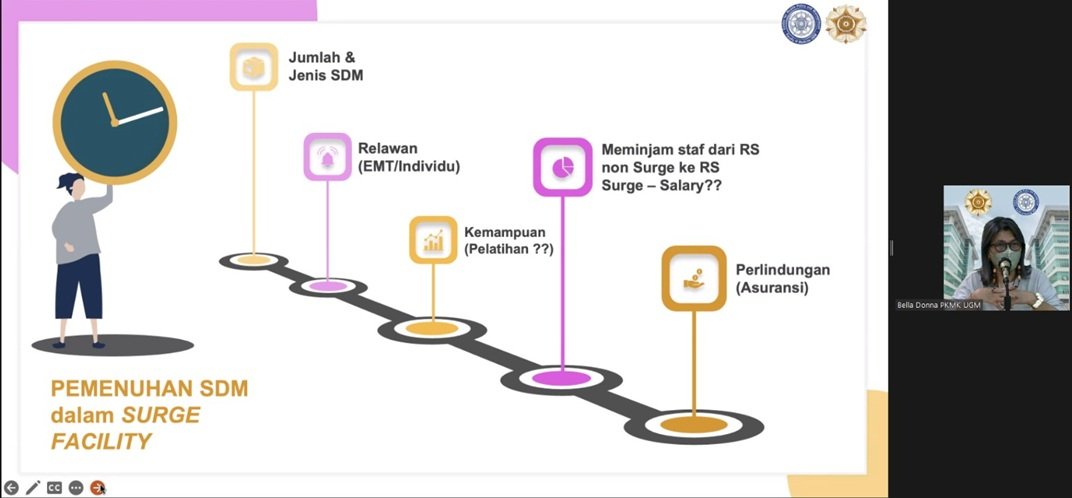
Materi pertama, disampaikan oleh dr. Bella Donna, M.Kes., yang menjelaskan tentang perencanaan peningkatan kapasitas. Peningkatan kapasitas ini bertujuan untuk menambah fasilitas RS yang telah ada saat ini ketika memang dibutuhkan. Sebelum merencanakan penambahan, RS harus memiliki sistem pengorganisasian yang jelas, pedoman, prosedur, sistem komunikasi, data dan informasi, serta pendanaan yang terstruktur dengan baik. Oleh karena itu, untuk bisa melakukan peningkatan kapasitas, RS harus menyelesaikan materi-materi sebelumnya. Ciri-ciri pelaksanaan peningkatan kapasitas yang berhasil adalah; perencanaan dilakukan sedari awal, koordinasi dalam sistem komando, kepemimpinan yang jelas, manajemen SDM dan logistik, komunikasi efektif, kualitas perawatan yang diberikan faskes lonjakan, serta pengambil kebijakan seharusnya paham dengan konsep bencana dan peningkatan kapasitas lonjakan.
Materi kedua terkait Peta Risiko, dibawakan Apt. Gde Yulian Yogadhita, M.Epid. Peta Risiko Bencana terletak di dalam dokumen, erat hubungannya dengan fasilitas rumah sakit. Dalam menyusunnya, harus memiliki cetak biru RS. Cetak biru ini kemudian dituliskan komponen-komponen seperti jumlah nakes, jumlah tempat tidur, ruangan yang dapat dialihfungsikan, alat kesehatan/ Bahan Medis Habis Pakai, jalur-jalur, dan lain-lain. Peta risiko bencana seharusnya juga berisi ancaman/ letak potensi kejadian ada dimana dan berapa kepadatan populasi di suatu area RS, sehingga bisa memprediksi area mana yang bisa menjadi bencana dan area mana yang aman. Setelah menyusun peta risiko, maka dapat menyusun peta respon yang berisi teknis dari pelaksanaan penanggulangan bencana RS.
Materi terakhir, terkait SOP dalam HDP disampaikan oleh Madelina Ariani, SKM., MPH. SOP yang telah disusun oleh rumah sakit masih dapat diperbaiki dan dilengkapi sesuai pedoman yang sudah ada. Setelah mengidentifikasi SOP secara lengkap, maka dapat mulai menyusun skenario sesuai hasil penilaian analisis risiko. Hal-hal yang perlu diperhatikan dalam menyusun skenario antara lain; strategi fase mitigasi, kesiapan, tanggap darurat, dan pemulihan. Lanjutannya, dapat dituliskan strategi apa yang digunakan untuk menanggapi skenario yang dipilih. Lalu, dilakukan identifikasi tindakan yang akan dilakukan.
Pendampingan akan berlanjut via jarak jauh dan komunikasi terbangun melalui WhatsApp. Diharapkan rumah sakit terlebih dahulu selesai mengerjakan penugasan menyusun peta risiko dan skenario.
Reportase: dr. Alif Indiralarasati
{tab title=”Pertemuan ke 4″ class=”green”}
Reportase Pertemuan Keempat
Pelatihan dan Pendampingan Penyusunan Perencanaan Penanggulangan Bencana di RS
22 September 2023
Pertemuan keempat telah dilaksanakan pada Jumat, 22 September 2023 pukul 09.00-11.00 WIB. Sesi kali ini membahas mengenai logistik dan fasilitas saat bencana. Kegiatan dimoderatori oleh Madelina Ariani, SKM., MPH.
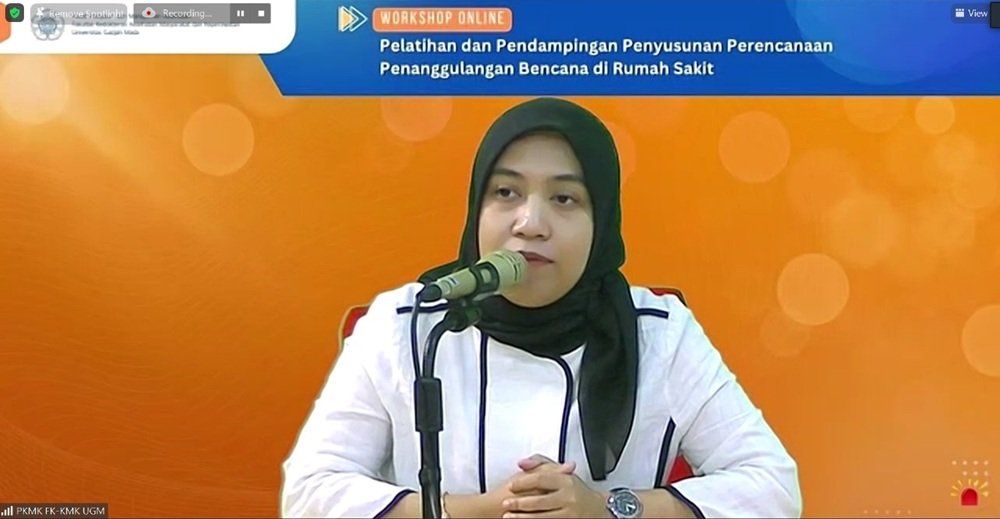
Materi pertama, disampaikan oleh Apt. Gde Yulian Yogadhita, M.Epid., mengenai “Logistik Medis dan Manajemen Relawan”. Logistik merupakan salah satu komponen penting yang menentukan keberhasilan penanggulangan bencana. Dalam menentukan logistik medis terutama dalam rangka meningkatkan buffer stock, harus mempertimbangkan hasil analisis risiko, analisis kerentanan, dan peninjauan terhadap kapasitas sumber daya kesehatan. Sistem perencanaan dalam manajemen logistik harus terdokumentasi dengan baik. Baik dalam segi logistik maupun relawan, fasilitas kesehatan berhak menolak bantuan jika tidak sesuai dengan kebutuhan dan SOP yang telah disusun.
Materi kedua terkait “Fasilitas saat Bencana” disampaikan oleh Happy R Pangaribuan, SKM., MPH. SOP digunakan untuk memnuhi standar yang dibutuhkan dalam penyelenggaraan penanggulangan bencana dan krisis kesehatan yang tidak terdapat pada kegiatan sehari-hari. Sedangkan untuk penentuan fasilitas saat bencana, harus disesuaikan dengan hasil analisis risiko. Fasilitas saat bencana dibagi menjadi fasilitas umum dan penunjang. Selain itu, agar sistem penanggulangan bencana dapat terorganisir dengan baik, diperlukan alur dan formulir saat bencana, seperti formulir struktur organisasi tim bencana RS, formulir registrasi relawan dan ID relawan kesehatan, formulir penerimaan logistik medis, formulir/notulensi rapat harian, formulir dan laporan harian, formulir/penjelasan alur penerimaan pasien rujukan. Tidak lupa, RS juga harus membuat peta risiko dengan papan tanda yang memudahkan untuk mengenali ruangan yang dipakai menjadi fasilitas saat bencana.
Selepas sesi materi berakhir, peserta kemudian memiliki tugas untuk mengidentifikasi kebutuhan fasilitas berdasarkan pengorganisasian, menggambar fasilitas di dalam denah RS, dan daftar kontak internal maupun eksternal.
Reportase: dr. Alif Indiralarasati
{/tabs}
Rangkaian Pre Fornas dan Fornas JKKI XIII Topik Manajemen Bencana Kesehatan 2023

 Pokja Bencana FK-KMK UGM bekerjasama dengan Divisi Bencana Kesehatan PKMK UGM kembali hadir dalam rangkaian Forum Nasional Jaringan Kebijakan Kesehatan Indonesia (JKKI) XIII.
Forum Nasional JKKI XIII mengambil tema “Peningkatan Kapasitas Daerah dalam Menjalankan Kebijakan Transformasi Sistem Kesehatan Nasional dan UU Kesehatan” bertempat di Yogyakarta, 25-27 September 2023.
Pre Forum Nasional JKKI XIII telah digelar pada Selasa, 19 September 2023 secara hybrid bertempat di Auditorium Lantai 8 Gedung Tahir Foundation FK-KMK UGM dalam topik Workshop Penyusunan Puskesmas Disaster Plan yang memberikan pelatihan penyusunan dokumen Puskesmas Disaster Plan kepada Puskesmas se Indonesia, terutama daerah jejaring AHS UGM (Kota dan Kabupaten di Provinsi DIY, serta Kabupaten Klaten).
Kemudian, pada 26 September 2023 akan digelar seminar hybrid bertajuk Integrasi Kebijakan Tenaga Cadangan Kesehatan (TCK) dalam Kerangka UU Kesehatan 2023 dengan Rencana Kontijensi Kesehatan di Daerah. Seminar ini akan membahas bagaimana realisasi dan integrasi kebijakan TCK yang telah berjalan selama satu tahun dengan renkon penanggulangan bencana di daerah.
Reportase Kegiatan Workshop Penyusunan Puskesmas Disaster Plan

Workshop Penyusunan Puskesmas Disaster Plan
Kerjasama Divisi Manajemen Bencana Kesehatan dan
Pokja Bencana Fakultas Kedokteran Kesehatan Masyarakat dan Keperawatan
Universitas Gadjah Mada
{tab KAK}
Kerangka Acuan Kegiatan
Pengantar
Puskesmas adalah ujung tombak utama pelayanan kesehatan untuk masyarakat. Puskesmas di Indonesia tidak hanya harus mempersiapkan diri dan masyarakat dalam situasi sehari-hari untuk peningkatan kesehatan masyarakat tetapi juga kesiapsiagaan dalam menghadapi situasi bencana alam dan non alam yang mengancam seluruh wilayah Indonesia. Lebih dari 11 kejadian bencana alam terjadi di Indonesia setiap harinya, belum termasuk kejadian krisis kesehatan akibat penyakit seperti pandemia COVID-19 lalu. Dalam situasi tenang, amanah kontribusi puskesmas dalam pelaksanaan Standar Pelayanan Minimum atau SPM telah diatur di pasal 45 ayat 2 Peraturan Pemerintah Nomor 18 Tahun 2016 tentang Perangkat Daerah. SPM secara khusus diatur dalam Undang-Undang Nomor 23 Tahun 2014 tentang Pemerintah Daerah, sebagai rujukan hukum tertinggi di Indonesia. Undang-undang ini kemudian direspon oleh Peraturan Pemerintah Nomor 2 tahun 2018 tentang Standar Pelayanan Minimal. Untuk itu, Peraturan Pemerintah ini direspon dan diatur lebih teknis oleh masing-masing kementerian atau Lembaga dalam bentuk Peraturan Menteri, termasuk di bidang kesehatan, yakni melalui Permenkes Nomor 75 tahun 2019 terkait Penanggulangan Krisis Kesehatan serta PMK Nomor 4 tahun 2019 tentang Standar Teknis Pemenuhan Mutu Pelayanan Dasar pada Standar Pelayanan Minimal bidang Kesehatan.
Berdasarkan Peraturan Menteri Kesehatan Republik Indonesia Nomor 75 Tahun 2019 tentang Penanggulangan Krisis Kesehatan, pembentukan klaster kesehatan pada tingkat pusat dan daerah bertujuan untuk meningkatkan koordinasi, kolaborasi, dan integrasi dalam penanggulangan krisis kesehatan. Puskesmas di bawah koordinasi dinas kesehatan yang aktif dalam pelayanan kesehatan masyarakat ikut bertanggung jawab dalam pelaksanaan upaya pra krisis kesehatan tersebut. Prinsipnya puskesmas ikut berperan untuk menjaga sistem kesehatan tetap berjalan normal meski terjadi krisis kesehatan atau bencana.Oleh karena itu, sejak tahun 2020 Pokja Bencana FK-KMK UGM dan Divisi Manajemen Bencana Kesehatan PKMK UGM telah Menyusun daftar cek atau checklist yang diperlukan oleh puskesmas untuk siap siaga dalam menghadapi bencana dan krisis kesehatan berdasarkan hasil analisis isi berbagai peraturan terkait. Checklist ini membantu puskesmas untuk mengidentifikasi hal-hal yang perlu disiapkan atau direncanakan ke depannya.
Selain itu, ternyata puskesmas menghadapi kesulitan dalam menyusun rencana penanggulangan bencana, baik untuk puskesmas yang belum pernah memiliki pengalaman bencana, maupun puskesmas yang sudah pernah menghadapi bencana. Umumnya, masalah yang dirasakan adalah kebingungan puskesmas harus memulai dari mana dan perasaan ragu apakah perencanaan yang dibuat ini sudah benar atau belum.
Pengembangan dokumen perencanaan penanggulangan bencana di tingkat puskesmas (Puskesmas Disaster Plan) masih sangat jarang dilakukan. Puskesmas yang belum memiliki dokumen perencanaan penanggulangan bencana akan kesulitan untuk mengoperasionalkan manajemen penanganan bencana. Mulai dari pembagian tugas yang jelas, alur komunikasi dan rencana alternatif. Puskesmas harus memahami bahwa dokumen Puskesmas Disaster Plan sebagai salah satu bentuk kesiapan puskesmas untuk menghadapi bencana alam dan bencana non alam. Ini menjadi pembelajaran bagi seluruh fasilitas kesehatan terutama puskesmas saat terjadi bencana non alam pandemi COVID-19 yang menuntut puskesmas harus siap, khususnya dalam pelaksanaan layanan COVID-19 tapi juga tidak mengganggu layanan rutin sehari-hari terhadap pasien non COVID-19.
Dengan demikian sudah saatnya puskesmas memahami pentingnya menyusun dokumen perencanaan penanggulangan bencana operasional yang mencakup semua rencana kebutuhan dan penanganan bencana alam dan non alam. Oleh karena itu, Pokja Bencana FK-KMK UGM bekerjasama dengan Divisi Bencana Kesehatan PKMK UGM dalam rangkaian Pre-Fornas Jaringan Kebijakan Kesehatan Indonesia (JKKI) XIII mengadakan Workshop Puskesmas Disaster Plan.
Tujuan
- Menginformasikan kebutuhan penyusunan Puskesmas Disaster Plan
- Menginformasikan cara menghitung analisis risiko bencana
- Menginformasikan komponen-komponen Puskesmas Disaster Plan
- Menginformasikan komponen perhitungan kapasitas maksimum tenaga existing dan menentukan gap potensi mobilisasi Tenaga Cadangan Kesehatan
- Menginformasikan tindak lanjut dari pedoman Puskesmas Disaster Plan
Waktu dan Sistematika Pelaksanaan
Hari, tanggal : Selasa, 19 September 2023
Waktu : 09.00 – 15.00 WIB
Tempat : Auditorium Lantai 8 Gedung Tahir Foundation FK-KMK UGM
Tautan zoom : https://us02web.zoom.us/j/82285488957?pwd=S3RzWEtBK0FHRTk5WXdtZzhqckZVQT09
Meeting ID : 822 8548 8957
Passcode : PRE-FORNAS
Streaming : PKMK FK-KMK UGM (Channel 1)
Peserta
Peserta undangan (hadir langsung di lokasi):
- Dinas Kesehatan Provinsi DIY
- Dinas Kesehatan Kota Yogya (1 orang pemegang program puskesmas/ krisis kesehatan, dan 5 puskesmas yang dipilih oleh dinas kesehatan)
- Dinas Kesehatan Kabupaten Sleman (1 orang pemegang program puskesmas/ krisis kesehatan, dan 5 puskesmas yang dipilih oleh dinas kesehatan)
- Dinas Kesehatan Kulonprogo (1 orang pemegang program puskesmas/ krisis kesehatan, dan 5 puskesmas yang dipilih oleh dinas kesehatan)
- Dinas Kesehatan Gunungkidul (1 orang pemegang program puskesmas/ krisis kesehatan, dan 5 puskesmas yang dipilih oleh dinas kesehatan)
- Dinas Kesehatan Bantul (1 orang pemegang program puskesmas/ krisis kesehatan, dan 5 puskesmas yang dipilih oleh dinas kesehatan)
- Dinas Kesehatan Klaten (1 orang pemegang program puskesmas/ krisis kesehatan, dan 5 puskesmas yang dipilih oleh dinas kesehatan)
- Departemen KU
- Departemen Gizi
- Departemen Keperawatan
Peserta yang diperbolehkan hadir secara daring:
- Puskesmas
- Dinas Kesehatan
- Dewan pengawas fasilitas pelayanan kesehatan
- Direksi/ manajer lembaga pelayanan kesehatan (rumah sakit dan jaringan pelayanan primer)
- Organisasi pelayanan kesehatan (korporasi, perkumpulan, asosiasi, maupun yayasan) dari sektor swasta maupun pemerintah
- Peneliti/ akademisi
- Mahasiswa pascasarjana
Agenda
| Waktu (dalam WIB) | Durasi | Materi/Kegiatan | Narasumber |
| 09.00 – 09.05 | 5’ | Pembukaan | MC |
| 09.05 – 09.10 | 5’ | Sambutan oleh Wakil Dekan bidang Penelitian dan Pengembangan | dr. Sudadi, Sp.An., KNA., KAR. |
| 09.10 – 09.15 | 5’ | Pengantar | Sutono, S.Kp., M.Sc., M.Kep |
| 09.15 – 09.55 | 40’ |
Materi 1: Konsep Puskesmas Disaster Plan (30 menit) Diskusi (10 menit) |
dr. Hendro Wartatmo, Sp.B-KBD |
| 09.55 – 10.35 | 40’ |
Materi 2: Komponen dan Pengorganisasian Sistem Komando (30 menit) Diskusi (10 menit) |
dr. Bella Donna, M.Kes |
| 10.35 – 11.15 | 40’ |
Materi 3: Logistik Medik dan Manajemen Relawan (30 menit) Diskusi (10 menit) |
Apt. Gde Yulian Yogadhita, M.Epid |
| 11.15 – 11.55 | 40’ |
Materi 4: Data Informasi (30 menit) Diskusi (10 menit) |
Madelina Ariani, SKM., MPH. |
| 11.55 – 12.55 | 60’ | ISHOMA | |
| 12.55 – 13.35 | 40’ |
Materi 5: Analisis Risiko (30 menit) Diskusi (10 menit) |
Madelina Ariani, SKM., MPH. |
| 13.35 – 14.15 | 40’ |
Materi 6: SOP dan Fasilitas saat Bencana (30 menit) Diskusi (10 menit) |
Happy R. Pangaribuan, SKM., MPH. |
| 14.15 – 14.55 | 40’ |
Materi 7: Rencana Tindak Lanjut (30 menit) Diskusi (10 menit) |
Sutono, S.Kep., M.Sc., M.Kep. |
| 14.55 – 15.00 | 5’ | Penutup | MC |
Narahubung
Kepesertaan : Dewi Catur Wulandari / 0818-263-653/ [email protected]
Konten : dr. Alif Indiralarasati / 0812-1553-2898 / [email protected]
Pusat Kebijakan dan Manajemen Kesehatan
Fakultas Kedokteran, Kesehatan Masyarakat dan keperawatan
Universitas Gadjah Mada
Gedung Litbang FK-KMK Jl. Medika Yogyakarta 55281
Telp/Fax: 0274 – 549425
{tab REPORTASE}
Reportase Kegiatan
Workshop Penyusunan Puskesmas Disaster Plan
PKMK – Pada Selasa, 19 September 2023 pukul 09.00 – 15.00 WIB telah terlaksana kegiatan Pre Forum Nasional Jaringan Kebijakan Kesehatan Indonesia XIII yang bertajuk “Workshop Penyusunan Puskesmas Disaster Plan” secara luring bertempat di Auditorium lantai 8 Gedung Tahir Foundation FK-KMK UGM dan daring melalui zoom meeting. Acara ini diikuti oleh 40 peserta luring dan 120 peserta daring yang berasal dari berbagai instansi seperti Puskesmas, Dinas Kesehatan, KKP, Klinik, Rumah Sakit, Universitas atau Poltekkes, dan lain-lain yang tersebar di seluruh Indonesia. Kegiatan ini merupakan Kerjasama antara Kelompok Kerja Bencana FK-KMK UGM dengan Divisi Manajemen Bencana Kesehatan PKMK FK-KMK UGM.

Kegiatan diawali dengan sambutan yang disampaikan oleh dr. Sudadi, Sp.An., KAN., KAR. selaku Wakil Dekan bidang Kerjasama, Alumni, dan Pengabdian Masyarakat FK-KMK UGM. Beliau mengingatkan bahwa Indonesia adalah negara dengan berbagai potensi bencana, sehingga kita harus senantiasa bersiap siaga, salah satunya dengan mempersiapkan rencana penanggulangan bencana dari fasilitas kesehatan yang paling dekat dengan masyarakat, yakni Puskesmas. Selanjutnya, Sutono, S.Kp., M.Sc., M.Kep selaku Ketua Kelompok Kerja Bencana FK-KMK UGM, menjelaskan pengantar kegiatan kepada para peserta terkait gambaran kegiatan dan tujuan diadakannya pelatihan penyusunan Puskesmas Disaster Plan (atau bisa disebut Primary Health Care Disaster Plan/PHCDP).
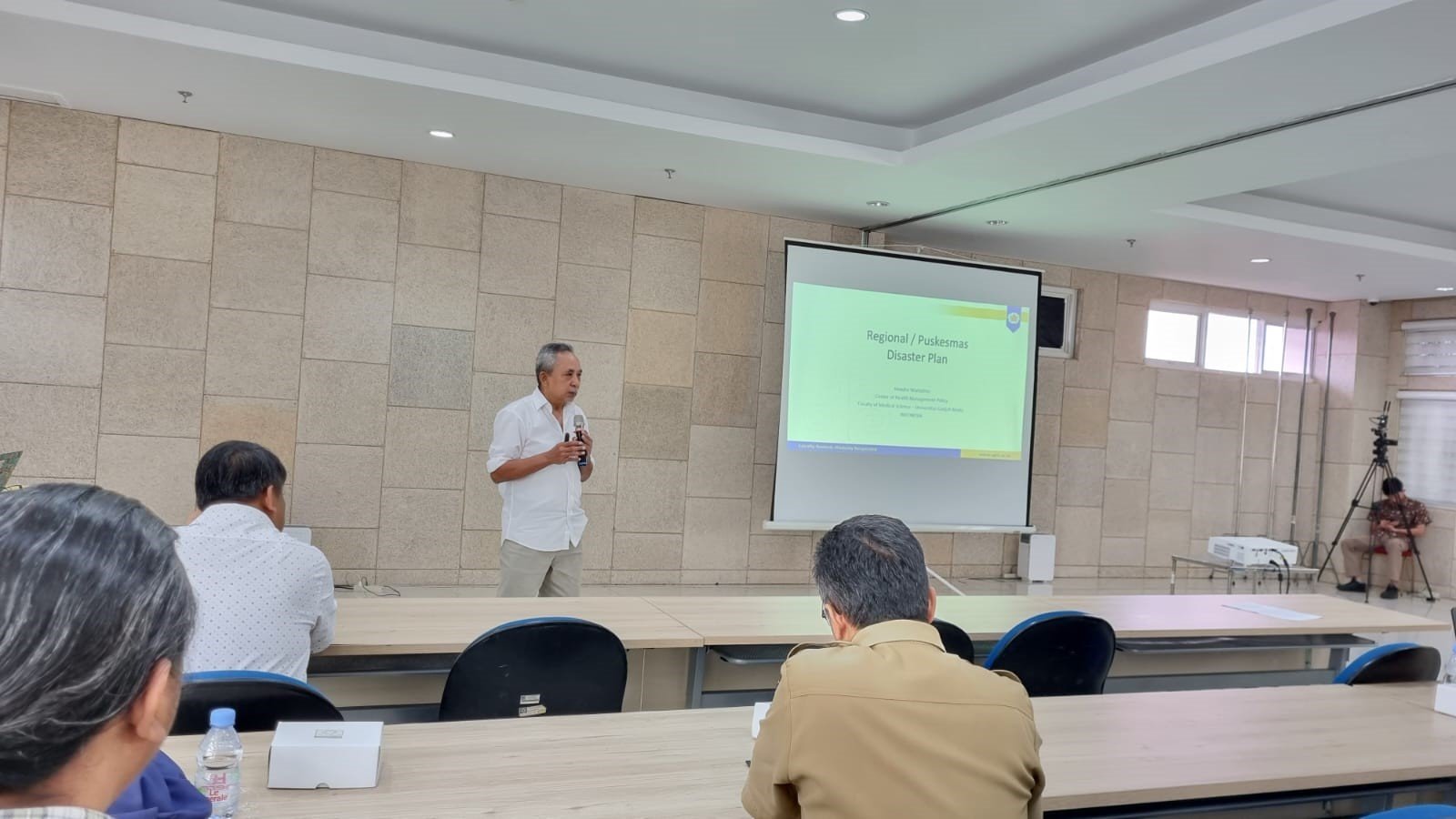
Acara utama dalam pelatihan ini adalah penyampaian materi sebanyak 7 topik yang merupakan Langkah-langkah dalam penyusunan dokumen rencana penanggulangan bencana. Materi pertama, adalah “Konsep Puskesmas Disaster Plan” yang disampaikan oleh dr. Hendro Wartatmo, Sp.B-KBD. Puskesmas adalah garda terdepan dalam pelayanan kesehatan dan memiliki fungsi kesehatan masyarakat. Puskesmas perlu menyusun upaya penanggulangan bencana saat kondisi pra-, saat-, dan pasca- bencana. Dalam konsep rencana kontijensi, Puskesmas berada dalam kelompok pemangku kebijakan regional yang erat kaitannya dengan upaya penanggulangan bencana di pre-hospital dan kegawatdaruratan kesehatan masyarakat (public health emergency). Sehingga, dalam penyusunan dokumen perencanaan, harus disesuaikan dengan iklim masyarakat tempat instansi bernaung.
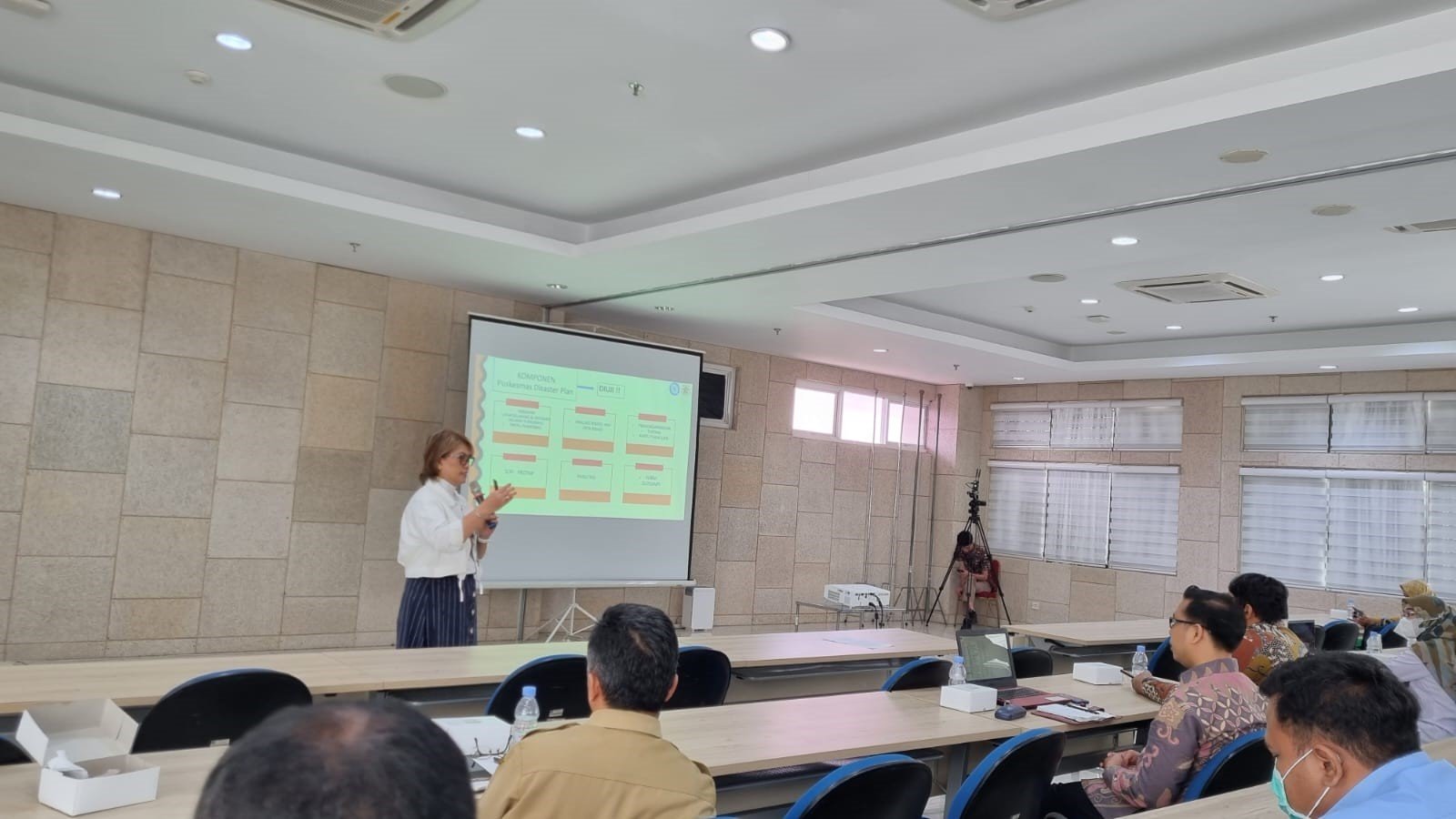
Materi kedua, disampaikan oleh dr. Bella Donna, M.Kes tentang “Komponen dan Pengorganisasian Puskesmas Disaster Plan”. Komponen PHCDP antara lain; kebijakan (SK), latar belakang, profil puskesmas dan kapasitas, analisis risiko, peta risiko, pengorganisasian, tugas pokok, SOP/Protap, formulir, dan fasilitas. Bella menyampaikan, bahwa dalam penyusunannya terdapat tahapan kegiatan yang harus dilakukan seperti identifikasi risiko, pemetaan SDM, dan evaluasi dokumen (berupa tabletop exercise dan/atau simulasi). Dalam pengorganisasian, harus didasarkan pada struktur sehari-hari yang kemudian bersifat sederhana dan mencakup semua kebutuhan. Penyusunan bagan organisasi dapat menggunakan metode crosswalk yakni dengan menempatkan tugas pada posisi yang sama seperti tugas harian.
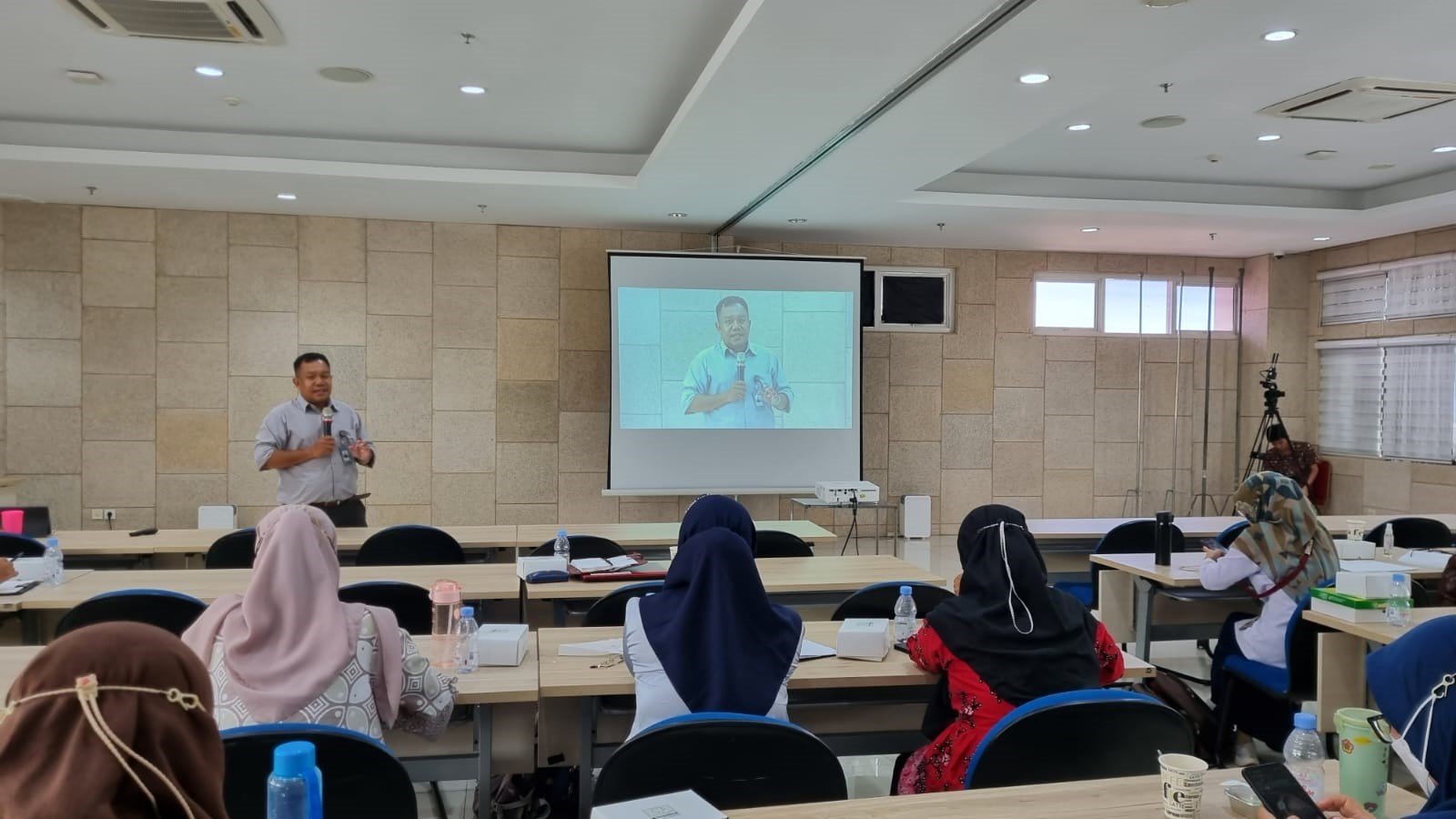
Sesi dilanjutkan dengan materi “Logistik Medik dan Manajemen Relawan” oleh Apt. Gde Yulian Yogadhita, M.Epid. Logistik, merupakan unsur pokok yang menentukan berhasil atau gagalnya manajemen bencana. Bagian logistik bertanggung jawab untuk menyediakan fasilitas, transportasi, komunikasi, persediaan, pemeliharaan dan pengisian bahan bakar peralatan, layanan makanan staff dan layanan medis staff. Terkait manajemen relawan, Gde menyampaikan bahwa pemilihan pendekatan manajemen harus disesuaikan dengan jenis bencana. Perencanaan distribusi relawan harus menganalisis workload dan peta wilayah serta kebutuhan daerah sesuai laporan tenaga kesehatan setempat (misalkan bidan desa), sehingga pendistribusiannya tepat sasaran dan tepat manfaat.
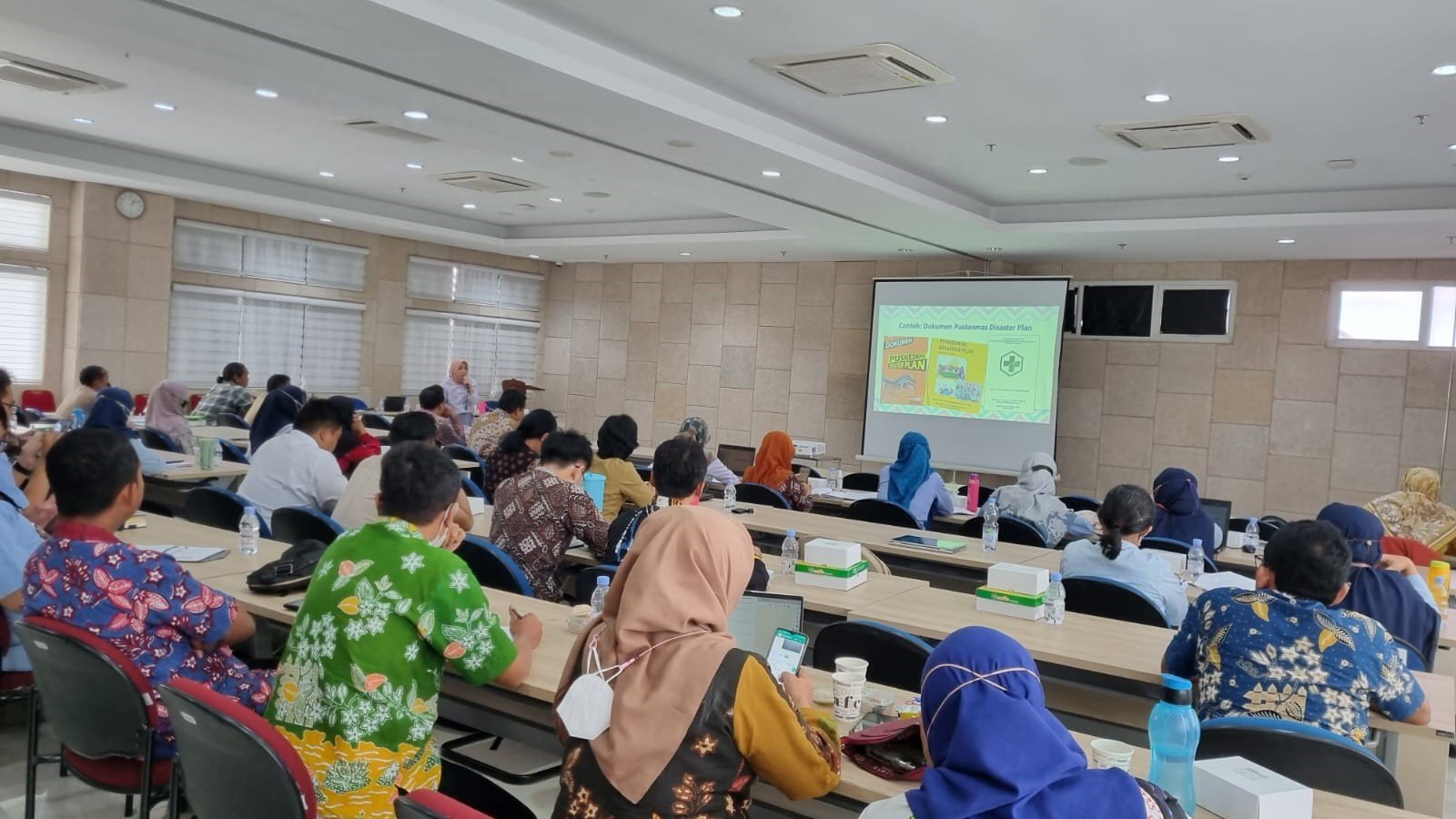
Materi keempat tentang “Analisis Risiko” dan kelima tentang “Data Informasi”, dipresentasikan oleh Madelina Ariani, SKM., MPH. Tujuan dari Analisis Risiko Bencana adalah untuk mengetahui potensi ancaman bencana yang ada di wilayah dan menentukan prioritas dalam penanggulangan bencana dan krisis kesehatan. Analisis risiko tidak dapat dilakukan oleh individu, namun harus dilakukan oleh sebuah kelompok. Setelah menyelesaikan analisis risiko, dapat dilanjutkan dengan penyusunan skenario, program, protap, dan latihan. Madelina kemudian melanjutkan dengan manajemen data informasi saat bencana. Informasi menjadi dasar dalam penentuan kebijakan dan tindakan yang akan dilakukan. Sehingga, fungsi utama puskesmas dalam menghimpun informasi di masyarakat harus tetap berjalan.
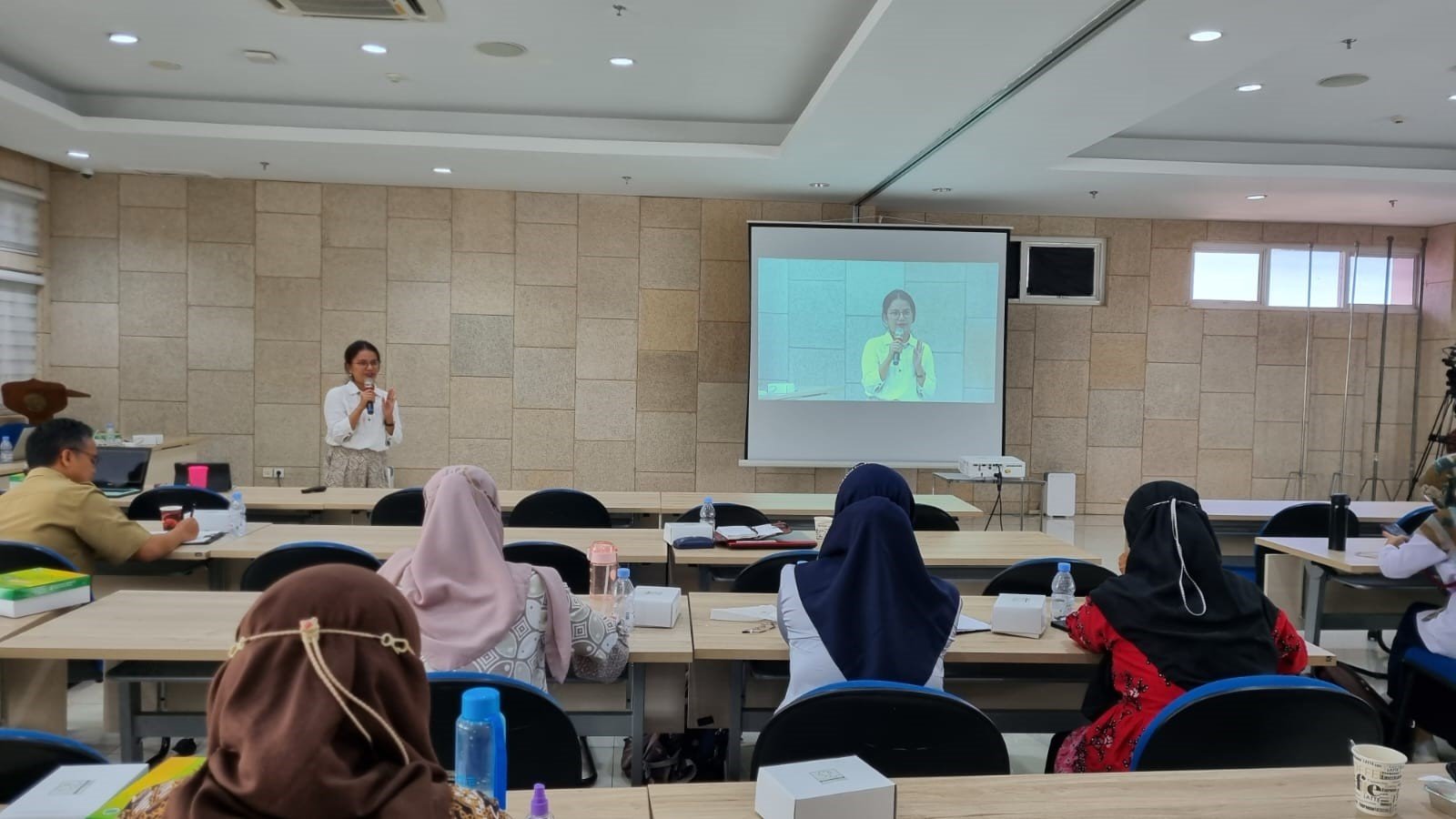
Happy R Pangaribuan, SKM., MPH., kemudian melanjutkan dengan materi “SOP dan Fasilitas saat Bencana”. SOP digunakan untuk memnuhi standar yang dibutuhkan dalam penyelenggaraan penanggulangan bencana dan krisis kesehatan yang tidak terdapat pada kegiatan sehari-hari. Sedangkan untuk penentuan fasilitas saat bencana, harus disesuaikan dengan hasil analisis risiko dan pengembangan skenario. Dalam penentuannya, puskesmas juga dapat bekerjasama dengan lintas sektor jika fasilitas sehari-hari tidak cukup atau kurang memadai.
Materi terakhir, disampaikan oleh Sutono, tentang “Rencana Tindak Lanjut”. Penyusunan RTL harus memperhatikan kaidah “SMART”, sederhana, menjabarkan tujuan dan alasan mengapa ingin melaksanakannya. Bentuk RTL dapat berupa matriks yang harus mendapatkan persetujuan dari atasan dan menyebutkan sumber daya yang dibutuhkan serta cara mendapatkannya. Setelah membuat dan melaksanakan RTL, maka perlu disusun laporan tindak lanjut.
Pelatihan ini tidak menyertakan penugasan, karena hanya berupa kegiatan satu hari. Para instruktur berharap, Puskesmas dapat secara proaktif menyusun dan memperbaiki dokumen PHCDP-nya. Konsultan yang berada di FK-KMK UGM siap sedia untuk memberikan fasilitas pelatihan lebih mendalam jika dibutuhkan.
Reporter: dr. Alif Indiralarasati
{tab MATERI}
- Data Informasi – Madelina Ariani, SKM., MPH
- Rencana Tindak Lanjut – Sutono, S.Kp., M.Sc., M.Kep
- Logistik dan Manajemen Relawan – Apt. Gde Yulian Yogadhita, M.Epid
- Komponen dan Pengorganisasian – dr. Bella Donna, M.Kes
- Analisis Risiko – Madelina Ariani, SKM., MPH
- Konsep Puskesmas Disaster Plan – dr. Hendro Wartatmo, Sp.B-KBD
- SOP dan Fasilitas saat Bencana – Happy R Pangaribuan, SKM., MPH
{/tabs}
Forum Nasional Jaringan Kebijakan Kesehatan Indonesia XIII Topik 5

Forum Nasional Jaringan Kebijakan Kesehatan Indonesia XIII
(Fornas JKKI 2023)
Integrasi Kebijakan Tenaga Cadangan Kesehatan dalam Kerangka UU Kesehatan 2023 dengan Rencana Kontijensi Kesehatan di Daerah
Kerjasama Divisi Manajemen Bencana Kesehatan PKMK FK-KMK UGM dan Pokja Bencana Fakultas Kedokteran Kesehatan Masyarakat dan Keperawatan Universitas Gadjah Mada
Selasa, 26 September 2023 | Pukul 13.00-15.00 WIB
{tab title=”KAK” class=”red”}
Latar Belakang
Sebagai negara yang dikenal dengan sebutan “laboratorium bencana”, maka segenap unsur di Indonesia telah berupaya hidup berdampingan dengan ancaman bencana. Upaya kesiapsiagaan terus dilakukan dengan berbagai kebijakan dan peningkatan pengetahuan. Progres penanggulangan bencana dan krisis kesehatan di Indonesia telah mengalami transformasi yang signifikan sejak pasca bencana tsunami 2004 silam hingga saat ini. Meski demikian, manajemen Sumber Daya Manusia dalam penanggulangan bencana masih menjadi tantangan. Rasa gotong royong yang kuat di hati masyarakat Indonesia dapat menjadi malapetaka sumber daya yang berlimpah di daerah terdampak, jika tidak ada pihak yang mampu mengelola. Di sisi lain, jika jatuh pada kondisi kurang SDM juga akan menjadi kesulitan yang serius bagi berbagai pihak di daerah terdampak. Maka, dibutuhkan suatu sistem yang dapat mengatur pemberdayaan sumber daya manusia dalam kondisi krisis agar tepat guna dan tepat sasaran.
Hampir semua situasi bencana dapat dipastikan berdampak menimbulkan krisis kesehatan di masyarakat. Di sisi lain, kita juga harus memahami bahwa risiko bencana tidak hanya muncul dari alam. Tetapi juga non alam. Salah satunya, adalah pandemi COVID-19 yang melanda selama 3 tahun lalu. Belum lagi ancaman kejadian luar biasa dari agen biologi lainnya, termasuk kegagalan teknologi dan kimia, hingga ancaman konflik sosial. Ancaman-ancaman ini, khususnya seperti wabah, virus (seperti COVID-19), dan perubahan iklim, ternyata memunculkan keunikan tersendiri sehingga menjadi pembelajaran baru bagi semua masyarakat dan pemangku kebijakan. Lagi-lagi, dibutuhkan suatu sistem perencanaan penanggulangan bencana yang baik serta kesiapsiagaan untuk menghadapi kondisi krisis yang dapat muncul setiap saat dan tak terduga sumbernya.
Pada 2022, Kementerian Kesehatan Republik Indonesia mencanangkan 6 pilar transformasi sistem kesehatan. Salah satunya, adalah transformasi dalam sistem ketahanan kesehatan yang memuat poin-poin perbaikan dalam sistem penanggulangan bencana, yakni di dalam poin 3.b. Turunan dari konsep tersebut adalah kebijakan Tenaga Cadangan Kesehatan dan Table Top Exercise (TTX) Kesiapsiagaan Krisis. Tenaga Cadangan Kesehatan menghadirkan suatu ekosistem pemberdayaan sumber daya manusia yang terkelola, terstruktur, terkonsep, serta terlatih. Sedangkan TTX membantu mewujudkan rencana kontingensi daerah untuk mencapai ketahanan kesehatan.
Kebijakan tersebut telah berjalan selama satu tahun. Sehingga, penting untuk menilai dan menilik Bagaimana penerimaan kebijakan, rencana atau bahkan strategi implementasi di level daerah dalam merespon kebijakan Transformasi Sistem Kesehatan khususnya Sistem Ketahanan Kesehatan. Integrasi antara kebijakan Tenaga Cadangan Kesehatan dan rencana kontingensi daerah menjadi penting dalam Menyusun strategi kesiapsiagaan bencana dan krisis kesehatan. Oleh karenanya, forum nasional XIII Jaringan Kebijakan Kesehatan Indonesia menghadirkan topik ini sebagai sarana refleksi, sinkronisasi, dan timbal balik antar berbagai komponen terkait dari masyarakat hingga pemangku kebijakan.
Tujuan Kegiatan
Tujuan umum kegiatan ini adalah untuk mendiskusikan dan mencatat progress implementasi kebijakan Tenaga Cadangan Kesehatan sebagai salah satu produk transformasi sistem kesehatan baik di level pemerintah pusat dan daerah
Tujuan Khusus dari kegiatan ini adalah:
- Menjelaskan tentang progress implementasi kebijakan Tenaga Cadangan Kesehatan di tingkat pusat dan posisinya dalam struktur sistem penanggulangan bencana dan krisis kesehatan di subnasional
- Memberikan contoh salah satu rencana kontingensi daerah dan Bagaimana manajemen Tenaga Cadangan Kesehatan di tingkat sub-nasional dapat terintegrasi di dalamnya
- Mendiskusikan bagaimana pemanfaatan sumber daya Tenaga Cadangan Kesehatan di subnasional
- Mendiskusikan tantangan dan peluang dalam implementasi strategi manajemen Tenaga Cadangan Kesehatan di level sub-nasional yang terintegrasi dengan rencana kontijensi kesehatan daerah
Waktu Kegiatan
Hari, tanggal : Selasa, 26 September 2023
Pukul : 13:00 – 15:00 WIB
Rundown Kegiatan
| Waktu* (WIB) | Kegiatan** |
| 13.00 – 13.05 | Pembukaan |
| 13.05 – 13.15 | Pengantar disampaikan oleh Ketua Pokja Bencana FK-KMK UGM (10 menit) Sutono, S.Kp., M.Kep., M.Sc (10 menit) |
| 13.15 – 13.30 | Materi 1: Progres implementasi kebijakan Tenaga Cadangan Kesehatan dalam Kerangka UU Kesehatan 2023 hingga saat ini Pusat Krisis Kesehatan Kementerian Kesehatan RI (15 menit) |
| 13.30 – 14.00 | Materi 2: Integrasi TCK pada rencana kontijensi kesehatan atau Dinkes Disaster Plan
|
| 14.00 – 14.15 | Materi 3: Penguatan kapasitas jejaring AHS UGM untuk mendukung kebijakan TCK Ketua Kelompok Kerja Bencana FK-KMK UGM – Sutono, S.Kp., M.Kep., M.Sc (15 menit) |
| 14.15 – 14.35 | Pembahasan:
|
| 14.35 – 14.55 | Diskusi dan Tanya Jawab (20 menit) Moderator: Madelina Ariani, MPH |
| 14.55 – 15.00 | Penutup |
Narahubung
Kepesertaan : Widarti / 0856-4346-3035/ [email protected]
Konten : Alif Indira Rarasati / 0812-1553-2898 / [email protected]
{tab title=”Reportase – Materi dan Video ” class=”green”}

PKMK – Pada Selasa, 26 September 2023 pukul 13.00 – 15.00 WIB telah terlaksana Seminar Forum Nasional Jaringan Kebijakan Kesehatan Indonesia (Fornas JKKI) XIII dengan topik “Integrasi Kebijakan Tenaga Cadangan Kesehatan dalam Kerangka UU Kesehatan 2023 dengan Rencana Kontijensi Kesehatan di Daerah”. Kegiatan ini dilaksanakan secara hybrid, yakni bertempat di Auditorium Lantai 1 Gedung Tahir Foundation Sisi Utara dan melalui zoom meeting serta youtube streaming. Topik ini diselenggarakan oleh Divisi Manajemen Bencana Kesehatan Pusat Kebijakan dan Manajemen Kesehatan (PKMK) Fakultas Kedokteran, Kesehatan Masyarakat, dan Keperawatan Universitas Gadjah Mada (FK-KMK UGM) bekerja sama dengan Kelompok Kerja (Pokja) Bencana FK-KMK UGM.
Kegiatan dibuka dengan Pengantar yang disampaikan oleh Sutono, S.Kp., M.Sc., M.Kep selaku Ketua Pokja Bencana FK-KMK UGM. Indonesia dengan beragam jenis potensi bencana yang dimiliki, memacu semua komponen bangsa untuk selalu siap siaga. Kebijakan Tenaga Cadangan Kesehatan (TCK) telah berlangsung selama satu tahun, meski secara mengikat baru tertuang di UU Kesehatan No.17 tahun 2023 yang diresmikan pertengahan tahun ini. Kehadiran kebijakan tersebut sejalan dengan upaya penanggulangan krisis kesehatan di Indonesia. Sutono menyampaikan, dukungan dan upaya peningkatan kapasitas penanggulangan krisis kesehatan terus digalakkan oleh berbagai pihak, termasuk Pokja Bencana FK-KMK UGM yang melakukan pendampingan di daerah, rumah sakit, puskesmas, bahkan komunitas warga. Salah satu bentuk tindak lanjut dari kerja sama di kalangan akademisi adalah pelaksanaan seminar yang bekerja sama dengan Divisi Manajemen Bencana Kesehatan PKMK FK-KMK UGM.
Acara dilanjutkan dengan sesi inti yang dimoderatori oleh Madelina Ariani, SKM., MPH., selaku Ketua Divisi Manajemen Bencana Kesehatan PKMK FK-KMK UGM. Materi pertama, tentang “Progres implementasi kebijakan Tenaga Cadangan Kesehatan dalam Kerangka UU Kesehatan 2023 hingga saat ini” disampaikan oleh Kepala Pusat Krisis Kesehatan Kementerian Kesehatan RI, Dr. Sumarjaya, S.Sos., S.K.M., M.M., Mfp, Cfa. Kebijakan TCK termasuk dalam pilar transformasi sistem ketahanan kesehatan. Setelah berlangsung selama 1 tahun, saat ini telah terdapat 11.724 individu yang tergabung dalam dashboard TCK yang terdiri dari tim dan EMT, tenaga kesehatan dan non nakes. TCK terus dikembangkan, dibina, dan ditingkatkan kapasitasnya agar siap ketika dimobilisasi.
Selanjutnya, disampaikan materi tentang “Integrasi TCK pada Rencana Kontijensi Kesehatan atau Dinkes Disaster Plan” yang diawali oleh Provinsi Papua Barat. Frans Abidondifu, S.KM.,M.Epid menyampaikan bahwa saat ini telah diterbitkan SK tim EMT dan RHA Provinsi, yang menunjukkan bagaimana integrasinya di dalam Renkon atau Dinkes Disaster Plan. Hadirnya kebijakan TCK menurut Frans sangat membantu meningkatkan ketahanan sistem kesehatan daerah. Papua Barat berkomitmen untuk meningkatkan kapasitas TCK di daerahnya. Namun, perlu dikomunikasikan apakah kegiatan simulasi dan pelatihan peningkatan kompetensi menjadi tanggung jawab pemerintah pusat atau daerah.
Daerah Istimewa Yogyakarta melalui Kudiyana, SKM., M.Sc melanjutkan paparan tentang Integrasi Kebijakan TCK dengan Renkon di daerahnya. Berbeda dengan Papua Barat, DIY telah memiliki sistem PSC 119 dan sistem penanggulangan gawat darurat terpadu yang mampu mengkolaborasikan seluruh komponen ambulans, EMT, dan tim RHA di seluruh wilayah. Seperti Papua Barat, selanjutnya DIY merencanakan untuk melakukan gladi/simulasi penanggulangan krisis setelah menyelesaikan inventaris/pemetaan SDM TCK untuk meningkatkan kapasitas TCK.
Lalu Madahan, SKM., MPH dari Provinsi Nusa Tenggara Barat menyampaikan bahwa daerahnya telah memiliki roadmap tangguh bencana yang melibatkan TCK di dalamnya. NTB juga telah memetakan SDM Kesehatan pada kondisi normal dan surge capacity jika terjadi bencana sesuai jenis bencana yang menjadi hasil analisis risiko Provinsi NTB. Meski begitu, Lalu Madahan menyampaikan bahwa beberapa tantangan yang dihadapi NTB adalah masih tingginya ego sektoral di internal Dinas Kesehatan, sistem SPGDT yang belum terkoneksi sepenuhnya, dan hambatan birokrasi.
Materi ketiga dipaparkan oleh Sutono, S.Kp., M.Sc., M.Kep., terkait “Penguatan kapasitas jejaring AHS UGM untuk mendukung kebijakan TCK”. AHS UGM (Academic Health System UGM) adalah bentuk kerjasama antara institusi pendidikan tinggi, rumah sakit, dan pemerintah. Salah satu topik prioritasnya adalah tanggap darurat bencana kesehatan yang di dalamnya memuat misi mengintegrasikan kebijakan TCK di wilayah kerjanya. Sutono menyampaikan, saat ini telah dilakukan sosialisasi pembentukan EMT di RS jejaring AHS yang selanjutnya akan dilakukan pendampingan pembentukan EMT.
Pembahas topik ini, yakni Apt. Gde Yulian Yogadhita, M.Epid selaku Konsultan Divisi Manajemen Bencana Kesehatan PKMK FK-KMK UGM menyampaikan bahwa belajar dari kejadian Bencana Gempa Bumi Cianjur, terdapat 4 konsep TCK yakni TCK untuk fungsi RHA (Rapid Health Assessment), TCK sebagai tenaga inti di faskes masing-masing, TCK sebagai tenaga cadangan di daerah yang memerlukan bantuan, dan TCK melalui sistem komando HEOC. Gde menyampaikan kebijakan TCK sudah diamini oleh daerah, namun bagaimana kemudian daerah dapat menggunakan dashboard TCK dan peningkatan kapasitas serta penggunaannya pada fase krisis kesehatan perlu dikawal. Pembahas berikutnya, Drs. Pangarso Suryotomo selaku Direktur Kesiapsiagaan BNPB menuturkan bahwa TCK menjadi bagian penting dari penanggulangan bencana kesehatan. Pangarso menyoroti bagaimana peran antar pihak dalam mengaktifkan TCK yang belum terlihat dalam paparan masing-masing daerah yang perlu ditilik kembali pada Renkon Daerah, terutama kaitannya dengan Klaster Kesehatan. Dalam mandat Renkon Bencana, tiap bencana memiliki rencana sendiri, sehingga peran TCK harus didefinisikan pula tiap jenis bencana yang dimaksud. Meski tenaga sudah ada, tapi seringkali rencana kebencanaan belum tersusun dengan baik. Sehingga rencana kontijensi yang berbentuk single hazard harus dikombinasikan dengan risiko lainnya membentuk rencana aksi dan SOP untuk TCK, serta dapat digunakan untuk menyusun rencana peningkatan kapasitas dan latihan.
Dari topik ini, kita melihat bahwa Kebijakan TCK telah terintegrasi dalam Rencana Kontijensi Daerah dan disambut baik oleh daerah. Tantangan selanjutnya adalah bagaimana menindaklanjuti Rencana Kontijensi menjadi Rencana Aksi dan SOP yang kemudian dapat digunakan sebagai dasar untuk membentuk pelatihan dan rencana peningkatan kapasitas TCK di daerah.
{/tabs}
Desa terdampak meluas, Pacitan bentuk satgas bencana kekeringan
Pacitan, Jatim (ANTARA) – Pemerintah Kabupaten Pacitan, Jawa Timur membentuk satuan tugas penanggulangan bencana kekeringan di daerah itu, untuk memudahkan koordinasi dalam memetakan wilayah terdampak sekaligus mengoptimalkan penyaluran air bersih ke warga karena desa terdampak kian meluas.
“Ini langkah mitigasi yang harus kami lakukan. Intinya pemerintah (daerah) harus hadir dalam situasi bencana kekeringan yang saat melanda di sejumlah desa dan dirasakan langsung oleh masyarakat yang terdampak,” kata Sekretaris Daerah (Sekda) Kabupaten Pacitan., Heru Wiwoho di Pacitan, Rabu.
Ia menjelaskan pembentukan satgas ini menandai bahwa Pemkab Pacitan telah menaikkan level kesiagaan dalam menghadapi bencana kekeringan karena jumlah desa terdampak kini kian meluas, yakni dari sebelumnya hanya beberapa desa yang mengajukan permintaan bantuan air bersih, kini telah bertambah menjadi 13 desa.
Daerah terdampak kekeringan itu teridentifikasi di enam kecamatan yang selama ini memang menjadi langganan krisis air bersih tiap kali memasuki kemarau.
“Kami (Pemkab Pacitan) siaga 24 jam untuk memenuhi kebutuhan air ke desa-desa terdampak kekeringan. Pembentukan satgas ini memungkinkan kami untuk melakukan tindakan cepat. Setiap saat mendesak ditangani ya ditangani,” katanya.
Satgas tersebut terdiri atas beberapa organisasi perangkat daerah (OPD) yang membidangi masalah kekeringan.
Pemkab telah melakukan pemetaan dan inventarisasi sumber air, juga daerah mana saja yang kekeringan.
Sesuai rencana, kata dia, distribusi air bersih akan dilakukan dengan empat unit mobil tangki milik badan penanggulangan bencana daerah (BPBD) setempat.
“Beberapa yg mendesak ya segera aksen BPBD ada, PDAM, Satpol PP kita bisa sewa tidak ada kendala. Bisa beli air itu untuk penyaluran kami akan bayar. Anggaran BTT (bantuan tak terduga) bisa digunakan sewaktu-waktu,” kata Heru Wiwoho..
Sebelumnya, ribuan warga Kabupaten Pacitan mengalami kekeringan saat kemarau panjang 2023 ini.
Mereka krisis air bersih, sehingga menggantungkan dari penyaluran air. Data dari Badan Penanggulangan Bencana Daerah (BPBD) Pacitan yang terdampak ada 13 desa di enam kecamatan. Untuk total jiwanya yang perlu penyaluran air bersih sejumlah 7.412 jiwa.
Keberadaan Urusan Bencana Kesehatan di Undang-Undang Kesehatan Nomor 17 tahun 2023

{tab title=”Pengantar” class=”red”}

{tab-ex title=”Urusan Bencana Kesehatan dalam UU No 17 Tahun 2023″ class=”green” align=”justify”}
- Pelayanan Kesehatan saat Bencana
Bab V. Upaya Kesehatan – Bagian Kesembilan Belas Kesehatan Bencana (kebijakankesehatanindonesia.net) - Kerahasiaan Data dan Informasi
Bab II. Bagian Satu – Hak (kebijakankesehatanindonesia.net) - Fasilitas Pelayanan Kesehatan
Bab VI. Fasilitas Pelayanan Kesehatan – Bagian Ketiga Rumahsakit (kebijakankesehatanindonesia.net) - Sumber Daya Manusia Kesehatan
Bab VII. Sumber Daya Manusia Kesehatan – Bagian Keempat Pendayagunaan Tenaga Medis dan Tenaga Kesehatan (kebijakankesehatanindonesia.net) - Ketahanan Kefarmasian dan Alat Kesehatan
Bab IX. Ketahanan Kefarmasian dan Alat Kesehatan (kebijakankesehatanindonesia.net) - Kejadian Luar Biasa dan Wabah
Bab XII. Bagian kedua Wabah (kebijakankesehatanindonesia.net) - Pendanaan
Bab XIII. Pendanaan Kesehatan (kebijakankesehatanindonesia.net)
{tab-ex title=”Turunan UU No 17 Tahun 2023 dalam Urusan Bencana Kesehatan” class=”red”}
- Pelayanan Kesehatan
- PP No 21 tahun 2008
- PP No 22 tahun 2008
- PP No 23 tahun 2008
- Perpres No 87 tahun 2000
- Permenkes No 19 tahun 2016
- Permenkes No 75 tahun 2019
- Permenkes No 4 tahun 2019
- Kerahasiaan Data Informasi
Permenkes No. 36 tahun 2012 - Fasilitas Pelayanan Kesehatan
Permenkes No 4 tahun 2018 - Sumber Daya Manusia Kesehatan
Belum ada - Ketahanan Kefarmasian dan Alat Kesehatan
- Permenkes No 74 tahun 2016
- Permenkes No 58 tahun 2014
- Kejadian Luar Biasa dan Wabah
- UU No 24 tahun 2007
- Permenkes No 17 tahun 2008
- Pendanaan Kesehatan
PMK No. 173 tahun 2019
{/tabs-ex}
{slider title=”DOKUMENTASI PUBLIC HEARING PUSAT KRISIS KEMENKES” class=”red icon”}
- Public Hearing RPP UU Kesehatan : Pelayanan Kesehatan Pada Bencana
- Public Hearing RPP UU Kesehatan : Tenaga Cadangan Kesehatan
{slider title=”SUARAKAN ASPIRASI ANDA” class=”green icon”}


{slider title=”Latar Belakang” class=”blue icon”}
Tinggal di wilayah Indonesia, semua unsur dari masyarakat, swasta, hingga pemerintah diharuskan siap dan tanggap menghadapi situasi bencana. Baik bencana alam maupun bencana non alam seperti wabah penyakit menular dapat mengancam sistem kesehatan, fasilitas kesehatan dan masyarakat kita kapan saja. Oleh karena itu, urusan kebencanaan telah diatur dalam peraturan tertinggi yakni undang-undang hingga peraturan turunannya, sampai ke peraturan di tingkat sub nasional.
Sektor kesehatan, tidak luput dalam upaya kesiapsiagaan dan tanggap bencana ini. Sektor kesehatan telah mengatur manajemen bencana dalam Undang-Undang Kesehatan No.36 Tahun 2009 hingga digantikan oleh Undang-Undang Kesehatan No.17 Tahun 2023 baru-baru ini. Terdapat lebih dari 40 kata bencana disebutkan dalam keseluruhan bab dan pasal di UU Kesehatan No.17 tahun 2023. Istilah bencana kesehatan menjadi sebutan dalam undang-undang kesehatan terbaru ini.
Divisi Manajemen Bencana Kesehatan, Pusat Kebijakan dan Manajemen Kesehatan (PKMK) FK-KMK UGM bekerjasama dengan Pokja Bencana FK-KMK UGM sejak pasca bencana Tsunami Aceh tahun 2004 berfokus pada upaya pengkajian manajemen bencana kesehatan di Indonesia, termasuk melakukan berbagai kegiatan pelatihan dan advokasi manajemen bencana kesehatan. Tim ini juga turut terlibat dalam upaya penanganan baik ditanggap darurat maupun pada masa transisi hingga pemulihan bagi daerah terdampak di Indonesia. Tim ini juga turut mengikuti dan berpartisipasi pada proses perumusan Undang-Undang Kesehatan, khususnya pada hal-hal terkait bencana dan krisis kesehatan.
Berdasarkan hal tersebut, tim ini mengajak rekan sekalian baik dari pemerhati manajemen bencana kesehatan maupun pemerhati kebijakan dan pemerhati kegiatan kemanusiaan untuk berdiskusi. Diskusi ini diharapkan dapat menjadi masukan untuk peraturan turunan dari undang-undang kesehatan bagi kepentingan masyarakat yang terdampak akibat bencana khususnya di sektor kesehatan kedepannya.
{slider title=”Tujuan” class=”green icon”}
- Mendiskusikan perubahan-perubahan yang terjadi pada bidang bencana kesehatan yang terdapat di Undang-Undang Kesehatan
- Memberikan usulan untuk peraturan turunan dari Undang-Undang Kesehatan terkait urusan bencana kesehatan
{/sliders}
{tab title=”Seri Webinar” class=”green”}
- Webinar 1: Keberadaan Urusan Kesehatan di UU Kesehatan 17 tahun 2023 SELENGKAPNYA
- Webinar 2: Turunan Undang-Undang dalam Urusan Bencana Kesehatan
- Coming soon
{/tabs}
Pelatihan Potensi Pembentukan Emergency Medical Team (EMT) AHS UGM untuk Mendukung Kebijakan Tenaga Cadangan Kesehatan (TCK)


PKMK – Fakultas Kedokteran, Kesehatan Masyarakat, dan Keperawatan Universitas Gadjah Mada bersama jejaring Academic Health System (AHS) Universitas Gadjah Mada mengadakan Pelatihan “Potensi Pembentukan Emergency Medical Team (EMT) AHS UGM untuk Mendukung Kebijakan Tenaga Cadangan Kesehatan (TCK)” pada 2-3 Agustus 2023 di Ruang Diskusi Lantai 2 Gedung Tahir Foundation FK-KMK UGM.