Tanggap bencana, Pemkab siapkan dapur umum untuk korban banjir

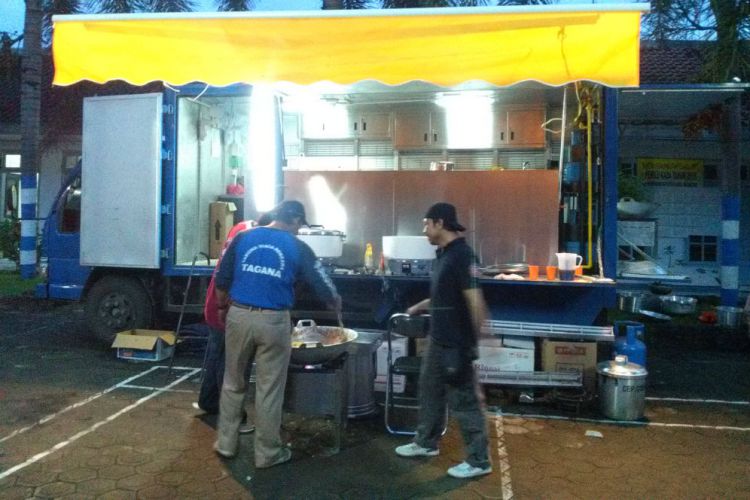
Banyuwangi.merdeka.com – Pemerintah Kabupaten Banyuwangi, menyiapkan dapur umum untuk korban banjir di Desa Wringin Putih, Kecamatan Muncar. Wakil Bupati setempat, Yusuf Widiatmoko, juga nampak memantau dapur umum tersebut sekaligus memberikan bantuan makanan cepat saji kepada para korban.

Meski banjir sudah surut sekitar pukul 11.00 WIB, hingga malam ini, tim Taruna Tanggap Bencana (Tagana) di bawah naungan Dinas Sosial (Dinsos) bersama BPBD akan terus standby sampai besok, Selasa (19/7).

Dapur umum didirikan sejak Senin sore, sekitar pukul 16.00 WIB oleh Tim Logistik Tagana untuk menyuplai kebutuhan makan korban banjir.

“Mulai berangkat dari markas kemudian masak sampai distribusi makanan maksimal 3 jam. Kami siapkan 800 bungkus makanan. Ini sementara ada telur, mi, ada sambal goreng jamur. Sarden untuk dimanfaatkan saat ini,” kata Koordinator Bidang Bencana Tagana, Karsono, kepada Merdeka Banyuwangi.

Karsono menambahkan, Taganan bersama BPBD akan terus standby sampai hari ini. Selain untuk mengantisipasi apabila ada banjir susulan. “Rencana cuma hari ini tapi kalau lihat kondisi masih hujan akan tetap standby terus,” ujarnya.

Sementara itu Nurhadi, Kepala Desa Wringinputih, mengatakan suplai logistik dapur umum memang untuk mencukupi kebutuhan makan warganya. Terutama yang tidak bisa memasak akibat perlengkapan dapur yang terendam.

Dia menambahkan, jumlah 800 bungkus makanan yang dibagikan merupakan hasil perkiraan jumlah 240 Kepala Keluarga (KK) dari 8 RT yang terkena dampak banjir. “240 dari perkiraan KK-nya. Total per KK kalau masing-masing KK dibuat 3 orang ya kurang lebih ada 800,” ujarnya.

Soal distribusi makanan, Nurhadi telah berkoordinasi dengan Kepala Dusun (Kasun), RW dan RT, yang terkena dampak banjir. “Ini masak selesai langsung dibagikan sekitar habis Magrib,” ujarnya.

Makanan tersebut didistribusikan lewat Kasun yang berkoordinasi dengan RT. Di Wringinputih sendiri ada tiga dusun; Krajan, Kabat, dan Tegalpare. Dari situ yang terkena dampak banjir Dusun Krajan, ada 2 RW dan 8 RT.

Minister’s earthquake prediction

What are they based on?

It is with bemusement that we note our Minister for Relief and Disaster Management giving such categorical assurance that Bangladesh will not experience a massive earthquake in the magnitude of 8 or 9 on the Richter scale. This he has said in the backdrop of a study by a geologist at Columbia University in New York City that has found that Dhaka sits on a dangerous fault which could trigger a massive earthquake affecting around 140 million people in the region that includes Bangladesh, India and Myanmar. 

While we are not suggesting for a moment that there will be a mega quake, we hesitate to rule out such a possibility altogether without scientific basis. Just because we have been lucky enough to be spared an earthquake of such magnitude for the last 200 years as the Minister has quoted, does not guarantee that it will not occur now or in the near future. While it is important for the minister to tell people not to panic, his dismissal of an earthquake of that scale occurring, we feel, is misplaced. Given that it is not possible to predict whether such an earthquake is imminent, or that it may occur after a few hundred years, the most prudent task for a country under risk would be to boost its preparedness for such a disaster.  

What the minister should be telling the public is how prepared the nation is or needs to be for such a disaster should it occur. This includes training rescue teams, mobilizing volunteers, educating the public on survival skills, keeping adequate hospital staff to attend to the injured, enough ambulances, firefighting facilities etc. Only such contingency plans can reassure the public.

62 people killed in natural disasters in U’khand this yr

DEHRADUN: The year 2016 is proving to be a terrible year for Uttarakhand in terms of human lives lost in natural disaster incidents. As per official figures, 62 people have been killed in natural disasters like flash floods, cloudbursts, landslides and forest fires as of Monday. Over 64 persons have been injured.

Even animals have had to bear the brunt of nature’s fury with around 887 animals including domestic cattle perishing in disasters since January this year. Besides loss of human lives, there has been considerable property loss as well with around 144 houses getting completely damaged and 133 sustaining severe damage in natural disaster incidents.

Elaborating on the reasons behind the high numbers, Santosh Badoni, deputy secretary, disaster management department, told TOI, “Uttarakhand is sensitive to natural calamities due to its terrain. Besides flash floods and landslides which take maximum lives in a year, the state is also one of the most seismic or earthquake-prone regions in the country with majority of its area lying in either the highly vulnerable Zone 5 or Zone 4.”

This year, Pithoragarh has been the worst affected disaster-hit district in the state with 17 causalities and eight people missing and feared dead in the series of cloudbursts which ocurred on July 1, triggering flash flood and landslides and wreaking havoc in the Bastadi, Naulanda, Charma and Pathorkot villages of the district.

Even Dehradun district reported 13 deaths due to natural disaster in the present year with as many as 10 workers being killed in a single incident when they were hit by a landslide in the Chakrata area in the month of May. Eight people lost their lives in Tehri district followed by Chamoli district where five persons have been killed this year.

Around 87 drinking water pipelines and 1184 electricity lines were also damaged during the natural disasters in Uttarakhand between January and July.

Data from the disaster management department shows that on an average 73 people have lost their lives every year in the state since 2001, mainly due to landslides and flash flood-related incidents. The average death count excludes fatalities during the 2013 catastrophe which alone killed over 4,000 people.

Overall, since its inception, the state has seen 1,016 people getting killed (excluding the 2013 disaster) in landslides and flash floods. In the last two years, landslides and flash floods have claimed 119 lives.

Ketua DPRD Bogor Minta Korban Bencana Pergeseran Tanah Direlokasi

Ketua DPRD Kabupaten Bogor Ade Ruhandi mengunjungi korban bencana pergeseran tanah di kampung Sikantor RT 01/05/, Desa Malasari, Kecamatan Nanggung, Kabupaten Bogor, Jawa Barat.

Bogor – Ketua DPRD Kabupaten Bogor Ade Ruhandi meminta warga korban bencana pergeseran tanah di kampung Sikantor RT 01/05/, Desa Malasari, Kecamatan Nanggung, Kabupaten Bogor, Jawa Barat, segera direlokasi ke tempat yang lebih aman. Korban bencana ini terdiri atas 58 keluarga.

Dia berjanji akan terus membantu relokasi warga kampung itu melalui rapat anggaran. Relokasi sangat mendesak dilakukan mengingat cuaca yang kurang mendukung. “Saya masih menunggu hasil kajian Kementerian ESDM terkait apakah tanah tersebut masih layak atau tidak untuk dihuni. Saya meminta kepada Pemerintah Kabupaten Bogor untuk merelokasi secepatnya warga Desa Malasari,” ungkap dia, Senin (18/7).

Dia berterima kasih kepada PT Aneka Tambang Tbk yang telah memberikan bantuan kepada warga yang terkena bencana. “Saya berharap mereka terus membantu warga dan warga lainnya yang ada di kecamatan Nanggung,” tambah dia.

Akhir pekan lalu, Ade bersama Adian Napitupulu, anggota DPR Komisi VII dapil Kabupaten Bogor, Dandim Kabupaten Bogor Letkol Czi Dwi Bima Nurahmat, dan Muspika Nanggung mendatangi langsung lokasi kejadian korban bencana pergeseran tanah. Warga berharap Ade bersedia membantu relokasi ke tempat aman.

“Kami takut kembali ke rumah apabila cuacanya hujan, karena khawatir longsor. Saat ini, tembok rumah kami sudah retak akibat tanah bergeser,” ujar Heni.

Adian Napitulu meminta Pemkab Bogor segera menyerahkan bantuan ke korban bencana. “Kalau pemerintah daerah kekurangan anggaran untuk membantu masyarakat, bisa mengajukan ke pemerintah pusat. Tapi, saya yakin Ketua Dewan dan Bupati Bogor bisa menanggulangi masalah ini melalui APBD Kabupaten Bogor,” kata dia.

Megathrust earthquake: Ticking time bomb threatening Bangladesh

A MASSIVE earthquake called an “active megathrust fault” is posing a genuine threat to southern Asia.

And if the modelling is correct, this earthquake could be at least as devastating as the 2011 quake which devastated Japan and took 16,000 lives.

The discovery of the hidden geographic fault lurking under southern Asia could unleash a magnitude 9.0 quake, placing up to 140 million people at risk in the most densely-populated place on earth, researchers fear.

The study of the area took more than a decade and detected the massive fault beneath Bangladesh, parts of India and Myanmar.

The research, the first to use GPS data collected from Bangladeshi tracking stations, suggests the northeastern corner of the Indian subcontinent is on a collision course with Asia.

The tectonic plates far beneath the earth’s surface are covered in layers of sediment more than 20m thick, and the study models suggest at the upper levels they are stuck in a pile-up, one thrusting under the other in a ‘megathrust’ which may have been under stress for more than 400 years.

Potential quake zone. Solid red line indicates an area of about 62,000 square kilometres that could move during a subduction-zone earthquake, affecting 140 million people or more. Image: Chris Small/Lamont-Doherty Earth Observatory

Potential quake zone. Solid red line indicates an area of about 62,000 square kilometres that could move during a subduction-zone earthquake, affecting 140 million people or more. Image: Chris Small/Lamont-Doherty Earth ObservatorySource:Supplied

Researchers believe the area is spring-loaded to buckle and rupture under the strain. But because their discovery is relatively recent, they have no idea when, or if, the fault will give way and trigger a 8.2 to 9.0 megaquake.

“We don’t know if it’s tomorrow or if it’s not going to be for another 500 years,” study co-author Michael Steckler, a geophysicist at the Lamont-Doherty Earth Observatory at Columbia University in New York City said in an article on the university website.

“We don’t know how long it will take to build up steam, because we don’t know how long it was since the last one. But we can definitely see it building.”

 
The research team estimates 140 million people live within 100km of the fault, including about 17 million in the area around low-lying Dhaka region of Bangladesh, which Steckler says already has problems with poor construction, making it hugely at risk of building collapse should a quake of large magnitude hit the region.

Overcrowding would make it difficult to rescue survivors in the event of an earthquake.

“Right now, the streets are clogged with traffic such that it’s impossible to drive around Dhaka on a normal day,” Steckler said. “If you fill the streets with debris, it’s really going to be impossible to get supplies and rescue equipment and things like that around,” Steckler told Live Science.

The research team is now building a more detailed map of the shape of the fault, as well as looking at historical tsunami data to understand how often megathrust earthquakes occur, Steckler said.

Japan tsunami hits Sendai

The March 11, 2011 Japan earthquake, with a magnitude of 9.0 struck off Japan’s northeastern shore and was the most powerful to ever hit the island country.

The quake triggered a devastating tsunami which struck the area with waves of up to 40m, tearing apart villages and towns, flattening homes and carrying ships inland, before sucking back to out to sea carrying debris, vehicles and bodies in its wake.

Damage to the Fukushima Daiichi Nuclear Power Plant completed a deadly treble of disaster, contaminating an area which continues to see more than 100,000 displaced locals living as evacuees.

Gempa Tiga Kali Goyang NTT

Ilustrasi (Okezone)

KUPANG – Provinsi Nusa Tenggara Timur tiga kali dilanda gempa dengan intensitas kecil dalam dua hari ini. Gempa terakhir terjadi, Kamis (14/7/2016) pukul 05.13 Wita dengan kekuatan 3,2 skala richter (SR).

Kepala Seksi Data dan Informasi Stasiun Kelas I BMKG Kupang, Sumawan mengatakan, gempa dengan kedalaman 58 kilometer itu berpusat di 26 kiometer barat laut Kabupaten Manggarai Barat, NTT.

Sementara pada Rabu 13 Juli 2016, NTT dua kali digoyang masing-masing berkekuatan 3,6 SR yang terjadi pukul 14.53 Wita dan berpusat di Sumba Barat Daya. Kemudian gempa 4,7 SR pukul 21.13 Wita di Kabupaten Alor.

International Simulation for Emergency Medical Team (EMT) Coordination 2016

border-page

Term of Reference

International Simulation for

Emergency Medical Team (EMT) Coordination 

In INSARAG Earthquake Regional Exercise

25-28 July 2016

border-page

pembukaan-emt-international 

Presented by

Disaster Management Division, Center for Health Policy and Management
In Collaboration with WHO representative Indonesia and Health Crisis Center, Ministry of Health Republic of Indonesia


Introduction

Disaster management is need multidiscipline approach. Various disciplines and sectors need to be involved. Health sector is the most important aspect in victim’s aid and health care services during disaster. However, it was realized that the coordination is important to safe victim from search, rescue, and aid both from disaster location, health post, and health facilities.

Following the EAS Australia-Indonesia Rapid Disaster Response Workshop in 2013, the Indonesian National Disaster Management Authority and EMA, in collaboration with the World Health Organization (WHO), hosted a two-day follow-up workshop in Bali, Indonesia on 11-12 June 2014. The workshop provided the opportunity to share country-specific feedback on the Foreign Medical Team (FMT) document among EAS countries, provided preliminary feedback to WHO on options to progress implementation of the FMT concept and enabled solutions to be identified to issues around FMT deployment from the Typhoon Haiyan response. This event also to determine guidelines for FMT deployments and streamlining protocols for assistance in major disasters. Outcomes of the workshop will continue to improve existing disaster response arrangements in the EAS region, assisting countries to better self-manage disasters in their own territories; assist with responding to disasters elsewhere in the region; and better receive, coordinate and integrate international assistance when national capabilities are overwhelmed.

Moreover, there is a Reception and Departure Center (DC) mechanism for international assistance which is an OCHA’s frontline coordination function. RDC will set up at the point of arrival of the affected country (sea port/country road border/arrival airport) by the United Nations Disaster Assessment and Coordination (UNDAC) team or first arriving USAR teams. In recent response to the Philippines Typhoon (2013) and the Nepal Earthquake (2015), RDC had difficulties in logistics limitation (e.g. internet connection) and in responding to the requests from member states (e.g. negotiation of landing permission). In relation with national mechanism of Indonesia, similar post like RDC are regulated in by National Disaster Management Agency (BNPB) in their regulation no.22 year 2010.
Haiti Earthquake reported that there were many Search and Rescue teams and Emergency Medical Team (EMT) involved but from 2000 victims, only 100 victims that could be safe. In another situation, Disaster Victims Identifications teams has difficult to identify death victim because victim’s identity has gone by previous savior team.

Chaos and problems surely happened when disaster, but it can diminished if each sectors has ability to good coordination, sharing their role appropriately, and working in one command. Based on this, in 2015 Local Authority for Disaster Management (BPBD) Special Region of Yogyakarta (DIY) has been initiated to publish Government Regulation (Pergub) regarding the coordination in search, aid, and rescue disaster victims that regulating the role of BASARNAS (National of Search and Rescue Agency), DVI DIY, Center for Health Assistant (PUSBANKES) DIY, Red Cross Indonesia (PMI) DIY. Furthermore, DIY Health District Office had compiled SOP for disaster health management such as activated health cluster and organized domestic and international EMT based on experiences of Jogja Earthquake 2006 and Mount Merapi Eruption 2010. These regulations are need testing to know operational or not.

Related with The INSARAG Earthquake regional Exercise on July 2016 will be our opportunity to test and simulate the collaboration between national and international EMT using both UNOCHA’s RDC integrated with local BNPB/BPBD mechanism. The objectives is involving the local partners and   introducing the international and national RDC and EMT framework as well as to facilitate INSARAG Earthquake Regional Exercise 25-28 July 2016.

Outputs:

The outputs are:
1.    Simulation
2.    Evaluation form

Committee:

The team who initiate and guide overall activities from CHPM FoM UGM, DIY Health District Office, BPBD DIY:

  CHPM FoM UGM

  1. dr. Hendro Wartatmo, Sp.BD(K)BD
  2. dr. Handoyo Pramusinto, Sp.BS
  3. dr. Bella Donna, M.Kes
  4. Syahirul Alim, SKp, Ns, M.Sc, PhD
  5. Madelina Ariani, SKM, MPH

  DIY Health District Office

  1. dr. Anung
  2. Kudiyana, SKM, MSc

  PUSBANKES (Center for Health Assitant)

  1. Sutono, SKp, MSc

  BPBD DIY

  1. Danang Samsu, ST
  2. Enaryaka, SKp  

Participants:

1. Player as Local Government

  • BPBD DIY
  • Health District Office DIY
  • Health Crisis Center, Ministry of Health
  • Health Crisis Center, Central Java Regional
  • Health District Office Sleman
  • Health District Office Kota Jogja
  • Health District Office Bantul
  • Sleman Public Hospital
  • Bantul Public Hospital
  • Kota Jogja Public Hospital
  • Dr. Sardjito Hospital

2. Player as EMT Team

a. EMT in DIY

  • Disaster working group of Faculty of Medicine UGM (Sardjito Hospital, Academic UGM Hospital, and Faculty of Medicine UGM)
  • Muhammadiyah Disaster Management Center (MDMC)/ Muhammadiyah Hospital
  • Yakkum Emergency Unit (YEU)
  • PMI
  • Pusbankes

b. EMT in Central Java

  • Health Crisis Center Regional
  • Health District Office of Central Java province
  • Hospital

c. EMT in East Java

  • Health Crisis Center Regional
  • Faculty of Medicine, Brawijaya University
  • Hospital d. EMT in Bali
  • Health Crisis Center Regional
  • Hospital

e. International EMT

  • Singapura
  • Malaysia
  • Thailand
  • Filiphina
  • Brunei
  • Myanmar
  • Laos
  • Vietnam
  • Kambodja
  • Timor Leste
  • Australia
  • China
  • Japan
  • South Korea
  • America
  • New Zealand
  • India
  • Rusia

Place, Time and Activity Plan
Blue sign for all cluster program
Yellow sign for Health Cluster Activities

Saturday, 23 July – Arrival of EXCONs

Time

Event

Responsible / Venue

All Day

Arrival of EXCONs (Jogjakarta airport)

BASARNAS


Sunday, 24 July – Arrival of Participants

Time

Event

Responsible / Venue

All Day

Arrival of Participants (Jogjakarta airport)

BASARNAS

All Day

EXCONs and Host Country only – Preparation for Exercise

BASARNAS, EXCONs, FCSS

Monday, 25 July – Opening and Preparatory Workshop

Time

Event

Responsible / Venue

0900-1000

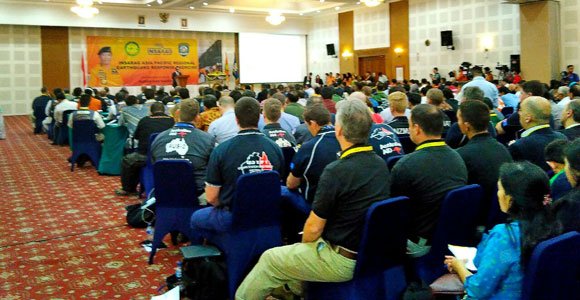
Official Opening of the INSARAG Asia-Pacific Regional Earthquake Response Exercise

(Speeches)

– Governor of Jogjakarta (tbc)

– Mr. Zhao Ming, China, INSARAG Asia-Pacific Regional Chair (tbc)

– Mr. Oliver Lacey-Hall, Head, OCHA Indonesia/ASEAN Liaison office (tbc)

– Air Marshal FHB Soelistyo, S.Sos, Head of National SAR Agency of the Republic of Indonesia

Group Photo

Indonesia, China, OCHA

Opening Video


Opening Report

1000-1030

Coffee Break

BASARNAS

1030-1045

Participants Introduction and Adoption of the Agenda and Exercise Overview

  • Objectives of the Exercise
  • History of the INSARAG Ex.
  • Simulation Exercise – Tasks and Injects

Yosuke Okita (FCSS)

1045-1115

Role and Responsibility: International USAR team

  • INSARAG Guidelines Vol. I Policy
  • INSARAG Mandate
  • IEC
  • USAR Response Cycle (Mobilization-Operation-Demobilisation and Beyond the Rubble)
  • INSARAG Global Meeting and Abu Dhabi Declaration
  • World Humanitarian Summit and INSARAG

New Zealand (Regional Vice-Chair 2016)

1115-1145

Role and Responsibility: Emergency Medical team (EMT)

  • EMT operations
  • EMT classification

WHO or international medical team in the region

Presentation Material

1145-1300

Lunch

BASARNAS

1300-1330

Role and Responsibility: HCT and OCHA Country office

  • Contingency Planning
  • Disaster Profile of Indonesia

OCHA Indonesia/HCT

1330-1400

Role and Responsibility: UNDAC

  • UNDAC Overview
  • OSOCC Concept
  • USAR Coordination (not too in detail)
  • Role of UNDAC Partner (DHL, MapAction, etc)

UNDAC member or OCHA, DHL, MapAction

1400-1430

Role and Responsibility: ASEAN and AHA Centre

  • AADMER and AADMER Work Program 2016-20
  • ERAT team

AHA Centre

143-1500

Coffee Break

BASARNAS

1500-1600

Panel Discussion: Domestic Capacity Building in Indonesia

  Facilitator: Rajan Gengaje (OCHA-ROAP)

  Panel:

  • BASARNAS (Rescue Special Unit, SAR Goes to School Project)
  • Indonesian Red Cross (First Responders Training)
  • Donor country (Japan)

Each panel will have 10-minute presentation followed by Q&A session.

1600-1700

KOBO Toolbox

Winston Chang (FCSS)


Report Day 1


1730-2200

Welcome Dinner

BASARNAS

Tuesday, 26 July – Tour to Mt. Merapi and Breakout sessions

Time

Event

Responsible / Venue

07.30-13.00

Tour to Mt. Merapi and observation of USAR Field Exercise and/or a local hospital (No need to bring PPE.)

BASARNAS

13.00-14.00

Lunch

BASARNAS

14.00-14.30

INSARAG Guidelines Overview (USAR Coordination – Basics)

  • INSARAG Guidelines VOl. II-B Operations
  • INSARAG Guidelines Vol. III Field Guide
  • ASR and Sectorisation

Mario Simaz (Switzerland), Tsukasa Katsube (Japan)

14.30-14.40

Earthquake Alert and Scenario Briefing – Simex starts

BASARNAS, EXCONs

14.40-15.00

Coffee Break

BASARNAS

15.00-17.00

Breakout sessions

(1) International USAR teams

  • Detail of USAR Coordination Cell
  • Team Fact Sheet and Virtual OSOCC
  • Marking and Forms

(2) UNDAC team, AHA Centre/ERAT, Partners

  • Virtual OSOCC Management
  • Preparation for deployment
  • Plan of Action

(3) EMTs

  • EMT Coordination
  • Team Fact Sheet and Virtual OSOCC

(4) HCT and OCHA Indonesia office

  • Activation of Contingency Plan
  • Support of the LEMA

(5) LEMA and National Responders

  • Activation of National Response Plan
  • Request for International Assistance (by 1700)

(1700 Technical Break; Dinner: own arrangement)

IEC-classified team in AP

UNDAC/ERAT EXCONs

WHO or EMT in the region

OCHA

BASARNAS

EMT Coordination Report

EMT Coordination Video

Wednesday, 27 July – Simulation Exercise

Time

Event

Responsible / Venue

08.00-

Simulation Exercise starts


08.00-17.00

Simulation Exercise

  • RDC (will be performed at the exercise venue)
  • BoO set up
  • USAR Operations and Coordination
  • OSOCC Meeting
  • Media Briefing, etc.

(Coffee and Lunch will be provided during the Simex)

(1700 Technical Break; Dinner: own arrangement)

BASARNAS, EXCONs

Report Day 3

Thursday, 28 July – Simulation Exercise, Closing

Time

Event

Responsible / Venue

08.00-15.00

Simulation Exercise continued

(1500 Technical Break)

(Lunch and coffee provided during the Simex)

BASARNAS, EXCONs

15.00-16.00

Debriefing by each group and plenary

End of Simulation Exercise

BASARNAS, EXCONs

16.00-17.00

Closing Ceremony

(Speeches)

– Air Marshal FHB Soelistyo, S.Sos, Head of National SAR Agency of the Republic of Indonesia

– Mr. Dewey Perks, USA

– INSARAG Regional Group (tbc)

(Dinner: own arrangement)

Video Simulation Exercise

Report Day 4


Friday, 29 July – Departure of participants

Time

Event

Responsible / Venue

All day

Departure of participants

BASARNAS

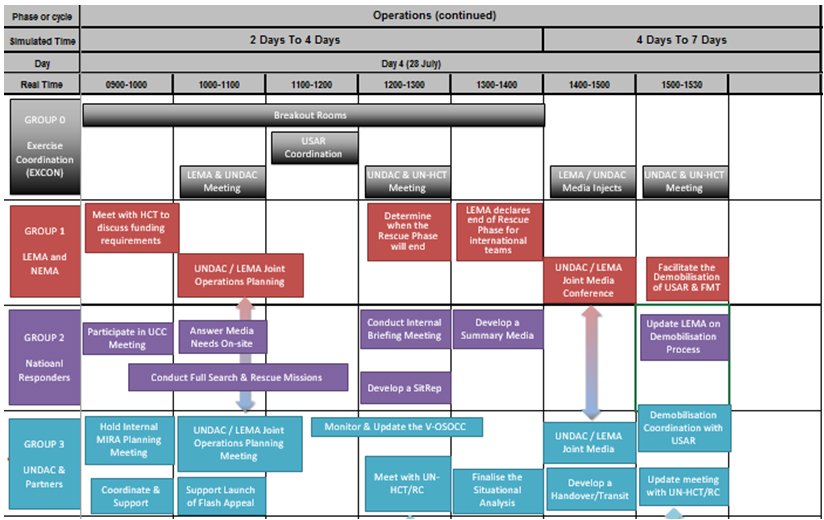
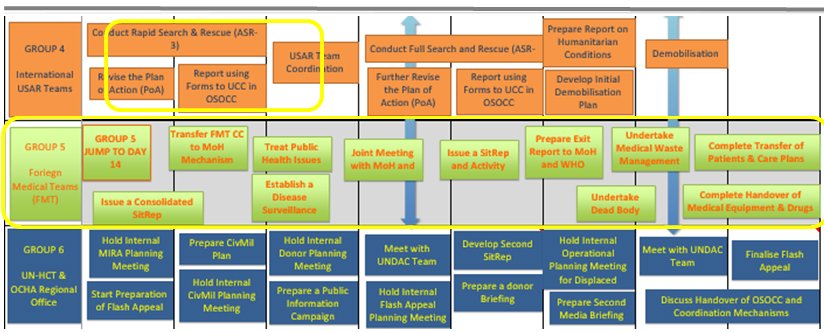
Scenario for health cluster

simulasi-2

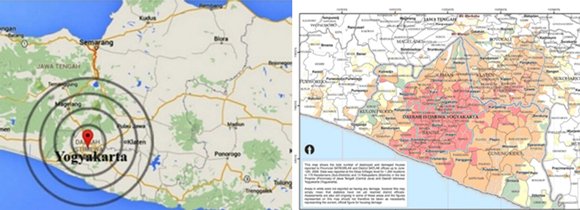
Earthquake struck Special Region of Yogyakarta and Central Java on xx xx xxx at bout 07:55:03 WIB for 57 seconds. The magnitude 5.9 SR. Indonesia Agency for Meteorology, Climatology, and Geophysics (BMKG) has reported that the moment magnitude of this earthquake is 6.2 SR. Many sub districts and districts has damaged and destroyed.

Simulation will be held on July 27-28 with notice as bellow:
1.    Day one (July 27, 2016) as 2 – 4 days after earthquake
2.    Day two (July 28, 2016) as 4 – 15 days after earthquake

Health cluster will be activated from day one under IC of DIY (BPBD). And for EMT jump to 2-4 days after event to start health care services, medical services, and public health services.

simulasi-3

simulasi-4

Closing

Thus the proposal for International Simulation for Emergency Medical Team (EMT) Coordination in INSARAG Eatrhquake Regional Exercise 25-28 July 2016. We expect if this cooperation will be realized, would be a mutually beneficial cooperation to create the toughness of health personnel in disaster management as well as coordination with other sectors.

{jcomments on}

Legarda: Disaster preparedness must be a way of life

MABALACAT CITY — In observance of the National Disaster Consciousness Month, Senator Loren Legarda has renewed her call to make disaster prevention and preparedness a way of life.

“When we reduce disaster risks and we are all prepared, informed and equipped, natural hazards like typhoons, earthquakes, tsunamis, storm surges, will not turn into disasters,” said Legarda, UNISDR Champion for Global Resilience.

“For instance, a magnitude 7.2 earthquake will not cause deaths or damage if there are no buildings on the fault line or if buildings and structures are built to withstand such a strong earthquake. A storm surge will not turn into a disaster if there are no settlements near the coastlines, or if there are enough mangroves to serve as buffer, or if residents are evacuated ahead of time, disaster management agencies give timely advisories and people follow the warnings,” she said.

Legarda stressed that there are many ways to prevent disasters. “We may be vulnerable to natural hazards and the effects of climate change, but we do not have to be helpless. We must be in control, we must be proactive, we must take urgent action.”

The Senator reiterated key lessons from previous disasters, which should guide the country toward strengthening disaster risk reduction and management.

First, we must focus on managing the risks rather than managing disasters. Disaster risk management should not be carried out only right before calamities happen. Local government units (LGUs) should be at the forefront of the planning, preparation and execution of the plans to provide an effective “first line of defense” against disaster risks. Funds should be sufficiently allocated. Cooperation among local and national governments, businesses, and the communities is imperative.

Second, we must let science work for our communities. The best solutions are possible only with the guidance of science, which is essential to develop land use plans that are risk sensitive. Accurate scientific data is needed to design practical solutions and communicate the risks to the people because knowing when, where and in what magnitude a typhoon will strike is fundamental to keeping our people prepared.

Third, everyone should be disaster-literate. We need to know and understand the risks. Everybody should be part of the solution and action needs to come from the communities themselves. Early and mandatory evacuation would be useless if the people do not understand the need for such efforts. Raising public awareness should be made to resonate loudly and as far deep into the communities as possible.

Fourth, we must protect our environment and pursue green urban development. We need to go back to the basics: protect our ecosystems and natural buffers such as mangrove forests to mitigate floods, storm surges and other hazards. Design and enforce building standards to address future hazards, not past ones.

Fifth, prepare adequately and engage. While disaster prevention should be the greater focus of our efforts, response preparedness is likewise important to prevent further casualties and reduce losses. Contingency plans are crucial in times of disasters. LGUs must have the political will to implement forced evacuation when called for.

Legarda has been engaged in efforts to raise awareness and educate government agencies, private sector, and citizens on disaster prevention and preparedness.

In 2011, the Senator collaborated with various government agencies to produce the Disaster Preparedness and First Aid Handbook, a practical manual that educates citizens on how to prepare for and respond to both natural and human-induced hazards.

An audio-visual version of the book was launched in 2013.

“Ligtas”, an instructional video on disaster preparedness, was produced by Legarda and directed by multi-awarded Kapampangan Indie film director Brillante Mendoza.

source: sunstar.com

Potensi Bencana Meningkat, BPBD Malang Siapkan Posko

Ilustrasi (Okezone)

MALANG – Badan Penanggulangan Bencana Daerah (BPBD) Kabupaten Malang, Jawa Timur, menyiapkan posko darurat bencana sejak menjelang Lebaran hingga September. Posko tersebut disediakan karena wilayah itu diprediksi sudah memasuki fase rawan bencana alam.

Kepala BPBD Kabupaten Malang, Hafie Lutfi, mengatakan Kabupaten Malang memasuki fase rawan bencana akibat gelombang La Nina yang dimulai Juni lalu dan diperkirakan hingga September mendatang.

“Berdasarkan pantauan kami, ada potensi peningkatan bencana sehingga memberlakukan kebijakan darurat bencana banjir, longsor, dan pohon tumbang,” ucapnya, Kamis (7/7/2016).

Hafie mengungkapkan, keberadaan posko bencana tersebut sangat penting. Bahkan, posko tersebut sudah beroperasi sejak Juni dan kemungkinan hingga September.

Posko bencana juga dilengkapi berbagai kebutuhan mendasar ketika terjadi bencana, termasuk mobil tangki air bersih yang bisa didistribusikan kepada masyarakat.

Selain petugas dari BPBD Kabupaten Malang, Hafie menjelaskan, pihaknya juga melibatkan personel dari Wahana Lingkungan Hidup (Walhi) dan PMI. “Koordinasi dengan berbagai pihak terkait juga terus kami instensifkan agar jangan sampai putus komunikasi,” ujarnya.

Sementara itu, Koordinator Posko Bencana, Dixie mengatakan setiap hari hingga September mendatang ada lima hingga 10 orang yang berjaga di posko. “Tim posko juga dibekali berbagai peralatan untuk penanggulangan pertama jika terjadi bencana, seperti perahu karet dan ekskavator,” katanya.

Sementara itu, BMKG mengimbau warga yang ingin memanfaatkan libur Lebaran dengan rekreasi ke pantai selatan sebaiknya lebih waspada dan berhati-hati. Itu karena secara umum gelombang laut mencapai 1,2 hingga 2,5 meter. Bahkan, ada potensi gelombang tinggi hingga mencapai 3,5 meter sampai empat meter.

Gelombang tinggi tersebut diperkirakan baru berangsur-angsur turun pada Jumat 8 Juli 2016. Sementara kecepatan angin antara 30 hingga 50 kilometer per jam.

Potensi bencana alam, baik banjir, tanah longsor dan puting beliung terjadi di sejumlah kecamatan, seperti Kecamatan Pujon, Ngantang dan Kasembon (Malang barat), Kecamatan Tumpang, Poncokusumo, Pakis (Malang timur), serta Kecamatan Tirtoyudo, Donomulyo, Ampelgading, Sumbermanjing Wetan di wilayah Malang selatan.

Sejumlah pantai yang berpotensi gelombang tinggi di kawasan Pantai Selatan, di antaranya Pantai Bajulmati, Goa China, Balekambang, Sendangbiru, Tamban, Lenggoksono, Ngliyep, dan Pantai Bengkung.

(erh)

One nonprofit’s way of responding to natural disasters – more than 60 of them

All Hands Volunteers has enabled more than 35,000 people to bring aid to places ranging from post-Sandy Brooklyn to Ofunato, Japan, after the 2011 tsunami.

Boston — Teach, save, travel. It was a rhythm that brought “Jess UK,” as she still answers to, everywhere from her native Britain, to Taiwan, to finally Laos, where she found herself gritting her way through a muggy 10-hour bus ride.

“It was a great life,” she says today, but time for a change. She’d been searching for volunteering opportunities, but hindered each time by aid groups’ requirement that their disaster workers pay their own way.

Need in the region was still high, though, five years after the Indian Ocean tsunami, which ripped hundreds of thousands of families from their homes.

“I had time to give, but not a lot of money,” Jess Thompson says.

As she settled into her seat on the bus, however, two girls’ conversation nearby caught her ear: something about All Hands Volunteers, where pitching in didn’t come with a price tag. Ms. Thompson scribbled the name into her damp palm, where, many miles later, she managed to decipher the half-melted note and made a once-in-a-lifetime call.

“Can I come?” she asked.

“Yeah, when are you going to be here?” came the answer from Indonesia.

It was her first project with All Hands Volunteers, a nonprofit that today has enabled more than 35,000 volunteers, from more than 100 countries, respond to more than 60 natural disasters around the globe. The places where volunteers have gone range from post-Sandy Brooklyn to Ofunato, Japan, after the 2011 tsunami – where the team restored not just houses, but thousands of water-damaged photos.

They’re the “Good (for Nothing) Club,” as founder David Campbell says with a laugh: Volunteers pay nothing but their airfare and, technically, get nothing in return for their long days of hauling rubble, digging latrines, and figuring out what’s most needed – except, for many, an addictive sense of friendship, hope, and fulfillment.

Without volunteer fees, All Hands makes its budget work through a combination of grants, gifts, and partnerships, not to mention pared-down comforts – no air conditioning or nonlocal food, for starters. It spends less than 10 percent of its budget on administrative or fundraising expenses.

The organization got its start in 2004, when Mr. Campbell boarded a plane to Thailand after the Indian Ocean tsunami. He was equipped with little more than the urge to identify “obvious problems without obvious solutions,” and then create solutions. It was a knack he’d put to use in a four-decade career in tech entrepreneurship, which was then coming to a close.

What he saw in Thailand was inspiring, but also worrying. “People think of disasters as happening to countries, but they actually happen to villages,” he says. And those villages’ needs can differ wildly, as can the help that reaches them.

Often, assistance disappears soon after the news crews, whether in Fiji or New Orleans, go home. One year later, “Who’s here, and what are they doing? That would be a real picture of disaster response,” Campbell says.

The disaster aid field is trying to move toward long-term recovery and prevention, says Regine A. Webster, vice president of the Center for Disaster Philanthropy in Washington, which has partnered with All Hands’ current project in Nepal.

“What we really believe has been special about [All Hands] is, No. 1, their willingness to communicate in a very transparent manner about what they’re doing, why they’re doing it, how they’re doing it,” Ms. Webster says. Originally, most of CDP’s funding for All Hands was designated for WASH funding – water, sanitation, and hygiene. But “then they came back to us after really understanding what the needs were, and they asked if they could reallocate part of the funding to build retaining walls,” she says.
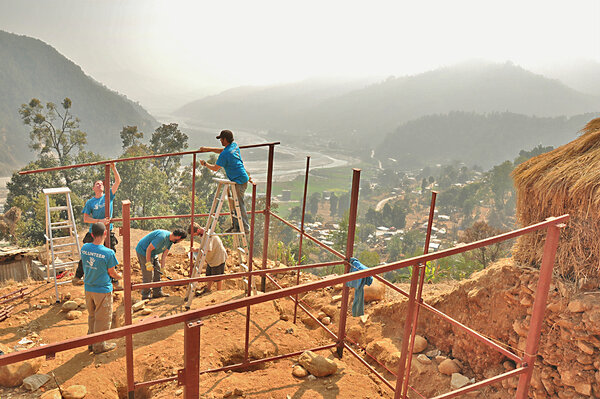
All Hands Volunteers construct 50 transitional homes on a plot overlooking the Indravati River in Sindhupalchowk district, Nepal, after the 2015 earthquake. Courtesy of All Hands Volunteers

By living bunk-to-bunk on local food, outside the main cities, and taking local trucks instead of expat SUVs, All Hands’ workers are also its eyes and ears, picking up on a community’s specific needs. In the Philippines, for example, they learned that a savings program for local workers would be just as useful as a training class.

“With All Hands, we have friendships in the community,” April Jelinek, a volunteer after the 2010 Haiti earthquake, told Campbell for a 2015 book about the group’s evolution. “We didn’t do something for Haitians,” added Ms. Jelinek. “We did it for Jean-Marc, Emanuel, Pierre and César.”

Like many volunteers, Thompson couldn’t say goodbye. “At the end of the day, my body was tired – but my brain was on fire,” she says. Today, she’s All Hands’ US director of rebuild and recovery, managing flood relief in Louisiana, Texas, and South Carolina.

Then again, she had an extra incentive: her now-husband, whom she met when she showed him around on his first day on-site in Indonesia. As soon as their daughter begins to crawl, the next generation of the “Good (for Nothing) Club” will be in motion.

For Campbell, the most important rebuild isn’t of homes or schools. It’s of hope – not only that lives can be put back together, but that everybody has it in himself or herself to go and help.

A good Samaritan looks out for his or her neighbor, he says, but “it’s very different to help someone who’s totally disconnected from you … picking yourself up, and going to Ecuador, and sleeping on a bunk, and working for two weeks just to dig out and start rebuilding a school for people you never knew and you’ll never know again.”

When someone’s home has fallen down, “it’s very straightforward,” Thompson says. “Piece by piece, with your own bare hands, you fix it…. How can you step away from that?”