Gunungkidul Akan Launching Sekolah Siaga Bencana

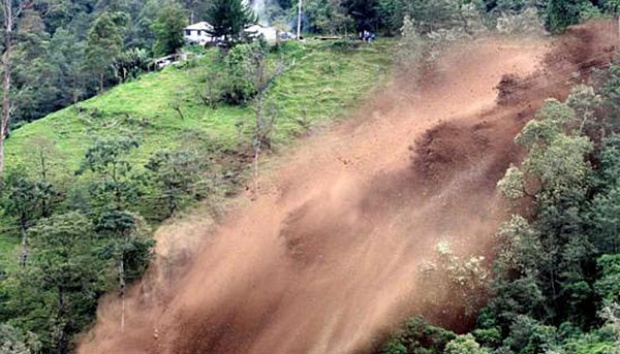
YOGYAKARTAWilayah utara Gunungkidul menjadi salah satu wilayah rawan bencana, terutama tanah longsor dan juga puting beliung. Untuk itu kesiap siagaan bencana perlu dilakukan masyarakat, termasuk siswa sekolah.

Tak ayal, Badan Penanggulangan Bencana Daerah (BPBD) Gunungkidul juga menyiapkan sekolah siaga bencana (SSB) di Kecamatan Ngawen. Salah satu sekolah, yaitu SMKN 1 Ngawen akan di-launching sebagai SSB tersebut.

Kepala Pelaksana BPBD Gunubgkidul Budhi Harjo mengungkapkan, pihaknya sedang mempersiapkan SMKN 1 Ngawen menjadi Sekolah Siaga Bencana (SSB) di Gunungkidul sejak setahun yang lalu. 

Langkah ini dilakukan agar kesiap siagaan bencana, tidak hanya dilakukan masyarakat saja. “Bencana tidak pernah memilih lokasi atau korban. Sehingga anak-anak juga punya potensi besar terhadap kerawanan bencana,” terangnya saat gladi bersih pendirian tenda pengungsi yang dilakukan Siswa SMK tersebut, Rabu (4/2/2015).

Menurut rencana, pada Rabu (18/2) mendatang bupati akan melakukan launching SSB di SMKN 1 Ngawen. “Dalam launching ke depan, akan dilakukan gladi bencana tanah longsor yang diikuti sekitar 900 siswa sekolah itu termasuk para gurunya,” tambahnya.

sumber: sindo

SDSU professor using drones to prepare for disasters

How much damage was caused by an earthquake?… Did key roads buckle?… Did buildings topple?

It’s information first responders need to know. Now researchers at San Diego State University are developing a program that uses drones to help provide that information.

SDSU geography professor Doug Stow is leading the research, which involves taking pictures of key infrastructure such as bridges, dams and hospitals with the use of unmanned aerial systems or drones fitted with cameras and GPS monitors. GPS units track the exact location of the photo. After a disaster, another drone will use those GPS coordinates to photograph the exact same location and the change between the two photos can be used to determine the extent of the damage.

Stow says the information can be used to send resources to the areas in need and will be particularly useful in areas that first responders can’t reach.

Stow and his team recently received $500,000 in grant money from the National Science Foundation and Department of Transportation to conduct the two-year research project.

Waspadai Daerah Rawan Bencana di Tasikmalaya

Kabupaten Tasikmalaya, Jawa Barat merupakan wilayah rawan bencana yang menempati urutan kedua seluruh Indonesia. Hampir sebagian besar kecamatan di wilayah ini berpotensi mengalami bencana alam mulai dari longsor, banjir hingga tsunami.

Menurut Kepala Badan Penanggulangan Bencana Daerah Kabupaten Tasikmalaya, Kundang Sodikin, bencana alam diperkirakan terus berlangsung hingga Maret 2015. Status siaga bencana ini mengingat musim hujan diperkirakan akan berakhir pada bulan Maret mendatang.

“Menurut BMKG (Badan Meteorologi, Klimatologi dan Geofisika), akhir (musim) hujan antara Januari hingga akhir Maret,” kata Kepala Badan Penanggulangan Bencana Daerah (BPBD) Kabupaten Tasikmalaya, Kundang Sodikin, saat ditemui di kantornya, Selasa 3 Februari 2015.

Menurut Kundang, wilayah Kabupaten Tasikmalaya masih menempati urutan kedua se-Indonesia dalam hal bencana alam. Mulai tanggal 1-27 Januari 2015 saja, jumlah bencana di wilayah ini ada 24 kejadian dengan total kerugian mencapai Rp 1,1 miliar. “Jika dirata-ratakan, hampir tiap hari ada bencana,” ujarnya.

Kundang melanjutkan, dari 39 kecamatan di Kabupaten Tasikmalaya, hampir semua kecamatan merupakan daerah rawan bencana. Bencana yang mengancam daerah di antaranya tanah longsor, letusan gunung berapi, tsunami, dan lainnya. “Semua daerah memang rawan, tapi ada klasifikasinya yakni daerah tertinggi bencana, daerah tinggi bencana dan daerah sedang,” kata dia.

Daerah yang paling rawan bencana beada di 17 kecamatan, di anataranya Bojonggambir, Bojongasih, Culamega, Cigalontang, Salawu, Pancatengah, Cibalong, Parungponteng. Jenis bencana di kecamatan tersebut yakni tanah longsor. “Wilayahnya berbukit-bukit sehingga rawan bencana longsor,” ujarnya.

Adapun kecamatan yang rawan banjir adalah Sukaresik, Pancatengah dan Cikalong. Banjir di kecamatan tersebut disebabkan oleh luapan sungai.

Daerah yang berpotensi terkena dampak tsunami, berada di Kecamatan Cipatujah, Cikalong, dan Karangnunggal. Daerah-daerah tersebut terletak di pesisir pantai selatan Tasikmalaya. “Daerah yang rawan terkena dampak bencana gunung api yakni Cisayong, Sukaratu, Sariwangi, Cigalontang, Padakembang. Daerah tersebut berbatasan langsung dengan Gunung Galunggung,” kata dia.

Sementara itu, jalur rel kereta api tidak luput dari ancaman bencana longsor. Bulan April tahun lalu, tanah longsor terjadi di Kecamatan Kadipaten. Akibatnya, Kereta Api Malabar jurusan Bandung-Malang anjlok lalu masuk jurang. Tiga orang tewas dalam kejadian itu.

Berdasarkan data BPBD Kabupaten Tasikmalaya, jalur kereta rawan longsor berada di Kecamatan Kadipaten dan Ciawi. Saat melintas di daerah ini, kereta harus meliuk-liuk melintasi perbukitan. “Banyak lekukan,” kata Kundang.

Menurut Kundang, jalur kereta rawan longsor di Kecamatan Kadipaten berada di Desa Dirgahayu, Desa Cibahayu, Desa Kadipaten dan Desa Mekarsari. Sedangkan di Kecamatan Ciawi hanya satu desa, yakni Desa Pasirhuni.

sumber: TEMPO.CO

Philippines: Drivers of disaster resilience in Benguet

Benguet is not a stranger to natural disasters – from earthquakes to typhoons – which have resulted in the loss of lives in the province. Benguet’s experiences from these disasters cemented the belief that it is not enough to just be equipped when responding. Preparedness is equally important.

Meet some of the drivers of disaster resilience in the Province of Benguet. With the help of the World Food Programme’s (WFP) Disaster Preparedness and Response and Climate Change Adaptation (DPR/CCA) Projects, they are moulding Benguet into a province that is equipped to prepare for and respond to disasters.

The Government Champion

Typhoons are a regular occurrence in the town of Tublay. Mayor Ben Paoad has been the head of the municipality for the past eight years and has sat through the worst disasters the town has ever seen. By virtue of being situated on a mountainous area, landslides are the most common result of weather disturbances in Tublay – putting in jeopardy not only the people, but also the town’s sources of livelihood.

The year 2009 was a year of change in the municipality. In the wake of the disasters brought by Typhoons Ketsana (Ondoy) and Parma (Pepeng), WFP’s initial response was to assist in the rehabilitation of the town, but it didn’t stop there. Since then, Tublay has been part of WFP’s DPR/CCA projects such as Automated Weather Stations that provide the municipality with vital information regarding incoming weather disturbances; and slope stabilization that ensures the community’s safety and protects their farms. Capacity building initiatives also empower the community by making sure that they are ready to respond if a disaster strikes.

“WFP has been a big help in empowering our community,” said Mayor Paoad. “The next step is with us, and how we can improve upon this assistance further and how we can better prepare and involve our community as much as possible. That is what I wish to do in my last term as the Mayor of this municipality.”

The Farmer

In 2009, Typhoon Pepeng devastated most of the sources of livelihood in Benguet province. Fely Damilo, then a daycare centre teacher, saw it all happen. Now, five years later, Fely, who still teaches, got herself and her family involved in the slope stabilization and livelihood activities of WFP’s DPR/CCA programmes.

Benguet takes pride in producing export-quality Arabica coffee. However, producing coffee didn’t come without a challenge. According to Fely, only a few understand the significance of coffee to their livelihood and the importance of protecting the soil from landslides if intercropped with vetiver grass. “If we really want change, it should start in our way of thinking. We have to convince the people to think not only of the now, but for the long term. Because we’ll never know when a disaster will happen and when it does, we shouldn’t be uprooted anymore.”

The people of Benguet were used to a more traditional type of farming where the income is immediate. “But the problem is, traditional livelihood is no longer sustainable,” Fely said. “We need something that will stay with us in the long term. And the answer is here. It’s coffee.”

WFP provided the community with trainings and resources to utilize this growing livelihood. Fely and her family are helping make that transition and inspiring their community to also embrace coffee farming. “There is more to be done. But we are inspired. It will happen,” Fely smiled.

The Academic

When Dr. Alejandro Ciencia Jr. agreed for the WFP-supported Knowledge Training and Resource Center (KTRC) to be part of the Cordillera Studies Center in the University of the Philippines Baguio (UPB), he was not expecting to also be at its helm. But it was a pleasant surprise and now Doc Aly – as he is popularly called – is working hard to make sure people realize the importance of KTRC.

“I’ve always been a teacher. And I believe that teaching opens doors to educate and empower, especially making people aware that disasters could happen anytime, anywhere. They have to know what we can do about it,” Doc Aly explained.

The academe has been a vital partner in disaster preparedness and response initiatives. The KTRC aims to be a repository of knowledge where people could learn more about disasters, its impacts and how to mitigate and prepare for them. The Center also aims to reach out to the academe to develop studies that would be beneficial to disaster response.

“Of course there is much to be done, and we’re very excited. We’re looking forward to conferences, to more trainings, where we can add more knowledge into KTRC,” Doc Aly said. “And hopefully there will be more universities and fellows in the academe who will contribute to this venture. That will be very helpful.”

The Student

“Whenever I hear my parents’ stories about what takes place during typhoons, during volcanic eruptions, I am very scared. I don’t want anything like that to ever happen again.”

Rieyen Clemente is a 17-year-old Social Sciences student of UPB, majoring in History and minoring in Philosophy, who considers himself a big fan of KTRC. Owing to his mom’s experiences during the Mount Pinatubo eruption, he resolved that he will do his part to change the disaster preparedness landscape of the country.

Rieyen got involved with KTRC after seeing KTRC posters around the campus, and he was immediately inspired. He volunteered to be a Student Assistant in the center where he spends his time assisting people in their research, and doing readings of his own.

“My mom always says that the environment is like time. You cannot take it back after it has gone.” Rieyen said. “KTRC is a venue where people can learn more about the disasters of the past and the present. Learning about it allows us to know that we can do something about it when the time comes.”

“The youth can do a lot. I hope more would start realizing their power,” he added. “Many thanks to the World Food Programme and their partners for helping us further recognize the importance of being resilient to natural disasters.”

Badan SAR Asia Tenggara Siapkan Sistem Sinyal Bencana Online

Jakarta: Badan SAR di negara Asia Tenggara dan sekitar akan membangun suatu sistem terintegrasi yang bertujuan untuk mempermudah proses penanganan suatu bencana atau kecelakaan. Kepala Basarnas Indonesia Marsekal Madya FHB Soelistyo menjelaskan, selama ini kerja sama yang ada baru ada pada tingkat bilateral antara dua negara dan belum ada sistem yang menjaring kerjasama riil yang multilateral.

“Antara dua negara yang dibangun capacity building dan latihan individual. Ke depan lama-lama kita bangun sistem yang multilateral,” kata dia dalam Seminar Implementasi Rencana SAR Global, di Hotel Aryaduta, Gambir, Jakarta Pusat, Senin (3/2/2015).

Menurut dia, negara di Asia Tenggara dan sekitarnya sedang membangun sistem sinyal SAR secara online. Sehingga, ketika nanti ada kejadian petugas hanya tinggal mengirimkan sinyal yang bisa diketahui sampai tingkat pusat. Sistem online ini, kata dia, akan dikembangkan sampai tingkat antar negara. 

“Biar matching antara negara satu dengan yang lain,” ujar periwa tinggi bintang tiga Angkatan Udara itu.

Dengan seminar yang diselenggarakan Basarnas dengan International Maritime Organization (IMO), Soelistyo berharap wacana ini bisa terwujud. Pasalnya, hal ini dapat membantu dalam penangangan kecelakaan penerbangan dan pelayaran. 

“Ini penting untuk tiap negara, operasi kemanusiaan harus dibangun. Kalau ada kecelakaan atau bencana, elemen di tingkat regional kita bisa adaptif,” jelas dia.

Ia menambahkan, sistem ini bakal berguna bila melihat kondisi geografis Indonesia yang kepulauan. “Apa lagi Indonesia katanya marketnya bencana dan market kecelakaan,” pungkas dia.

sumber: Metrotvnews.com

US surgeon: World can learn from PHL disaster preparedness ‘turnaround’

The world can learn from the turnaround of the Philippines’ disaster awareness as shown by its experiences with super Typhoon Yolanda (Haiyan) in 2013 and Typhoon Ruby (Hagupit) in 2014, a US surgeon who took part in the response to both disasters, said.

Michael Karch, a surgeon with Mammoth Hospital in Mammoth Lakes, California, said learning lessons from Yolanda and applying them during Ruby may have saved the lives of some 1.7 million Filipinos.

“The preemptive actions of the Philippine government, military, medical, and civilian sectors should serve as valuable lessons for the rest of the world as we collectively begin to embrace mass casualty education and preparedness on an individual, national, and international platform,” Karch said in a blog post.

Yolanda, which tore through the Visayas on Nov. 8, 2013, left more than 6,300 dead.

In contrast, Ruby – which, like Yolanda, packed powerful winds and posed a major threat – resulted in 18 deaths. The lower casualty count was in part due to massive evacuations in areas Ruby was projected to hit.

Karch said Yolanda’s destruction had been described as the “Night of 1,000 Knives,” due to the flying debris that “wreaked injury and death on the Filipino population.”

In contrast, he said, Ruby could be dubbed the “Night of a Million and a Half Flames” referring to 1.7 million plus people who survived the typhoon.

“Widespread public health and civil defense measures that had been established in the interim between Haiyan and Hagupit were initiated in the days before landfall,” he said.

Karch, who said he served as a team leader in Civilian Mobile Forward Surgical Teams (CMFSTs) in the aftermath of both typhoons, found certain patterns that he said are reproducible.

“Valuable lessons can be taken from each and applied to the next. The initial differences between the disaster response to Typhoons Haiyan versus Hagupit are striking. The simple fact that the Philippine government was able to evacuate more than a million and a half million citizens out of harm’s way is a testament to their dedication to learn and evolve as super storms occur on a more frequent basis,” he said.

“Although the response to Hagupit was not perfect, it was much improved from that of Haiyan. The use of progressive communication through social media and Short Message Service (SMS) texting played a large role in this success,” he added.

Karch likened the turnaround to super storms Katrina in 2005 and Sandy in 2013 in the US.

“As with Haiyan, the Hurricane Katrina experience was a glaring low point in terms of public opinion and confidence in governmental response to natural disaster. The government response to Hurricane Sandy showed marked improvement in pre-emptive planning and execution on the part of federal, state and city government,” he said.

“The recent Philippine Hagupit experience provides us with another opportunity to learn. Although no system is perfect, if the motivation to continually improve our national disaster response is a driving force, we must study all storms, especially those with successful outcomes, and determine how we can apply these lessons to our own public health and disaster preparedness programs,” he added. Joel Locsin/JDS, GMA News

source: gmanetwork.com

GMKI Minta Pemerintah Jokowi Buat Road Map Penanganan Bencana Sinabung

JAKARTA  – Pengurus Pusat Gerakan Mahasiswa Kristen Indonesia (GMKI), meminta pemerintahan Joko Widodo agar segera membuat road map penanganan bencana erupsi gunung Sinabung yang tidak kunjung selesai.

“Pola penanganan bencana gunung Sinabung tidak dibuat secara berkelanjutan. Ditangani ketika terjadi letusan saja,” ujar Sekretaris
Umum Pengurus Pusat Gerakan Mahasiswa Kristen Indonesia (GMKI), Adolfin Deslina Datang di Kecamatan Payung, Karo, 1 Februari 2015.

Dia mengatakan status bencana gunung Sinabung belum menjadi bencana nasional memang membuat penanganan pasca bencana tidak pernah maksimal karena hanya ditangani oleh pemerintah Kabupaten Karo saja.

“Penanganan relokasi pengungsi erupsi Gunung Sinabung yang akan direlokasi ke tempat yang aman tidak kunjung terealisasi,” ujarnya.

Dia mengatakan perlu memberikan pemahaman tanggap bencana lanjutan terhadap masyarakat sekitar Gunung Sinabung. Masyarakat dapat memahami potensi bahaya erupsi Gunung Sinabung.

“Perlu ada pembangunan sarana dan prasarana dampak bencana di Karo. Masyarakat dapat bersiap ketika tanda- tanda bencana akan terjadi,” ujarnya.

Pada kesempatan tersebut GMKI juga melaksanakan Peringatan Hari Relawan GMKI yang jatuh pada Tanggal 1 Februari, untuk mengenang
kepergian 7 relawan GMKI yang terkena awan panas pada 1 Februari 2014 lalu.

GMKI juga menggelar aksi sosial di seluruh cabang GMKI setanah air. “Kami menjadikan momentum perenungan gugurnya 7 saudara kami
tersebut untuk semakin semangat mengabdi kepada negeri,” ujarnya.

Peringatan Hari Relawan GMKI ini dihadiri oleh ke tujuh Keluarga Relawan GMKI yang menjadi korban bencana Gunung Sinabung yang terjadi
pada setahun yang lalu.

Peringatan Hari Relawan GMKI ini juga dihadiri ratusan kader GMKI di Sumatera Utara dan Aceh dengan mengunjungi
makam ke 7 Relawan GMKI dan meletak batu pertama pembangunan monumen Hari Relawan GMKI di Desa Payung, Karo.

“Monumen tersebut menjadi pertanda semangat 7 relawan GMKI akan tetap bersama kami dalam menjalankan tugas untuk mengabdi,” ujarnya.

sumber: TRIBUNNEWS.COM

How Robots Are Changing Disaster Response and Recovery

Robin+Murphy

Robin Murphy is a leader in the field of disaster robotics, having started working on the topic in 1995 and researching how the mobile technologies have been used in 46 emergency responses worldwide. She has developed robots that have helped during responses to numerous emergencies, including 9/11 and Hurricane Katrina. As director of the Center for Robot-Assisted Search and Rescue at Texas A&M University, Murphy works to advance the technology while also traveling to disasters when called upon to help agencies determine how robots can aid the response. The center’s first deployment was in response to 9/11, which also was the first reported use of a robot during emergency response.

Emergency Management: Since 9/11, how have you seen the use of robots in disasters change?

Robin Murphy: We started out in 2001 and up until 2005 you didn’t see the use of anything but ground robots. Everything was very ground-centric, and I think that reflected the state of the technology. For years we had bomb squad robots, which were being made smaller and smaller for military tactical operations so that gave them a tool that was pretty easy to use. Starting in 2005, we saw the first use of small unmanned aerial vehicles that were being developed primarily for the military market and those were very useful. Those have really come up and, in fact, since 2011, I’ve only found one disaster that didn’t use an unmanned aerial vehicle and that was the South Korea ferry where they used an underwater vehicle. So we went from ground robots dominating to about 2005 and then we started shifting toward unmanned aerial vehicles. In about 2007, it became much more commonplace to see underwater vehicles being used. Then starting in about 2011, I think if you have a disaster and you’re an agency and you haven’t figured out a way to use a small unmanned aerial system, it’s kind of surprising.

EM: Is one of the issues that people are waiting for FAA regulations to use UAVs?

RM: Every single disaster since about 2011, but definitely since 2012, looking at the 46 disasters we’ve kept tabs on, have used unmanned aerial systems, including the ones here in the United States. I would not say the adoption problem is the FAA regulations. It takes very little time to get an emergency COA [certificate of authorization]. It does take time to get some of the paperwork in advance done to fly a regular COA but the FAA has given jurisdictional COAs. The emergency COAs take a very short period of time — it’s knowing the paperwork, like with any new technology.

The deterrent to adoption seems to have been the lack of money to flat out purchase them. They’re basically computers and you know how fast the technology for your cellphone and computer changes, you wouldn’t expect to have a computer that’s 10 years old, so you wouldn’t buy these the way you buy big equipment. We’re suggesting that agencies look at plans that allow them to lease the technology. And also because it’s a new technology, you don’t know what that means in terms of training and how it’s going to be integrated and that means they don’t have to recoup some of the training and maintenance costs right off the bat.

EM: What are you currently working on?

RM: I work mostly on the human factor side: How people actually use these. I am not worried about whether a UAV is going to fall out of the sky or a ground robot’s wheels will stop turning. In my book, Disaster Robotics, I go back over 34 disasters, of which I was in a bunch. If you look at the data that’s available, there were 13 terminal failures where the robots failed for some reason and that caused the mission to be aborted. In about 51 percent of the cases it was human error. When I go back and analyze that I see that it’s human error, but it was the designer — the designer didn’t give it an interface that allowed the user to have the right type of information to make a different or better decision. You can only see what you can see.

We’re also very interested in how these technologies change the way emergency response works. What we saw at the Washington state mudslide was that everybody’s thinking “these UAVs will be useful for ESF [emergency support function] 9 for urban search and rescue” but actually they’re more useful in that particular case, in a mudslide, for public safety and you can start thinking about ESF 14 and recovery. [Questions include:] How are you going to share that information? How are you going to do that without creating a data avalanche that just overwhelms different decision-makers who need to share, to plan, to interact with each other? And if I want to use this robot and you want to use it and we both want to point it in different directions, how do we handle that? So how do you get these interfaces that let people interact in real time and then process the data and share and work together?

We’ve got a group of students that have put together what we call the Skywriter interface that lets somebody with a tablet, laptop or mobile phone see what a UAV or robot is seeing and communicate to the operator or system what they want to do, like circle or draw an arrow, which indicates where to go, or follow my finger and track this.

EM: When you deploy to a disaster, what’s your role there?

RM: We’re always invited in, we do not self-deploy. Our center, this is something frankly that I am little disappointed that we’re still doing, I had hoped that at this point everybody would have robots, but we can provide robots. We can usually provide robots through our Roboticists Without Borders program where members train with us beforehand and then when we’re called out, they will donate their equipment and time. So we go out and our role is to first off see, what’s the right technology for what they’re trying to do? There are some times when a robot isn’t going to work because you can’t afford in a disaster to make anything worse, so we have to be conservative. We act as a dating service.

What we’ve found is that most responders prefer to work with us side by side. We’ll drive and you tell us what to do. We also do formal studies and what we’ve found is that in looking at the video data and the sensor data coming from robots, two heads are nine times better than one head. Having a team work together really takes off the cognitive load, one person will catch something that the other person didn’t and it just adds a vast improvement to performance. … With that said, I would love to be out of business, I would be just as happy for groups to have robots on their own. I would like the data though; I love learning from the practitioners what’s working and what’s not.

EM: Have you been working on anything in response to public health needs like for the Ebola response?

RM: We find that in Ebola a lot of people are thinking about clinical applications, like replacing the nurse. Nurses and doctors are hard to replace and duplicate; robots rarely are cost-effective at replacing what humans do. They’re often better at giving some capability that you didn’t have before. So in this case, rather than looking at clinical needs, we’ve looked at logistical needs and the fact that a lot of people involved in health aren’t really doing health work, they’re cleaning up messes, they’re hauling all of these sheets that are contaminated, they’re trying to move people around. So having one person instead of four doing that begins to be more of what the military calls a “force multiplier” and becomes much more efficient. There are things like that that exist. There’s general reconnaissance: How long is the line outside? What’s going on in the villages in the rainforest, do they seem empty? Is there dirt overturned that may indicate graves? That can indicate what’s going on.

We’re also looking at clinical but that’s going to be much more specialized. We like to work with the practitioners and find out what’s going to be the most bang for the buck. If there’s one thing to do to make your life easier, what would that be?

EM: Looking to the future, where do you see disaster robotics headed in the next five to 10 years?

RM: There’s that idea of adoption, which will hopefully continue to accelerate.

In the future, for the new technology, I expect to see three things: Better software on what we call emergency informatics; it’s how you share the data and how you visualize it. In ground robots, I am so excited at work at looking at burrowing robots. The big value in most big building collapses lies in the smaller the better, what do you do when there’s not an obvious void and can you get something to literally snake and nudge and worm its way through there. There are some animals that do that — there’s a sand lizard and types of snakes that navigate in the ground — so we’re doing some work with Georgia Tech and Carnegie Mellon on that. There are also some great advances being made in manipulation. Initially I would characterize the first decade of robots as having been all about allowing the responders to see at a distance, but now we’re seeing a shift. We can see at a distance but now we would like to poke things, we would like to move them over, we would like to drop off things. So we need to act at a distance and not just see at a distance. There’s some advances in robot manipulation that are coming up and are very exciting and we’ll be incorporating those into future work.


2.000 Siswa di Padang Ikuti Latihan Mitigasi Bencana

Padang – Sebanyak 2.000 orang siswa dari 18 SMA dan SMK di Kota Padang, Sumatera Barat (Sumbar), mengikuti latihan mitigasi bencana di lapangan Imam Bonjol Padang, difasilitasi lembaga kemanusiaan Aksi Cepat Tanggap (ACT).

Director of Community Network ACT, Rini Maryani di sela-sela acara, Sabtu (31/1), mengatakan pelatihan terbuka tersebut diberikan agar peserta lebih teredukasi dan memiliki pemahaman lengkap mengenai mitigasi bencana.

“Sumbar merupakan salah satu daerah rawan bencana, sehingga masyarakatnya harus memiliki pemahaman terhadap mitigasi bencana tersebut,” ujarnya.

Siswa yang menjadi peserta pelatihan menurut dia, diharapkan dapat menjadi agen edukasi bagi teman sebaya atau pelajar di tingkat bawahnya.

Menurut dia, pihaknya mengapresiasi dukungan Gubernur Sumbar Irwan Prayitno dan Wali Kota Padang, Mahyeldi Ansharullah yang mendukung penuh pelatihan tersebut.

Dia juga mengapresiasi Dinas Pendidikan (Disdik) Padang yang mendukung kegiatan mitigasi dan perlindungan diri masyarakat terhadap bencana itu.

“Kami optimis, dengan pemahaman yang lebih baik terhadap mitigasi akan dapat mengurangi resiko korban jiwa saat terjadi bencana,” katanya.

Acara tersebut, jelasnya, sekalian dalam rangka penandatanganan perjanjian kerjasama antara ACT dan Sentra Pelajar Indonesia (SPIN) untuk program “Komunitas Gemar Berbagi”.

“Program itu diharapkan akan mengaktivasi kanal-kanal kemanusiaan di Kota Padang,” kata dia.

Salah seorang peserta, Murni mengaku mendapatkan pemahaman yang lebih baik dalam hal menghadapi situasi saat bencana.

Dia menambahkan akan menginformasikan apa yang didapatnya kepada teman dan warga lingkungan sekitar tempat tinggalnya.

sumber: hanter
 

Data storage firm Cosentry takes disaster recovery services to wider market

Cosentry, an Omaha-based provider of data storage and services, is expanding its ability to take over a firm’s Internet presence or website functions in the event of a disaster or power outage.

“Due to its complex nature, disaster recovery services have primarily been embraced by corporations with large IT support staff,” said Brad Hokamp, the company’s chief executive.

“Cosentry is making disaster recovery available to a wider market.”

The company, which operates nine data centers throughout the Midwest, provides a full range of IT services to businesses that want to outsource some or all of their data and IT needs — from hardware to software to cloud-based storage.

Clients “can have their applications running on our infrastructure,” said Craig Hurley, vice president of product management.

“A lot of companies don’t want to maintain their own data centers and want to reduce their IT infrastructure,” he said.

Businesses can use the company’s services, Hurley said, allowing them to concentrate on “what they do best.” Cosentry’s new tag line, “We operate, you innovate,” is intended to reflect that focus.

Cosentry’s expanded disaster recovery services follows the firm’s acquisition last year of additional data centers in Milwaukee and St. Louis. Cosentry a year ago acquired Xiolink, St. Louis’ largest provider of managed data hosting services and data center colocation, and last fall it acquired data center provider Red Anvil in Milwaukee.

The company will be expanding two of its data centers this year: the existing data center in Lenexa, Kansas, and the newly acquired Milwaukee facility.

Cosentry’s nine data centers are in Bellevue; Papillion; Lenexa, Kansas; Kansas City; St. Louis; Sioux Falls, South Dakota; and Milwaukee.

The company employs about 240 people, most of whom work in the company’s Omaha headquarters, and has annual revenue of between $60 million and $80 million.