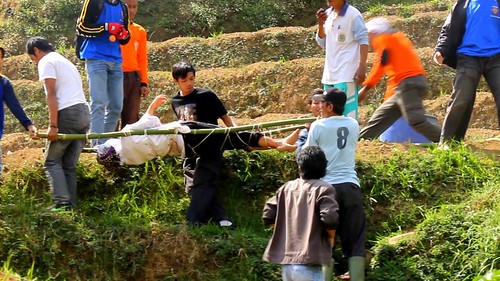
BNPB Ingatkan Kerawanan Bencana di Indonesia Lewat Film

Jakarta – Badan Nasional Penanggulangan Bencana (BNPB) berupaya mengedukasi dan mengingatkan masyarakat tentang kerawanan bencana di Indonesia lewat sebuah film bertajuk Nyanyian Musim Hujan. Film itu dirilis hasil kerja sama dengan Palang Merah Indonesia (PMI), Australia-Indonesia Facility for Disaster Reduction, Palang Merah Australia, dan Miles FIlms.

“Penting bagi masyarakat, terutama yang sering terdampak banjir, untuk meningkatkan kesiapsiagaan,” kata Sekeretaris Jenderal PMI, Ritla Tasmaya, di sela-sela pemutaran film Nyanyian Musim Hujan di Gedung Pusat Perfilman Usmar Ismail, Jakarta, Kamis, 29 Januari 2015.

Film menjadi salah satu media yang dipilih untuk mengedukasi kesiapsiagaan warga terhadap bencana banjir karena sifatnya juga menghibur sehingga dapat mudah dipahami masyarakat.

Menurutnya, melalui film itu, permasalahan masyarakat di tengah bencana dapat menjadi sebuah pembelajaran sehingga masyarakat dapat bersiap diri saat banjir melanda wilayah mereka.

Kepala Pusat Data, Informasi dan Humas BNPB, Sutopo Purwo Nugroho, mengatakan bahwa film seperti itu menjadi media strategis untuk mengedukasi masyarakat secara luas. Film itu dibuat atas berbagai peristiwa banjir yang melanda berbagai wilayah di Indonesia.

“Setiap permasalahan selalu ada pembelajaran untuk terus memperbaiki kesiapsiagaan masyarakat. Potensi bencana selalu dapat diminimalisasi risikonya. Jika kita sudah mengetahui bahayanya, sudah seharusnya kita dapat mengurangi risikonya,” kata Sutopo.

Riri Reza sebagai sutradara film, menjelaskan bahwa dalam film berdurasi 65 menit itu berlatar belakang drama keluarga. “Dalam film kita bisa belajar,” katanya. (ren) sumber: VIVA.co.id

Govt to empower more disaster-prone areas

The government says the regions need to set up more community based disaster preparedness units (KSBs) to empower those who live in areas prone to natural disasters.

“We have only 258 KSBs and we’re preparing more in 2015,” said Social Affairs Ministry social protection for disaster victims director Margowiyono as quoted by Antara news agency.

He explained that according the country’s disaster-prone regional index, 453 regencies were prone to natural disasters, so the amount of units was still far from adequate.

Margowiyono encouraged local administrations and the private sector to help finance the units to improve residents’ awareness of disasters.

See more at: <a href=”http://news.asiaone.com/news/

DPD RI Bantu Rumuskan Konsep Penanggulangan Bencana Nasional

Jakarta – Dewan Perwakilan Daerah (DPD) RI mengadakan Focus Group Discussion (FGD) untuk merumuskan politik kebencanaan, Selasa (27/1), di Jakarta bersama Badan Nasional Penanggulangan Bencana (BNPB), Badan Meteorologi, Klimatologi dan Geofisika (BMKG) dan Badan SAR Nasional (Basarnas) untuk mendorong sebuah kebijakan nasional yang terintegrasi, komprehensif dan berkelanjutan dalam penanganan bencana alam.

“DPD RI mendukung penuh langkah BNPB, BMKG dan Basarnas dengan berkomitmen dalam mendorong kebijakan nasional penanganan bencana yang lebih komprehensif dan aplikatif. Kita menyadari bahwa selama ini penanganan kebencanaan sudah berjalan dengan baik namun belum optimal,” kata Wakil Ketua DPD RI Farouk Muhammad dalam kesempatan tersebut.

Selain Farouk, hadir sebagai pembicara adalah Kepala BNPBN Syamsul Maarif, Kepala Laboratorium Departemen Geologi Universitas Gadjah Mada (UGM) Wahyu Wilopo, dan para pejabat BMKG dan Basarnas.

Farouk memaparkan Indonesia merupakan negeri ‘rawan bencana’, mengingat secara faktual berada pada pertemuan dua lempeng dunia dan kondisi geografis yang rawan. Hampir semua bencana ada di Indonesia seperti longsor, topan, banjir dan gempa bumi dan gunung meletus.

“Reflektif dari berbagai bencana yang terjadi di Indonesia selama ini, di antaranya 10 tahun tsunami Aceh dan yang terbaru bencana longsor di Banjarnegara. Ternyata masih banyak catatan dalam penanganan bencana alam di Indonesia. Selain ini kita baru serius saat bencana terjadi, bukan di saat normal seperti saat ini,” kata Mantan Kapolda Maluku ini.

Farouk menambahkan, DPD RI berusaha menginisiasi, mengevaluasi dan memberikan rekomendasi solusi terhadap kebijakan ‘politik kebencanaan’ nasional, yaitu sebuah konsep kebijakan nasional strategis terkait penanggulangan bencana yang disusun secara komprehensif dan integratif.

Kebijakan komprehensif itu mencakup pencegahan dari bencana alam seperti banjir dan longsor; mendidik dan memberdayakan masyarakat; penguatan mekanisme peringatan dini (early warning system); tanggap darurat hingga rehabilitasi pasca bencana terhadap alam maupun penduduk.

“DPD RI saat ini sedang melakukan inventarisasi dan mitigasi daerah rawan bencana berdasarkan dampak dan potensinya di seluruh Indonesia bersama Pemerintah Daerah. Kemudian data tersebut saat ini mencoba dirumuskan bersama lembaga kebencanaan (BNPB, Basarnas dan BMKG), yang diharapkan kita menemukan banyak masukan dan solusi,” kata Farouk.

Sumber:PR

Buku Standar Minimum untuk Pendidikan pada saat Bencana

buku-bencana

Buku Standart Minimum untuk Pendidikan pada saat Bencana

buku-bencanaSalam tangguh bencana bagi seluruh penggiat bencana yang menjadi pembaca setia website bencana kesehatan ini. Berbicara tentang bencana kita akan  ingat dengan perlindungan lebih untuk populasi rentan. Siapa mereka? Tentunya, anak, perempuan, dan lansia.

Marak saat ini kita dengar pelatihan-pelatihan dalam rangka peningkatan kapasitas populasi rentan terhadap bencana, ada peningkatan peran serta lansia dalam kesiapsiagaan bencana salah satunya.

Bagaimana dengan anak-anak yang mana psikologisnya lebih rentan untuk terluka pada saat menghadapi bencana, maka sering kita dapati pendidikan pada saat bencana. Lantas kebutuhan pendidikan seperti apa yang harusnya di dapatkan anak pada setiap pase bencana? siapa yang dapat kita libatkan dalam memberikan pendidikan kepada anak? Serta bagaimana kebijakan yang dikembangkan?

Pertanyaan-pertanyaan di atas barangkali dapat terjawab oleh buku yang menjadi pilihan kita untuk disajikan bagi pembaca website bencana kesehatan  minggu ini. Buku yang digagas oleh INEE (Inter-Agency Network for Education in Emergencies) dan The Sphere Project ini telah dialihbahasakan ke Bahasa Indonesia. Simak selengkapnya buku ini,

Museum preserves Kobe quake rift as visible reminder of disaster 20 years ago

The massive earthquake that rocked western Japan in January 1995 left a visible reminder of its cause: a ground-level fracture along one of the faults that shifted.

The movement of the Nojima Fault left its mark in the northern part of Awajishima Island, Hyogo Prefecture. After an on-site survey by specialists, 140 meters of the fracture was preserved at a museum on the island. Since it opened in 1998, about 8.6 million visitors have viewed the exhibit at the Nojima Fault Preservation Museum in Hokudan Earthquake Memorial Park.

For the past 10 years, deputy curator Masayuki Komeyama, 48, has been telling visitors of his own experiences that day.

Visitor numbers have fallen since a high in 1998, the year of the opening of the Akashi-Kaikyo Bridge, which links Kobe and Awajishima Island. At nearly 4 km long, it is the world’s longest suspension bridge.

Still, Komeyama believes there is growing public interest in the Nojima Fault.

“After the mechanism of an active fault causing a large earthquake became widely known, an increasing number of people are visiting us to learn how to prepare and respond to disasters,” he said.

After the quake took place, evidence was seen on the ground of movement along roughly 10 km of the Nojima Fault, which runs north-south on the island.

Early on Jan. 17, 1995, Komeyama was asleep in his fourth-floor apartment near the southern end of the fault.

“I heard the Earth rumbling from deep underground, followed by a powerful jolt from below,” he recalls. “It felt as if my apartment was falling down after being hit by a big dump truck or something.”

He threw himself over his wife and daughter, aged 2 months, and grabbed the edge of the bed.

“The shaking continued for about 40 seconds, but it felt longer,” he says. The kitchen was littered with broken dishes and he had to kick open the entrance door.

After taking his wife and daughter to an evacuation center in an elementary school gym, he visited the wooden house of his parents, only to find it collapsed.

As a member of a local fire brigade, he took part in rescue work. In the city of Awaji, 58 people died. The quake claimed more than 6,400 lives in all.

“At the time, I had no knowledge of the Nojima Fault and didn’t think a huge quake would hit Awajishima Island,” Komeyama says. “A friend of mine told me that he thought an airplane had crashed, judging from the big noise and jolt, as Kansai International Airport is located nearby.”

After hearing people say that there were bumps on the ground, he went out and discovered the sharp edge raised above the ground. “As the slip on the fault had caused that magnitude of shaking, I was scared by the Earth’s tremendous power.

“I want everybody to be careful not to forget the earthquake. If it’s forgotten, similar disaster damage will happen again,” Komeyama says.

“A large-scale quake could originate in the Nankai Trough” in the Pacific off Japan’s central to southwestern coast, he notes. “Natural disasters can’t be prevented, but I want everyone to think how the damage from a disaster can be alleviated.”

Kemensos Anggarkan Dana Penanganan Bencana Rp235 Miliar

JAKARTA – Kementerian Sosial menyiapkan anggaran penanganan bencana alam pada 2015 sebesar Rp235 miliar, kata Direktur Perlindungan Sosial Korban Bencana Alam, Margowiyono.

“Anggaran yang disiapkan terdiri dari yang di pusat dan dana dekonsentrasi di 34 provinsi,” kata Margowiyono di Jakarta, Senin (26/1/2015).

Anggaran tersebut disiapkan antara lain untuk logistik korban bencana alam, dan pemenuhan stok penyangga.

Margowiyono menjelaskan penanganan bencana saat ini sudah menjadi perhatian pemerintah, untuk itu pemerintah daerah juga harus bersinergi untuk mengalokasikan APBD.

“Penanganan bencana bukan hanya tugas pemerintah pusat, tapi juga pemerintah daerah,” tambah dia.

Dia menjelaskan jika pemerintah daerah masih bisa menangani bencana alam yang terjadi maka Pemerintah Pusat tidak perlu turun tangan.

“Kecuali jika pemda tidak mampu lagi menangani dan bencana alam tersebut pengaruhnya berdampak besar terhadap masyarakat, misalnya, kegiatan pemerintahan dan masyarakat lumpuh,” katanya.

Kementerian Sosial mempunyai tugas pokok dan fungsi penanganan bencana alam antara lain menyediakan kebutuhan dasar korban pada masa tanggap darurat.

Kebutuhan dasar tersebut antara lain, sandang, pangan dan papan serta bantuan jatah hidup (jadup) korban untuk sementara waktu selama tanggap darurat.

sumerber: bisnis.com

US surgeon: World can learn from PHL disaster preparedness ‘turnaround’

The world can learn from the turnaround of the Philippines’ disaster awareness as shown by its experiences with super Typhoon Yolanda (Haiyan) in 2013 and Typhoon Ruby (Hagupit) in 2014, a US surgeon who took part in the response to both disasters, said.

Michael Karch, a surgeon with Mammoth Hospital in Mammoth Lakes, California, said learning lessons from Yolanda and applying them during Ruby may have saved the lives of some 1.7 million Filipinos.

“The preemptive actions of the Philippine government, military, medical, and civilian sectors should serve as valuable lessons for the rest of the world as we collectively begin to embrace mass casualty education and preparedness on an individual, national, and international platform,” Karch said in a blog post.

Yolanda, which tore through the Visayas on Nov. 8, 2013, left more than 6,300 dead.

In contrast, Ruby – which, like Yolanda, packed powerful winds and posed a major threat – resulted in 18 deaths. The lower casualty count was in part due to massive evacuations in areas Ruby was projected to hit.

Karch said Yolanda’s destruction had been described as the “Night of 1,000 Knives,” due to the flying debris that “wreaked injury and death on the Filipino population.”

In contrast, he said, Ruby could be dubbed the “Night of a Million and a Half Flames” referring to 1.7 million plus people who survived the typhoon.

“Widespread public health and civil defense measures that had been established in the interim between Haiyan and Hagupit were initiated in the days before landfall,” he said.

Karch, who said he served as a team leader in Civilian Mobile Forward Surgical Teams (CMFSTs) in the aftermath of both typhoons, found certain patterns that he said are reproducible.

“Valuable lessons can be taken from each and applied to the next. The initial differences between the disaster response to Typhoons Haiyan versus Hagupit are striking. The simple fact that the Philippine government was able to evacuate more than a million and a half million citizens out of harm’s way is a testament to their dedication to learn and evolve as super storms occur on a more frequent basis,” he said.

“Although the response to Hagupit was not perfect, it was much improved from that of Haiyan. The use of progressive communication through social media and Short Message Service (SMS) texting played a large role in this success,” he added.

Karch likened the turnaround to super storms Katrina in 2005 and Sandy in 2013 in the US.

“As with Haiyan, the Hurricane Katrina experience was a glaring low point in terms of public opinion and confidence in governmental response to natural disaster. The government response to Hurricane Sandy showed marked improvement in pre-emptive planning and execution on the part of federal, state and city government,” he said.

“The recent Philippine Hagupit experience provides us with another opportunity to learn. Although no system is perfect, if the motivation to continually improve our national disaster response is a driving force, we must study all storms, especially those with successful outcomes, and determine how we can apply these lessons to our own public health and disaster preparedness programs,” he added

taken from: http://www.gmanetwork.com

329 Desa di Kabupaten Bogor Siaga Bencana

Bogor – Memasuki puncak musim penghujan, Badan Penanggulangan Bencana Daerah Kabupaten Bogor menetapkan 329 desa yang tersebar di 25 Kecamatan masuk dalam katagori rawan bencana dengan ancaman tinggi dan sedang.

“Penentuan lokasi rawan bencana ini berdasarkan hasil survei BPBD Kabupaten Bogor yang tertuang dalam formulir desa tangguh sesuai dengan Peraturan Kepala (Perka) BPBD No. 01 Tahun 2012,” kata Kepala BPBD Kabupaten Bogor Yos Sudrajat, Ahad, 25 Januari 2015.

Menurut dia, ratusan desa tersebut merupakan daerah atau lokasi rawan bencana longsor, banjir, angin putingbeliung pada muslim penghujan dan kekeringan dan kebakaran pada musim kemarau.
“Bahkan Kabupaten Bogor masuk dalam indeks rawan bencana dari Badan Nasional Penanggulangan Bencana (BNPB) dengan menduduki peringkat 5 daerah rawan bencana tingkat nasional,” kata Yos.

Kepala Seksi Kedaruratan dan Logistik BPBD Kabupaten Bogor, Budi Aksomo, mengatakan, pihaknya sudah memasang alat Landslide Early Warning System (LEWS), sistem peringatan dini yang dapat menditeksi tanah longsor atau retakan tanah.

sumber: tempo


“Alat ini dipasang di Kecamatan Sukamakmur, yang merupakan salah satu daerah rawan longso. Bahkan dengan alat ini dapat menditeksi pergerakan tanah yang berpotensi longsor,” ujar dia.

Menurutnya, beberapa wilayah di Kabupaten Bogor masuk dalam daerah rawan longsor, yakni Babakanmadang, Cigudeg, Citeureup, Cisarua, dan Megamendung. “Tidak jarang bencana alam yang terjadi di daerah-daerah ini kerap menelan korban jiwa dan korban luka,” kata dia.

Sebagai langkah antisipasi, BPBD Kabupaten Bogor bersama Dinas Energi dan Sumerdaya Mineral Kabupaten Bogor melakukan pemetaan lokasi-lokasi tersebut, selain mempersiapkan sumber daya manusia (SDM), peralatan, kendaraan, dan logistik.

“Kesiapan logistik dan semua peralatan kami, sudah cukup. Kita sudah melakukan pengecekan terhadap semua kelengkapan siaga bencana, termasuk alat berat milik Dinas Bina Marga Kabupaten Bogor,” kata Budi.

Haitians learn to live with disaster upon disaster

PORT-AU-PRINCE (Thomson Reuters Foundation) – Claude Enrico survived the earthquake that hit Haiti five years ago and helped pull people from under the rubble in the flattened capital Port-au-Prince.

Now he is dedicated to saving more lives in the disaster-prone Caribbean country.

Lying on two fault lines and in the path of hurricanes, Haiti is among the countries most at risk from natural disasters in the world, including floods, tsunamis and drought.

The 7.0-magnitude earthquake on Jan. 12, 2010, which killed more than 220,000 people, was a wake-up call to the government and international aid agencies about the dire need to protect Haitians from disasters and build resilience among communities to withstand shocks.

“We have to learn to live with natural phenomena,” said Enrico, 37, a civil protection officer with Haiti’s interior ministry. “It’s inevitable they will come year after year. So we must train people what to do in an emergency and ensure families have an evacuation plan.”

NETWORK OF VOLUNTEERS

He belongs to a network of 3,000 newly trained volunteers and paid staff, created in the aftermath of the earthquake, who work across Haiti’s 10 provinces.

Trained in first aid and emergency response, they are on the frontline of government efforts to ensure Haiti is better prepared to deal with disasters and can save more lives.

“We still lack equipment, firefighters and more people need to be trained. But communities are more aware about how to keep safe. One of our key messages is to tell people not to cross rivers during a flood because that’s often how people get killed,” said Enrico at the National Emergency Operations Centre (COUN) in downtown Port-au-Prince.

Built in 2010 following the earthquake, the center is where government ministries and aid agencies meet to coordinate disaster response. The center, which includes a warehouse stocked with water, mattresses, hygiene and food kits, has been put to the test.

A cholera epidemic broke out in October 2010, which has claimed the lives of more than 9,000 people, followed by several tropical storms, including Hurricane Sandy, which killed 54 and forced 100,000 Haitians to evacuate their homes in 2012.

“In Haiti, it’s the back-to-back accumulation and combination of disasters that puts pressure on the government and the people,” said Thomas Pitaud, chief technical advisor to the government on national disaster risk management systems.

Each year in parts of Haiti, homes and animals are washed away, fields inundated, and food crops and grazing land destroyed by storms and floods, pushing up food prices.

With 60 percent of Haiti’s population of 10 million living on less than $2 a day, even a small increase in food prices can mean families cannot afford to put enough food on the table.

DISASTER PREPAREDNESS

Five years after the earthquake, aid agencies say progress has been made in preparing communities on what to do when a disaster strikes, including early warning systems, simulation exercises and identifying shelters.

Other projects include building flood walls and drainage ditches, along with embankment and watershed protection projects to conserve water supplies and lessen the impact of floods and landslides.

But such schemes, along with the efforts of Haitians like Enrico, can only go so far to reduce the high exposure to disasters Haiti faces.

Far less progress has been made on reducing the risk of disasters in the first place, and ensure all new homes, hospitals and schools being built are earthquake resistant.

“You have an environment that’s very degraded,” said Pitaud, who also works for the United Nations Development Programme (UNDP) in Haiti.

“We’re constantly responding from one catastrophe to another, so it’s difficult to focus on reducing risk over the long-term and get funding.”

URBAN SLUMS

A lack of urban planning and high levels of urbanization have led to more than 60 percent of Haitians living in densely populated slums in Port-au-Prince, which magnifies the damage and number of casualties disasters bring.

Angelique Hilaire lives with her three children in a gray brick one-room home perched precariously on a hillside slum.

Hilaire is only too well aware that she is exposed to flooding and landslides but has no option but to brace herself for the yearly hurricane season.

“I can’t afford to rent anywhere else,” she said. “Every time it rains I pray to God for it to stop. But what can I do?

Even a short downpour can leave the capital flooded as piles of rubbish on the streets and debris filled canals block drains, which exacerbates flooding.

Natural disasters linked to climate change will only get more frequent and extreme in the future, experts say.

Decades of deforestation have left Haiti even more exposed to natural disasters, with less than three percent of its original forest cover still intact, according to the UNDP.

This causes soil erosion and reduces the ability of soil to retain water, making Haiti more vulnerable to flooding and landslides. During heavy rainfall, there are few trees to stop water washing down the bare mountains.

While 5.5 million tree seedlings have been planted in Haiti by the UNDP since 2010, not enough has been done to stop people cutting down trees in the first place.

Selling charcoal, which comes from burning wood, is used for cooking and is a key source of income for many Haitians living in the countryside.  

“One challenge is to provide economic opportunities so farmers don’t have to cut down trees,” Pitaud said.

Jawa Tengah Rawan Bencana

TEMANGGUNG  – Gubernur Jateng Ganjar Pranowo mengajar di SMA I Temanggung dalam rangkaian blusukan di daerah tersebut. Di sekolah favourit tersebut orang nomor satudi Jateng itu memberikan materi tentang mitigasi bencana, Kamis (22/01/2015).

“Jawa Tengah ini hampir semua wilayah rawan bencana, jadi harus memahami mitigasi bencana. bencana itu seperti mulai banjir, tsunami, gempa bumi, angin puting beliung, gas beracun, tanah longsor, gunung api, dan kebakaran,” kata Ganjar.

Dikatakan, semua warga termasuk pelajar harus memahami mitigasi bencana, mulai awal pencegahan, hingga penanganan pasca bencana. Dengan pemahaman yang benar tentang bencana diharapkan bisa mengaplikasikannya di lapangan dalam kehidupan keseharian. “Saya berharap kepada kalian para pelajar yang akan menjadi generasi penerus benar-benar memahami mitigas bencana,”ujarnya.

Mitigasi yang benar tentang bencana akan mencegah atau meinimalkan terjadinya korban baik dari kematian dan cedera akibat bencana yang terjadi. Siswi kelas XII IPA3, Hikmah Febti Merina mengatakan pemahaman dan pelatihan mitigasi bencaca bisa lewat pelajar dan ekstra kurikuler. Dengan mitigasi, korban jiwa bisa ditekan, lantaran masyarakat sudah tahu apa yang harus dilakukan ketika terjadi bencana.

Sedangkan Alfian siswa kelas XII IPA2, mengatakan dunia pendidikan harus secara khusus memasukkan mitigasi bencana dalam kurikulum. ” Kami mulai tersadar betapa pentingnya mitigasi bencana, kami berharap bisa menguasainya,” katanya.

Sutirah guru lainnya mengatakan, hadirnya Ganjar dengan mengajar secara langsung memberikan motivasi tersendiri bagi anak didiknya terutama terkait mitigasi bencana.

sumber: (KRjogja.com)