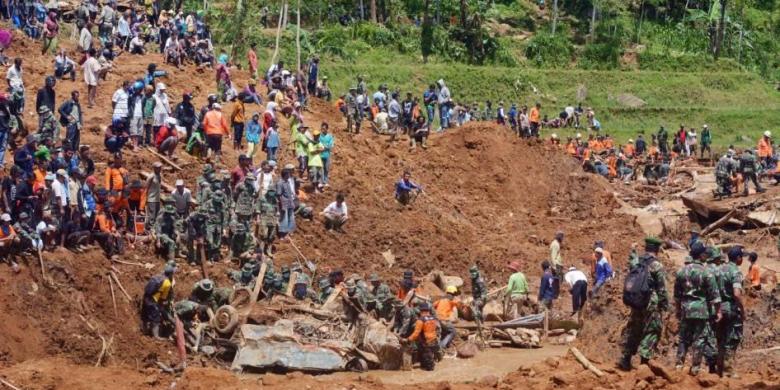
DPR dan BNPB sepakat revisi UU Bencana

Jakarta  – Komisi VIII DPR dan Badan Nasional Penanggulangan Bencana (BNPB) sepakat merevisi Undang Undang Nomor 24 Tahun 2007 tentang Penanggulangan Bencana.

“Kesepakatan ini dicapai dalam rapat dengar pendapat antara Komisi VIII dan BNPB,” kata Wakil Ketua Komisi VIII DPR Deding Ishak kepada pers di Jakarta, Rabu.

Dia menjelaskan, revisi UU Nomor 24/2007 itu penting untuk memperkuat peranan BNPB dan BPBD (Badan Penanggulangan Bencana Daerah).

“Termasuk penguatan fungsi koordinasi, pelaksana dan komando yang dilakukan oleh BNPB,” katanya.

Selain itu, Deding menjelaskan, revisi juga dilakukan untuk memperkuat peran BPNB dalam melakukan kerja sama dengan kementerian dan lembaga terkait dalam penanggulangan bencana.

“Yang pasti revisi juga dilakukan untuk sinkronisasi dan harmonisasi atas peraturan perundang-undangan yang terkait dengan penanggulangan bencana,” ujarnya.

Deding mencontohkan, UU Nomor 27 Tahun 2007 tentang Wilayah Pesisir dan Pulau-pulau Kecil memberikan pemaknaan “mitigasi bencana” yang berbeda dengan pengertian “mitigasi” pada UU 24/2007 tentang Penanggulangan Bencana.

Hal ini, lanjutnya, berimplikasi pada perbedaan pengertian pada turunan perundang-undangan dan praktik penanggulangan bencana di BNPB.

Dia menambahkan, hal yang sama juga terjadi pada Undang-undang Nomor 7 Tahun 2012 tentang Penanganan Konflik Sosial yang memastikan adanya tingkatan status tkonflik di lingkup daerah, regional dan nasional tetapi tidak memberikan mandat pada BNPB tentang tingkatan status bencana tersebut.

Selain itu juga UU Nomor 26 Tahun 2007 tentang Penataan Ruang yang menggunakan mitigasi bencana sebagai pertimbangan tindakan, namun belum melakukan penyelarasan tata ruang mengelolaan kawasan rawan bencana sebagai bagian dari upaya pencegahan.

Selanjutnya, dia menambahkan, ada UU Nomor 31 Tahun 2009 tentang BMKG yang menghasilkan produk komponen teknis untuk mendukung sistem peringatan dini tetapi tidak memperimbangkan atau melandasi kehadirannya dengan UU Penanggulangan Bencana.

Begitu juga UU Nomor 28 Tahun 2002 tentang Bangunan Gedung yang belum diselaraskan dengan intensitas zona rawan bencana.

Ada pula UU Nomor 7 Tahun 2004 tentang Sumber Daya Air yang belum melihat air sebagai potensi bencana, kemudian UU Nomor 34 Tahun 2004 tentang TNI dan UU Nomor 2 Tahun 2002 tentang Polri yang belum mengatur lebih lanjut tentang peranan TNI dan Polri dalam menanggulangan bencana.

sumber: (ANTARA News)

Key to successful disaster preparedness

Life would be a lot better if we can just shoo away typhoons, plug the craters of volcanoes to prevent them from erupting, or hold the plates underneath us to keep them from shaking the ground and toppling buildings and ripping highways apart.

These terrifying and unwanted events and their terrible impact – thousands of lives lost, families displaced, and livelihood disrupted – are parts of the normal life in the Philippines, a country situated in the Pacific Ring of Fire and in the path of typhoons.

Climate change has only worsened our situation, with experts predicting more extreme weather disturbances as the new normal. A recent example of our vulnerability to weather’s whims was the visit of Pope Francis to Leyte last Saturday. He was scheduled to spend almost half a day in Tacloban and Palo to celebrate a Mass, meet with the victims of super-typhoon Yolanda, and lead other activities, but rain and strong winds from Mekkhala/Amang, the first tropical storm of 2015, forced him to fly back to Manila after less than an hour in Leyte.

The Pope, who told the Yolanda victims he knew what happened in November, 2013, even though he was in Rome, got a firsthand taste of what Filipinos, particularly those in Eastern Visayas, have to go through throughout their lives. Each year, 18 to 20 typhoons strike the country.

The Philippines is also located on the Pacific Ring of Fire, where most of the world’s volcanoes are located. Countries on the “ring” – Indonesia, Japan, New Zealand, United States, Canada, Chile, Mexico, Russia, and the Philippines – account for most of the earthquakes that happen in the world. The memories of the 2011 earthquake that triggered a tsunami, caused a nuclear meltdown and killed nearly 16,000 people are still fresh in the minds of the Japanese. The areas affected by the nuclear disaster remain ghost towns.

The magnitude-7.2 earthquake that hit Bohol on October 15, 2013, was weaker than the magnitude-9.0 that hit Japan, but it was one of the strongest recorded in the Philippines, leaving more than 200 people dead and destroying many historical churches.

The Philippines has more than 30 volcanoes, of which more than 20 are considered active, and a few, like Mayon and Taal, are permanently monitored. Mount Pinatubo, which for many centuries was just a part of the mountainous part of Zambales, erupted in 1991, and its effects were felt worldwide: The massive amount of gas and ash caused a temporary half-degree centigrade drop in global temperatures. The millions of tons of lahar spewed out of the volcano permanently changed the river system in parts of Central Luzon.

The US Embassy in Manila, recognizing the risks from natural calamities faced by Americans visiting or living in the Philippines, has published on its website information to help US citizens “prepare for any disaster that may occur.

The key word is “preparation.” In my view, successful preparation means a system backed up by the most accurate disaster information like weather forecasts, which in turn, can happen if we have the most advanced technology and equipment.

We have a pool of competent and well-trained weather forecasters, volcanologists, and other scientists (that is why some of them are pirated by foreign entities), but they need the best equipment and the latest technology to do their task well.

As a country prone to disasters, we should be the leader in weather or disaster forecasting and monitoring. The price for a nation ill-prepared for disasters is too stiff to pay: Thousands of lives lost, families displaced, vital facilities destroyed and economic growth disrupted.

We saw the terrible destruction wrought by super typhoon Yolanda in 2013. In 2014, timely preparations reduced the disastrous impact of typhoon Ruby, which was initially expected to become another super-typhoon.

Yet, we still count casualties and measure damage: Ruby left P5.09 billion worth of damage and 18 dead. Typhoon Seniang, a weak typhoon that hit the country in the last days of December, brought heavy rains and triggered floods, leaving 66 people dead and more than 100,000 families displaced.

These are continuing wake-up calls and reminders for the government to modernize our weather and disaster forecasting equipment and technology. Because of our situation, our objective and attitude should be that the Philippines should be the leader in this field.

In closing, I share the gladness of my countrymen and their deep appreciation for the visit of Pope Francis in the Philippines.

Building community resilience to disasters: legacy of the Great Hanshin-Awaji Earthquake


January 17, 1995, 05:46. This was the moment 20 years ago that the Great Hanshin-Awaji Earthquake struck and resulted in 6,434 lost lives, 200,000 destroyed buildings, 300,000 people made homeless, and a staggering economic cost then calculated at 2.5 percent of Japan’s GDP (approximately $100 billion).

As for all disasters, the human toll, including the psycho-social impact on survivors, is the greatest tragedy. It reminded us of the constant need for communities, cities, and nations to enhance prevention and preparedness, to ensure that response systems are efficient, and that communities build their resilience to withstand and cope with any future disaster.

The Great Hanshin-Awaji Earthquake ushered in a new era of volunteerism in Japan, and highlighted many lessons on how to prepare for disasters arising from hazards of all kinds, improve care and support for the survivors, as well as to rebuild cities and their health systems. The 2011 Great East Japan Earthquake, and so many other natural disasters in the past two decades across the world, illustrated the need to continuously apply past lessons.

The number of people affected by emergencies and disasters continues to increase year after year, with climate change further exacerbating the frequency and magnitude of climate-related hazards. Underlying all efforts is the need to reinforce the role of communities, for which lessons from the Great East Japan Earthquake are being transmitted through the concept of “kizuna” (human bonds).

The Ebola emergency in West Africa has once more demonstrated the need to ensure that preparedness is in place and response plans are up-to-date, disease surveillance, health facilities and health systems are operational in any circumstances, health education is implemented, and social mobilization and risk communication plans are available in case of an emergency.

Investing in health systems is critical to ensure that all countries can prevent, detect and respond to known and emerging health threats, as well as to ensure increased resilience and response and recovery capacity. A key part of this is emphasizing that hospitals and other health facilities are safe and operational in times of disasters to deliver life-saving care, for which the World Health Organization and its partners are supporting through a global Safe Hospitals Initiative.

All of these experiences further increase the urgency to focus on vulnerable populations, such as the aged, disabled, women and children, and the poor, across the continuum of prevention, preparedness, response and recovery from disasters.

For example, understanding the risk context of various communities, subpopulations and the nature of inequities can help local actors form social mobilization strategies for more effective preparedness and response. Knowing where people live, coupled with effective early warning systems, can help ensure that first responders can locate populations and save lives. An increasing aged population and people with life-threatening chronic diseases also introduces new challenges to ensuring the continuity of care for survivors.

The spirit and determination of the people of Kobe and other municipalities in Hyogo Prefecture inspired the world on how to “build back better” that ensures that post-disaster recovery, including social and health rehabilitation and reconstruction, provides the opportunity to reduce future risk and make communities safer and better places to live and work.

This spirit, and the vision of former Gov. Toshitami Kaihara (who recently passed away), and of the former director-general of the World Health Organization, Dr. Hiroshi Nakajima, inspired the creation of the WHO’s Kobe Center in the aftermath of the Great Hanshin-Awaji Earthquake, a commitment continued by Gov. Toshizo Ido and Mayor Kizo Hisamoto to this day.

Among the key legacies of the Hyogo and Kobe experience had been the incorporation of their experience into the ground-breaking Hyogo Framework for Action, 2005-2015, Building the Resilience of Nations and Communities to Disasters, which defined global action for disaster risk reduction.

Ten years later, this framework will be discussed with all nations and updated at the upcoming World Conference on Disaster Reduction on March 14-18 in Sendai.

For the good of all citizens worldwide, there is an urgent need to expand international, national and local efforts to reduce disaster and health emergency risks, to put a greater focus on prevention and community-centered action, to increase preparedness capacity, and response and recovery when needed.

January 17, 1995, 05:46. This was the moment 20 years ago that the Great Hanshin-Awaji Earthquake struck and resulted in 6,434 lost lives, 200,000 destroyed buildings, 300,000 people made homeless, and a staggering economic cost then calculated at 2.5 percent of Japan’s GDP (approximately $100 billion).

As for all disasters, the human toll, including the psycho-social impact on survivors, is the greatest tragedy. It reminded us of the constant need for communities, cities, and nations to enhance prevention and preparedness, to ensure that response systems are efficient, and that communities build their resilience to withstand and cope with any future disaster.

The Great Hanshin-Awaji Earthquake ushered in a new era of volunteerism in Japan, and highlighted many lessons on how to prepare for disasters arising from hazards of all kinds, improve care and support for the survivors, as well as to rebuild cities and their health systems. The 2011 Great East Japan Earthquake, and so many other natural disasters in the past two decades across the world, illustrated the need to continuously apply past lessons.

The number of people affected by emergencies and disasters continues to increase year after year, with climate change further exacerbating the frequency and magnitude of climate-related hazards. Underlying all efforts is the need to reinforce the role of communities, for which lessons from the Great East Japan Earthquake are being transmitted through the concept of “kizuna” (human bonds).

The Ebola emergency in West Africa has once more demonstrated the need to ensure that preparedness is in place and response plans are up-to-date, disease surveillance, health facilities and health systems are operational in any circumstances, health education is implemented, and social mobilization and risk communication plans are available in case of an emergency.

Investing in health systems is critical to ensure that all countries can prevent, detect and respond to known and emerging health threats, as well as to ensure increased resilience and response and recovery capacity. A key part of this is emphasizing that hospitals and other health facilities are safe and operational in times of disasters to deliver life-saving care, for which the World Health Organization and its partners are supporting through a global Safe Hospitals Initiative.

All of these experiences further increase the urgency to focus on vulnerable populations, such as the aged, disabled, women and children, and the poor, across the continuum of prevention, preparedness, response and recovery from disasters.

For example, understanding the risk context of various communities, subpopulations and the nature of inequities can help local actors form social mobilization strategies for more effective preparedness and response. Knowing where people live, coupled with effective early warning systems, can help ensure that first responders can locate populations and save lives. An increasing aged population and people with life-threatening chronic diseases also introduces new challenges to ensuring the continuity of care for survivors.

The spirit and determination of the people of Kobe and other municipalities in Hyogo Prefecture inspired the world on how to “build back better” that ensures that post-disaster recovery, including social and health rehabilitation and reconstruction, provides the opportunity to reduce future risk and make communities safer and better places to live and work.

This spirit, and the vision of former Gov. Toshitami Kaihara (who recently passed away), and of the former director-general of the World Health Organization, Dr. Hiroshi Nakajima, inspired the creation of the WHO’s Kobe Center in the aftermath of the Great Hanshin-Awaji Earthquake, a commitment continued by Gov. Toshizo Ido and Mayor Kizo Hisamoto to this day.

Among the key legacies of the Hyogo and Kobe experience had been the incorporation of their experience into the ground-breaking Hyogo Framework for Action, 2005-2015, Building the Resilience of Nations and Communities to Disasters, which defined global action for disaster risk reduction.

Ten years later, this framework will be discussed with all nations and updated at the upcoming World Conference on Disaster Reduction on March 14-18 in Sendai.

For the good of all citizens worldwide, there is an urgent need to expand international, national and local efforts to reduce disaster and health emergency risks, to put a greater focus on prevention and community-centered action, to increase preparedness capacity, and response and recovery when needed.

source: japantimes.co.jp
Dana Desa Bisa Digunakan untuk Buat Posko Khusus Siaga Bencana

Jakarta – Menteri Desa, Pembangunan Daerah Tertinggal, dan Transmigrasi (Mendes PDTT) Marwan Jafar meminta kepala desa, terutama di daerah rawan bencana untuk selalu dalam keadaan siaga. Musim hujan dengan curah deras disertai angin kencang yang menerpa seluruh pelosok tanah air, dianggap Marwan potensial menimbulkan berbagai ancaman bencana alam.

“Jadi kami instruksikan kepada seluruh desa yang rawan bencana, agar sedini mungkin siaga bencana, menyiapkan action plan untuk menghadapi bencana dan dampaknya” kata Marwan, dalam keterangan tertulis yang diterima Selasa (20/1/2015) malam.

Berdasarkan data Badan Nasional Penanggulangan Bencana (BNPB) terdapat 315 daerah dengan jumlah penduduk 61 juta jiwa masuk kategori rawan banjir dan 274 daerah dengan jumlah penduduk 124 juta jiwa yang rawan musibah longsor. Ancaman banjir dan longsor yang melanda berbagai daerah ini menjadi perhatian serius

Banyak sekali desa-desa yang mengalami bencana longsor atau banjir. Tidak terkira kerugian yang diderita desa akibat musibah tersebut. Mulai dari korban jiwa hingga hilang atau rusaknya bangunan dan kekayaan milik desa dan warganya. Belum lagi lumpuhnya kegiatan sosial, pendidikan dan ekonomi desa.

Belajar dari kejadian sebelumnya, longsor atau banjir bisa datang secara tiba-tiba mengakibatkan perlunya semacam posko desa siaga bencana. Posko bertugas memberikan penyuluhan kepada warga desa agar siap menghadapi bencana, juga mempersiapkan seluruh perlengkapan dan peralatan yang diperlukan baik sebelum, saat terjadinya bencana maupun paska bencana.

Semua hal tersebut harus sudah disiapkan sedini mungkin, supaya desa rawan bencana benar-benar siap menghadapi situasi apapun yang bisa saja terjadi secara tiba-tiba atau di luar apa yang sudah diprediksi.

“Pembiayaan posko dan berbagai kegiatannya dapat dimusyawarahkan bersama warga desa untuk dibebankan pada dana desa. Karena hal tersebut sifatnya sangat urgen bagi keselamatan desa dan warganya” ujar Marwan.

Lebih lanjut Marwan mengingatkan agar aparatur desa rawan bencana sejak dini mulai melakukan upaya perlindungan dan penyelamatan aset-aset desa dari dampak bencana. Seperti dokumen, kendaraan bermotor, bangunan, dan lain-lain.

“Supaya aset-aset tersebut tidak rusak dan tetap dapat digunakan, sehingga desa tidak perlu mengeluarkan banyak dana lagi untuk memperbaiki atau membeli lagi aset-aset tersebut,” ucap politisi PKB itu

Dengan demikian, lanjut Marwan, dana desa dapat dialokasikan untuk membantu warga desa yang terkena dampak bencana, melalui program pemberdayaan masyarakat desa untuk mempercepat proses pemulihan ekonomi desa paska bencana.

sumber: KOMPAS.com

Puluhan Karyawan Rumah Sakit Gelar Simulasi Bencana Kebakaran

Berita Egatama — Puluhan karyawan Rumah Sakit Kharisma Paramedika mengikuti pelatihan pemadam kebakaran dengan instruktur dari Badan Penanggulangan Bencana daerah (BPBD) Kulonprogo. Pelatihan dasar ini selain melakukan antisipasi dari adanya bencana kebakaran, juga berlatih cara menggunakan Alat Pemadaman Api Ringan (APAR).

Hal ini disampaikan oleh Kasie Pencegahan dan Kesiapsiagaan Badan Penanggulangan Bencana Daerah (BPBD) Kabupaten Kulonprogo Hepy Ekonugroho, ST saat ditemui Senin (19/1/2015) di ruang kerjanya. Puluhan karyawan RS Kharisma paramedika yang mengikuti pelatihan terdiri dari Perawat, Juru masak, Petugas Parkir dan Satpam. “para karyawan rumah sakit perlu mengetahui penyebab dari terjadinya kebakaran dan cara memadamkan api dengan menggunakan APAR” ungkap Hepy.

Rumah Sakit Kharisma Paramedika terhitung sudah dua kali melakukan pelatihan tersebut, mengingat rumah sakit menjadi salah satu lokasi yang cukup rawan dengan adanya kebakaran serta penyelamatan pasien menjadi hal yang utama saat terjadi bencana kebakaran. “hampir semua rumah sakit sudah kita latih cara menggunakan alat tersebut” tambah Hepy.

Dalam pelatihan ini, puluhan karyawan Rumah sakit juga diberikan materi antisipasi adanya kebakaran, mulai dari memilih lokasi saat menempatkan kompor, merawat selang gas, menggunakan kabel listrik yang standar serta teknis memadamkam ledakan saat terjadi kebakaran. “penyebab terjadinya kebakaran perlu juga diketahui sebab hal itu merupakan antisipasi” paparnya.

Selain itu, sejumlah lembaga pendidikan dalam hal ini sekolah, sudah diberikan pelatihan yang sama, terutama Sekolah menengah Kejuruan (SMK) yang memiliki jurusan Otomotif. Sementara Kepala BPBD Kulonprogo Drs, Untung Waluyo berharap, agar semua instansti maupun lembaga yang ada segera memiliki APAR, sehingga saat terjadi bencana kebakaran bisa dilakukan pencegahan agar tidak makin meluas.(bm)

Disaster relief: humanitarian architecture for post-disaster shelter

In the field of humanitarian architecture, post-disaster provision is more than just supplying shelter. It’s about involving communities in places of uncertainty and rapid change, delivering the best rebuilds that incorporate future risk mitigation in the design.

Safe and dignified shelter is a basic human right, and in a post-disaster scenario provision is more than just putting a new roof over people’s heads and providing emergency shelter; it is about fit-for-purpose rebuilds that address the local culture, environment and economy. It is a complex task of rebuilding a community, or even a city, that may have had little in the way of adequate planning or building regulations before the disaster struck. The best housing will improve on what went before and incorporate future risk mitigation in the design.

According to the UN Office for Disaster Risk Reduction, in the first 12 years of this century 2.9 billion people were directly affected by natural disasters such as tsunamis, flooding, fire, earthquakes, hurricanes and typhoons, many losing their homes. In 2011 alone, 42 million were forced to leave their houses, more than the total of those displaced by war and armed conflict.

The first half of 2011 was also the costliest six-month period in the over 300-year history of the international insurance market because of disasters in New Zealand, Australia, Japan and the US. Many of these events were exacerbated by the growing impact of climate change.

Engineers and architects have been working in the post-disaster arena for many years as technical and logistical experts. But in her book ‘Humanitarian Architecture – 15 stories of architects working after disaster’, Esther Charlesworth, founding director of Architects without Frontiers, argues that “a long term, collaborative and consultative approach to working with a damaged community, using locally available building materials, construction techniques, local contractors and the labour of the displaced themselves is relatively new and builds a necessary investment, both emotional and economic in the finished shelter, helping to provide not just shelter over people’s heads but community resilience and also benefitting the local economy”.

This approach is in sharp contrast to the so-called design parachute: the fly-in, fly-out model of some architects, donors and contractors that was especially criticised in New Orleans in the aftermath of Hurricane Katrina and in Haiti after the devastating earthquake in Port-au-Prince. There has been a desire, particularly with temporary housing, for architects to attempt to design a ‘one size fits all’ prefabricated experimental solution. Charlesworth has witnessed some extraordinary design follies. “I’ve seen igloo-style shelters, or funky shipping container emergency housing in Sri Lanka, New Orleans and Port-au-Prince, where interior temperatures hit 42°C. Such universal or prototype solutions are also often prohibitively expensive.” The concept is intellectually appealing, but almost never works, she says.

Fifty-dollar shelters

“We should be looking for the fifty dollar shelter not one costing twenty or fifty times that,” says Graham Saunders of the International Federation of the Red Cross (IFRC). “We analysed the average spend available to us for shelter across all major emergencies, and it worked out at $50 per household.” Even a medium-scale disaster will see the need for 20,000-30,000 shelters, larger disasters need 200,000-300,000 shelters while catastrophic events like the 2010 Haiti earthquake saw the urgent need for 1.6 million shelters.

Provision of immediate shelter is just one of the products of humanitarian intervention post-disaster. The whole community infrastructure may have been destroyed – roads, bridges, transport facilities, power systems, schools, clinics, shops, even police stations and jails are needed.

“The best people to involve in the reconstruction are the affected local people themselves. The employment and retraining aspects of this are just as important as the rehoming of a shattered community, another reason to avoid prefabricated solutions,” says Australian Brett Moore, architect and shelter and infrastructure advisor at NGO World Vision International.

A pioneer in the field of humanitarian architecture since the 1990s, Japanese architect Shigeru Ban combines a world-class private practice with innovative yet practical design solutions for emergency relief housing in disaster areas through his Voluntary Architects Network (VAN). To construct his disaster relief shelters, Ban often employs recyclable cardboard paper tubes for columns, walls and beams, as they are locally available anywhere in the world. The tubing is inexpensive, is easy to transport, mount and dismantle, can be water- and fire-proofed, and recycled. Ban says that his Japanese upbringing helps to account for his wish to waste no materials. Working in his own country following the devastating earthquake in 2011, VAN worked with the community of Onagawa to construct temporary housing in an area where flat land is limited. VAN built three-storey apartments from stacked modified shipping containers that created surprisingly light and versatile accommodation with built-in cupboards and storage. VAN hopes that this design will become a government benchmark standard for evacuation facilities and temporary housing in Japan. Ban won the prestigious Pritzker Architecture prize in 2014, which recognises his work in both the private and humanitarian field.

Maggie Stephenson is an architect and planner who has been working in the development and crisis recovery fields for over 20 years and is now based in University College London. She says: “There is often a window of opportunity immediately post-crisis. A crisis may precipitate or facilitate political decisions that might otherwise take years to make.” The decisions to be made post-disaster are not only design decisions but also about how people invest in their home, including issues of credit, assets and insurance. “We have to understand what they want for the family – what are the afflicted community’s aspirations? Do they want multi-family occupancy households or to break out on their own? In Haiti, for example, given limited land suitable for housing, people very much want the capacity to be able to extend upwards in future to allow for family growth. These considerations need to be incorporated into the provided structural design and need to be anticipated from the outset especially in earthquake zones.”

The Haiti earthquake of 2010 was not the most powerful in recent years, measuring 7.0 on the Richter scale. But the combination of prior weak building practices and increasing urban density – people were building three or four storeys out of substandard concrete or steel materials – meant that the impact of this earthquake was hugely devastating.

Giving people responsibility

Concrete blocks are the basic building material of choice in Haiti, and they presented problems. During the early phases of reconstruction, the guidance prepared was based on assumed block strength of 10 MPa, but in reality the majority of blocks available in the market were half that strength. The regulatory and developmental challenge is to increase quality assurance, which is likely to take time. Meanwhile the engineering challenge is to anticipate the implications of below-code, low-strength materials in design and construction.

Stephenson is a firm believer in a people-centred approach, citing Ian Davis’s seminal text, the 1978 book ‘Shelter after Disaster – Don’t do anything for people that they can do for themselves’. This means allowing people to make their own decisions, by providing them with the information and choice to make those decisions. It’s vital that displaced people have real choice and real responsibility for their own future. The colour of houses is a classic example – everybody has an opinion, and enjoys making the choice about the appearance of their house – why take that away from people? But the most important tenet of all is ‘build back better’.

For this article, the architects interviewed all commented on apparent cultural and training differences between engineers and architects. To sum this up (at least from the architect’s point of view), an engineer sees the building and how it is made while architects are more likely to also see the people involved and how the building is likely to be used by them.

Elements of this may be true, but a leading expert in the post-disaster field, Professor David Sanderson, is rather more succinct: “Architects need to move beyond their traditional role of designers of buildings in places of relative certainty, to become facilitators of building processes that involve people in places of uncertainty and rapid change,” he says.

Perhaps the last word should go to Lizzie Babister, an architect and humanitarian adviser at the Department for International Development, who has many years’ field experience of reconstruction after disasters. In Esther Charlesworth’s book, Babister makes the point that engineering institutes invariably have a phrase in their mission statements that refers to using engineering skills for the good of humanity. The Royal Institute for British Architects has no similar focus. She commented: “There are definitely some strong skills that architects have, but if I was advising a young professional today I would say: make sure that you have some really good strong structural engineering skills. That will make you much more attractive to humanitarian organisations who are looking for comprehensive ‘shelter professionals’ rather than architects or engineers specifically.”

However, it is clear that both communities make important contributions when disaster strikes and operate more effectively together.

How to get involved

The International Medical Corps is calling for engineers and sanitation experts to help build hospitals and containment centres in Sierra Leone and Liberia.

Experienced engineers can undertake training and selection to join the register of RedR, which provides personnel to humanitarian programmes worldwide. RedR engineers have formed part of the operational response teams working in places like Darfur, Pakistan and Aceh. Their goal is to build the skills of aid workers in local organisations, ensuring that skills remain in-country and enhancing disaster preparedness for the future.

Engineers without Borders can advise early-career engineers on opportunities in the humanitarian area, and give information about training and field placements.

sumber: http://eandt.theiet.org

Dinsos Karawang Persiapkan Kebutuhan Antisipasi Bencana

KARAWANG – Dinas Sosial Kabupaten Karawang mengaku telah mempersiapkan segala hal untuk menghadapi kemungkinan terjadinya bencana di daerah lumbung padi tersebut. Di antaranya mempersiapkan logistik para korban bencana.

“Segala sesuatunya sudah kami siapkan, termasuk logistik seperti beras dan mie instan,” kata Kepala Dinas Sosial Karawang, Rokhuyun, di kantornya, Senin (19/1/2015).

Dikatakan, saat ini telah tersedia 200 ton beras milik Pemerintah Kabupaten Karawang yang siap disalurkan jika sewaktu-waktu terjadi bencana. Selain logistik, pihak Dinsos juga telah membina dan melatih warga agar tanggap bencana.

“Di daerah bencana, kami sudah menyiaplan kampung siaga, ada 10 titik. Warganya sudah dilatih untuk tanggap bencana,” tutur Rokhuyun.

Disebutkan juga, selain menyiapkan logistik, pihak Dinsos telah mempersiapkan perahu karet 15 unit untuk mengevakuasi korban bencana banjir. Sementara Taruna Tanggap Bencana (Tagana) bentukan Dinsos yang aktif ada 45 anggota.

sumber: (PRLM)

ASM FK UGM 2015

asm-banner-16

asm-banner-16

Dalam rangka Annual Scientific meeting (ASM) Fakultas Kedokteran 2015
Kelompok Kerja (Pokja) Bencana FK  UGM bekerjasama dengan Divisi Manajemen Bencana Pusat Kebijakan Manajemen Kesehatan FK UGM Menyelenggarakan seminar mengenai:

Kaitan Peningkatan Risiko Bencana dengan Pencapaian MDGs

Senin, 16 Maret 2015
Gedung Senat Lantai 2 KPTU Fakultas Kedokteran UGM


Latar Belakang

Berbicara mengenai Milenium Development Goals (MDGs) maka masing-masing bidang yang dirumuskan dalam MDGs akan menemui fokusnya masing-masing seperti pendidikan, malaria, ekonomi, lingkungan, dan kesehatan misalnya. Namun, pertanyaannya dimanakah peran dan perhatian terhadap risiko bencana yang terus meningkat diseluruh dunia terhadap pencapaian MDGs saat ini dan sudahkan masuk dalam agenda pembahasan pasca MDGs mendatang?

Peningkatan ancaman bencana saat ini tidak saja karena alam, tetapi juga wabah penyakit, bioterorisme, konflik, kecelakaan transportasi, dan sosial. Dampak perubahan iklim misalnya, tidak saja meningkatkan kejadian bencana hidrometeorologi tetapi juga kaitannya dengan penyakit dan kesehatan lingkungan. Upaya menghadapi ancaman bencana ini adalah dengan meningkatkan kapasitas baik lingkungan dan sumberdaya manusia. Terutama bagaimana melindungi populasi rentan (anak, perempuan, dan lansia) baik pada sebelum, saat, dan sesudah bencana.

Fokus perlindungan bencana dan pencapaian MDGs bertemu pada satu titik yaitu perlindungan pada populasi rentan. Hal ini tersirat dalam MDGs 4 mengenai pengurangan angka kematian bayi dan MDGs 5 mengenai peningkatan kesehatan ibu.

Saat ini, Indonesia melalui BNPB yang bekerjasama dengan beberapa kementerian dan LSM sedang membangun pendekatan kluster dalam penanggulangan bencana. Ada 8 kluster yang dibentuk yaitu kluster kesehatan, kluser pencarian dan penyelamatan, kluster logistik, kluster pengungsian dan perlindungan, kluster pendidikan, kluster sarana dan prasarana, dan kluster pemulihan dan kepemerintahan. Kepala Pusat Penanggulangan Krisis Kesehatan, Kementerian Kesehatan menjadi koordinator untuk kluster kesehatan.

Dalam Kluster kesehatan ini disusunlah 10 sub sistem: sub sistem pelayanan kesehatan, pengendalian penyakit, penyehatan lingkungan, air bersih dan sanitasi, pelayanan kesehatan gizi, pengelolaan obat bencana, kesehatan reproduksi dalam situasi bencana, penanganan kesehatan jiwa, penatalaksanaan korban mati, dan pengelolaan informasi bidang kesehatan. Dari semua sub sistem kluster kesehatan yang terbentuk maka sub sistem kesehatan reproduksi dalam situasi bencanalah yang paling banyak mendapat pertanyaan, mengapa sub sistem ini menjadi penting dibuat?  Apakah ada pengaruhnya dengan perlindungan populasi rentan atau terhadap pencapaian MDGs 4 dan 5 pada saat bencana?

Saat ini, kejadian bencana bukanlah sesuatu yang terjadi dengan apa adanya dan manusia sebagai korban tidak bisa berbuat apa-apa. Bencana memang sesuatu peristiwa yang tidak dapat ditangguhkan tetapi saat ini kita dapat meningkatkan kapasitas masyarakat dan pemerintah. Misalnya, dengan membuat rencana kontijensi bencana sektor kesehatan maka salah satu bidang seperti layanan kesehatan ibu dan anak pada saat bencana tetap dapat berjalan seperti biasanya, sehingga dapat menghindari kematian ibu dan anak pada saat bencana.

Melalui rangkaian kegiatan Annual Scientific Meeting Fakultas Kedokteran UGM tahun 2015 yang bertemakan “Menutup Kesenjangan MDGs dan Agenda Pasca MDGs”, maka Pokja Bencana FK UGM bekerjasama dengan Divisi Manajemen Bencana PKMK FK UGM bermaksud menyelenggarakan seminar yang berjudul “Kaitan Peningkatan Risiko Bencana dengan Pencapaian MDGs”. Melalui seminar sehari ini, kita akan membahas mengenai data peningkatan risiko bencana dengan kejadian penyakit terutama pada populasi rentan dan bagaimana hubungannya dengan pencapaian MDGs 4 dan 5, perlindungan kesehatan populasi rentan pada saat bencana, serta bagaimana penguatan sektor kesehatan menghadapi bencana pasca MDGs ini.

Tujuan kegiatan

  1. Terbentuknya pemahaman mengenai peningkatan risiko bencana dan dampaknya pada pencapaian target kesehatan di Indonesia, diantaranya pencapaian MDGs 4 dan 5.
  2. Terbentuknya pemahaman mengenai perlunya kesehatan reproduksi pada saat situasi bencana.
  3. Terbentuknya pemahaman berdasarkan bukti penelitian mengenai dampak perubahan iklim dengan kajadian bencana dan peningkatan kasus penyakit di masyarakat.
  4. Terbentuknya pemahaman mengenai penguatan peran sektor kesehatan dalam menghadapi peningkatan risiko bencana untuk pencapaian target kesehatan pasca MDGs

archive-iconTopik Materi Seminar

  1. Dampak peningkatan risiko bencana terhadap pencapaian MDGs 4 dan 5
  2. Dampak perubahan iklim terhadap peningkatan risiko bencana dan angka kesakitan di Indonesia
  3. Penguatan peran sektor kesehatan dalam menghadapi risiko bencana pasca MDGs

Tempat, Waktu, dan Jadwal Kegiatan

Blended advokasi dilaksanakan sejak februari-mei 2015 yang terbagi menjadi tiga tahap sebagai berikut:

TAHAP 1: Pra Kegiatan Advokasi Tatap Muka

Kegiatan

Jadwal

Penanggungjawab

Pra seminar dengan stakeholder melalui milist dengan melibatkan narasumber, pembahas dan moderator

5 Maret-15 Maret 2015

Oktomi Wijaya

TAHAP 2: SEMINAR TATAP MUKA

Senin, 16 Maret 2015
Ruang Senat KPTU Lantai 2 Fakultas kedokteran UGM
Pukul 08.00-15.30 WIB

Waktu

Kegiatan

08.00 – 08.30

Registrasi

08.30- 08.40

Pembacaan Safety Briefing

08.40 – 09.00

Pembukaan

  1. Sambutan oleh Ketua Pokja Bencana FK UGM, dr. Handoyo Pramusinto, Sp.BS
  2. Sambutan dan Pembukaan oleh Dekan Fakultas Kedokteran: Prof. DR. dr. Teguh Aryandono, Sp.B(K)Onk

09.00– 09.10

Tea Break


Sesi 1: Dampak peningkatan risiko bencana terhadap pencapaian MDGs 4 dan 5

Pembicara 1: Kepala Bidang Kesehatan Masyarakat Dinkes Provinsi DIY: drg. Inni Hikmatin M.Kes

pdf Materi

Pembicara 2: NGO- Yakkum Emergency Unit, Bagian Kesehatan Reproduksi pada saat bencana : dr. Sari Mutia Timur

pdf Materi

Pembahas : dr.Sitti Noor Zaenab, M.Kes

pdf Materi

Diskusi

Moderator: dr. Bella Donna, M.Kes

10.30-10.50

10.50-11.10

11.10-11.30

11.30-11.50

Sesi 2: Dampak perubahan iklim terhadap peningkatan risiko bencana dan angka kesakitan di Indonesia

Pembicara 1: Kepala Badan Penelitian dan Pengembangan Kesehatan Kementerian Kesehatan RI : Prof. dr. Tjandra Yoga Aditama, Sp.P(K), MARS, DTM &H, DTCE

pdf Materi

Pembicara 2: WHO   Indonesia : Dr. Nirmal Kandell, MBBS, MA (Anthropology), MPH

pdf Materi

Pembahas: Prof. dr. Hari Kusnanto, Dr.PH

diskusi

Moderator: dr.Nandy Wilasto, MSc.IH

11.50- 13.30

ISHOMA

13.30-13.50

13.50-14.10

14.10-14.30

14.30-14.50

Sesi 3: Penguatan peran sektor kesehatan dalam menghadapi risiko bencana pasca MDGs

Pembicara 1: Pusat Penanggulangan Krisis Kesehatan, Kementerian Kesehatan RI: dr. Ina Agustirini

pdf Materi

Pembicara 2: Ketua Pokja Bencana Fakultas Kedokteran UGM: dr. Handoyo Pramusinto, Sp.BS

pdf Materi

Pembahas: Prof. dr. Laksono Trisnantoro, M.Sc, Ph.D

pdf Materi

Diskusi
Moderator: dr. Hendro Wartatmo, SpB, KBD

14.50-15.10

Kesimpulan dan Penutupan

TAHAP 3: Pasca Advokasi Tatap Muka

Kegiatan

Jadwal

Penanggungjawab

Publikasi online hasil seminar melalui web bencana kesehatan dalam bentuk reportase, dokumentasi dan materi seminar.

Maret 2015

Madelina Ariani

Diskusi lanjutan dengan pembicara, pembahas dan fasilitator dengan menggunakan webinar

April 2015

Oktomi Wijaya

Pembuatan policy brief untuk disebarkan kepada stakeholder BNPB, BPBD, PPKK 9 regional, Dinas Kesehatan.

April 2015

Madelina Ariani

community usersSasaran Peserta

Seminar ini mengharapkan kehadiran rekan-rekan dari:

  1. Lingkungan Kementerian Kesehatan
  2. Pusat Penanggulangan Krisis Kesehatan dari 9 Regional
  3. Dinas Kesehatan Provinsi dan Kabupaten Kota di Indonesia
  4. Badan Penanggulangan Bencana Daerah (BPBD), terutama bidang mitigasi, kesiapsiagaan dan kegawatdaruratan
  5. Rumah Sakit, terutama tim penanggulangan bencana di rumah sakit
  6. Fakultas Kedokteran dan Fakultas Ilmu Kesehatan
  7. Mahasiswa S2 dan S3 yang tertarik pada kesehatan, bencana, emergency, ibu dan anak, serta manajemen bencana
  8. Peneliti bidang pencapaian MDGs, manajemen bencana sektor kesehatan, dan perubahan iklim, dan kesehatan global
  9. Pusat studi bencana di Indonesia
  10. LSM yang bergerak pada bidang kemanusiaan, anak, dan ibu.

Target jumlah peserta

Demi kelancaran diskusi maka seminar ini membatasi peserta maksimal 80 orang.

Biaya, Cara pendaftaran dan Pembayaran

  • Biaya pendaftaran peserta Rp. 500.000,00/orang.
    Biaya pendaftaran peserta webinar Rp. 300.000,00/orang
  • Pendaftaran peserta dapat dilakukan online melalui website bencana kesehatan www.bencana-kesehatan.net atau secara offline dengan mengemail ke [email protected].
  • Pembayaran peserta dapat dilakukan dengan cara tunai pada saat kegiatan atau melalui transfer ke rekening panitia:
  • Bank BNI, no.Rek: 0203024192, atas nama: Pusat Kebijakan Manajemen Kesehatan Fakultas Kedokteran UGM
    (Bukti setor wajib di fax ke +62274 549425/ email ke [email protected])
 Sekretariat:  


Pusat Kebijakan Manajemen Kesehatan Fakultas Kedokteran UGM
Gedung IKM Lantai 2 Sayap Utara, Jalan Farmako Sekip Utara, Yogyakarta 55281 Indonesia
Phone/fax: +62 274 549425
Email: [email protected]

Contact person:
Dewi Catur Wulandari
Mobile: +62 818 263653
Email: [email protected]

Oktomi Wijaya
Mobile: +62 813 1484 3515
Email: [email protected]


Kaitan Peningkatan Risiko Bencana dengan Pencapaian MDGs

asm-banner-16

asm-banner-16

Dalam Rangka Annual Scientific Meeting (ASM) Fakultas Kedokteran 2015

Kelompok Kerja (Pokja) Bencana FK  UGM bekerjasama dengan Divisi Manajemen Bencana Pusat Kebijakan Manajemen Kesehatan FK UGM Menyelenggarakan seminar dan blended advokasi mengenai:

Kaitan Peningkatan Risiko Bencana dengan Pencapaian MDGs

Senin, 16 Maret 2015
Gedung Senat Lantai 2 KPTU Fakultas Kedokteran UGM


Gambaran garis besar kegiatan sebagai berikut:

Seminar ditujukan sebagai sarana advokasi kepada para stakeholder, narasumber, dan peserta kegiatan. Rangkaian kegiatan advokasi terbagi menjadi tiga bagian yakni pre seminar, seminar, dan pasca seminar.

Tahap 1: Pra seminar ditujukan untuk advokasi kepada para stakeholder yang akan hadir dan narasumber serta peserta yang terlibat untuk mendapatkan gambaran yang sama mengenai tujuan dan arah dilaksanakan seminar mendatang. Kegiatan mulai dilaksanakan awal maret hingga menjelang pelaksanaan seminar. Media yang digunakan adalah email milist narasumber, pembahas, dan moderator.


Tahap 2: Seminar sehari mengenai Kaitan Peningkatan Risiko Bencana dengan Pencapaian MDGs yang dilaksanakan secara tatap muka dan streaming melalui website bencana kesehatan akan dilaksanakan di FK UGM pada senin, 16 maret 2015. Kegiatan ini ditujuan untuk pemaparan materi yang telah dirumuskan sebelumnya pada saat pre kepada seluruh peserta seminar.

Tahap 3: Pasca seminar, hasil kesepahaman, diskusi, dan temuan saat seminar akan disebarluaskan melalui media website bencana kesehatan baik dalam bentuk reportase, dokumentasi, dan materi seminar. Hasil ini dapat diakses oleh siapa saja yang mengunjungi website bencana. rangkaian advokasi pasca seminar berlanjut dengan diskusi yang dibangun menggunakan email peserta, narasumber, dan fasilitator (PKMK FK UGM) terkait hasil temuan dilapangan dan masukan dari semua yang terlibat. Pokja Bencana FK UGM bersama dengan narasumber dan pembahas kemudian menyusun policy brief yang akan disebar luaskan kepada stakeholeder, dinas kesehatan, BPBD, dan PPKK 9 Regional. Kegiatan ini akan dijadwalkan april dan mei 2015.

Gambaran lebih lengkap mengenai seminar dan blended advokasi dapat dilihat pada TOR berikut ini dan pada website bencana kesehatan