President approves disaster declaration

https://stateoftheterritory.news/wp-content/uploads/2017/08/FEMA-1228x691.png

Editor’s Note: Trimble County Emergency Management Director Andrew Stark shared an update Wednesday morning on assistance from the February flooding:

When Kentucky Emergency Management (KYEM) submitted documentation to FEMA for the February flooding, they requested Individuals Assistance (IA). The six counties submitted for IA was Henderson, Carroll, Trimble, Hardin, Jefferson, and Christian.

KYEM was informed yesterday that IA will not be declared for any of the six counties. KYEM informed local officials of FEMA’s decision today.

Unfortunately, this means individuals will not receive FEMA assistance to aid in the repairs and cleaning of homes damaged by the February flooding.

Original story

WASHINGTON – The Federal Emergency Management Agency (FEMA) announced Friday that federal disaster aid has been made available to the Commonwealth of Kentucky to supplement commonwealth and local recovery efforts in the area affected by severe storms, tornadoes, flooding, landslides, and mudslides beginning Feb. 21 to March 21.

Federal funding is available to eligible state and local governments and certain private nonprofit organizations on a cost-sharing basis for emergency work and the repair or replacement of facilities damaged by the severe storms, tornadoes, flooding, landslides, and mudslides in Boyd, Bullitt, Butler, Caldwell, Campbell, Carlisle, Carroll, Carter, Crittenden, Fulton, Gallatin, Grant, Graves, Greenup, Hancock, Hardin, Henderson, Henry, Hickman, Jefferson, Kenton, Lawrence, Livingston, McCracken, McLean, Metcalfe, Ohio, Owen, Spencer, Trigg, Trimble, Union, Washington and Webster counties.

Federal funding is also available on a cost-sharing basis for hazard mitigation measures throughout the commonwealth.

Manny Toro has been named the federal coordinating officer for federal recovery operations in the affected area. Toro said additional designations might be made at a later date.

Assistance for state and local governments can include: Payment of not less than 75 percent of the eligible costs for debris removal and emergency protective measures taken to save lives and protect property and public health; payment of not less than 75 percent of the eligible costs for repairing or replacing damaged public facilities, as well as certain private non-profit organizations engaged in community service activities.; and payment of not more than 75 percent of approved costs for hazard mitigation undertaken by state and local governments to reduce long-term risk to life and property from natural or technological disasters.

Kenya Flooding, Mudslides Kill at Least 100, Red Cross Says

https://static.euronews.com/articles/462141/1024x576_462141.jpg?1525186777

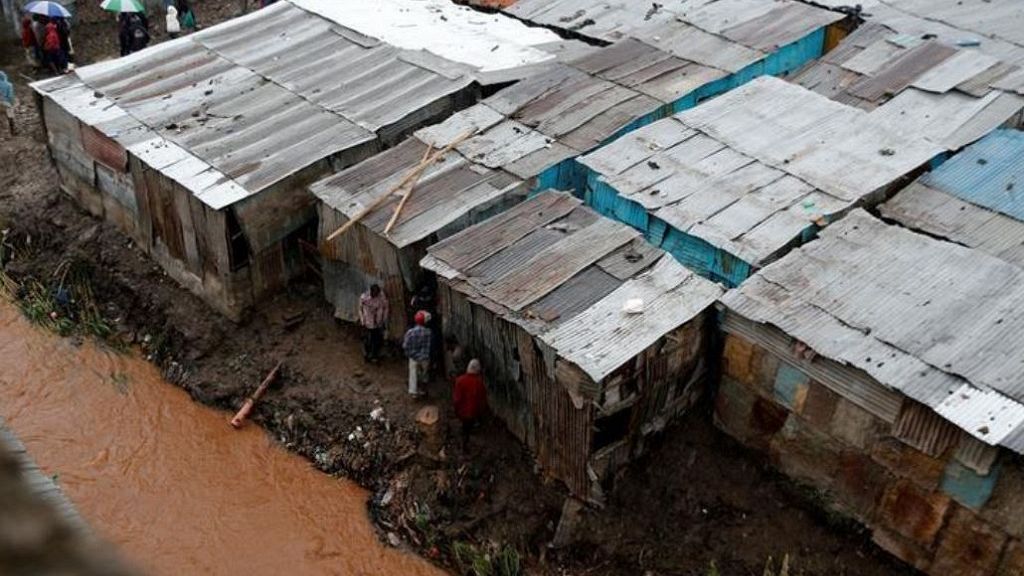
At least 100 Kenyans have died and some 200,000 residents have been forced from their homes by multiple rounds of flooding and mudslides that struck the African nation in April, the Red Cross said.
The floods have caused a humanitarian disaster that authorities say needs an immediate response before it worsens, the Times of India reported. Residents told the Standard that flooding has cut off health care facilities, making them unable to reach.
“We would urge the national government to declare this a national disaster so that deliberate effort can be made and resources mobilized to help the affected people,” Kenya Red Cross secretary general Abbas Gullet told reporters Sunday. “We need a national disaster management fund set up.”
With many roads cut off, rescuers had to airlift more than 300 people to safety amid the flooding in Nairobi, the Standard also said. Several dams are also in danger of overflowing as water levels continue to rise, and officials fear even worse damage downstream if that happens, the report added.
As the disaster persists, there’s another fear: illness. On both sides of Kenya’s border with Somalia, refugee camps were flooded, and the conditions have officials fearful that a cholera outbreak is imminent, the Telegraph reported.
“Our staff on the ground have seen the elderly, women and children struggling to survive while their flimsy shelters are knee-high full of stagnant water,” Victor Moses, Somalia country director for the Norwegian Refugee Council, told the Telegraph. “With limited access to proper toilets and clean water, it’s a ticking time bomb for disease outbreaks like cholera and malaria.”

Gov. Charlie Baker Seeks Federal Disaster Relief for 6 Mass. Counties Hardest Hit by March Nor’easter

Gov. Charlie Baker is seeking federal disaster relief for six Massachusetts counties hit hardest by the March 2-3 nor’easter that pounded the region with hurricane-force wind and rain and downed trees.

The Republican governor on Monday asked the Federal Emergency Management Agency for a major disaster declaration for Essex, Plymouth, Norfolk, Bristol, Barnstable and Nantucket counties.

Baker said preliminary estimates show emergency protective measures, debris clearance, and repairing or replacing damaged public infrastructure exceed $23.8 million — well beyond the statewide threshold of $9.5 million.

Baker is also seeking a disaster declaration from the federal Small Business Administration.

Photos: Aftermath of  the Nor'easter That Hammered New England
Tewksbury Police Department

The declaration would let the agency make low-interest home disaster and business physical disaster loans available to eligible applicants in Norfolk County and neighboring counties including Plymouth, Bristol, Suffolk, Middlesex and Worcester.

Building a kit for disaster

Building a kit for disaster

OKMULGEE, Oklahoma — The warm, moist air from the Gulf of Mexico hits the cool, dry air from Canada and a tornado is born. The birthplace is typically tornado alley, which includes Oklahoma.

The National Weather Service provides information on how to prepare for a tornado by staying informed of the current weather and any potential severe weather. Their website shows what an individual should do during a tornado, whether at home, the workplace or school, outside or in a vehicle.

But what about preparation before severe weather strikes?

U.S. government website www.ready.gov provides information on how to build a kit for disaster, including a checklist of recommended items to include in a basic emergency supply kit to be prepared.

According to the website, being prepared means having food, water and supplies to last for at least 72 hours.

Additional emergency supplies can be determined by individual needs. This includes prescription medications, cash, important family documents such as insurance and identification, sleeping bags and clothes.

After assembling an emergency kit, maintenance may be required and needs for families may change and should be rethought every year.

Keeping canned food in a cool, dry place, replacing expired items as needed and making sure boxed food is stored in a tightly closed plastic or metal containers will guarantee an emergency kit is up to date.

The website also recommends to consider kit storage locations since an individual’s location may not be known during a disaster, whether it will be work, home or vehicle.

Home kits should be kept in a designated place and ready in case evacuation is necessary.

Work kits should be stored in a ‘grab and go’ case and accommodate a person for at least 24 hours including food, water and other necessities such as medication.

Vehicles kits should have additional supplies with a basic kit, such as jumper cables and car cellphone charger.

For more information visit: www.ready.gov/build-a-kit

Delhi University professors for disaster management course

NEW DELHI: Six months after the University Grants Commission (UGC) sent a letter to all universities asking for compulsory courses on disaster management, geography teachers of Delhi University, concerned with the safety situation in the campus, have written to the DU vice-chancellor requesting the start of such a course.
In their letter, geography professor and member of the DU Teacher’s Association (DUTA), Vishwaraj Sharma, stated that DU needs a centre for disaster management studies.

“It is pertinent to note that whenever any disaster happens, it not only causes financial but also social and psychological sufferings in the society. Thus, the importance arises of conducting research and studying this discipline in the contemporary society,” the professor wrote to the vice-chancellor.

Sharma told TOI that only recently, JNU started its ‘Special Centre for Disaster Research,’ a trans-disciplinary centre where research would be conducted including social sciences and natural sciences and will start courses from next year.

Amita Singh, chairperson of the centre, explained that the centre will allow opportunities of research and “will also start master’s courses where students will be taught about disaster management and response.”

Sharma also mentioned TOI’s report on Jamia Millia Islamia beginning its centre for climate sustainability and disaster management where they are offering MSc and diploma courses ‘specific to Delhi’.


Japan partners with ASEAN countries on disaster insurance

TOKYO — Japan will work with Southeast Asian nations like Laos and Myanmar to provide immediate financing after natural disasters so that recovery funds can be quickly distributed.

The Southeast Asia Disaster Risk Insurance Facility will be announced in May at the annual meeting of the Asian Development Bank’s board of governors. Operations are slated to begin in 2019.

Participating countries will make the insurance payouts while Japan provides initial support through funding. The facility will invest funds it has accumulated and take out reinsurance from private insurers in Japan and elsewhere.

The facility is meant to provide rapid financial relief after typhoons, earthquakes and other disasters. In a flood, for example, it will determine payouts based on precipitation levels — a faster method than the current one that relies on on-site inspections to assess damage.

Japan’s Ministry of Finance has been working to set up the new insurance framework in Laos, Myanmar and Cambodia, and it could eventually be extended to other members of the Association of Southeast Asian Nations.

The facility aims to reduce financial risk in Southeast Asia, where large losses from frequent natural disasters could destabilize the finances of afflicted countries. A 2015 flood in Myanmar was estimated to cost $1.5 billion, for instance. Japan seeks to curb this risk by offering insurance expertise and financial support.

source: https://asia.nikkei.com

Scholar on Nuclear Disasters: ‘I Am Not Optimistic About Our Collective Future’

On the 32nd anniversary of the most destructive man-caused disasters in history, the explosion at the Chernobyl nuclear power plant in northern Ukraine, Sputnik discussed the liquidation of nuclear incidents throughout the world with Majia H. Nadesan, Risk Innovation Fellow in the Graduate Faculty of Hugh Downs.

Sputnik: In your view, how do politics affect such disasters as the Fukushima incident?

Majia H. Nadesan: Politics is an inevitable dimension of social life. Unfortunately, consolidated political power over critical decision-making can have catastrophic consequences, particularly when decision-makers are driven by singular logics that are intolerant of dissent.

We see in the case of nuclear energy how centralization of decision making power legitimized by symbolic appeals to national and economic security have produced never-ending catastrophes, illustrated best by Hanford in the US, Chernobyl in the Ukraine, Mayak in Russia, and Fukushima Daiichi in Japan.

Each of these catastrophes poisons air, soil, and water as toxic radionuclides migrate, bio-accumulate, and bio-magnify in biological life.

Although no authority will deny the hazards of radioactive activity and the challenges of nuclear waste management, the institutionally vested logic of nuclear, what Gabrielle Hecht referred to as “nuclearity,” routinely seeks to contain and trivialize representations of radiation risk. We saw this tendency toward trivialization in the WHO’s rush during the early stages of the Fukushima Daiichi disaster to declare no long-term health risks.

It is relatively easy to contain and trivialize representations of radiation risk because effects for all but the most extreme exposures are protracted and do not manifest equivalently across exposed populations because of variations across exposure forms and conditions and the contingencies of biological vulnerabilities. Most troubling, the transgenerational genetic and epigenetic effects of elevated exposure to chemically toxic and radioactive elements are studied least frequently of all and yet may pose the greatest risk to biological life.

Containment and trivialization of radiation risk are foundational to the symbolic logic of nuclear security, yet blind us to the hazards we’ve engineered into our infrastructures, as observed by Ulrich Beck.

Sputnik: What measures need to be taken to prevent these catastrophes from happening?

Majia H. Nadesan: Efforts to redress catastrophic risks must first and foremost acknowledge the scope and severity of hazards. Powerful governmental and corporate organizations vested in the nuclear industry and its symbolic logic of national security are often unwilling to take this first step and so we see efforts in the US to extend the operations of antiquated reactors and in Japan efforts to return Fukushima refugees to areas with still-elevated radiation levels.

Failure to acknowledge infrastructural hazards across the nuclear supply, utilization, and waste cycles promises more disasters and each one will contribute to the genotoxic load of radionuclides circulating and concentrating in the biological life upon which we depend.

Sputnik: What are your thoughts on the way the previous catastrophes were handled?

Majia H. Nadesan: It is quite instructive to compare how Chernobyl was managed as compared to Fukushima. There is little doubt that the Soviet deployment of hundreds of thousands of liquidators was on a scale that has not yet been surpassed. The Soviets also set the exposure level at a fraction (5 millisieverts) of the up-to-twenty millisieverts of annualized exposure now allowed by Japan’s government. However, many observers note that the autocratic nature of the Soviet system and the availability of space for relocating refugees contributed to the more aggressive mitigation and evacuation in Chernobyl as compared to Japan.

That said, I believe there has been a shift in the management of risk globally towards “adaptation” and “resilience.” The nuclear control paradigm has ceded the inevitability of accidents, but by forcefully trivializing risk, has created a symbolic rationale for requiring individuals and communities to adapt to increasingly contaminated environments. Risk reduction techniques are individualized in everyday decisions such as what food to eat and whether to allow your children to play outside or not as you adapt to your more contaminated environment.

Sputnik: In your view what are the most critical risks impacting disasters like Chernobyl and Fukushima?

Majia H. Nadesan: The most critical risks illustrated by the management of the Chernobyl and Fukushima nuclear catastrophe derive from the failure of learning and the attendant and deepening willingness of governments to individualize radiation risk management in the wake of radiological emergencies.

Together, the trivialization and individualization of risk management externalize nuclear’s costs and thereby preclude transparent comparative analysis of the risks and benefits of competing energy supply chains. More nuclear catastrophes are an inevitable outcome of this narrowing of options.

Sputnik: Certainly catastrophes of such proportion have led to governments improving their work in the nuclear industry, do you think there is any chance that a similar disaster may occur?

Majia H. Nadesan:  There is no doubt that more nuclear disasters are on the horizon as aging nuclear infrastructures are tested by earth’s forces, including earthquakes, volcanic eruptions, and climatic changes, and by the inevitability of human error and malice (e.g. cyber-attacks).

Chernobyl Exclusion Area

I suspect that although the incidents of severe accidents will increase, the public will hear less about these accidents. Driven by the logic of adaptation, governments across the globe are re-thinking allowable exposure levels. In addition to increasing exposures standards, governments may censor or otherwise limit access to data on measured pollutants. For example, we see in the US how the EPA’s Radnet System shutdown monitors and limited access to beta data in the months and years following the Fukushima disaster. The public’s right to know appears to be faltering.

Since radiation detection requires access to specialized equipment, controlling perceptions of radiation risk may be easier to achieve than controlling actual exposures.

I am not optimistic about our collective future.

The views and opinions expressed by Majia H. Nadesan are those of the analyst and do not necessarily reflect those of Sputnik.

Responding to Natural Disasters

At any given moment, millions of people are grappling with the lingering impacts of a natural disaster. Last year a series of massive earthquakes struck Mexico. Floods in India, Nepal and Bangladesh killed over 1,200 people. Historic wildfires raged across the state of California and a string of powerful hurricanes devastated U.S. cities from Texas to the Virgin Islands.

These large events commonly steal the media spotlight for only a short while before they are replaced with the next crisis. However, the effects of these disasters can linger for years after their memory has faded from the public eye. Periodic reminders about the ongoing state of disarray in disaster zones can be just as important to the recovery efforts as coverage immediately following the event.

It may be easy for most RIT sudents who have no direct connection to places like Houston or Puerto Rico to forget about their ongoing plight, but the university is home to over 18,000 students. For some members of our community, the effects of hurricanes and floods are not so difficult to remember at all.

“We’re a global community. We have people from everywhere, so when these types of things happen odds are there are going to be students here who are impacted in some way,” said Kerry Foxx, director of the RIT Center for Leadership and Civic Engagement (CLCE).

Even if no one we know has been directly impacted, when most people hear about a devastating natural disaster our first impulse is to help immediately in some way, often by giving money or material goods to help the relief effort. However, despite the urgency of the situation, if we don’t stop to think about the impact of our well-intentioned charity we may wind up doing more harm than good.

Coordinating the Relief Effort

In the U.S., large-scale disaster relief operations involve a collaboration between federal and state government, non-profit relief agencies, local leaders and survivors themselves. These efforts often include tens of thousands of volunteers and personnel that must be coordinated across dozens of organizations.

This hardscrabble network must establish itself in a disaster zone within a matter of days in order to find out what damages occurred and who needs help. Unfortunately, one of the biggest challenges to restoring order immediately after a disaster is all the help that floods into the affected area. Leaders in the disaster zone have to manage the often overwhelming influx of volunteers, financial capital and physical donations so that nothing gets lost on its way to survivors.

It takes some time to build up enough infrastructure to begin accepting large volumes of donated physical goods like canned food and bottled water, toiletries, building supplies or even furniture and clothes. All these goods are often needed and appreciated long-term, but when too many of them arrive in a disaster zone too quickly, it creates what relief personnel often refer to as “the second disaster.”

“After Hurricane Katrina, people were sending clothes down to the area and we know that most of them had to be destroyed because there was no infrastructure in place to get the clothes from the port to people who needed them,” Foxx said.

It’s not uncommon for volunteer centers to be forced into tossing out well-intended but poorly timed donations for lack of a place to store them. Disaster relief leaders generally recommend not donating anything in the first few days and weeks after a disaster except for money or, if you have specialized skills, your time. Sending the right thing at the wrong time can be worse than sending nothing at all.

“There comes a point in time when those types of things are helpful. It’s never in the immediate wake of a disaster,” Foxx clarified.

That’s why financially supporting experienced organizations which are part of the Volunteer Organizations Active in Disaster (VOAD) council is the best way to help initially. The American Red Cross, All Hands and Hearts and Habitat for Humanity are just a few of the major groups on the list. These organizations have the expertise, supply chains and connections to stretch your donated dollar as far as it can go.

Student Efforts

In the wake of past disasters, many RIT students have risen to the challenge and jumped aboard the effort to send financial support to recently afflicted areas. Greek life leaders have organized events to raise money, campus clubs like the Student Environmental Action League have run fundraisers and bake sales and the university has hosted Red Cross blood drives.

A number of students traveled in person to disaster zones in Texas and Florida to volunteer their time with RIT’s Alternative Spring Break program. Maria Lelie is a second year Business Management major minoring in Environmental Studies, who went to Houston and spent time with a woman whose home was destroyed when Hurricane Harvey hit the Gulf coast last fall.

“When we got there Benny [the client] was standing outside of her home so we got to meet her right away,” Lelie said. “She told us why her house looked the way it did, what happened to her, what her experience was in the hurricane. Then we just went in and started working.”

Something that’s often missed in the rush to help as many people as quickly as possible is the human element of any disaster. People don’t want to be treated like charity cases to be pushed efficiently through a system, and that kind of detached way of helping isn’t really what most volunteers are after. The relief organization Lelie worked with during her Spring break trip, Operation Blessing, understood this.

“Their one quote was ‘hope inspires healing,’” Lelie said. “They wanted us to talk to the homeowners a lot because it would give them hope and faith that they’re going to have their home restored. It comforts them, makes them feel like they’re not alone in the process.”

Some students, like fifth year Information Technology major Thomas Kurien, have gotten even more creative with their efforts to contribute. He used his Twitch videogame streaming channel, Thespacen3rd, as a platform for disaster relief after Hurricane Harvey.

“We have quite a few people in Texas as well as Florida,” Kurien explained. “Talking to them and listening to their hardships, I was like, ‘Enough is enough.’ I’ve got a pretty big community now, so we banded together to raise money for charity.”

Kurien reached out to other prominent streamers to coordinate a 24-hour streaming marathon. Together, they raised almost $12,000 for the American Red Cross’ hurricane relief fund.

Moving Forward

As the inevitable finger-pointing and political unrest surrounding the disasters continue, stories like these get to the heart of what natural disasters should mean to the world at large.

“When the time comes for a scenario like hurricanes or wind storms or whatever to happen to you, wouldn’t you want the same kind of help to get back up and running?” Kurien asked.

For survivors, the immediate aftermath is usually a time of incredible loss and uncertainty. But the silver lining of any disaster is the outpouring of support and the bonds that grow as people from every walk of life come together to heal devastating trauma. Cities that were the epicenter of widespread destruction become the focal point of renewed communities that spring up around the wreckage.

source: https://reporter.rit.edu/features/responding-natural-disasters-0

How to Avoid a Retirement Disaster

The $140 billion drop in the value of General Electric Co.’s stock price during the past year gets the full human interest treatment in the Wall Street Journal. I don’t want to minimize the deep individual suffering of those who had their retirement savings tied up in GE’s stock, but it is as good a time as any to examine a host of human failings. My hope is to help others avoid a similar fate.

The Journal sums up the scope of the problem this way:

The stock value lost by GE in the past 12 months is twice the amount that vanished when Enron Corp. collapsed in 2001 — and more than the combined market capitalization erased by the bankruptcies of Lehman Brothers and General Motors during the financial crisis. Longer term, GE’s market capitalization has fallen more than $460 billion since its 2000 peak.

This sort of thing has happened many times, as that paragraph indicates, and it will surely happen again. There are several forces that keep driving these errors. Recognizing and understanding them is crucial:

  • Survivorship bias: There is a natural tendency to evaluate the world around us based on what we see and remember. That can lead to a somewhat distorted view of how stocks behave over the long run.

    One of my favorite examples of this is the case of the forgotten and then found stock certificate. It resurfaces every few years. A classic example is the man who in 2000 discovered he owned EMC shares purchased for about $16,000 year earlier that now were worth about $5 million; a more modern example is a forgotten and rediscovered purchase of Bitcoins.

    The purported lesson is that if you just buy a good stock or asset, and forget about it for a few decades, you can become rich. I suspect that is what the GE employees (and all too many others) were thinking when they overweighted their retirement accounts with company stock.

    But here is the problem with this concept: These stories are only newsworthy when they show great wealth creation. To those who discovered dusty old shares of Enron or Lehman Brothers in 2015, no one would write the article “Local man finds worthless paper in attic.”

    This is a classic example of survivorship bias, and it can skew investor expectations for future returns of individual investments.

  • Failing to appreciate diversification: For a variety of reasons, people do not understand the value of having a broadly diversified portfolio. Perhaps they think it shows a lack of corporate loyalty to their employer; maybe it reflects a bit of a lottery-ticket mentality that perhaps your employer is the next Apple or Amazon or Alphabet (Google). Wishful thinking might suggest diversification is giving up a potential fortune.

    But every worker who gets company stock also gets a salary from that same employer. That is a very intense concentration of financial risk. For those workers, diversifying their company stock into broad indexes is the prudent approach. They won’t become Jeff Bezos, the world’s wealthiest person, but they will have happy, well-funded retirements. This is a rational and prudent trade-off (especially since almost none of us are going to become the next Jeff Bezos anyway).

  • Risk and reward are closely related: The flip side of all high expected returns is increased risk of lower returns. To me, this is the single most important rule of investing. To get better than average returns you must be willing to accept higher — sometimes much higher — levels of risk. This means that sometimes, you will receive lower returns and even losses. This is how investing works.

    The inverse is that if you want safety you must accept the inevitability of lower returns. Failing to understand these simple principles is the biggest error almost all individual investors make.

  • Failing to create a financial plan: All of this comes back to the basic question of why invest in the stock market in the first place. If your goal is to become rich, then (hopefully) you understand the odds, and sometimes the roll of the dice goes against you. But the more rational goal for most employees of big companies is to have more measured objectives: saving to buy a home, paying for the kids’ college, and most important of all, securing a comfortable retirement.

    If those GE employees had created a long-term financial plan, I believe it would have been obvious to most if not all that they were taking on more risk than was necessary to achieve those goals.

The fall in GE’s shares has caused many people a lot of pain. It could easily have been avoided.

This column does not necessarily reflect the opinion of the editorial board or Bloomberg LP and its owners.

To contact the author of this story:
Barry Ritholtz at [email protected]

source: https://www.bloomberg.com/view/articles/2018-04-23/how-to-avoid-a-retirement-disaster

Emergency Proclamation Issued Declaring Kaua‘i a Disaster

Emergency Proclamation Issued:

Gov. David Ige today issued an emergency proclamation for the County of Kauaʻi after unprecedented rains caused flooding and a series of landslides on Kūhiō Highway.

“We’ve mobilized to assist Mayor Carvalho and his emergency management team. The Hawaiʻi Guard and the City and County of Honolulu are preparing to help Kauaʻi with search and rescue operations as crews continue to clear the roadway,” said Gov. Ige.

The proclamation authorizes the expenditure of state monies as appropriated for the speedy and efficient relief of damages caused by this weather event.

Radar imagery 4.15.18. PC: NOAA/NWS


Flood Warning Extended

The National Weather Service in Honolulu has extended the Flash Flood Warning for the island of Kauaʻi until 4:45 p.m. on Sunday, April 15, 2018.

At 1:28 p.m., intense rainfall with rates at least 4 to 5 inches per hour continued over north and east Kauaʻi. The heaviest rainfall has spread east and will produce a rapid and significant rise in the Kapaʻa Stream and Wailua River water levels.

This is in addition to the severe flooding ongoing in Hanalei River.

Road access west of Princeville is not possible and several communities are isolated due to washed out roads.

Emergency managers are advising the public to avoid any unnecessary travel to north and east Kauaʻi until further notice.

State mobilizes response to Kauaʻi floods and landslides

Governor David Ige this morning assembled state emergency management leaders to assist Kauaʻi County’s response to serious flooding and landslides on that island.

In a video conference with the Kauaʻi Emergency Management Agency, first responders, and Mayor Bernard Carvalho, the governor committed to providing all available resources to helping Kauaʻi residents.

“In a situation like the Kauaʻi flooding, the response begins at the county level,” Ige said, “but we’re coordinating help from around the state. Based on the county’s needs, we may also bring in other state agencies like DLNR to provide specialized skills and personnel. I especially want to recognize our Department of Transportation personnel who worked all night to try to keep access open to these affected areas.”

The governor’s emergency proclamation provides relief for damage caused by this weekend’s floods and landslides.  Authorities continue to monitor conditions across the state as the weather system makes its way south along the island chain.

At the same time, Adjutant General and Hawaiʻi Emergency Management Agency Director Arthur “Joe” Logan agreed to an initial commitment of Hawaiʻi National Guard personnel to work with county first responders in canvassing and assessing affected areas, and helicopters to assist in survey flights and rescues, if necessary.

Logan said the National Guard would continue to monitor conditions on Kauaʻi and confer with Kauaʻi County officials to determine what additional assistance may be needed.

HI-EMA Administrator Thomas L. Travis is working with Honolulu City and County Department of Emergency Management officials to determine what assets Oʻahu DEM can provide to assist Kauaʻi County.

Ige thanked the first responders and others who worked through the night to address the mounting challenges brought by the heavy rains. “This is a team effort,” Ige said. “Nobody goes through this kind of disaster alone.”

Red Cross Response:

American Red Cross volunteers opened shelters at Hanalei Elementary, Kapa‘a Middle School, and Church of the Pacific in Princeville at 8 p.m. on Saturday night for those affected by flash flooding and landslides on the north shore.

Air rescue operations have commenced on the North Shore area of Kauaʻi. The Kauaʻi Fire Department is coordinating with the US Coast Guard to provide air and search and rescue operations on the North Shore. A Honolulu Fire Department helicopter and rescue crew is being deployed to provide support. Red Cross has set up a reception center/shelter at the Church of the Pacific to receive evacuees from the North Shore.