Seminar Kaitan Peningkatan Risiko Bencana dengan Pencapaian MDGs

pengantar

pengantar

Pembaca sekalian, menarik sekali membahas kesehatan populasi rentan dalam penanggulangan bencana saat ini. Kesehatan ibu anak dan kesehatan reproduksi salah satunya yang juga menjadi target pencapaian MDGs kita tahun lalu, dan bagaimana peran sektor kesehatan dalam pelindungan kesehatan populasi rentan serta penanggulangan bencana dan krisis kesehatan ke depannya, yang mana kita ketahui bahwa ancaman bencana semakin meningkat dengan adanya pengaruh perubahan iklim yang otomatis juga berdampak pada peningkatan risiko kesehatan masyarakat. Pembaca sekalian, dapat menyimak reportase kegiatan seminar ini mulai esok pada link di bawah ini.

Masih dalam rangkaian seminar ini, kami membagi dalam tiga tahap sebagai berikut:
Tahap 1:

Pra Seminar adalah kegiatan melalui diskusi online untuk menggiring kesepahaman mengenai tujuan seminar antara penyelenggara, narasumber, pembahas, moderator, dan peserta yang ingin terlibat. Proses ini sudah berjalan awal maret hingga menjelang seminar

Tahap 2:

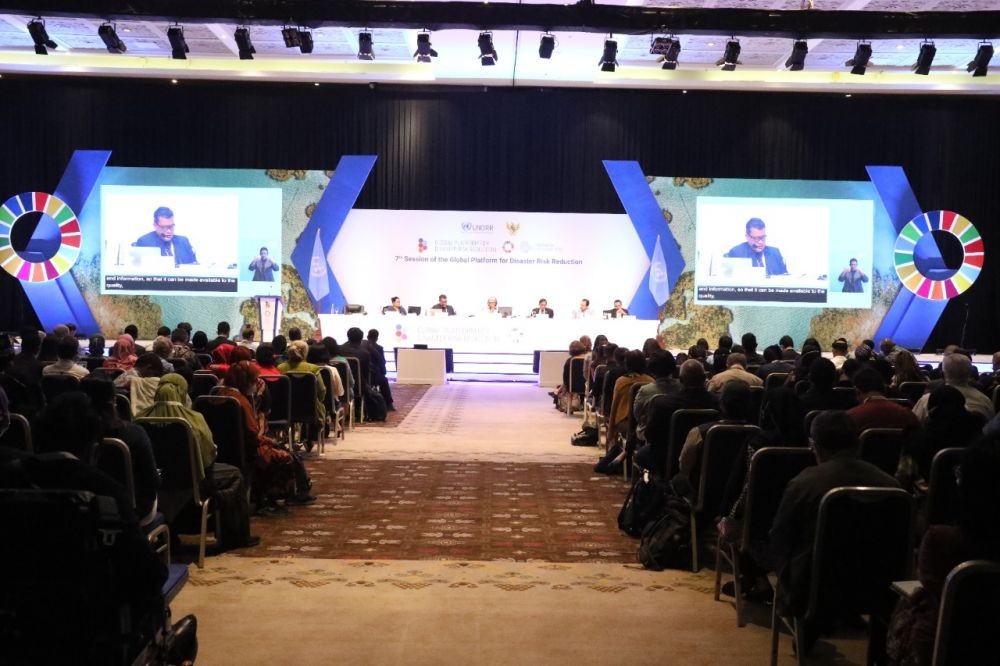
Seminar adalah kegiatan seminar yang berlangsung Senin, 16 Maret 2015

Tahap 3:

Pasca seminar adalah kegiatan lanjutan untuk kita bersama-sama merumuskan tujuan seminar dalam bentuk tulisan yang bisa dipublikasi ataupun kegiatan lanjutan yang disepakati bersama

Pembaca sekalian, kami mengundang seluas-luasnya rekan sekalian yang selama ini berkecimpung dalam kebencanaan dan kesehatan untuk terlibat dalam forum diskusi pasca seminar ini. Caranya dengan mengkonfirmasi kesediaan rekan sekalian ke email [email protected] dengan format Nama, Instansi tempat bekerja/mahasiswa/peneliti, nomor HP dengan subjek email Konfirmasi Tahap 3 Seminar Bencana.


Laporan:14th World Congress on Public Health

14wcph-1

14th World Congress on Public Health adalah forum kesehatan masyarakat yang diselenggarakan sekali dalam tiga tahun. Kali ini acara diselenggarakan di Science City, Kolkata, India. Kongres ini diselenggarakan oleh World Federation of Public Health Associations (WFPHA) dan Indian Public Health Association (IPHA) dan acara diselenggarakan pada Rabu-Minggu (11-15/2/2015). Kongres ini menghadirkan ahli kesehatan masyarakat dari berbagai belahan dunia. Pembicara berbagi pengalaman dan perspektif tentang kesehatan masyarakat dari berbagai negara, mulai dari India, Kanada, Brazil, Asia, Afrika, dan lainnya. Konferensi ini dibagi dalam lima acara besar yaitu pre-conference, plenaries & speakers, thematic sessions, concurrent sessions, dan free papers.

Kongres ini bertujuan untuk mendorong promosi “Rakyat Sehat-Lingkungan Sehat” dan akan mempertemukan ribuan peserta dari berbagai disiplin ilmu kesehatan masyarakat dari berbagai negara di seluruh dunia. Pusat Kebijakan dan Manajemen Kesehatan (PKMK) FK UGM mengirimkan tiga delegasi dari spesifik ilmu yang berbeda untuk melaporkan topik-topik yang menarik dan terkait dengan situasi di Indonesia di web ini. Simak reportase kegiatannya pada link berikut

 Hari I Hari II  Hari III  Hari IV  Hari V 

Badan Penanggulangan Bencana KBB Gagas Desa Tangguh

NGAMPRAH – Badan Penanggulangan Bencana Daerah Kabupaten Bandung Barat menggagas pembentukan desa tangguh akan bencana. Dalam dua bulan ke depan, Desa Cikahuripan, Kecamatan Lembang, diharapkan telah memenuhi syarat sebagai desa tangguh sekaligus menjadi percontohan bagi desa-desa lainnya.

Bupati Bandung Barat Abubakar menuturkan, pembentukan desa tangguh dimaksudkan sebagai upaya preventif dalam pencegahan bencana, sekaligus melakukan tindakan dini sebelum BPBD datang. Dia berharap, pembentukan desa tangguh dapat mengoptimalkan peran desa dalam menghadapi bencana.

“Soalnya, persoalan bencana itu kan tergantung upaya penanganan pertamanya. Kalau kejadiannya jauh, jadi akan tergantung upaya dari masyarakat di situ dulu. Itu yang sedang kami bina, sehingga desa memiliki masyarakat yang tangguh bencana,” kata Abubakar di Lembang, Kabupaten Bandung Barat, Senin (18/5/2015).

Menurut Kepala BPBD KBB Rony Rudyana, pembentukan desa tangguh merupakan hal yang penting karena hampir seluruh wilayah di KBB rawan akan bencana. “Selama dua bulan ini, kami akan membentuk desa tangguh di Desa Cikahuripan. Satu desa dengan draft standard prosedur operasional pelaksanaan desa tangguh,” tuturnya.

Pada 2015 ini, dia menambahkan, Desa Gunungmasigit di Kecamatan Cipatat dan Desa Kidangpananjung di Kecamatan Cililin juga bakal dilaksanakan program serupa. “Enam bulan sampai setahun ini, kami targetkan kedua desa itu jadi desa tangguh juga. Ke depan, seiring dengan penambahan anggaran untuk desa, kami akan dorong desa-desa yang lainnya juga,” imbuhnya. (Hendro Husodo/A-88)***

sumber: PRLM

ASEAN, United States to Bring Partnership to New Height

kerjasama-asean-australia

kerjasama-asean-australia

WASHINGTON D.C., 19 May 2015 – ASEAN and the United States of America reiterated their commitment to deepen cooperation under the framework of the ASEAN-U.S. Enhanced Partnership and to bring the relationship to a new height. This was the proposition of the 28th ASEAN-U.S. Dialogue that was successfully convened at the U.S. Department of State in Washington, D.C. on 15 May.

In his opening remarks, U.S. Deputy Secretary of State Antony J Blinken reaffirmed U.S.’ strong and unwavering commitment to Southeast Asia through the region’s most “important and dynamic” institution – ASEAN. As peace and stability remain the first and foremost condition for the region’s continued growth, the U.S. committed to continue working with ASEAN to address regional security challenges, build capacity to enhance ASEAN’s economic competitiveness, and strengthen the socio-cultural and people-to-people ties.

The two sides had candid and extensive discussions on the regional political and security landscape. Acknowledging the strategic challenges facing the region, both sides shared their vision of promoting a rules-based and norms-based regional architecture and patterns of behavior that are conducive for regional peace and stability. ASEAN welcomed the constructive engagement of the U.S. and other major powers in the region, as well as their valuable contributions to ASEAN Community building efforts.

The U.S. expressed its strong support for ASEAN unity and centrality and pledged its active participation in ASEAN-led mechanisms such as the ASEAN Regional Forum, the ASEAN Defence Ministers’ Meeting Plus, the East Asia Summit, and the Expanded Maritime Forum, to strengthen collaboration in addressing regional security challenges. These include, among others, maritime security and marine environment protection, cyber security, transnational crime and international terrorism, extremism and radicalisation, trafficking in persons, climate change and disaster management.

The dialogue took note of the serious concerns over the on-going developments in the South China Sea and its long-term implications for the regional strategic balance. Stressing the importance of peace, security, freedom of navigation and overflight in the South China Sea, both sides concurred that efforts must be expedited to ensure the full and effective implementation of the Declaration on the Conduct of Parties, especially in exercising self-restraint and avoiding actions or behaviors that might escalate tensions or further complicate the situation. They voiced their support for the peaceful resolution of all disputes in the South China Sea without the use or threat to use of force, in accordance with universally recognised principles of international law, including UNCLOS. They also encouraged the parties concerned to work expeditiously towards the conclusion of the Code of Conduct in the South China Sea.

Economic cooperation was an important agenda of the dialogue, with the U.S. being a firm supporter of the region’s growth and prosperity. Both sides agreed to push forward the implementation of the Trade and Investment Framework Agreement and the Expanded Economic Engagement (E3) initiative to build a stronger foundation for their economic ties, create more job opportunities in both regions, and further complement ASEAN’s efforts in building the AEC.

In addition, the meeting focused on addressing socio-economic issues and promoting sustainable development that requires a coherent and multi-faceted approach. ASEAN welcomed U.S.’ proposal to further strengthen cooperation in marine environmental protection, biodiversity conservation, climate change and disaster management, and green economy. Both sides ensured their commitments under the ASEAN-U.S. Joint Statement on Climate Change that was adopted by the Leaders at the 2nd ASEAN-US Summit in November last year, to work towards an agreed outcome of the 21st Session of the Conference of Parties of the UN Framework Convention on Climate Change in Paris later this year. They also agreed to build on the successes of the Brunei-US. English Language Enrichment Project, ASEAN-U.S. Fulbright Scholarship Programme, Young Southeast Asian Leaders’ Initiative, and ASEAN Youth Volunteer Programme, among others, to further promote their people-to-people ties and nurture young leadership in the ASEAN region.

Noting the satisfactory achievements in the implementation of the ASEAN-U.S. Enhanced Partnership Plan of Action (2011-2015), the meeting agreed to accelerate the formulation of the next five-year plan of action that is forward-looking and reflects the new priorities of both sides in the post-2015 period. They also recognised the need to work towards elevating the ASEAN-U.S. Dialogue Partnership to a strategic level.

The participants expressed their deepest condolences to the families of the victims of the Amtrak accident that occurred in Philadelphia on 13 May.
The dialogue was co-chaired by H.E. Aung Lynn, Permanent Secretary of the Ministry of Foreign Affairs of Myanmar, and H.E. Daniel R Russel, U.S. Assistant Secretary of State for East Asian and Pacific Affairs. It was attended by all ASEAN Member States and representatives of the ASEAN Secretariat, led by H.E. Hirubalan V.P., Deputy Secretary-General for ASEAN Political-Security Community.

ASEAN, Australia Strengthen Partnership to Support Disaster Management and Emergency Response

asean-australia

asean-australia

JAKARTA, 19 May 2015 – ASEAN Deputy Secretary-General for Socio-Cultural Community, H.E. Alicia Dela Rosa Bala and Australia’s first resident Ambassador to ASEAN, H.E. Simon Merrifield, today signed Amendment No. 6 to the Cooperation Arrangement between ASEAN and the Commonwealth of Australia represented by the Australian Department of Foreign Affairs and Trade on the ASEAN Agreement for Disaster Management and Emergency Response (AADMER) Work Programme 2010-2015 at the ASEAN Secretariat.

DSG Bala expressed appreciation to Australia for its steadfast assistance to ASEAN Community building efforts, especially in the area of disaster management, which is one of the areas of priority collaboration under the Plan of Action (POA) to implement the Joint Declaration on ASEAN-Australia Comprehensive Partnership (2015-2019). “Australia has provided much needed support for the implementation of priority projects under the strategic components and building blocks of the AADMER Work Programme, such as capacity building for our ASEAN Emergency Response and Assessment Team, establishment of the ASEAN Disaster Management Training Institutes Network and most importantly, the operationalisation of the ASEAN Co-ordinating Centre for Humanitarian Assistance on disaster management (AHA Centre),” she said. “Through the Cooperation Arrangement, Australia has also supported ASEAN’s strategic initiatives, including a lessons learned exercise of ASEAN’s post-Haiyan’s response, and  providing the capacity needed for ASEAN’s efforts in building cross-sectoral and multi-stakeholder collaboration,” DSG Bala added.

Meanwhile, Ambassador Merrifield reiterated Australia’s commitment to strengthen its cooperation with ASEAN on disaster management. “Australia has supported the implementation of the AADMER and the establishment of the AHA Centre from the beginning, and the signing today, extending our support until the end of 2016, demonstrates our commitment to using regional solutions to prepare and respond to disasters, and our recognition of ASEAN’s importance in this regional role,” said Ambassador Merrifield.

“I congratulate the ASEAN Secretariat and the AHA Centre for their strong and effective leadership, and for the significant support they have made to assist ASEAN Member States to improve their own response capabilities across the region,” Ambassador Merrifield added. 

Australia, which became ASEAN’s first dialogue partner in 1974, was also one of the earliest partners to pledge its support for the implementation of the AADMER Work Programme at the AADMER Partnership Conference held in May 2010 in Makati City, the Philippines.  This commitment was subsequently formalised through the signing of the Cooperation Arrangement on 9 August 2010. Since then, the Cooperation Arrangement has been amended to extend the assistance up to 31 December 2016, and reflects a total contribution of AUD 4,565,000.

Planning, Coordination Have Come a Long Way Since Eruption of Mount St. Helens

When Mount St. Helens erupted 35 years ago, officials were ill-prepared for the magnitude of the emergency.

Kate Prengaman, Yakima Herald-Republic | May 18, 2015

Mount St. Helens on May 18, 1980

(TNS) — When Mount St. Helens erupted 35 years ago Monday, killing 57 people and blanketing much of Central Washington in ash, officials were ill-prepared for the magnitude of the emergency.

“When the mountain blew, everyone was kind of out there on their own,” said Charles Erwin, emergency management specialist for the city of Yakima. “That’s what got the county started on doing disaster planning and coordinating with all the local jurisdictions.”

The explosion caused two different disasters on either side of the mountains. While the west side was dealing with mud and debris flows taking out bridges and roads, the prevailing winds pushed an estimated 520 million tons of ash eastward, turning Sunday morning in Yakima into midnight.

Local, state and federal officials say the eruption and the disorganized response prompted the development of planning and response protocols that officials say have made the region more prepared for a future eruption — because it’s only a matter of time before the volcano erupts again.

“We know we have recharge of magma chamber right now,” said Carolyn Driedger, scientist with the Cascade Volcanoes Observatory. “We’re fairly confident that the monitoring equipment we have there now will give us about as good a warning as we can get that there is magma rising. We could have an eruption with a few days of warning; it could be 100 years from now.”

And Mount St. Helens isn’t the only volcano Washington has to worry about. Mount Adams, Mount Rainier, Mount Baker and Glacier Peak are also capable of producing destructive mud and debris flows, known as lahars, and spewing ash.

Although Mount St. Helens has the most recent and most destructive activity, all five have generated ash or lahars in the past 300 years, according to the state’s hazard mitigation plan.

But in Yakima County, the primary danger is ash, according to the county’s emergency management plan.

Countless tons of it fell across much of the county during the 1980 eruption. It clogged waterways and cut visibility on roads to levels so dangerous that highways were closed for days. Merely walking in it kicked up clouds of ash.

Inhaling ash can cause lung damage, especially for those with existing respiratory conditions. Volcanic ash is acidic and when it combines with water it can create a form of sulfuric acid that can, in some cases, be strong enough to burn skin, damage crops and corrode machinery.

Preparing to deal with ash is the most important thing communities in Yakima County can do, Erwin said.

“What we’re trying to do again, since it’s far from people’s memory now, is to encourage all the cities to have plans for clearing ash from the streets and where to dump it and how to answer citizens’ questions about what to do with it,” Erwin said.

He recommended that all area residents add dust masks and goggles to their emergency kits to be prepared for an ash event.

Across the state, communities at risk from volcanoes work together on coordinated response plans, said Mark Stewart, spokesman for the Washington Military Department’s Emergency Management Division.

Each plan is different because each volcano is different, he said.

“Our five volcanoes have what I would call a different eruptive personality,” Stewart said. “We all know Mount St. Helens is a big exploder. Mount Rainier, on the other hand, is a lahar producer, and hundreds of thousands of people live in harm’s way of those lahars.”

One coordination plan addresses both St. Helens and Mount Adams, because the at-risk areas overlap. It’s developed by the Forest Service, state and federal geologists, and the emergency management officials from the surrounding tribes and counties, including Yakima and Klickitat.

The plan divides up responsibilities and channels of communication. For example, the Forest Service will make road closures as needed to protect public safety, and the state Emergency Management Division will coordinate the use of aircraft for emergency responses.

This multi-agency response plan simply didn’t exist 35 years ago, said Doug Ficco. When St. Helens blew, Ficco was a maintenance engineer with the state Department of Transportation from Southeast Washington to Southwest Washington, where he was trying to figure out how to save bridges from the vast amounts of water and debris gushing down from the mountain. Now as a DOT regional administrator in Vancouver, he said much has changed in terms of disaster preparedness.

“Back then, we didn’t do a lot of pre-planning for emergencies. We didn’t have relationships in place with the Corps of Engineers and the National Guard,” Ficco said. “It was a little chaotic.”

Now, he said, multi-agency emergency drills are part of the routine.

Putting the response plans into action starts with observational data of the volcanic activity from the Cascades Volcano Observatory, which is run by the U.S. Geological Survey.

Driedger said the 1980 eruption also triggered increased investment in monitoring equipment for the mountain and more research to understand what’s normal volcano behavior and what’s a warning sign that an eruption could be imminent.

“That eruption really changed the way we as scientists do business; we realized we need to work with emergency managers,” Driedger said. “We can draw a direct line from the St. Helens eruption to those coordination plans and awareness that we know today.”

Advances in volcano monitoring and communication technology mean that the region is more prepared today to get people out of harm’s way in time before an eruption, Stewart said.

“I have a high level of comfort that if it should happen again, procedures are in place to get critical infrastructure up and running and keep people safe,” Erwin said of Yakima County’s response plan.

But even with preparations to protect water supplies and power substations, and plans to get the roads cleared quickly, ash is still likely to cause problems.

In 1980, farmers were worried about the potential impacts to crops and there was little information about how best to respond. “It was such an unknown. Very few people have gone through being covered up by volcanic ash,” recalls Alan Taylor, who was then sales promotion manager for Northwest Cherry Growers in Yakima. “Going through that was all uncharted territory in agriculture.”

He said farmers tried a variety of techniques to remove the ash from crops quickly and to quell rumors that the ash could poison the cherry crop. But he said the biggest lesson farmers learned probably wasn’t how to be prepared, but realizing that sometimes Mother Nature just has the upper hand.

There are so many variables to a potential eruption — from what time of year to how much ash — that the ideal response from the industry will just depend on the conditions, agreed James Michael, vice president of Marketing for the Washington Stone Fruit Commission.

“In the case of the mountain blowing up, it’s not an exact science,” Michael said. “The technology in our industry is changing so rapidly that it’s hard to predict, but some of those investments in cleaning and washing technology could help salvage fruit after an incident.”

Driedger said the way Eastern Washington handled the ash challenge in 1980 provided a lot of important insight for scientists about the best way to protect water supplies and coordinate cleanup efforts.

“It was really the first modern eruption in U.S. history, and the people in Eastern Washington made a worldwide contribution by documenting their experiences in 1980,” she said. “One really important thing as we move on in time from that memorable eruption is that memory really needs to be transmitted down through time so future generations don’t forget that these are active volcanoes, and you need to be prepared for them to act up from time to time.”

©2015 Yakima Herald-Republic (Yakima, Wash.). Distributed by Tribune Content Agency, LLC.

source: emergencymgmt.com

Jumlah Korban Jiwa Gempa Nepal Tertinggi Sepanjang Sejarah

Kathmandu – Gempa Nepal meninggalkan duka mendalam. Bencana alam ini menyebabkan ribuan orang meregang nyawanya.

“Dua gempa besar ini menelan korban jiwa terbanyak sepanjang sejarah Nepal. Sampai saat ini jumlah korban mencapai 8.500 orang,” menurut keterangan otoritas setempat seperti dilansir dari Reuters, Kamis (18/5/2015).

Tak sampai di situ saja. Ratusan orang lainnya, baik warga Nepal mau pun asing, masih belum bisa diketahui keberadaannya. 

“58 Orang warga asing menjadi korban. Sementara untuk jumlah WN asing yang belum ditemukan jumlahnya 112 orang,” kata Perdana Menteri (PM) Nepal, Sushil Koirala.

Nepal diguncang gempa susulan pada Selasa 12 Mei 2015. Lembaga Geologi Amerika Serikat (AS) menuliskan, lindu kedua tersebut berkekuatan 7,4 skala Richter (SR).

Gempa ini terjadi di Barat Nepal. Tepatnya di Kota Namche Bazar. Besarnya kekuatan gempa, membuat guncangan terasa hingga ke Ibukota India, New Delhi, dan Ibukota Bangladesh, Dhaka.

Sementara gempa besar pertama mengguncang Nepal pada Sabtu, 25 April 2015, pukul 11.58 waktu setempat. Gempa saat itu berkekuatan 7,9 SR. (Ger/Tnt)

Govt urged to improve management of tsunami shelters

The Tsunami Alert Community (Kogami), an NGO educating people on disaster risk reduction in West Sumatra, is urging the provincial administration to improve the management of escape buildings or temporary evacuation places (TES) to increase their effectiveness.

Kogami executive director Tommy Susanto said that although the provincial and Padang city disaster mitigation agencies (BPBD) had announced a number of buildings as TES, their effectiveness was still in question.

“The buildings will not function optimally unless they come with signboards identifying them as TES, the owners agree to open the buildings when there is an earthquake that has the potential to cause a tsunami and people are regularly trained to evacuate to the buildings,” Tommy told The Jakarta Post, on Sunday.

He also questioned why a number of buildings located within 500 meters from the shoreline had been publicized as being TES despite the fact that they were at risk of being destroyed when a tsunami hit.

The only real new TES, according to Tommy, were two that were located in Koto Tangah. Both, which were opened only three weeks ago, were built by the National Disaster Mitigation Agency (BNPB) and each had the capacity to hold between 4,500 and 5,000 evacuees.

“Both are in need of better daily building management and people in the surroundings also need to be trained to make use of them,” he said.

Lack of management had led to traffic congestion and panic everywhere during the 2012 earthquake as hundreds of thousands of people drove to the east, away from the beach.

They did not make use of the buildings previously known as shelters, such as school buildings, because the school keepers would not open the gates for evacuees.

“Such things would not happen if the regional administrations had the guts to officially declare the buildings as TES and put signboards there,” Tommy said.

He said such a situation could occur again if the management of the TES buildings was unclear and people lacked knowledge.

Kogami recorded that between 300,000 and 400,000 of Padang City’s 1 million population were possibly threatened by a tsunami. Most of them lived in the Koto Tangah district, which is a sloping area and lacks escape routes for getting away from the beach.

Tommy admitted that efforts had been undertaken by the government after experts considered Padang to be a tsunami-prone city. Similar efforts had also been done by the private sector, including the Ibis and Grand Zuri hotels, which had declared their buildings to be public tsunami shelters.

Tommy, however, asked the BPBD to be selective in naming a building as a TES, to apply better TES management and to regularly train locals on the use of a TES. He also suggested that buildings located within 500 meters of a beach should not be named TES.

The head of the provincial BPBD’s prevention and preparedness division, Rumainur, said that there are currently 26 buildings with a combined capacity for 70,000 evacuees that could function as TES in Padang. The number does not include two more that are to be built this year in Koto Tangah.

Rumainur said that some 500,000 people in Padang live in tsunami red zones. Of them, 200,000 would not be able to escape away from the beach. The existing TES, he said, would be able to accommodate some one-third of the people.

“We only need to build TES to accommodate the remaining 130,000 people,” Rumainur said.

Of the existing TES buildings, according to Rumainur, most were government office buildings that had been rebuilt stronger after the 2009 earthquake, school buildings, campuses, mosques, new hotels and old buildings that had survived previous tsunami.

source : http://www.thejakartapost.com

Tanah Longsor Tercatat Jadi Bencana Paling Mematikan Selama 2014-2015

Tanah Longsor Tercatat Jadi Bencana Paling Mematikan Selama 2014-2015

Jakarta – Tanah longsor menjadi bencana yang paling mematikan selama tahun 2014-2015. Berdasarkan data BNPB selama tahun 2014, ada 600 kejadian longsor dengan korban 372 orang tewas, sementara pada tahun 2015 hingga Minggu (10/5/2015), telah terjadi 251 longsor dengan korban 74 orang tewas.

“Kejadian longsor seringkali jarang menjadi pembelajaran di masa berikutnya. Saat terjadi bencana semua sibuk, namun selesai tanggap darurat, semuanya lupa untuk memperbaiki agar longsortidak berulang kembali,” Jelas Kepala Pusat Data Informasi dan Humas BNPB, Sutopo Purwo Nugroho dalam keterangan tertulisnya.

Karenanya butuh kerjasama semua pihak untuk mengantisipasi akibat bencana longsor. Masyarakat yang tinggal di daerah rawanlongsor harus dilatih melalui pembentukan kelompok siaga bencana, pemerintah daerah perlu mereview Rencana Tata Ruang wilayahnya, dunia usaha, seperti PT Star Energy dan PTPN juga melakukan mitigasi bencana dengan memasang EWS longsor dan melakukan mitigasi bencana.

Bencana tanah longsor di Pangalengan Bandung hingga Minggu (10/5/2015) mengakibatkan 6 orang tewas, 3 orang masih tertimbun, 6 luka berat, 7 luka ringan dan 170 orang mengungsi.

sumber: TRIBUNJOGJA.COM

Policy Brief Challenges for Curriculum Development in Disaster Health Management:What we can do?

border-page

Policy Brief

Challenges for Curriculum Development in Disaster Health Management:What we can do?

This policy brief is addressed to policy maker and stakeholder in Higher Education Agency, Universities, Faculty of Medicine and Health, and Section of Human Resources in Ministry of Health

border-page

Introduction

Disaster events increase continuously and require adequate medical treatment. Education on disaster medicine and disaster management is important because the post-disaster requires a lot of health workers assistance. Health institutions and medical schools involved in disaster management. There are involvements on disaster management of both formally through education for students and informally through training for health workers.

Increasing threat of natural disasters and social is impacted to increasing the world’s preparedness with to enter disaster education into college, including disaster education in medical school. United States began to take notice of disaster education in medical school since the Sept. 11 attacks and outbreaks anthrax in 2001. Disaster preparedness followed by many countries as the incidence of natural disasters in the Southeast Asian tsunami and Hurricane Katrina in 2004 South America in 2005. In Indonesia, the tsunami Aceh in 2004 is start steps to develop disaster management.

Context and Challenges in Development of Disaster Health Curriculum

The first challenge in the development of health disaster management curriculum is up to the current disaster management and emergency by health personnel is still not good. Health workers have not been able to understand its role in emergency response and disaster management. Doctors are still not ready and feel less capable in dealing with disaster situations, such as an outbreak of disease after a disaster. The health workers have poor performance where they do not know the work area at the time of the disaster as well as the low approaches to leadership and coordination in disaster management in the health sector. In fact, lack of health care will bad impact for health workers and patients.

The second challenge is the medical school felt it was important to prepare students in the face of disaster, but still found the low quality of learning are developed. Many medical schools only develop disaster education as elective courses and informal courses. Curriculum developed health disaster is still unclear with the competencies required of students and not properly describe the role and collaboration with health professionals that took place in the system of the disaster. In addition, medical student insight is still low against disasters. However, students feel important for learning about disaster medicine.

The third challenge is the lack of coordination. Chaos in the management of health disasters often occur not because of a lack of resources but because of lack of coordination in health professionals. Students or health workers who have not received education or training of disaster management will feel confused face a chaotic situation at the time of the disaster. In hope, material of disaster health management for medical students can provide an overview of their role in disaster management along with other health professionals in a system.

Policy Recommendations

Based on the above challenges then we can provide a solution through learning methods approach of disaster health management. We can describing the real problem and situation of disaster through online learning, interactive video, simulations, and live exercise, field trips, discussions based on real cases and other. In some studies, disaster cases developed based on the local situation. Learning models to integrate the role of physicians in disaster management continue to be developed in disaster health management. Studies in disaster management learning geared to provide the best understanding for medical students about health disaster management, able to describe their role in the future of health disaster management, and be able to retain the knowledge of disaster management in spite of the long term between the occurrence of disaster to next disaster.

Disaster Curriculum for Medical Student, Faculty of Medicine UGM

Since 2010, Faculty of Medicine UGM has developed a block 4.2 about Health System and Disaster. Block 4.2. is the second block in year 4. This block is part of Phase 2 of the medical curriculum, entitled transition from Theory to Practice.

In this block, students learn about the health system and disaster management, which are closely related. A health system is a set of collections of components organized to accomplish a set of functions in health. The health system can be analyzed from a normal situation perspective. However due to the natural and man-made disasters, the system can be disturbed or even destroyed. Block 4.2 is divided into two modules and five weekly themes. The modules are: (1) Health System, and (2) Disaster Management. In Module 1, there are three weekly themes discussing: (1) The Concept of Health System, (2) Physician Payment Mechanism and Quality of Care, and (3) Leadership and Communication. In Module 2 there two themes: (1) Disaster Management and (2) Disaster Medicine.

To achieve goals of this block, particularly in module 2, we develop problem based learning beside lecture and tutorial based learning, such as disaster practitioners for guest lecture, practice session, and disaster exhibition in one week. Disaster exhibition always invited Disaster and Humanitarian NGO, Local Disaster Management Agency, District Health Office, Red Cross, and etc. All disaster exhibition participants and student were direct communication. This exhibition always becomes favorite session chosen by students.

Arranged by:

Madelina Ariani, SKM

Phone : +62 87815691175

Email : [email protected]
________________________________

dr. Bella Donna, M.kes

Phone : 0811286284

Email : [email protected]
________________________________