Skip to content

Category: Berita Internasional

What You Should Do Before You Build an Emergency Kit for the Cascadia Earthquake

What will the apocalypse look like? Ever since Nov. 8, it’s been hard not to imagine the United States morphing into a lawless, post-nuclear wasteland ruled by Immortan Trump. Yet Oregon faces a threat that’s arguably more dangerous than the rise of any despot, the looming Cascadia earthquake.

It’s a terrifying prospect, especially in the wake of New Yorker writer Kathryn Schulz’s notorious 2015 article, in which Kenneth Murphy of the Federal Emergency Management Agency ominously declared, “Everything west of Interstate 5 will be toast.” The quake is predicted to devastate Portland and up to 140 square miles of the Pacific Northwest—quite an event for a city where a few inches of snow is considered a “Snowpocalypse.”

When I first heard about this, I shelved it in one of the back corners of my mind, near my youthful love of The Phantom Menace. When I finally read “The Really Big One,” I was stabbed with despair: the collapse of a million buildings and our region’s economy. According to FEMA, thousands of people will die.

There’s not much we can do about that. What’s the best way to give ourselves a fighting chance? Build a disaster preparedness kit.

It’s not hard to find a list of items for that kit. But before you start shopping, pause for a minute and think about your overall strategy.


“There’s a lot of groundwork that needs to be done before you even start worrying about the kit,” says Althea Rizzo, geologic hazards program coordinator at Oregon Emergency Management.

Rizzo says the key isn’t to hit Costco and stuff everything on the Red Cross’ exhaustive list into a big duffle bag, it’s to make plans to stash that stuff wherever you expect to be when the quake hits.

“We really recommend that people look at their lifestyle, look at where they spend time, and just squirrel away food and supplies there,” she says. “Make sure you have a flashlight at work or a gallon or two of water. Maybe that’s all you can put in your cubicle, but if you do, it’ll still be more than you had yesterday.”

You’ll want to spread supplies across multiple locations—and in your car, which will be in multiple locations.

“We recommend people keep seven to 10 days’ worth of supplies in their car because we’re Americans, so we usually have our cars with us,” Rizzo says. “So if you have seven to 10 days of supplies at your office and seven to 10 days of supplies in your car, that’s two weeks’ worth of supplies.”

Of course, if disaster strikes while you’re at work, you’re still going to need a way to get home. The Hawthorne, Steel, Interstate and Fremont bridges are expected to collapse. Anyone who needs to cross the Willamette should prepare to walk across the revamped Sellwood Bridge or Tilikum Crossing, both of which are earthquake-resistant.

Rizzo is also quick to emphasize that communication is crucial to surviving any natural disaster. That’s why picking a post-fallout meeting spot for family and friends is important, as is tapping a relative who lives outside the impact area as an emergency contact.

The other pressing issue is water. If you’ve got water, you’ve got at least a few days to figure things out.

“One gallon per person per day is the rule of thumb,” says Monique Dugaw, director of communications for the Red Cross in the Cascades region. When expanding your kit, Dugaw says water, nonperishable food and first-aid supplies “are the three basics to start with.”

Rizzo also emphasizes the importance of post-disaster hydration. “At home, I have 14 days’ worth of water for two people,” she says “But that’s probably not going to be enough. So what I have is a couple of different ways to purify water.”

This is something anyone can do. A basic water-purification straw costs $14 on Amazon, allowing you to stash them in your car, house and office.

The more I talked and read and learned, the more I realized that survival, like anything, depends on strategy.

“Most of the people who died in the Indonesian earthquake and tsunami died because of the tsunami,” Rizzo says, “and they died because they did not know what to do.”

Disaster education increases community resilience

HAVE you ever heard the story of a girl named Tilly Smith? On Dec 26, 2004, Tilly and her family went to Phuket, Thailand, for a Christmas holiday. While at Maikhao Beach, she sensed something was not right.

The water was bubbling and swelling, the tide went out suddenly and the sea was fizzing. Tilly freaked out and shouted that a tsunami was coming.


The 10-year-old learned about tsunamis in her geography class two weeks before coming to Thailand. Tilly’s action saved about 100 people and because of that she was once called the “angel at the beach”.

Tilly’s experience teaches us that it is imperative for society to learn about every aspect of disaster education, starting from the understanding of different types of disasters to learning about the numerous ways to save lives.


The learning process should be carried out in the school system or through informal education for the masses. Regardless of the medium of learning, disaster education should be implemented immediately, since a catastrophic disaster will strike without any notice.

Disaster education is important not only because it raises public awareness of disasters, but because it will also provide useful knowledge on disasters.

The students and the general public could learn about various kinds of disasters or the signs of disasters.

At the same time, disaster education helps community disaster preparedness. Finally, learning about disaster will facilitate the community to act appropriately in any disaster. At the end of the day, all of these will strengthen community disaster resilience.

Community disaster resilience refers to the ability of the community to face the disaster and their capability to rebuild their lives to the pre-disaster situation.

Besides the ability of a community to “bounce back” (i.e. resume normal functioning) to pre-disaster conditions, community resilience also involves the capacity of the community to “bounce forward”.

Malaysia is regarded as a fortunate country (particularly Peninsular Malaysia), which is not vulnerable to natural disasters such as earthquakes and hurricanes.

However, Malaysia is exposed to other types of catastrophes such as floods, droughts and haze.

Kelantan, Terengganu, Pahang, Perak, Johor, Sabah and Sarawak are often hit by floods, particularly monsoon floods.

On December 2014, most of these areas were hit by massive floods.

The National Security Council Malaysia confirmed that the floods, popularly called the Bah Kuning, that hit Kelantan were the worst in the history of the state since 1967.

According to the council’s report, the water level of Sungai Kelantan at Tambatan DiRaja, which has a danger level of 25m, reached 34.2m in 2014 compared to 29.7m in 2004 and 33.6m in 1967.

The 2014 floods taught us that being better prepared, especially at the community level, is crucial.

As the community is the “first responder” in any disaster, they should be well-prepared to face the calamity.

Preparedness is part of disaster education. In terms of Malaysia, site-specific disaster education programmes are crucial. In other words, this kind of education is vital, especially for communities prone to disasters.

The education programme must not be done in an ad hoc manner.

A well-organised and consistent disaster programme is essential in order to enhance overall community disaster resilience.

The preparedness effort is natural in the life of any person.

Even in Islam, making a systematic preparation or arrangement before any disaster event is strongly recommended.

In the Quran, the story of Prophet Yusuf’s preparation for a disaster (famine) is very enlightening.

He interpreted a king’s dream to mean that there would be seven years of abundance and the land should be properly cultivated.

This would produce an excess of good harvest, more than the people needed and the excess should be stored.

Following that seven years of abundance, there would be seven years of famine during which time the excess grain could be used.

He also advised that during the famine they should save some grain to be used for seed for the next harvest.

Prophet Yusuf also added that after seven years of famine, there would be a year during which water would be plentiful.

If the water was properly used, grapevines and olive trees would grow in abundance, providing the community with plenty of grapes and olive oil. (Yusuf, 12:46-49)

The story teaches us that disaster preparedness is important.

In Malaysia, carrying out a disaster preparedness programme, be it in terms of education, technology advancement or food storage, is essential and should be strongly encouraged.

Azrina Sobian is a Fellow at Ikim’s Centre for Science and Environment Studies. The views expressed here are entirely her own.

Responding to humanitarian crisis, a major challenge to NEMA – DG

Responding to humanitarian crisis, a major challenge to NEMA - DG

The Director General of the National Emergency Management Agency (NEMA), Muhammad Sani Sidi has lamented that responding to the current humanitarian challenges in Northeast Nigeria was one of the major challenges of the agency in 2016.

NEMA’s Head of Media and Public Relations, Sani Datti said Sani Sidi disclosed this at the annual retreat organized for Members of the House of Representatives Committee on Emergency and Disaster Preparedness in Jos Plateau State at the weekend.

He quoted him as saying “this year has been challenging just like last year, we have been occupied responding to the issues in  North east and North west, particularly Zamfara State.

“Insurgency is new to us as a people and as a country, managing its consequence will certainly be new to us, but we are learning and I want to assure you that we are learning fast as an agency and as a country.”

According to Datti, the Chairman of the committee, represented by the Vice Chairman, Hon. Ali Isa (JC) in his remarks, commeded the agency for making judicious use of the little resources it received, adding that it had been very effective in handling most of emergency cases in the country.

Isa promised that the committee will look at the Act of the agency with a view to enhance and improve the functions of the agency.

Read more at http://www.dailytrust.com.ng/news/general/responding-to-humanitarian-crisis-a-major-challenge-to-nema–dg/176679.html#7wYAEXWgPvaloqa8.99

Drones to the rescue: Could UAVs be used to deliver aid to disaster zones?

The possibility of using drones to deliver humanitarian aid in the wake of natural disasters in the Asia-Pacific region will be investigated as part of a new research project.

For the next nine months, a research team funded by the Australian Red Cross and the Department of Foreign Affairs will examine how drones could help in relief efforts.

“After a natural disaster, one of the most critical elements is time,” said Peter Walton, Director of International at the Australian Red Cross.

“The aim is [to find out] is this a way to get humanitarian aid to be more effective and faster?”

The team will head to Fiji — hit by Cyclone Winston earlier this year — and other South Pacific countries.

To begin with, researchers will assess what drones can do after a severe cyclone that conventional aircraft, like planes and helicopters, cannot.

After recent cyclones in Fiji and Vanuatu, it was several days before many areas could be safely overflown to assess damage.

“The cloud cover was low, the weather conditions were very poor,” said Mr Walton.

“Drones offer us an ability to actually fly at much lower levels. [They] give us the opportunity to get GPS coordinates so we know exactly what has happened where.”


Patrick Meier, executive director of WeRobotics and a leading expert in the use of drones in humanitarian assistance, said drones could fill the “vacuum of information” in the wake of a disaster.

“Understanding who has been affected, how badly, and where, is absolutely key. Otherwise you’re just guessing,” he said.

Based in Washington, DC, Mr Meier will lead the research project in the South Pacific. He also worked in the region in Vanuatu after Cyclone Pam in 2015. His team used drones to assess recovery efforts.

“This is important, because we need to identify the price, the costs of the damage in order to basically be able to rebuild.”

The study will look at some of the potential issues surrounding the use of drones, such as whether they comply with local aviation laws, and making sure their operation does not offend cultural sensitivities.

Ultimately, the goals will be to permanently base drones in South Pacific countries and train local operators.

Media player: “Space” to play, “M” to mute, “left” and “right” to seek.


00:00

00:00

AUDIO: Listen to Norman Hermant’s story on AM (AM)

“It takes time to fly international teams, it takes money to fly international teams around the world,” said Mr Meier.

“Why not work with first responders, who are by definition the local partners and the local communities, and build their capacity?”

The study will also look at what is the holy grail for drone operators who work in humanitarian relief: the possibility that drones could eventually be used to deliver vital emergency supplies, such as medicine and food, to areas isolated after a disaster.

“As Unmanned Aerial Vehicles (drones) become more available, more common, then I think it’s absolutely feasible that we could look at dropping essential aid items,” said Mr Walton.

“But firstly we have to make sure that it’s possible.”

First the tsunami took their homes. Now it’s taking their memories

The 2011 Japan earthquake and tsunami appears to have led to an increase in dementia in the years following the disaster. Scientists have shown the number of people with dementia symptoms trebled in the aftermath, with those who lost their homes, friends and relatives at most risk.

Natural disasters pose major risks for older people – their medical care can be disrupted and they face social isolation as a result of the displacement. While there has been research into the impact natural disasters has on mental health, it has been largely limited to the development of post-traumatic stress disorder (PTSD).

However, researchers from the US and Japan have now been able to examine the effect of the natural disaster on mental health thanks to a survey taken carried out shortly before the tsunami struck. In their study published in the journal PNAS, scientists looked at over 3,500 survivors of the disaster aged over 65 to work out if dementia risk increased – and, if so, what factors were behind the rise.

The Japan Gerontological Evaluation Study was carried out seven months before the earthquake and tsunami. It looked at the health of older people living in communities around 80km (50m) from the earthquake’s epicentre, allowing the team to assess the risk factors for health issues like dementia, stroke and hypertension. Researchers followed up with the survivors two and a half years after the disaster.

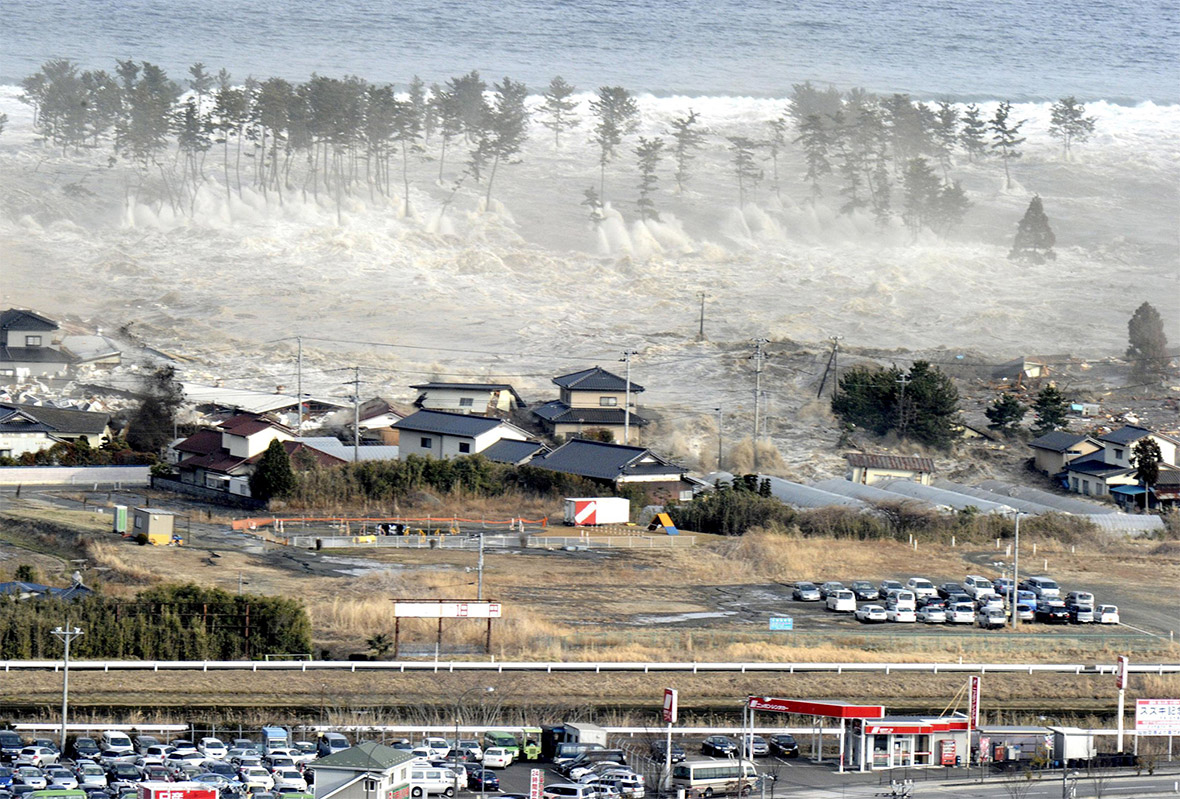
Japan earthquake tsunami then and now
Natori city in Miyagi prefecture is seen being engulfed by a huge wave as the tsunami hits on 11 March 2011Kyodo/Reuters

Before the tsunami, 4.1% of participants had been assessed as having symptoms of dementia. After the disaster, this rose to 11.5%. They found the biggest impacter was people losing their homes, more so than losing friends and family. People who ended up in temporary housing showed the highest levels of cognitive decline – the greater the damage, the greater the cognitive decline.

“The severity of housing damage was significantly associated with cognitive decline after controlling changes of covariates and risk factors during the follow-up period,” the team wrote. “Cognitive decline should be listed as a health risk of older survivors in the aftermath of natural disasters.”

“In the aftermath of disasters, most people focus on mental health issues like PTSD,” said Hiroyuki Hikichi, lead author of the study. “But our study suggests that cognitive decline is also an important issue. It appears that relocation to a temporary shelter after a disaster may have the unintended effect of separating people not just from their homes but from their neighbours – and both may speed up cognitive decline among vulnerable people.”

FEMA Disaster Recovery Center opens in Mullins

MULLINS, S.C. (WBTW) – A Federal Emergency Management Agency (FEMA) Disaster Recovery Center opened in Mullins Saturday.

The center is designed to help residents register damage with FEMA. After they have registered an inspector will visit their home to assess the damages.
Then FEMA will determine if they qualify for assistance. Officials say the process only takes about 15 minutes.

Renee Bafalis, FEMA Media Relations Specialist said, “A lot of these folks have been through trauma and they are overwhelmed by everything that is happening to them. Then on top of that they are mandated to fill out government paperwork. Having a facility like a recovery center in their communities gives them the ability to talk face- to- face with someone that can become their advocate.”

Lisa Bellamy, lives in Marion. Her car was flooded after Hurricane Matthew.
“I came to get some benefits to help with my car. That is the only transportation I have,” Bellamy explained.
“It’s is a blessing to have these people [FEMA] to help us. It’s a miracle,” Bellamy adds.

Residents can also register online at 1-800- 621- FEMA or online at disasterassistance.gov.

The Disaster Relief Center in Mullins is located at the Mullins City Hall.

Hours of operation:

Monday – Friday from 9 a.m. to 7 p.m.

Saturday from 10 a.m. to 6 p.m.


Regional peace, stability benefits both ASEAN, US: Defence Minister

Peace, stability and prosperity in the region and the Southeast Asia in particular benefit both ASEAN and the US, stated Vietnamese Defence Minister General Ngo Xuan Lich during a recent informal meeting of US and ASEAN denfence chiefs in Hawaii, source from Vietnamnews said on September 2.

The responsible engagement of the US and other partners for peace, stability and development in the Southeast Asian region as well as in the Asia-Pacific will help ASEAN realise the ASEAN Community’s goals to 2025 and beyond.

He expressed hope that the cooperation of the US will contribute to strengthening solidarity, unity and raising the central role of the Association of Southeast Asian Nations (ASEAN).

The Vietnamese Defence Minister held that the relationship between the ASEAN and the US and other partners is significant to regional peace, stability and growth. He pointed to the need to increase dialogues, especially informal talks, to strengthen consultation and mutual understanding on policies and priorities of each party.

ASEAN and the US should promote existing dialogue and partnership mechanisms such as the East Asia Summit (EAS), the ASEAN Defence Ministers’ Meeting Plus, and the Shangri-La Dialogue, he said.

Minister Ngo Xuan Lich also stressed that all efforts for the maintenance of peace and the promotion of cooperation and development should be supported and facilitated.

He asserted that Vietnam and the US should focus on building capacity in joint operation in non-traditional security matters by sharing information and personnel training support, suggesting that the US share more experience with ASEAN and assist the grouping in capacity improvement, especially in search and rescue in Southeast Asian region.

Vietnam will send officials to ASEAN centres for maritime information sharing, military medicine, humanitarian aid coordinating and disaster relief, he pledged, adding that the setting up of the centres has contributed to reinforcing the solidarity and coordination among ASEAN countries as well as between the association and partners.

He noted that during the visit of US President Barack Obama to Vietnam in May this year, the two countries signed an agreement to set up a working group for Cooperative Humanitarian and Medical Storage Initiative, which is a civil deal merely for humanitarian purposes.

Meanwhile, US Defence Secretary Ash Carter affirmed that his country’s rebalance policy will be continued in the next President’s administration. He also reaffirmed the US ’ commitments to the Asia-Pacific.

Lauding the contribution of the ASEAN to the ensuring of security in the Asia-Pacific, Carter stressed that the US support the central role of the ASEAN as well as cooperation mechanism led by the association in the region.

At the meeting, the defence chiefs reaffirmed the commitments made by leaders of the US and ASEAN countries at the special US-ASEAN Summit in Sunnylands, the US in February 2016 and during the 4th US-ASEAN Summit in Laos in September this year.

They discussed the formation of a regional security network through which countries can contribute to the maintenance of peace and prosperity in the region. The defence chiefs also exchanged ideas on maritime security, counter-terrorism and the settlement of non-traditional security challenges.

According to Carter, all parties should exert joint efforts to cope with the non-traditional challenges such as natural disasters, piracy. He emphasised the importance of ASEAN coordination in humanitarian and disaster relief.

He also voiced the US ’ wish to keep the Southeast Asia ’s vital waterways open and secure.

On the sidelines of the ASEAN-US Defence Chiefs’ meeting, General Ngo Xuan Lich had bilateral meetings with his Malaysian, Thai and Singaporean counterparts. During the meetings, the ministers agreed to foster practical defence affiliation for the interest of each country, contributing to the maintenance of peace and stability in the region.

The ministers also concurred that it is necessary to increase meetings among defence chiefs of the ASEAN for more effectiveness partnership as well as stronger solidarity of the ASEAN.-

Disaster preparedness program held

PREPARE AHEAD OF TIME — 46th District Rep. Jason Ortitay, R-South Fayette, left, speaks with Ron Maltony at the Greater Burgettstown Area Senior Center Monday before an American Red Cross-sponsored program on disaster preparedness. -- Summer Wallace-Minger

BURGETTSTOWN — The American Red Cross, in partnership with 46th District Rep. Jason Ortitay, R-South Fayette, held an educational and entertaining program on disaster preparedness at the Greater Burgettstown Area Senior Center Monday.

“Disaster” bingo combined the favorite game with education on preparing for potential emergencies.

Tina Hammett, American Red Cross of Southwestern Pennsylvania disaster program specialist, said this was just one of several programs to increase disaster awareness.

The programs also includes “Mickey and Friends” for children in kindergarten through second grade and the “Pillowcase Project” for children in third through fifth grades.

“Pillowcase Project helps teach the kids coping skills,” Hammett said.

Volunteer Becky Veltre explained that the Red Cross encourages seniors to have a bag packed with items that would be helpful in an emergency, such as blankets, changes of clothes, water and flashlights, and keep it in the same place.

“That way, if someone comes to the door and says ‘we’re asking everyone to evacuate,’ all they need to do is pack their medication and go,” she said. “They’re not scrambling, looking for the things they need.”

Hammett noted the organization is currently installing 10-year smoke detectors throughout Washington and Greene counties. Red Cross volunteers will install the devices and offer education on fire safety at no cost.

Those interested in the smoke alarm program, volunteering or making a donation to the program can call Hammett at (724) 350-1827.

FEMA opens disaster recovery center in Breaux Bridge

BREAUX BRIDGE, La. (KLFY) – FEMA disaster recovery centers are popping up in Acadiana, giving flood victims a sense of relief.

It’s been 12 days since historic flood waters swept across Acadiana leaving thousands displaced from their homes.

St. Martin Parish opened a FEMA center in Breaux Bridge. FEMAa media relations specialists Sharon Karr encourages anyone to apply.

“They should apply whether they have insurance or not because sometimes people are under insured, so we can help them if the circumstances permit,” said Karr.

Computers are provided, but Karr suggests registering before coming to the center if at all possible. Karr also urges residents to take pictures of damage and save receipts when buying relief supplies.

“The more documentation a person has to prove what they have lost the better it is,” said Karr.

Flood victims will need a social security number, address of damaged residence, description of damage, insurance coverage information, phone number, mailing address, and routing number to a bank account.

Karr said FEMA’s goal is to get residents back on their feet as soon as possible.

A FEMA recovery center also opened on Darnall Road in New Iberia.

Both FEMA centers in Breaux Bridge and New Iberia are open seven days a week from 8 a.m. – 6 p.m.

For more information on FEMA assistance and registration log on to www.disasterassistance.gov .

Climate change increases risk of earthquakes – and India, Bangladesh are among the most vulnerable

An earthquake is building up under the Gangetic delta, which could possibly be linked with the rapid rise in global temperatures leading to climate change, according to Kolkata-based geographer Sujib Kar.

“The relationship between temperature rise and rise in a number of earthquakes is evident from two sets of data documented over a period of time,” Kar told thethirdpole.net. “If you look at the number of earthquakes of 5 or more in Richter scale from 2001 to 2015 in earthquake-prone areas, you will be able to comprehend the dynamics. This has been the period when the rise of global temperature was phenomenal.”

Global warming has been “increasing seismicity and probability of earthquake,” Kar – who teaches in Vidyasagar College, Kolkata – wrote in the paper Impact of global warming on the probable earthquake in the Bengal basin area with respect to the global scenario, which was published in the International Journal of Engineering Science Invention.

The latest identified threat is a subduction zone, where one section of earth’s crust, or a tectonic plate, is slowly thrusting under another. Instead of being under the ocean bed, this zone appears to be entirely under the land, which greatly multiplies the threat.

“Some of us have long suspected this hazard, but we didn’t have the data and a model,” lead author Michael Steckler, a geophysicist at Columbia University’s Lamont-Doherty Earth Observatory, said in a statement. “Now we have the data and a model, and we can estimate the size.”

Kar said the total number of earthquakes of five or more on the Richter scale across the globe in 2001 was 157. This has increased nearly 10 times in a decade and half to 1,556 in 2015, with almost all the continents showing a rising trend.

The period has also been the warmest, according to global data, with each year almost routinely breaking the maximum average temperature record being set in the preceding year. All the years between 2001 and 2015 fall within the top 16 warmest years, with 2015 being the warmest ever as per documented record, according to National Centres for Environmental Information of the US government.

The link between climate change and quakes

Kar’s research said that the continuous warming is increasing the volume of sea water, which in turn is triggering imbalance among the subsurface tectonic plates; hence the rising number of earthquakes. He also said that the changing climate, which is lengthening the duration of winter – especially in parts of the northern hemisphere – is adding to the trend. Winters have become milder overall, but longer.

“Longer winter means the release of much more heat from the land compared to release from water,” Kar said. “This is also triggering tectonic imbalance.”

Other researchers are echoing Kar. “Across the world, as sea levels climb remorselessly, the load-related bending of the crust around the margins of the ocean basins might – in time – act to sufficiently ‘unclamp’ coastal faults,” Bill McGuire, a professor of geophysical and climate hazards at University College London, said in his book Waking the Giant: How a Changing Climate Triggers Earthquakes, Tsunamis and Volcanoes.

After a series of earthquakes in Nepal last year, Vivek Kumar Srivastava, a professor in Kanpur University, observed in an article published in web journal countercurrents.org

In his paper, Kar said that the trend of earthquake occurrence is influenced by three factors – movement of the sun, increasing temperature of the atmosphere through global warming and the temperature deviation at the plate margin, mainly at the spreading sites and subduction zones. A subduction zone marks the boundaries of possible collision between two of the planet’s tectonic plates that triggers earthquakes.

“In the last 200 years, a majority of the earthquakes of the northern hemisphere have occurred between the months of November and March and a majority of earthquakes of the southern hemisphere occurred between May and July,” Kar told thethirdpole.net. “Such typical nature of the quakes indicates that due to excessive variation of temperature between the crust and the mantle, some parts the plates become much more active and cause powerful divergence or subduction, which is the main cause of such sudden quakes.”

Data shows that the temperature fluctuations were often very high in many of the days when major earthquakes happened, Kar’s research shows. “Such huge fluctuations may cater to significant unequal expansion and contraction of parent rocks,” he said. “Under such a situation, internal radioactive waves become extremely prominent and eventually may cause powerful earthquake.”

The trend has been quite prominent in case of some of the recent earthquakes in India, where in average the difference between highest and lowest temperatures on those days was around 15 degrees Celsius, the geologist pointed out.

Threat to India, Bangladesh

“The northern and north-eastern parts of India and northern part of the Arabian plate have developed a specific subduction zone that is extended through the continent,” Kar’s study claims. “As a result, any type of subduction occurs in this zone will cause tremendous earthquake in the major parts of Himalayan terrain, which may be able to change the Himalayan ecosystem and will cause a great devastation in the northern part of India, Mongolia and southern part of China, southern part of Europe and in the coastal tracts of Mediterranean Sea.”

He further wrote: “The various hinges prevailing under the Bengal fan and the parallel faults present over various parts of Bengal delta indicate that these zones are not a stable area in the tectonic history of the earth. The Kolkata hinge is also connected with the Dauki fault in the north-eastern part of India and that fault line is well connected with the Indo-Burma subduction zone. It is the probable area where the future earthquake will originate and will cause a great devastation over deltaic Bengal.”

The new study led by Steckler and published in Nature Geoscience journal has warned that Bangladesh, eastern and north-eastern parts of India and Myanmar may be sitting over a possible major earthquake – around 9 in Richter scale – as the north-eastern corner of the Indian subcontinent is actively colliding with the Asian plate.

In April, the Hindu Kush regions of Pakistan and Afghanistan experienced a number of tremors and experts pointed out that the area recorded more than 100 seismic shocks.

“The Himalayas are a great example to emphasise the relationship between climate change and earthquake,” said Kar. “The Himalayas, where a number of earthquakes were recorded, has been experiencing significant climate change since last few decades. Such changes have caused increase in temperature and have triggered shifting of glacier, snow line and tree line. The average temperature of foothill zone of Himalayan is 30 degrees Celsius, middle Himalayan is 25.6°C and upper Himalayas 20°C. In recent times the averages have been fluctuating rapidly which might have increased radioactive emulsion in the typical fault zones of the terrain and triggered spurt in earthquake frequency in recent years.”

This article first appeared on the Third Pole.

We welcome your comments at [email protected]” target=”_blank”>[email protected].