Skip to content

Category: Berita Internasional

Study finds 138 preventable hospital deaths following 2011 tsunami

At least 138 patients at major hospitals in Iwate and Miyagi prefectures who died in the aftermath of the 2011 quake and tsunami could have been saved under normal medical conditions, health ministry researchers have said.

The team attributed the deaths of 13 percent of the 1,042 patients who died in the 20 days following the disaster to power outages and shortages of materials such as drugs and clean water. The deaths are considered preventable because had there been electricity equipment such as respirators would have worked, and with suitable materials physicians would have been able to carry out surgery, the team said.

Data from Fukushima Prefecture is not included, due to the complicating impact of the nuclear disaster there.

The March 11, 2011, Tohoku disaster left more than 18,000 people dead or missing and triggered the world’s worst nuclear accident since Chernobyl.

Local doctors took part in the research by the Health, Labor and Welfare Ministry.

“Hospitals should map out plans in advance to continue providing medical service during a disaster, such as making up stockpiles on medical items,” said Satoshi Yamanouchi, a doctor who took charge of the survey in Miyagi Prefecture

Using info technology to tackle natural disasters

Due to diverse geo-climatic conditions prevalent in different parts of the globe natural catastrophes cause enormous destruction and create human sufferings and produce negative economic impact.

Disaster occurrences cannot be eliminated, but they can be managed in a better way. The successful management of emergency situations requires proper planning, guided response and well-coordinated efforts by adopting latest technology. Disaster cycle needs to be core of our information technology. Emergency responders face challenges of managing priorities, capacities, locations and the expectations of governments and the public in a complex environment and turbulent situation. Advancement in scientific technology in the form of Internet, geographical information system, remote sensing, satellite communication, weather observatory technology, early warning system and telemedicine made it possible to improve the quality and power of analysis of natural hazard assessment, guide development activities and assist planners in selecting measures and in the implementation of emergency preparedness and response actions. These enabling technologies can effectively contribute to the identification of hazardous areas, monitor the planet for its changes on real time bases, give early warning to many impending disasters and provide emergency communication, medical and relief management, disaster monitoring, modelling, mitigation, rescue operation management and rehabilitation strategies.

Over the three decades, scientific knowledge of intensity and distribution in time and space of natural disasters and technological means of confronting them expanded greatly in developed countries. Sensible nations have understood the mechanism, causes and parameters of the turbulent natural phenomena and the techniques to resist these adverse forces and, as a result, they got rid of consequences of natural hazards significantly. The critical information provided on weather prediction, identification of risk areas, response and relief work, global climate change and its implications on global environment is the fruit of this progress.

Pakistan is one of the most disaster-prone countries. It has witnessed devastating natural disasters in the recent past. Disasters have become an issue of growing concern across the country and the frequency and magnitude of natural catastrophes are on the rise. When we see disaster management in the context of adoption of scientific technology we can see problems in the pre-disaster and post-disaster phases as well as in times of planning and implementation. The responsible bodies/emergency organisations are still away from the ability to instantaneously connecting vast networks of individuals and organisations across great geographic distances, and to facilitate fast flow of information, capital, ideas, people and products.

However, the government, humanitarian agencies and emergency organisations are working hard to make use of information technology (IT) to tackle disasters with the help of conventional techniques. Decision makers should put efforts to use existing scientific and technical knowledge, adding advanced knowledge as needed to underpin the adoption and implementation of public policy for disaster prevention in accordance with the international strategy for disaster reduction framework.

Integration of space technology inputs into natural disaster monitoring and mitigation mechanisms is critical for hazard reduction. It is absolutely necessary to educate the people as well as decision makers to allocate resources for appropriate investments in information technology.

Applying scientific solutions in a complex situation merits not only special attention but necessitate true implementation of genuine emergency preparedness and response actions. It is high time for authorities concerned to develop new mechanisms involving information technology to help emergency organisations and professionals in the field of civil defence.

The writer is Lahore Civil Defence Academy commandant

DigitalGlobe Providing Rapid Assessment of Cyclone Damage for Government of Fiji

WESTMINSTER, Colo. DigitalGlobe, Inc. (NYSE: DGI), the global leader in earth imagery and information about our changing planet, is delivering crowdsourced damage assessments derived from satellite imagery to the government of Fiji in response to the devastating cyclone that struck the island nation on Feb. 20. Beyond imagery alone, DigitalGlobe is committed to helping the government of Fiji make critical decisions where lives, resources, and time are at stake.

Before the powerful storm reached Fiji’s coast, DigitalGlobe activated its FirstLook service and began making preparations to capture the world’s first glimpses of Cyclone Winston’s impact. Despite lingering cloud cover, DigitalGlobe’s constellation of high-resolution satellites collected the first images within 24 hours of the storm’s landing. The satellite images were immediately loaded onto DigitalGlobe’s public crowdsourcing platform, Tomnod, where an online community of volunteers began to search the imagery for impassable roads, damaged buildings, and areas of major destruction.

To date, the crowd has searched through more than 5,400 sq. km. of high-resolution, high-accuracy imagery and identified 5,500 unique points of interest that are helping the Fiji government and the Secretariat of the Pacific Community (SPC) organize a multi-agency relief effort. Fresh imagery and crowd-sourced results are being delivered in near real-time as the crowd searches through new areas each day.

Tropical Cyclone Winston made landfall as a category 5 storm with sustained winds of 230 kilometers per hour, making it the most powerful storm ever recorded to hit the island nation. More than 40 people have been killed and tens of thousands of people have been left homeless. The Tomnod campaign will remain active until the entire area of interest, as defined by the Fiji government, has been fully crowdsourced.

“With more than 100 inhabited islands scattered across thousands of square kilometers of open ocean in the South Pacific, Fiji faces unique challenges when it comes to disaster response and recovery,” said Caitlyn Milton, DigitalGlobe’s Crowdsourcing Manager. “The pointing agility and broad area collection capacity of our satellites enabled us to quickly image many of the affected islands. Only with DigitalGlobe’s high-resolution, high-accuracy imagery can the Tomnod crowd pinpoint the location of every damaged or flooded building and every impassable road and bridge, features that cannot be reliably detected in lower resolution imagery.”

“DigitalGlobe is a trusted partner of the Secretariat of the Pacific Community, and we appreciate their support, as well as the efforts of the many Tomnod volunteers who have contributed to the response to Cyclone Winston,” said Michael Petterson, Director of the SPC’s Geoscience Division. “By working jointly to collect, analyze, and distribute this information to response agencies, we are ensuring that aid reaches those who have been affected in the most efficient way possible.”

Join the online Tomnod community of volunteers & help map damage across Fiji: http://www.tomnod.com/campaign/fiji_winston_2016

Explore a sample of the current results via this interactive map: http://admin.tomnod.com/campaign/fiji_winston_2016/results

source: ()

Survey finds post-disaster reconstruction slow in Tohoku prefectures

https://itsadisaster.files.wordpress.com/2013/03/japan2.jpg

The pace of reconstruction after the powerful earthquake and tsunami that hit parts of northeastern Japan in March 2011, and the subsequent nuclear disaster, differs from community to community, with a delay forecast in Fukushima municipalities affected by radiation from the accident, a Jiji Press survey has revealed.

The survey was conducted in January and February in a total of 42 municipalities along the Pacific coast in Iwate, Miyagi and Fukushima prefectures, and around Tokyo Electric Power Co.’s Fukushima No. 1 nuclear power station, where an unprecedented triple reactor meltdown occurred following the natural disasters.

Of the 42, 12 are in Iwate, and 15 each in Miyagi and Fukushima.

Of the total, 15 municipalities said that post-disaster reconstruction will be completed by the end of fiscal 2020 in March 2021, the final year of the reconstruction period designated by the government.

Three municipalities said reconstruction will finish by the end of fiscal 2016, one by the end of fiscal 2017, six by the end of fiscal 2018 and five by the end of fiscal 2019.

The city of Soma in Fukushima said it is difficult to say exactly when the construction projects will be completed.

Meanwhile, 11 municipalities, including nine in Fukushima, noted that post-disaster reconstruction will end in fiscal 2021 or later.

Many of the nine Fukushima towns and villages cited delays in work to decontaminate areas polluted with radiation and dispose of radiation-tainted soil, and the restoration of agriculture, forestry and fishery industries.

This suggests that industry reconstruction has been tardy, affected by shipment restrictions and misinformation about radiation.

The two other municipalities projecting the completion of reconstruction after fiscal 2020 are Sendai, the prefectural capital of Miyagi, and the Miyagi town of Minamisanriku.

Sendai faces a delay in land procurement for reconstruction projects, including one for elevating roads. The central district of Minamisanriku was devastated by the tsunami.

In Iwate, nearly 50 percent of the planned public housing for people who lost their homes in the quake and tsunami has been completed. The proportion stands at about 50 percent in Miyagi and 40 percent in Fukushima.

Of the 12 Fukushima municipalities where evacuation advisories were issued after the nuclear accident, six, including the towns of Tomioka and Okuma, said that their populations at the end of 2025 are expected to decrease by 20 percent or more from current levels.

Among other municipalities in Fukushima and the two other prefectures, five, including Minamisanriku, project drops of 15-20 percent and eight foresee declines of 10-15 percent.

An official of Minamisanriku said, “The population decrease in our town will likely accelerate, because the number of children is falling and some of the residents who have been evacuated to other areas have found new homes and jobs there and therefore opted not to return to Minamisanriku.”

In Miyagi, Sendai and three nearby municipalities expect increases in their populations, on the back of inflows of evacuees from other areas and the establishment of operational hubs by construction companies.

In Fukushima, population growth is forecast in the town of Shinchi, where a liquefied natural gas storage facility is planned to be constructed.

Many of the surveyed municipalities said that they want the central government to continue securing enough reconstruction budgets and providing personnel support, and to increase flexibility in subsidy programs.

The earthquake and tsunami killed more than 15,800 people and left over 2,500 others unaccounted for.

Fiji Cyclone Disaster Is a Sign of Future Challenges

Small island states and environmentalists say the devastating cyclone that lashed Fiji on Saturday illustrates why the world must get serious about helping climate-vulnerable countries cope with warming.

Cyclone Winston was the most damaging storm ever to hit the small Pacific nation. The death toll was at 36 yesterday. Fiji’s representatives spent yesterday assessing the damage and securing aid.

“The government of Fiji’s first concern is to provide humanitarian emergency assistance, food, water, sanitation and shelter to people in dire need,” said the country’s U.N. ambassador, Peter Thomson, last night. “This process has begun, and we are working in close coordination with humanitarian partners to deliver the assistance required.”

Meanwhile, the climate community was quick to tie the storm to warming wrought by emissions from the developed world.

“Though we can’t connect a direct relationship to climate change, scientists will tell you that warmer temperatures and warmer water produces stronger storms,” Ambassador Ahmed Sareer, the Maldives’ U.N. representative and chairman of the Association of Small Island States (AOSIS), said in an email to ClimateWire. “For now, let’s call this the year’s first reminder of the urgent need to implement the Paris Agreement and support the decision on loss and damage with real resources.”

Secretary Emmanuel de Guzman of the Philippine Climate Change Commission, who heads the Climate Vulnerable Forum, said Saturday’s catastrophe was “another painful reminder of why global action on climate change is so urgent and vital.”

Both coalitions noted that while poor countries like their island states have done little to cause man-made warming, they are on track to bear the brunt of it, facing a one-two punch from rising sea levels and more frequent and severe storms.

“We’re expecting all countries to collaborate to safeguard our people by keeping warming to the minimum, which means living up to the 1.5 degrees limit enshrined in the Paris Agreement,” Guzman said.

Paris ‘not strong’ on compensation

Small island nations like Fiji advocated passionately for ambitious efforts to reduce emissions during talks that led to the landmark U.N. climate deal in Paris last December. Four days before it was hit by Winston, Fiji became the first country in the world to ratify the deal.

Island states initiated the “high-ambition coalition” heading into Paris, which succeeded in attaching aspirational language to the deal calling for the world to keep long-term warming to 1.5 degrees Celsius above preindustrial levels—an extremely challenging goal that scientists say would avoid the worst impacts of climate change.

They also insisted that any successful agreement address not only mitigation and adaptation, but also loss and damage—compensating poor countries that suffer irreparable loss due to warming. And they demanded that it create a facility to help populations that will be displaced by warming as the century progresses.

But the United States led other developed nations in refusing to accept any language that would open the door for liability. Secretary of State John Kerry told parties at the summit that “Congress will never buy into” language that creates a legal remedy. Such a provision would doom the deal in the United States, he said.

Climate aid of any kind is unpopular with Republican majorities in Congress. When Kerry defended the State Department’s fiscal 2016 budget yesterday before the Senate Committee on Foreign Relations, he was questioned sharply about the administration’s proposal to spend $1.3 billion for the Global Climate Change Initiative (E&E Daily, Feb. 24). Committee member John Barrasso (R-Wyo.) characterized it as sending “taxpayer dollars overseas to international bureaucrats in the name of climate change, rather than dealing with these issues at home.”

Instead, the agreement included the outline of a loss and damage agenda, calling for the introduction of early warning systems, emergency preparedness and other disaster readiness assistance to nations together with an insurance-based approach for losses. Details were left to a later time, but Paris extended a mechanism created two years previously at the U.N. summit in Warsaw, Poland.

But some observers said yesterday that what was agreed to in Paris isn’t enough to protect poor and vulnerable nations, and events like Winston demonstrate that fact.

“The Paris agreement is not strong on loss and damage,” said Karen Orenstein, who works on climate finance issues for Friends of the Earth. “I think this gives urgency to the need to actually have real money put into loss and damage and realize that this actually has to come on top of real finance for mitigation and adaptation.”

The collective $100 billion in climate aid that rich countries pledged in Copenhagen, Denmark, six years ago—and that was affirmed as a floor in Paris—does not scratch the surface of what will be needed to make countries like Fiji whole as climate change progresses, she said. And while developed countries say a large portion of those funds will come from the private sector, most of those dollars will go to renewable energy projects in the developing world. They won’t go to compensate islanders who saw their livelihoods washed away by rising tides and more frequent storms.

Doreen Stabinsky of the College of the Atlantic said developing countries got the short end of the stick in Paris.

“From my perspective, these countries paid a very high price to get some language on risk transfer and displacement—far less than what they had been demanding,” she said.

Record cyclone hints at coming damage

While the United States got what it wanted—an explicit exclusion of any liability language that put the issue to rest forever—poor countries only succeeded in ensuring that loss and damage would have a home under the convention, she said.

And the agreement’s language to create a task force to come up with recommendations to deal with displacement is “a far cry” from the coordination facility that climate-vulnerable countries seek, she said.

“The Paris outcome clearly showed who has the power to define the outcome of these sorts of agreements—it’s not the most vulnerable developing countries, no matter what moral weight they carry, or how many ‘biggest storm ever recorded’ events demolish their homes, and livelihoods, and lives,” she said.

Representatives of the AOSIS group will meet in New York City later this week to look for ways to show solidarity with Fiji in the aftermath of Winston, said Michael Crocker, a spokesman for the group.

Orenstein said the group should use the opportunity to propose new funding mechanisms to support compensation for loss and damage.

“This is the chance to make the connection between the damage caused by climate change—irreparable damage—and the need to have the funds to pay for it, and the connection between people losing their lives and their livelihoods and at some point their actual, physical countries,” she said.

Annaka Peterson of Oxfam America said that Winston demonstrated the importance of early warning systems in saving lives. People seem to have heeded government warnings to stay inside in advance of the storm, she said.

“Looking ahead at what success looks like for the [loss and damage] mechanism, we need to make sure that all countries have early warning systems in place and have good response plans to prevent some of the most devastating effects of extreme weather events,” she said. “We also need to make sure that the resources and support the people of Fiji need gets there quickly.”

The United Nations has begun providing humanitarian aid to Fiji, and multilateral lending organizations said they would come to Fiji’s aid.

Min Zhu, deputy managing director of the International Monetary Fund, said “an IMF team stands ready to visit Fiji at short notice to help the government assess the macroeconomic situation and policies and determine any potential financing needs and assistance.”

The World Bank touted its climate-related projects in the Pacific region and pledged further assistance to Fiji.

“This is reported to be the strongest cyclone ever to hit Fiji and is yet another reminder of the increasing vulnerability Pacific Island countries face due to climate change and natural disasters,” said Franz Drees-Gross, World Bank country director for Timor Leste, Papua New Guinea and the Pacific islands.

Reprinted from Climatewire with permission from Environment & Energy Publishing, LLC. www.eenews.net, 202-628-6500
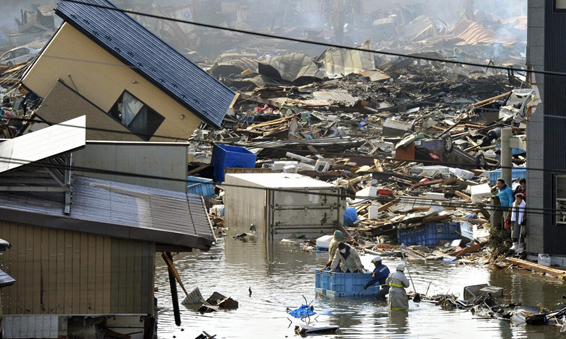
Fiji Declares a State of Natural Disaster After Fierce Cyclone

SYDNEY — Government officials declared a state of natural disaster inFijiafter a cyclone tore through the archipelago on Saturday, destroying villages and leaving five dead, Prime Minister Frank Bainimarama said on Sunday.

Mr. Bainimarama described Cyclone Winston, a Category 5 cyclone with winds up to 143 miles per hour and gusts up to 202 miles per hour, as the most powerful such storm in the country’s recorded history.

“The damage has been widespread,” he said in a statement. “Many are without power and full access to water and are cut off from communication.”

Aid workers said roofs had been blown off houses, power lines were down, roads were blocked by trees and some villages had been flooded by heavy rain.

At a hospital in the western district, patients were evacuated after a ward lost part of its roof, and at a hospital in the central district, an intensive care ward, operating room and maternity ward were flooded, Fiji’s national emergency operation center said on Sunday.

An elderly man died on Koro, an island to the east of Viti Levu, the main island, after a roof collapsed. Ewan Perrin, a spokesman for the prime minister, said that four other people had died but that the government would not release details until their next of kin had been notified.

Mr. Bainimarama said a curfew would remain in place until Monday morning to allow emergency workers to clear roads of fallen power lines and building debris. Most of the buildings in Suva, the country’s capital on the island of Viti Levu, appeared to have only minor damage.

A CARE Australia aid worker, Anna Cowley, said in a telephone interview from Suva that power outages had hampered aid efforts. “There is still a power blackout across the main island, Viti Levu, which has stopped water pumps from working,” Ms. Cowley said on Sunday, adding that patchy communications with outlying islands had made assessing the damage there difficult.

In a statement, CARE Australia said Cyclone Winston had also caused severe damage to houses and crops in Tonga, which lies to Fiji’s southeast.

source: http://www.nytimes.com/

Health worker steps up to the challenge of disaster response

Yacinta Julio Namacha is a project officer at the Malawi Red Cross Society in Blantyre.  Her expertise lies in community health, but when severe floods hit the country in early 2015, Yacinta stepped straight into an emergency response role thanks to training she received as a member of the Red Cross National Disaster Response Team.

When natural disasters strike, the need for staff and volunteers who are skilled in emergency response to support affected communities is immense. Often these staff must be brought in from outside the country. However, the International Federation of Red Cross and Red Crescent Societies (IFRC) has worked to establish National Disaster Response teams across southern Africa so that skilled staff can reach affected areas more quickly.  

Once the flooding started in southern Malawi, Yacinta was deployed to Chikwawa district to assist people who had been displaced. Many had lost their homes and livelihoods under the flood waters.  Yacinta was one of the first people on the ground, conducting needs assessments to determine what support was most needed.

“In Chikwawa, we went to the camps and sat with the people and asked them their problems and what they needed. The skills I got from being in [the National Disaster Response Team] assisted me in doing this during the emergency,” says Yacinta.

In 2014, Yacinta participated in National Disaster Response Team training that incorporated practical simulations of disaster situations. During the exercises, she learned how to conduct needs assessments, register beneficiaries, manage distribution of relief items, and plan for recovery. All of this knowledge was vital for her work in Chikwawa with the Malawi Red Cross Society.

After the needs assessment, Yacinta worked on registering and verifying beneficiaries in Chikwawa. She supported distributions and took charge of prioritizing vulnerable groups, such as pregnant women, the elderly, and children. Because of her training, she was able to direct other volunteers assisting with the emergency response to deal appropriately with vulnerable people.

“These people are vulnerable and they have already been affected psychologically. If you don’t treat them well, it means you are increasing the problem instead of assisting them. During our training, we learned how we can ensure their dignity is maintained,” says Yacinta.

Yacinta has since returned to her health officer position with the Malawi Red Cross Society, but she remains a valued member of the National Disaster Response Team. Her experience in Chikwawa, combined with ongoing training, helps ensure that she is ready to respond again should another emergency arise.

See more at: ifrc.org

Are Pharmacists Prepared for America’s Worst Natural Disaster?

“When, not if” is a repeated phrase experts use when they refer to the Cascadia subduction zone rupture, which will create North America’s worst natural disaster in recent history.

The Cascadia fault line—which may be lesser known than the San Andreas Fault, but has the potential to produce more damage—runs from the area around Cape Mendocino, California, through Oregon and Washington, and ends near Vancouver Island, Canada.

Pharmacists should be aware of this fault line because there is a 1 in 3 chance that a big earthquake with a magnitude of 8 to 8.6 will occur in the Pacific Northwest within the next 50 years, The New Yorker reported. The odds of the next full-margin rupture (between an 8.7- and 9.2-magnitude earthquake) occurring in the next half-century are about 1 in 10.

When the full-margin rupture occurs, the Pacific Northwest will experience not only a massive earthquake, but also a tsunami roughly 15 minutes later.

One of the most-cited quotes from The New Yorker article on the Cascadia subduction zone came from Kenneth D. Murphy, the Federal Emergency Management Agency (FEMA) regional administrator for Region X, who stated, “Our operating assumption is that everything west of Interstate 5 will be toast.”

On its website, FEMA describes the Cascadia subduction zone earthquake and tsunami situation as “one of the most complex disaster scenarios that emergency management and public safety officials face in the Pacific Northwest.”

Every 200 to 500 years, on average, an 8- to 9-magnitude earthquake occurs along the 800-mile territory, according to FEMA. The last major earthquake and tsunami occurred in 1700.

If the earthquake and tsunami had hit on February 6, 2016, at 9:41 AM, around 13,000 individuals would have died and 27,000 would be injured, FEMA told The New Yorker. The agency is currently planning a 4-day exercise in June to coordinate governmental agencies with the private sector on responses to this emergency situation.

Awareness and preparation are crucial for those residing in the Pacific Northwest. Here’s how pharmacists located in states on the West Coast can help prepare themselves and their patients for this natural disaster, starting with Washington State.

Washington
Michael Loehr, chief of emergency preparedness and response for Washington State, told Pharmacy Times that local and state emergency managers have led efforts to educate the public, business community, government agencies, and elected leaders about the Cascadia subduction zone rupture.

While Loehr did not have details on what percentage of homes or structures have been built or retrofitted to withstand earthquakes, he did note that efforts are continuing to retrofit critical infrastructure, especially bridges.

He described pharmacists as key health care providers who can play an important role in helping patients prepare for this disaster.

“Pharmacists can encourage their patients to create a disaster supplies kit, have all prescriptions written down in a safe place so that the list can be taken with the person in the event they need to evacuate, encourage patients to have contact information for health care providers readily available, and ensure to the greatest extent possible that an extra supply of critical medications can be maintained at home,” Loehr said.

source: pharmacytimes.com

Can Health Care Providers Afford to Be Ready for Disaster?

MORE than 200 people died in hospitals and nursing homes in Louisiana after Hurricane Katrina in 2005, leading to widespread agreement that health care preparedness in the United States needed dramatic improvement. One hospital, Memorial Medical Center, was so undone that two desperate doctors later said that they hastened the deaths of patients who had waited days in the heat for rescue.

The chaotic evacuations of more than 6,400 hospital and nursing-home patients in New York City after Hurricane Sandy in 2012 — where some were separated from their records and untraceable by their families for weeks — reinforced concern about the readiness of health care providers during emergencies.

Despite repeated calls for change, however, and billions of dollars in disaster-related costs for health care providers, federal rules do not require that critical medical institutions make even minimal preparations for major emergencies, from hurricanes, earthquakes and tornadoes to bioterrorist attacks and infectious epidemics such as Ebola and Zika.

“We’ve had way too many circumstances where the results are catastrophic,” said Karl Schmitt, a former division chief for public health preparedness in Illinois and founder of the consulting firm bParati. “Preparedness doesn’t put heads in beds, and if it doesn’t put heads in beds, it doesn’t bring in revenue, so it’s not going to get the C.E.O.’s attention.”

That may soon change. Industry experts are awaiting release of a federal rule that would make emergency preparedness a condition for a wide range of health care institutions to participate in the Medicare and Medicaid programs. More than 68,000 providers would potentially be affected, including hospitals, kidney dialysis centers, psychiatric treatment facilities, home health agencies and organ transplant procurement organizations. Among other steps, providers would be required to conduct regular disaster drills, have plans for maintaining services during power failures and create systems to track and care for displaced patients.

Those requirements were under development as early as 2007, during the Bush years. The government finally made public a draft of the proposed rule in 2013, describing it as an “urgent public health issue” and inviting public comments. But it still has not been finalized. As often occurs with disaster preparedness itself, other issues have taken precedence. “Preparedness of our hospitals rises to the fore each time a natural disaster (e.g., Hurricane Katrina) or significant pandemic (e.g., Ebola) occurs,” wrote Donna E. Shalala, a former Health and Human Services secretary, in prepared remarks for a Congressional hearing on combating biological threats on Friday. “We want to see more deliberate and systematic planning.”

The federal health official overseeing preparedness and response, Dr. Nicole Lurie, an assistant secretary at Health and Human Services, said the proposed rule could help build overall health system resilience and save lives. “Being ready and able to withstand disaster can benefit individual health care facilities and the local economy and helps the community as a whole recover faster.”

The proposed rule, however, appears stalled. Since Nov. 3, it has been parked at the Office of Management and Budget, undergoing a legally required review. A spokeswoman for the office said the 90-day review period had been extended.

Part of the reason for the yearslong wait may lie in the critical reaction to the proposal from health care groups, which argued that certain provisions, including testing backup power generators more frequently for longer periods (they have failed often in emergencies), were too costly and unnecessary.

“There was a lot of opposition to what they proposed,” said Robert Solomon, a division manager for building and life safety codes at the National Fire Protection Association, which developed its own disaster-emergency management standard and has urged the Centers for Medicare and Medicaid Services to defer to it.

In December, reviewers from the Office of Management and Budget discussed the rule with representatives of the American Health Care Association, which represents facilities that care for the elderly and disabled, and has challenged the cost estimates associated with the requirements.

Medicare’s calculations suggested a relatively modest impact: $8,000 on average for hospitals the year the rule takes effect and about $1,262 each year for skilled nursing facilities. But the association said that those figures were unrealistic because of factors like emergency overtime.

Others who commented on the proposal said they feared that the rules would be particularly burdensome for smaller facilities that have traditionally not been involved in emergency preparedness. “Each organization can only do so much based on their resources,” Mark Covall, president and chief executive of the National Association of Psychiatric Health Systems, said in an interview.

Ashley Thompson, a senior vice president at the American Hospital Association, said the group generally agreed with the proposal, but hoped Medicare would align its requirements with crisis preparedness standards developed by other bodies, including the Joint Commission, which accredits many American hospitals and other health institutions.

Mr. Schmitt said those resisting regulation were shortsighted. “It’s saying, ‘Look, if you want to care for the more vulnerable populations in America and you want to bill for these services, we’re just saying meet some minimum standards.’ ”

But girding for emergencies often seems to fall off the map as a disaster recedes. More than 45 years after the Sylmar earthquake killed dozens at California hospitals, for example, more than 250 hospital buildings rated most at risk of collapsing and endangering the public have yet to be retrofitted, replaced or removed from service. “If I never have a disaster and you make me invest, say, $100,000 or $500,000 in preparedness, I’ve lost revenue,” said Dr. David Marcozzi, an associate professor at the University of Maryland School of Medicine. “However, for the facility that is impacted and is able to continue treating patients, the return on investment is different. Tell me, how do you do a budget analysis on that?”

Dr. Marcozzi, a former director of the National Healthcare Preparedness Programs at Health and Human Services, recently left a position at Medicare, where he contributed expert advice to the group working on the rule. They were considering scaling back or revising it “to accommodate a lot of the stakeholders,” he said.

Part of the solution, he added, could be to create incentives for providers demonstrating preparedness, like higher Medicare reimbursements, increased credit ratings and lower insurance premiums.

The rule has a statutory deadline of three years from proposal to publication, and if it is approved, much of its strength will depend on how it is interpreted and enforced. “If this has political will, which unfortunately it hasn’t historically, it will get across the goal line,” Dr. Marcozzi said. “If it doesn’t, and other things encumber it, this will not get to final.”

source: nytimes

Rescuers scour rubble for survivors after earthquake kills 37 in Taiwan

(CNN)Rescuers scrambled to find survivors Sunday night after an earthquake toppled buildings in Taiwan, killing at least 37 people, authorities said.

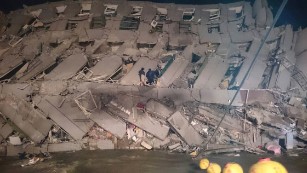
Of the fatalities, at least 24 were in the Weiguan Jinlong apartment building in the city of Tainan, according to presidential spokeswoman Ma Wei-kuo.

Dozens of people were still trapped in the building, one of 11 that collapsed after Saturday’s magnitude-6.4 quake, the official Central News Agency reported.

President Ma Ying-jeou canceled his traditional Chinese New Year address to oversee rescue and recovery operations at the national disaster headquarters, his spokeswoman said.

‘I was trapped’

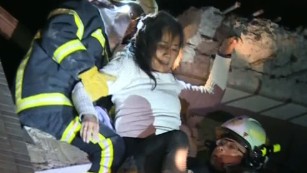
Chien, her 3-year-old daughter and her husband were in their bedroom in Tainan –Taiwan’s oldest city — when the earthquake struck.

“I was trapped in a room in a building toppled by the quake,” said the mother, who gave only her surname.

“The smell of gas was thick in the air, and I was worried that I would be killed by an explosion if not crushed to death in the collapsed building,” she told CNA.

It was a frightening ordeal, one that she has dealt with before.

She lived in central Taiwan before moving to Tainan and survived the 1999 quake that killed more than 2,000 people.

“I moved to Tainan after I got married and now I have encountered another major earthquake,” she told CNA.

‘Ring of fire’

Before rescuers freed them, Chien and her family were trapped for three hours in their sixth-floor apartment in the 16-story residential building.

In all, more than 500 people were injured, CNA reported. Ninety-two people remain hospitalized late Sunday, according to Tainan’s disaster response office.

As of Sunday morning, at least 121 people were still unaccounted for in Taiwan, CNA reported. A cold wave moving into the area added to rescuers’ sense of urgency.

Taiwan is in the so-called “Ring of Fire,” an area in the Pacific Ocean where intense tectonic plate movement causes frequent earthquakes.

“Taiwan is very used to earthquakes and tremors, but this is far more significant than the island has seen in quite a while,” Elise Hu, an NPR correspondent who was in Taipei when the quake hit, told CNN.

Read more: How earthquakes are measured

The building

The Weiguan Jinlong building now looks like an accordion from above. Aerial footage from CNN affiliate SETTV showed the collapsed building, with white smoke or dust still rising.

“The building essentially collapsed onto itself,” Hu said. “When you see the aerial images around Tainan, the rest of the buildings are standing. But this particular apartment complex is as damaged as it is.”

One woman told CNN affiliate EBC that rescuers had to cut a hole in order to help her family get out.

“Fortunately we were stuck under a space created by a baby crib and a closet door, so that things won’t fall on us and air was able to get in,” she said from the hospital, where she was being treated for a leg injury. “I was so afraid.”

Rescuers searching for victims trapped after quake
 
Rescuers searching for victims trapped after quake 04:33

The country’s interior minister and other officials said they would conduct an investigation into the building’s collapse, according to CNA.

After residents raised concerns about the safety of the building, Tainan Mayor Lai Ching-te said he will order a probe as well.

The quake struck as many in Taiwan prepared to celebrate the Lunar New Year.

It’s one of the country’s biggest holidays, and some people have as many as nine days off, Hu said.

“If you can imagine something like this happening during Thanksgiving holiday weekend or Christmas travel, that’s the equivalent of what’s happening here in Taiwan right now,” she said.