‘Disaster tourists’ clogging up roads, hampering flood relief efforts in Malaysia

Malaysia – A large number of people are converging in Kelantan, bringing welcome aid to the flood victims. There’s another large number that is coming in – but they are not welcome.

These “disaster tourists” are adding to the woes of the people by coming in large groups and clogging up areas with their vehicles.

They are also getting in the way of services and volunteers who are trying desperately to reach the victims.

Those distributing aid to the flood victims here say their jobs have been hampered by these “sightseers”. “They choke up roads with their cars,” they said.

A military officer, who only wanted to be known as Yan, said the roads in Manek Urai here were congested with casual visitors when priority should be given to vehicles bringing in aid.

“To bring 20 to 30 cars for a visit to the area only worsens the situation,” he said.

“The roads are already congested with victims’ cars as most are covered in mud and debris. These tourists shouldn’t be driving into the rural areas nor be there at all,” the officer said.

The bad traffic flow left volunteer doctor Beh Xi Chin and his team stuck on a bridge for almost three hours

Public meetings to discuss natural disaster preparedness plans

Warren County residents are invited to attend public meetings later this week to discuss plans to prepare for natural disasters.

The meetings are part of the process for the county to create its “hazard mitigation” plan.

Municipalities are required to put together plans detailing how they will respond to disasters such as floods, earthquakes, fires and other disasters. Transportation of hazardous materials is being included in the new plan as well.

Public meetings on the plan will be held Thursday at 6 p.m. in Crandall Public Library and Jan. 13 at 6 p.m. in the state Department of Environmental Conservation office on Golf Course Road in Warrensburg.

Investing in disaster preparedness

When Typhoon Hagupit made landfall in the Philippines on Dec. 6, memories of Typhoon Haiyan, which killed more than 6,300 people, were fresh in people’s minds. Some 227,000 families — more than a million people — were evacuated ahead of Hagupit’s arrival, according to the United Nations. The typhoon, one of the strongest of the season, killed some 30 people. All deaths from disasters are a tragedy, but the fact that this number was not much higher attests to the efforts that the Philippines has made to prepare for natural disasters.
As administrator of the United Nations Development Program (UNDP), I have seen firsthand the devastation and heartbreak caused by disasters around the world.

Since the beginning of the century, more than a million people have died in storms like Hagupit and other major disasters, such as the 2010 Haitian earthquake, with economic damage totaling nearly $2 trillion.

These losses are tragic, but they are also avoidable. They serve as a reminder that disaster preparedness is not an optional luxury; it is a constant, intensive process that is necessary to save lives, protect infrastructure, and safeguard development.

The argument for investing in disaster preparedness is simple. If countries expect to experience natural hazards, such as violent storm seasons or major earthquakes, then investing time and resources in preparing for shocks will save lives and protect communities from other losses.
Unfortunately, governments often put different priorities ahead of disaster preparation. Other investments often take precedence, and donors have historically funded emergency relief much more readily than pre-disaster preparedness. The measures that are implemented tend to be stand-alone and piecemeal, rather than part of a larger, systematic risk-reduction plan.

That needs to change. Countries like the Philippines continue to demonstrate the benefits of investing in preparedness, especially when done as part of a larger risk-mitigation effort. Typhoon Hagupit is just the latest event to showcase this. The Philippine government’s quick, effective response saved many lives. But it is important to note that its efforts were not simply an overnight reaction to the oncoming storm. They were part of a national, comprehensive effort that was long in the making. Officials were wise to acknowledge their country’s vulnerabilities and to commit the resources and capital needed to build resilience.

The Philippines includes preparedness as a core component in its overall strategy for reducing disaster risk. Over the last decade, the country’s authorities have raised awareness, established and strengthened disaster-management institutions and worked on recovering from past disasters.

The UNDP, and the wider UN system, is supporting governments as they place greater emphasis on disaster-risk reduction, including preparedness, by strengthening their institutional capacity to plan and act when needed. In addition to assisting with emergency relief, it is crucial that the international community help to introduce basic procedures for responding long before disaster strikes.

First responders, for example, need training and tools. Emergency shelters and evacuation routes must be planned and established using risk assessments and actual simulations. If communities are to be expected to make use of available resources, they need to be involved in the design and development of emergency plans. Risk reduction, including preparedness, is also, first and foremost, rooted in responsive governance.

In March 2015 a new global framework for disaster reduction will be agreed in Sendai, Japan. It is crucial that delegates push for transformational change that enables preparedness and saves lives. Furthermore, risk reduction needs to be integral to sustainable-development strategies.

source: http://www.arabnews.com/columns/news/682576

DSWD and WFP partner for enhancing disaster preparedness

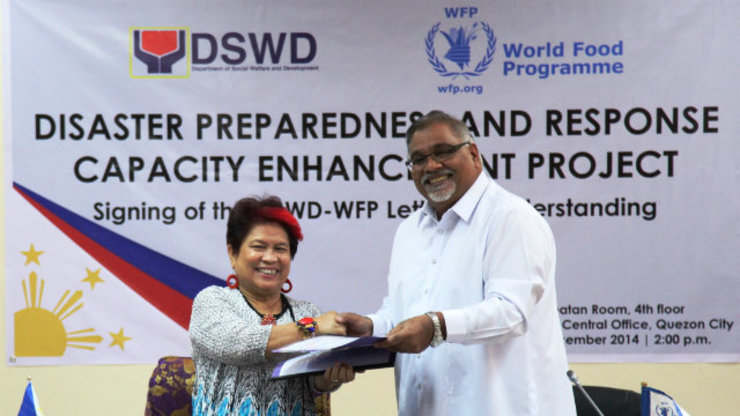
DSWD Secretary Corazon Juliano-Soliman and World Food Program Country Director Praveen Agrawal exchange documents during the Signing Ceremony for the Letter of Understanding between the DSWD and the UN-WFP on Disaster Preparedness and Response Capacity Enhancement Project.DSWD Secretary Corazon Juliano-Soliman and World Food Program Country Director Praveen Agrawal exchange documents during the Signing Ceremony for the Letter of Understanding between the DSWD and the UN-WFP on Disaster Preparedness and Response Capacity Enhancement Project.

MANILA, Philippines – The United Nations World Food Programme (WFP) is partnering with the Government of the Philippines through the Department of Social Welfare and Development (DSWD) to further build capacity for disaster preparedness and response in the country.

The collaboration will involve boosting DSWD’s National Resource Operation Centre (NROC) in Pasay City and its regional warehouses through the prepositioning of relief items and operational support equipment, as well as the development and implementation of government training programs with emphasis on disaster response, logistics and supply chain management.

“The Philippines experiences more than 20 typhoons a year, including Typhoon Hagupit, locally known as Ruby, which hit us this December,” said Praveen Agrawal, WFP Philippines Representative and Country Director. “These natural calamities continue to threaten the food security in the country which is why WFP remains strongly committed to work alongside the Government in its disaster preparedness and response initiatives.”

“Strengthening DSWD’s response hubs is a step towards a more prepared Philippines so we can better reach affected people with food assistance. We look forward to this strategic partnership with the Philippine Government,” Agrawal added.

“WFP has long been our partner in providing assistance to survivors of calamities,”

DSWD Secretary Corazon Juliano-Soliman added. “This partnership strengthens our existing logistic and relief delivery capacities, and will surely improve our immediate response to any disaster.”

WFP also has future plans with DSWD and the Office of the Civil Defense to build disaster response centers in Luzon, Visayas, and Mindanao. Each disaster response centre will consist of two buildings built and funded by WFP. The first building will be used for packing and storing family food packs while the second building will house search and rescue equipment. The centers will initially be managed by WFP and will be handed over to the Philippine Government after a two-year period. – Rappler.com


Satellite images important to disaster management process

KUALA LUMPUR: The use of satellite technology in the pre- and post-disaster management process is equally important as doing so during the disaster, said National Space Agency (Angkasa) director-general Dr Noordin Ahmad (pix).

In a recent interview with theSun, he said at present the whole disaster management operation is under the purview of the National Security Council of the Prime Minister’s Department.

“We have engaged them on how best to use and promote the use of satellite technology in mitigating disaster. One way will be to use satellite images in the pre- and post disaster process,” he added.

Doing so in the pre-disaster process would help the federal government and local authorities better understand the type, trend and extent of the disaster, and provide sufficient time for the mitigation methods to be put in place before a disaster occurs, he said.

“It will greatly minimise the repair costs due to damages from a disaster and ensure the emergency relief centre is easily accessible to the locals and the relief aid response team,” he added.

Dr Noordin pointed out that by comparing the images taken during and after a disaster plays a vital role in the development planning process for an area.

“The images can act as a guide for the authorities to determine whether or not any building or infrastructure should be constructed in the area should it be a possible disaster prone area,” he said.

As the cost of constructing and maintaining a satellite was exorbitant, he said it was important for Malaysia to collaborate with other countries or space agencies.
Currently, Angkasa through programmes like the United Nations Platform for Space-based Information for Disaster Management and Emergency Response (UN-Spider) and Sentinel Asia can get satellite disaster images when a disaster happens in Malaysia.

UN-Spider is an open network system that provides space-based solutions to support disaster management activities while Sentinel Asia is a disaster management support system in the Asia Pacific region.

“We do not have to pay for the satellite disaster images we obtain from UN-Spider and Sentinel Asia,” he said.

Artists, designers rally to raise awareness on disaster preparedness

Art as a tool for disaster preparedness is the main idea behind Earth Manual Project, a Japan-sponsored travelling exhibit showing the creative outputs of artists from different countries in response to floods, earthquakes and typhoons.

Hirokazu Nagata, chair of the project, said the tagline of the exhibit was “A country of frequent natural disasters can also be a country of high disaster preparedness.”

“I had seen various exhibits that tackle disaster preparedness from different countries and they had innovative ideas, and we decided that these ideas be collated and be shared internationally,” Nagata said.

The Manila run of the exhibition is running at Ayala Museum and features 12 projects: Iza! Kaeru Caravan!, Jishin Itsumo Project, and Red Bear Survival Camp by NPO Plus Arts (Japan); Design for Flood by Thailand Creative and Design Center (Thailand); Climate School Project by Dakila (Philippines); The Filipino Spirit Is Waterproof by Ayala Museum (Philippines); Paper Partition System by Shigeru Ban (Japan); RooSuFlood: Knowledge to Fight Flood by RooSuFlood (Thailand); “Lost Homes” Model Restoration Project by Osamu Tsukihashi (Japan); Core House: Extensive Live Post Earthquake by Ikaputra (Indonesia); Floating Wombs: A healing project through the arts—heARTS by Alma Quinto (Philippines); and Forms of Recollection by Plus63 Design Co. (Philippines).

Drills, toy donations

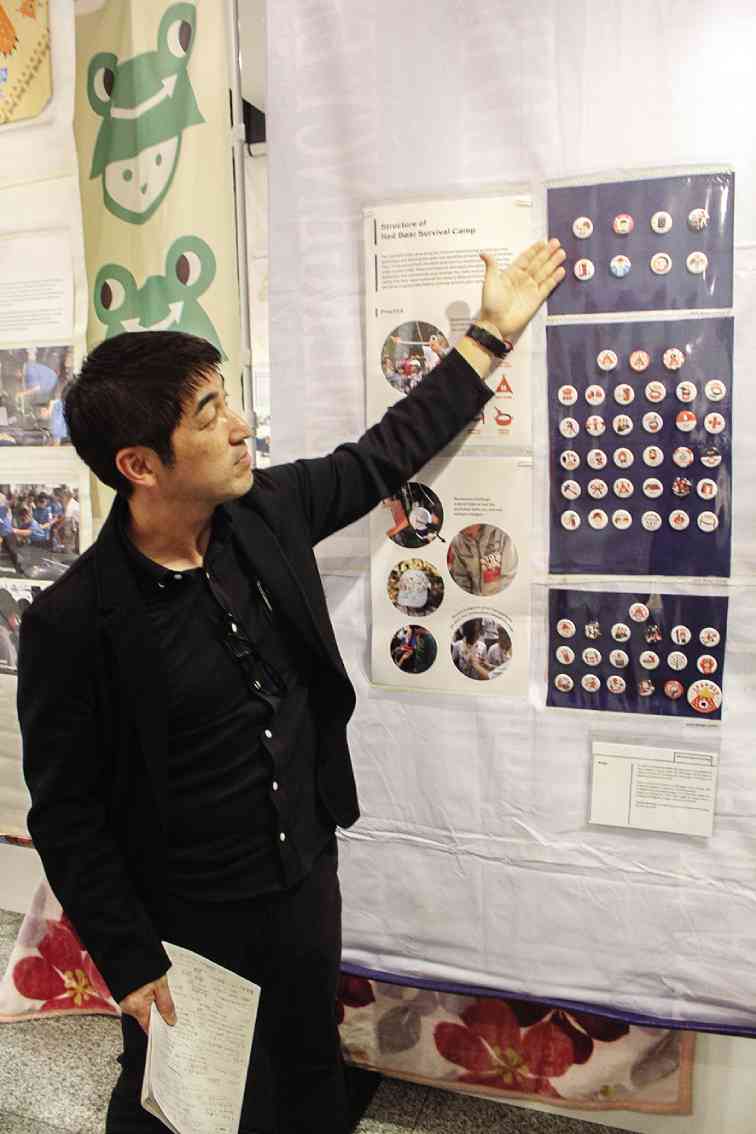
EARTH Manual Project chair Hirokazu Nagata showing over 50 different “skill badges” at the Red Bear Survival Camp for Disaster Preparedness

EARTH Manual Project chair Hirokazu Nagata showing over 50 different “skill badges” at the Red Bear Survival Camp for Disaster Preparedness

Japan’s Iza! Kaeru Caravan! is a disaster drill program where participants learn necessary skills for disaster preparedness through card games, hand-on programs, quizzes and other interactive activities.

The caravan also made a barter system in which children donate their toys in exchange for other used toys, instilling the value of volunteerism.

“The program has been conducted more than 150 times in 20 prefectures throughout Japan,” said Nagata.

Focusing also on children is Red Bear Survival Camp, where participants are taught basic survival skills such as knotting ropes, filtering water, pitching tent and producing fire. Skill badges are given to children who successfully complete each task.

The Jishin Itsumo Project uses the print media as means of spreading disaster awareness. Its major publication, the Jishin Itsumo Note, records the stories of 167 earthquake survivors in Japan, as well as tips on disaster preparedness based on their firsthand experience.

“People could not move at all when the big earthquake hit,” says a survivor in the book, “they could not hear people crying out for help because their cries were muffed by the sound of the helicopters used by the media.” Paper Partition system, a brainchild of renowned Japanese architect Shigeru Ban, is a partition system that could be used as evacuation facilities. It uses paper-based materials for posts, beams and joints, and curtains.

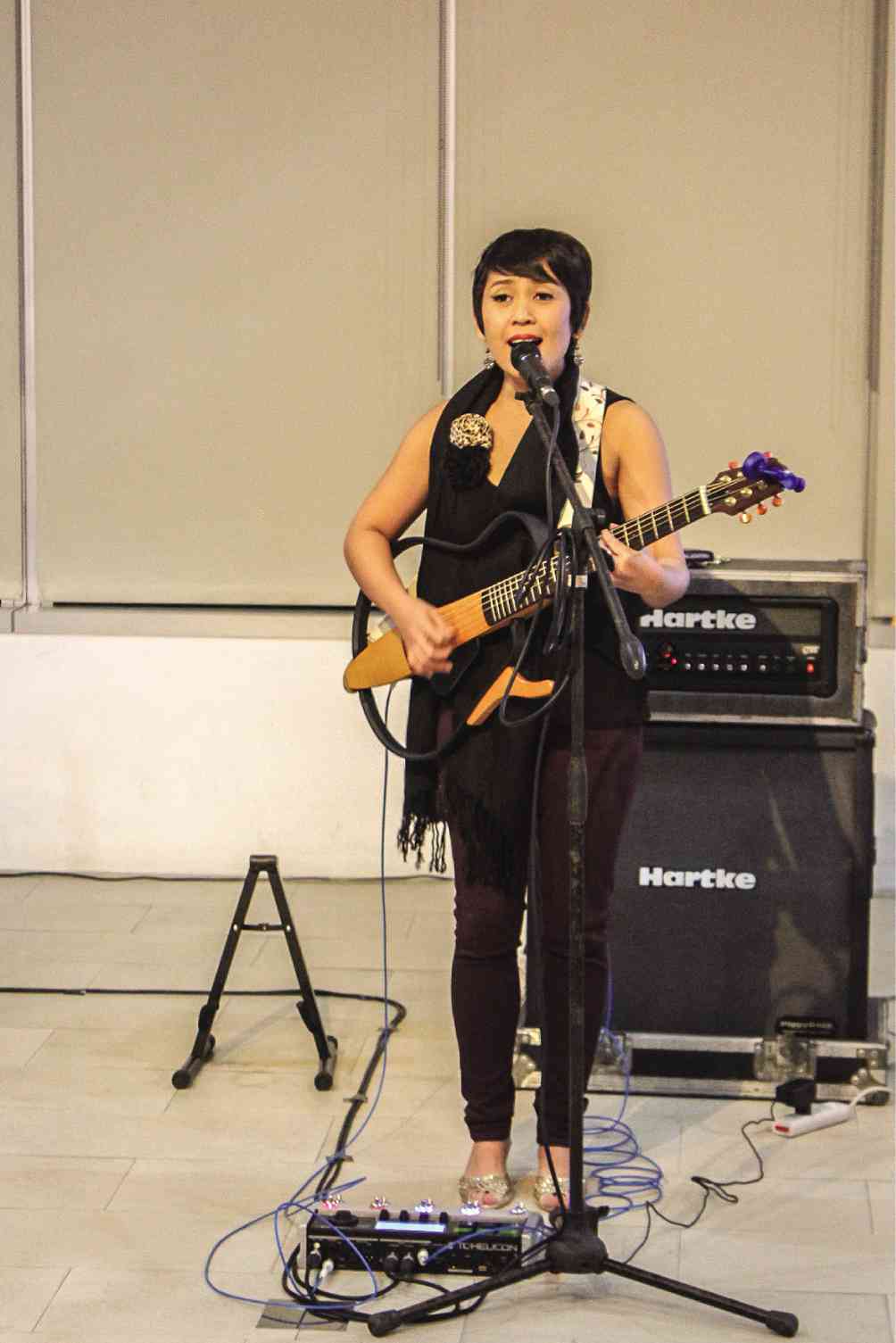
SINGER and Dakila member Aia de Leon singing at the opening of Earth Manual exhibit.

SINGER and Dakila member Aia de Leon singing at the opening of Earth Manual exhibit.

Proper partitioning gives evacuees much needed privacy and provides orderliness even in a chaotic setting. The material itself is recyclable, easy to install and cost-effective.

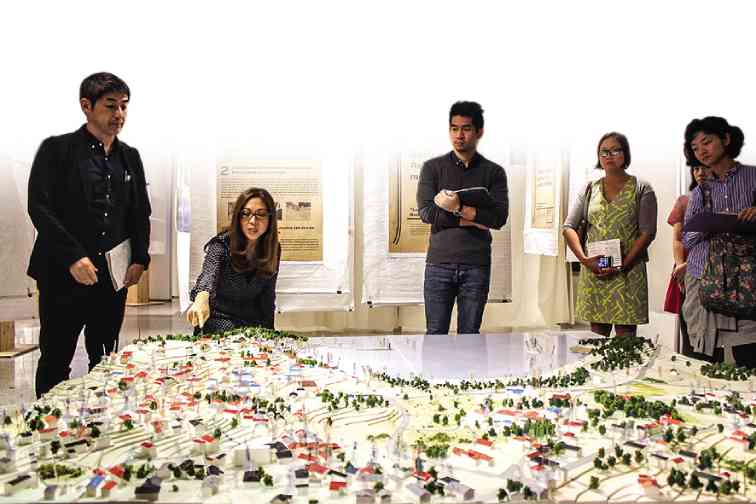
The “Lost Homes” model Restoration Project is a scale model of Nagasaki and Odanohama before the Great Hanshin-Awaji Earthquake in 1995. It was conceptualized by Kobe University professor Osamu Tsukisashi. The models were made by university students based on inputs from locals.

“You can have a more relaxed conversation when talking through the medium of the miniature model, an object, than talking directly to people, said Tsukisashi. “The model brings back memories associated with (the survivors’) former homes and is an effective medium for communicating memories to the future generations.”

Southeast Asia

Thailand’s RooSuFlood: Knowledge to Fight Flood is a series of animated ads that aims to educate Thais on how to respond to floods. The project is a collaboration between students, media professionals, creative artists and volunteers. It is a response to massive flooding in the country in 2011.

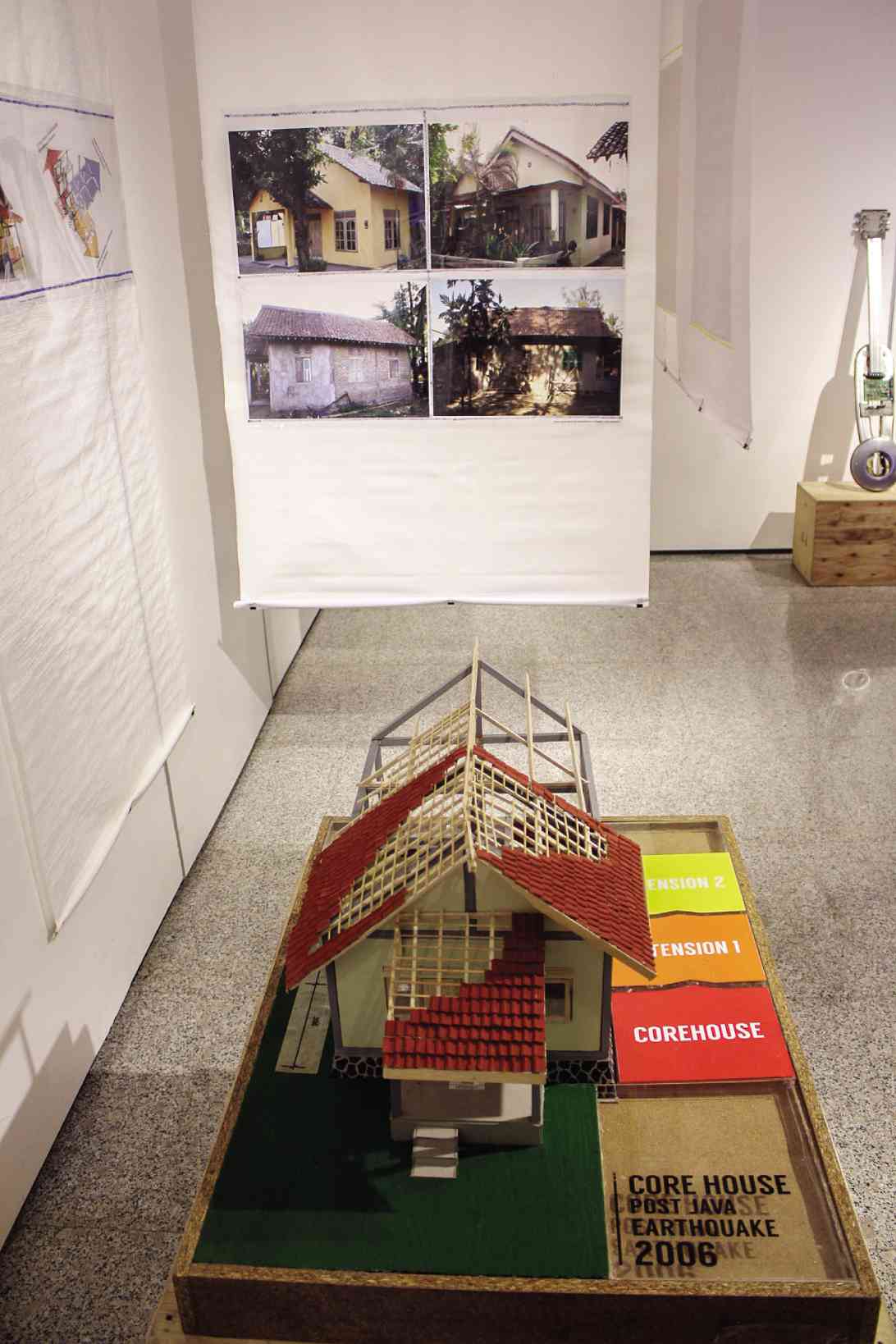
SCALE model of the Core House that served as emergency housing during the 2006 Java earthquake.

SCALE model of the Core House that served as emergency housing during the 2006 Java earthquake.

Project leader Thawatchai Saengthamchai said public information spread during the emergency was so inadequate and difficult to understand that the viewers didn’t prepare for the disaster.

“We wanted to give information that was accurate, easy-to-understand and truly helpful for their survival,” Saengthamchai said.

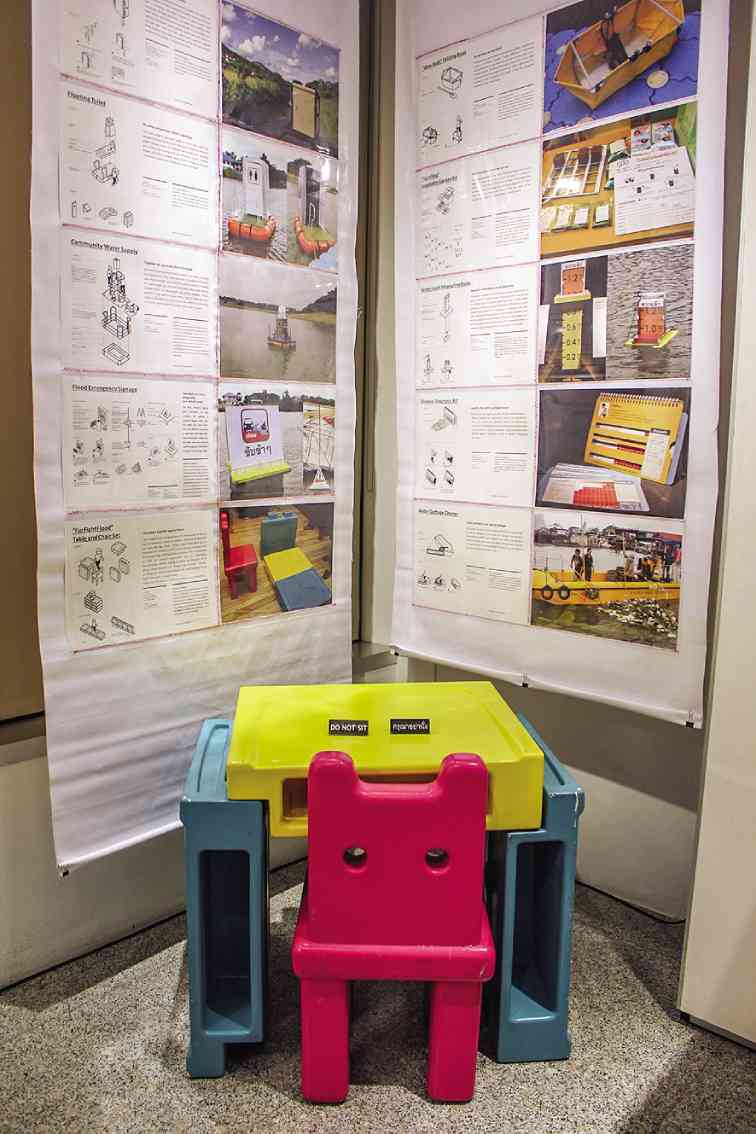
Another project from Thailand is Design for Flood, a collection of furniture, equipment and signage designed to float during floods. Examples include school chairs and tables for kindergarten that double as a flotation devices; a foldable boat, a floating toilet, and emergency food rations and manuals kept in a floatable bag.

Indonesian architect Ikaputra designed a temporary housing system called Core House, which serves as temporary emergency shelter for the victims of the Java earthquake in 2006. Its major characteristic is the extension system, which allows the house to expand to accommodate the needs of its user. The money for the extension can come from various aids or from the user’s own money.

Ikaputra was not satisfied with the aesthetics of the houses at first because of the cost restrictions.

Thai-designed desk and chair for kindergarten students that doubles as a flotation device during flood.

Thai-designed desk and chair for kindergarten students that doubles as a flotation device during flood.

“I was very frustrated because I could not feel I was using all my skills as an architect,” said Ikaputra. “But I eventually realized that the important thing was not the aesthetic design, but the system.”

Waterproof Filipino spirit

With earthquakes and typhoons afflicting the country over the years, Filipino artists and designers are doing their share to increase public awareness for disaster preparedness.

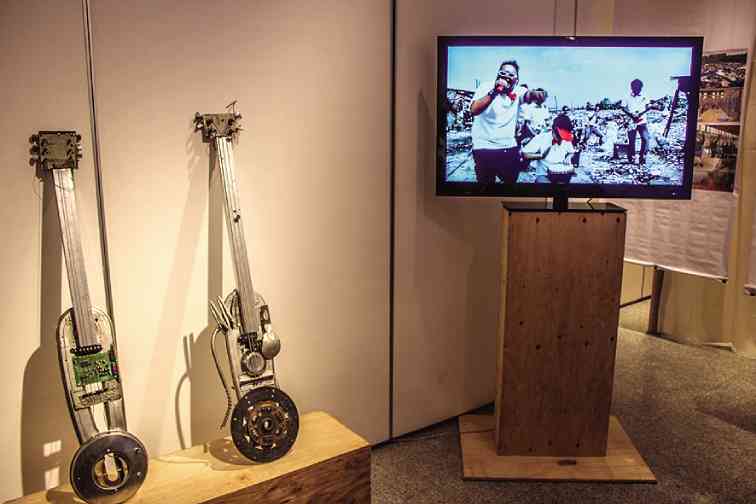
The Climate School Project is a series of activities by Dakila to raise environmental awareness via music video disseminating climate-change issues (BasuROCK), art exhibits made from recycled materials (BasurART), and collaboration projects with government (BasuraHAND) such as holding a “plastic holiday” in the public markets of Malabon.

Dakila is composed of students, activists, artists and young professionals.

Utilizing social media, Ayala Museum came up with the campaign The Filipino Spirit is Waterproof to give moral support to Filipinos affected by Typhoon “Yolanda.”

Music video of Dakila band is played while the guitar used on the video,made from scraps, goes on display.

Music video of Dakila band is played while the guitar used on the video,made from scraps, goes on display.

The slogan was created by Ayala Museum’s marketing and public relations officer Spike Acosta. It quickly grew into a campaign. Various inspirational posters made by students and creative artists were designed with the slogan attached to it.

Floating Wombs is a series of workshops seeking to treat the psychological trauma of the victims of floodings and typhoons in Cagayan de Oro City and the Bicol region.

Children participate in workshops in drawing, dance, theater, creative writing and storytelling to draw out stories of their experiences during the disasters.

The women attend sewing and cooking workshops. The workshops are facilitated by artist Alma Quinto.

“When you work with the community, you should not behave like an artist who dictates how the workshop will progress, but as a facilitator who works with the participants,” Quinto said.

Forms of Recollection are sets of furniture in resin that contain debris from houses ruined by disasters. Conceptualized by Dan Matutina, the furniture items transform ruins into symbols of hope.

“Forms of Recollection is melancholia put to good use. By encasing rough and broken materials, we create a graphic memento that is functional in everyday life,” Matutina said in his website.

The Earth Manual exhibit is running at Ayala Museum until Dec. 7. Visit www.earthmanual.org/exhibition/en.

source:

Four dead in China earthquake

A strong earthquake that hit a sparsely populated, mountainous area of western China killed at least four people and injured 54 others, including schoolchildren in a stampede, officials said Sunday.

The US Geological Survey said the magnitude-5.9 quake hit Saturday about 20 miles from the county of Kangding in Sichuan province. China’s seismological agency put the magnitude at 6.3.

The four dead included a woman in her 70s who was struck by a falling window pane, the official Xinhua news agency and state broadcaster CCTV said, citing Chen Yunbing, a doctor at the region’s Ganzi People’s hospital.

A stampede at a primary school in Tagong town during the quake injured 42 children, according to Xinhua.

A total of 30 homes collapsed and 2,630 suffered serious damage, the Sichuan information office said.

Western China is regularly hit by earthquakes, and reports said Saturday’s quake could be felt in the Sichuan provincial capital of Chengdu on the plains below the Himalayan foothills. Sichuan was struck by a magnitude-7.9 quake in May 2008 that left nearly 90,000 people dead, many of them in collapsed schools and other poorly constructed buildings.

Construction standards have been significantly tightened since then, and the country’s disaster response capacity has improved with better equipment and trained rescue teams.