How Robots Are Changing Disaster Response and Recovery

Robin+Murphy

Robin Murphy is a leader in the field of disaster robotics, having started working on the topic in 1995 and researching how the mobile technologies have been used in 46 emergency responses worldwide. She has developed robots that have helped during responses to numerous emergencies, including 9/11 and Hurricane Katrina. As director of the Center for Robot-Assisted Search and Rescue at Texas A&M University, Murphy works to advance the technology while also traveling to disasters when called upon to help agencies determine how robots can aid the response. The center’s first deployment was in response to 9/11, which also was the first reported use of a robot during emergency response.

Emergency Management: Since 9/11, how have you seen the use of robots in disasters change?

Robin Murphy: We started out in 2001 and up until 2005 you didn’t see the use of anything but ground robots. Everything was very ground-centric, and I think that reflected the state of the technology. For years we had bomb squad robots, which were being made smaller and smaller for military tactical operations so that gave them a tool that was pretty easy to use. Starting in 2005, we saw the first use of small unmanned aerial vehicles that were being developed primarily for the military market and those were very useful. Those have really come up and, in fact, since 2011, I’ve only found one disaster that didn’t use an unmanned aerial vehicle and that was the South Korea ferry where they used an underwater vehicle. So we went from ground robots dominating to about 2005 and then we started shifting toward unmanned aerial vehicles. In about 2007, it became much more commonplace to see underwater vehicles being used. Then starting in about 2011, I think if you have a disaster and you’re an agency and you haven’t figured out a way to use a small unmanned aerial system, it’s kind of surprising.

EM: Is one of the issues that people are waiting for FAA regulations to use UAVs?

RM: Every single disaster since about 2011, but definitely since 2012, looking at the 46 disasters we’ve kept tabs on, have used unmanned aerial systems, including the ones here in the United States. I would not say the adoption problem is the FAA regulations. It takes very little time to get an emergency COA [certificate of authorization]. It does take time to get some of the paperwork in advance done to fly a regular COA but the FAA has given jurisdictional COAs. The emergency COAs take a very short period of time — it’s knowing the paperwork, like with any new technology.

The deterrent to adoption seems to have been the lack of money to flat out purchase them. They’re basically computers and you know how fast the technology for your cellphone and computer changes, you wouldn’t expect to have a computer that’s 10 years old, so you wouldn’t buy these the way you buy big equipment. We’re suggesting that agencies look at plans that allow them to lease the technology. And also because it’s a new technology, you don’t know what that means in terms of training and how it’s going to be integrated and that means they don’t have to recoup some of the training and maintenance costs right off the bat.

EM: What are you currently working on?

RM: I work mostly on the human factor side: How people actually use these. I am not worried about whether a UAV is going to fall out of the sky or a ground robot’s wheels will stop turning. In my book, Disaster Robotics, I go back over 34 disasters, of which I was in a bunch. If you look at the data that’s available, there were 13 terminal failures where the robots failed for some reason and that caused the mission to be aborted. In about 51 percent of the cases it was human error. When I go back and analyze that I see that it’s human error, but it was the designer — the designer didn’t give it an interface that allowed the user to have the right type of information to make a different or better decision. You can only see what you can see.

We’re also very interested in how these technologies change the way emergency response works. What we saw at the Washington state mudslide was that everybody’s thinking “these UAVs will be useful for ESF [emergency support function] 9 for urban search and rescue” but actually they’re more useful in that particular case, in a mudslide, for public safety and you can start thinking about ESF 14 and recovery. [Questions include:] How are you going to share that information? How are you going to do that without creating a data avalanche that just overwhelms different decision-makers who need to share, to plan, to interact with each other? And if I want to use this robot and you want to use it and we both want to point it in different directions, how do we handle that? So how do you get these interfaces that let people interact in real time and then process the data and share and work together?

We’ve got a group of students that have put together what we call the Skywriter interface that lets somebody with a tablet, laptop or mobile phone see what a UAV or robot is seeing and communicate to the operator or system what they want to do, like circle or draw an arrow, which indicates where to go, or follow my finger and track this.

EM: When you deploy to a disaster, what’s your role there?

RM: We’re always invited in, we do not self-deploy. Our center, this is something frankly that I am little disappointed that we’re still doing, I had hoped that at this point everybody would have robots, but we can provide robots. We can usually provide robots through our Roboticists Without Borders program where members train with us beforehand and then when we’re called out, they will donate their equipment and time. So we go out and our role is to first off see, what’s the right technology for what they’re trying to do? There are some times when a robot isn’t going to work because you can’t afford in a disaster to make anything worse, so we have to be conservative. We act as a dating service.

What we’ve found is that most responders prefer to work with us side by side. We’ll drive and you tell us what to do. We also do formal studies and what we’ve found is that in looking at the video data and the sensor data coming from robots, two heads are nine times better than one head. Having a team work together really takes off the cognitive load, one person will catch something that the other person didn’t and it just adds a vast improvement to performance. … With that said, I would love to be out of business, I would be just as happy for groups to have robots on their own. I would like the data though; I love learning from the practitioners what’s working and what’s not.

EM: Have you been working on anything in response to public health needs like for the Ebola response?

RM: We find that in Ebola a lot of people are thinking about clinical applications, like replacing the nurse. Nurses and doctors are hard to replace and duplicate; robots rarely are cost-effective at replacing what humans do. They’re often better at giving some capability that you didn’t have before. So in this case, rather than looking at clinical needs, we’ve looked at logistical needs and the fact that a lot of people involved in health aren’t really doing health work, they’re cleaning up messes, they’re hauling all of these sheets that are contaminated, they’re trying to move people around. So having one person instead of four doing that begins to be more of what the military calls a “force multiplier” and becomes much more efficient. There are things like that that exist. There’s general reconnaissance: How long is the line outside? What’s going on in the villages in the rainforest, do they seem empty? Is there dirt overturned that may indicate graves? That can indicate what’s going on.

We’re also looking at clinical but that’s going to be much more specialized. We like to work with the practitioners and find out what’s going to be the most bang for the buck. If there’s one thing to do to make your life easier, what would that be?

EM: Looking to the future, where do you see disaster robotics headed in the next five to 10 years?

RM: There’s that idea of adoption, which will hopefully continue to accelerate.

In the future, for the new technology, I expect to see three things: Better software on what we call emergency informatics; it’s how you share the data and how you visualize it. In ground robots, I am so excited at work at looking at burrowing robots. The big value in most big building collapses lies in the smaller the better, what do you do when there’s not an obvious void and can you get something to literally snake and nudge and worm its way through there. There are some animals that do that — there’s a sand lizard and types of snakes that navigate in the ground — so we’re doing some work with Georgia Tech and Carnegie Mellon on that. There are also some great advances being made in manipulation. Initially I would characterize the first decade of robots as having been all about allowing the responders to see at a distance, but now we’re seeing a shift. We can see at a distance but now we would like to poke things, we would like to move them over, we would like to drop off things. So we need to act at a distance and not just see at a distance. There’s some advances in robot manipulation that are coming up and are very exciting and we’ll be incorporating those into future work.


Data storage firm Cosentry takes disaster recovery services to wider market

Cosentry, an Omaha-based provider of data storage and services, is expanding its ability to take over a firm’s Internet presence or website functions in the event of a disaster or power outage.

“Due to its complex nature, disaster recovery services have primarily been embraced by corporations with large IT support staff,” said Brad Hokamp, the company’s chief executive.

“Cosentry is making disaster recovery available to a wider market.”

The company, which operates nine data centers throughout the Midwest, provides a full range of IT services to businesses that want to outsource some or all of their data and IT needs — from hardware to software to cloud-based storage.

Clients “can have their applications running on our infrastructure,” said Craig Hurley, vice president of product management.

“A lot of companies don’t want to maintain their own data centers and want to reduce their IT infrastructure,” he said.

Businesses can use the company’s services, Hurley said, allowing them to concentrate on “what they do best.” Cosentry’s new tag line, “We operate, you innovate,” is intended to reflect that focus.

Cosentry’s expanded disaster recovery services follows the firm’s acquisition last year of additional data centers in Milwaukee and St. Louis. Cosentry a year ago acquired Xiolink, St. Louis’ largest provider of managed data hosting services and data center colocation, and last fall it acquired data center provider Red Anvil in Milwaukee.

The company will be expanding two of its data centers this year: the existing data center in Lenexa, Kansas, and the newly acquired Milwaukee facility.

Cosentry’s nine data centers are in Bellevue; Papillion; Lenexa, Kansas; Kansas City; St. Louis; Sioux Falls, South Dakota; and Milwaukee.

The company employs about 240 people, most of whom work in the company’s Omaha headquarters, and has annual revenue of between $60 million and $80 million.

Govt to empower more disaster-prone areas

The government says the regions need to set up more community based disaster preparedness units (KSBs) to empower those who live in areas prone to natural disasters.

“We have only 258 KSBs and we’re preparing more in 2015,” said Social Affairs Ministry social protection for disaster victims director Margowiyono as quoted by Antara news agency.

He explained that according the country’s disaster-prone regional index, 453 regencies were prone to natural disasters, so the amount of units was still far from adequate.

Margowiyono encouraged local administrations and the private sector to help finance the units to improve residents’ awareness of disasters.

See more at: <a href=”http://news.asiaone.com/news/

US surgeon: World can learn from PHL disaster preparedness ‘turnaround’

The world can learn from the turnaround of the Philippines’ disaster awareness as shown by its experiences with super Typhoon Yolanda (Haiyan) in 2013 and Typhoon Ruby (Hagupit) in 2014, a US surgeon who took part in the response to both disasters, said.

Michael Karch, a surgeon with Mammoth Hospital in Mammoth Lakes, California, said learning lessons from Yolanda and applying them during Ruby may have saved the lives of some 1.7 million Filipinos.

“The preemptive actions of the Philippine government, military, medical, and civilian sectors should serve as valuable lessons for the rest of the world as we collectively begin to embrace mass casualty education and preparedness on an individual, national, and international platform,” Karch said in a blog post.

Yolanda, which tore through the Visayas on Nov. 8, 2013, left more than 6,300 dead.

In contrast, Ruby – which, like Yolanda, packed powerful winds and posed a major threat – resulted in 18 deaths. The lower casualty count was in part due to massive evacuations in areas Ruby was projected to hit.

Karch said Yolanda’s destruction had been described as the “Night of 1,000 Knives,” due to the flying debris that “wreaked injury and death on the Filipino population.”

In contrast, he said, Ruby could be dubbed the “Night of a Million and a Half Flames” referring to 1.7 million plus people who survived the typhoon.

“Widespread public health and civil defense measures that had been established in the interim between Haiyan and Hagupit were initiated in the days before landfall,” he said.

Karch, who said he served as a team leader in Civilian Mobile Forward Surgical Teams (CMFSTs) in the aftermath of both typhoons, found certain patterns that he said are reproducible.

“Valuable lessons can be taken from each and applied to the next. The initial differences between the disaster response to Typhoons Haiyan versus Hagupit are striking. The simple fact that the Philippine government was able to evacuate more than a million and a half million citizens out of harm’s way is a testament to their dedication to learn and evolve as super storms occur on a more frequent basis,” he said.

“Although the response to Hagupit was not perfect, it was much improved from that of Haiyan. The use of progressive communication through social media and Short Message Service (SMS) texting played a large role in this success,” he added.

Karch likened the turnaround to super storms Katrina in 2005 and Sandy in 2013 in the US.

“As with Haiyan, the Hurricane Katrina experience was a glaring low point in terms of public opinion and confidence in governmental response to natural disaster. The government response to Hurricane Sandy showed marked improvement in pre-emptive planning and execution on the part of federal, state and city government,” he said.

“The recent Philippine Hagupit experience provides us with another opportunity to learn. Although no system is perfect, if the motivation to continually improve our national disaster response is a driving force, we must study all storms, especially those with successful outcomes, and determine how we can apply these lessons to our own public health and disaster preparedness programs,” he added

taken from: http://www.gmanetwork.com

Haitians learn to live with disaster upon disaster

PORT-AU-PRINCE (Thomson Reuters Foundation) – Claude Enrico survived the earthquake that hit Haiti five years ago and helped pull people from under the rubble in the flattened capital Port-au-Prince.

Now he is dedicated to saving more lives in the disaster-prone Caribbean country.

Lying on two fault lines and in the path of hurricanes, Haiti is among the countries most at risk from natural disasters in the world, including floods, tsunamis and drought.

The 7.0-magnitude earthquake on Jan. 12, 2010, which killed more than 220,000 people, was a wake-up call to the government and international aid agencies about the dire need to protect Haitians from disasters and build resilience among communities to withstand shocks.

“We have to learn to live with natural phenomena,” said Enrico, 37, a civil protection officer with Haiti’s interior ministry. “It’s inevitable they will come year after year. So we must train people what to do in an emergency and ensure families have an evacuation plan.”

NETWORK OF VOLUNTEERS

He belongs to a network of 3,000 newly trained volunteers and paid staff, created in the aftermath of the earthquake, who work across Haiti’s 10 provinces.

Trained in first aid and emergency response, they are on the frontline of government efforts to ensure Haiti is better prepared to deal with disasters and can save more lives.

“We still lack equipment, firefighters and more people need to be trained. But communities are more aware about how to keep safe. One of our key messages is to tell people not to cross rivers during a flood because that’s often how people get killed,” said Enrico at the National Emergency Operations Centre (COUN) in downtown Port-au-Prince.

Built in 2010 following the earthquake, the center is where government ministries and aid agencies meet to coordinate disaster response. The center, which includes a warehouse stocked with water, mattresses, hygiene and food kits, has been put to the test.

A cholera epidemic broke out in October 2010, which has claimed the lives of more than 9,000 people, followed by several tropical storms, including Hurricane Sandy, which killed 54 and forced 100,000 Haitians to evacuate their homes in 2012.

“In Haiti, it’s the back-to-back accumulation and combination of disasters that puts pressure on the government and the people,” said Thomas Pitaud, chief technical advisor to the government on national disaster risk management systems.

Each year in parts of Haiti, homes and animals are washed away, fields inundated, and food crops and grazing land destroyed by storms and floods, pushing up food prices.

With 60 percent of Haiti’s population of 10 million living on less than $2 a day, even a small increase in food prices can mean families cannot afford to put enough food on the table.

DISASTER PREPAREDNESS

Five years after the earthquake, aid agencies say progress has been made in preparing communities on what to do when a disaster strikes, including early warning systems, simulation exercises and identifying shelters.

Other projects include building flood walls and drainage ditches, along with embankment and watershed protection projects to conserve water supplies and lessen the impact of floods and landslides.

But such schemes, along with the efforts of Haitians like Enrico, can only go so far to reduce the high exposure to disasters Haiti faces.

Far less progress has been made on reducing the risk of disasters in the first place, and ensure all new homes, hospitals and schools being built are earthquake resistant.

“You have an environment that’s very degraded,” said Pitaud, who also works for the United Nations Development Programme (UNDP) in Haiti.

“We’re constantly responding from one catastrophe to another, so it’s difficult to focus on reducing risk over the long-term and get funding.”

URBAN SLUMS

A lack of urban planning and high levels of urbanization have led to more than 60 percent of Haitians living in densely populated slums in Port-au-Prince, which magnifies the damage and number of casualties disasters bring.

Angelique Hilaire lives with her three children in a gray brick one-room home perched precariously on a hillside slum.

Hilaire is only too well aware that she is exposed to flooding and landslides but has no option but to brace herself for the yearly hurricane season.

“I can’t afford to rent anywhere else,” she said. “Every time it rains I pray to God for it to stop. But what can I do?

Even a short downpour can leave the capital flooded as piles of rubbish on the streets and debris filled canals block drains, which exacerbates flooding.

Natural disasters linked to climate change will only get more frequent and extreme in the future, experts say.

Decades of deforestation have left Haiti even more exposed to natural disasters, with less than three percent of its original forest cover still intact, according to the UNDP.

This causes soil erosion and reduces the ability of soil to retain water, making Haiti more vulnerable to flooding and landslides. During heavy rainfall, there are few trees to stop water washing down the bare mountains.

While 5.5 million tree seedlings have been planted in Haiti by the UNDP since 2010, not enough has been done to stop people cutting down trees in the first place.

Selling charcoal, which comes from burning wood, is used for cooking and is a key source of income for many Haitians living in the countryside.  

“One challenge is to provide economic opportunities so farmers don’t have to cut down trees,” Pitaud said.

Key to successful disaster preparedness

Life would be a lot better if we can just shoo away typhoons, plug the craters of volcanoes to prevent them from erupting, or hold the plates underneath us to keep them from shaking the ground and toppling buildings and ripping highways apart.

These terrifying and unwanted events and their terrible impact – thousands of lives lost, families displaced, and livelihood disrupted – are parts of the normal life in the Philippines, a country situated in the Pacific Ring of Fire and in the path of typhoons.

Climate change has only worsened our situation, with experts predicting more extreme weather disturbances as the new normal. A recent example of our vulnerability to weather’s whims was the visit of Pope Francis to Leyte last Saturday. He was scheduled to spend almost half a day in Tacloban and Palo to celebrate a Mass, meet with the victims of super-typhoon Yolanda, and lead other activities, but rain and strong winds from Mekkhala/Amang, the first tropical storm of 2015, forced him to fly back to Manila after less than an hour in Leyte.

The Pope, who told the Yolanda victims he knew what happened in November, 2013, even though he was in Rome, got a firsthand taste of what Filipinos, particularly those in Eastern Visayas, have to go through throughout their lives. Each year, 18 to 20 typhoons strike the country.

The Philippines is also located on the Pacific Ring of Fire, where most of the world’s volcanoes are located. Countries on the “ring” – Indonesia, Japan, New Zealand, United States, Canada, Chile, Mexico, Russia, and the Philippines – account for most of the earthquakes that happen in the world. The memories of the 2011 earthquake that triggered a tsunami, caused a nuclear meltdown and killed nearly 16,000 people are still fresh in the minds of the Japanese. The areas affected by the nuclear disaster remain ghost towns.

The magnitude-7.2 earthquake that hit Bohol on October 15, 2013, was weaker than the magnitude-9.0 that hit Japan, but it was one of the strongest recorded in the Philippines, leaving more than 200 people dead and destroying many historical churches.

The Philippines has more than 30 volcanoes, of which more than 20 are considered active, and a few, like Mayon and Taal, are permanently monitored. Mount Pinatubo, which for many centuries was just a part of the mountainous part of Zambales, erupted in 1991, and its effects were felt worldwide: The massive amount of gas and ash caused a temporary half-degree centigrade drop in global temperatures. The millions of tons of lahar spewed out of the volcano permanently changed the river system in parts of Central Luzon.

The US Embassy in Manila, recognizing the risks from natural calamities faced by Americans visiting or living in the Philippines, has published on its website information to help US citizens “prepare for any disaster that may occur.

The key word is “preparation.” In my view, successful preparation means a system backed up by the most accurate disaster information like weather forecasts, which in turn, can happen if we have the most advanced technology and equipment.

We have a pool of competent and well-trained weather forecasters, volcanologists, and other scientists (that is why some of them are pirated by foreign entities), but they need the best equipment and the latest technology to do their task well.

As a country prone to disasters, we should be the leader in weather or disaster forecasting and monitoring. The price for a nation ill-prepared for disasters is too stiff to pay: Thousands of lives lost, families displaced, vital facilities destroyed and economic growth disrupted.

We saw the terrible destruction wrought by super typhoon Yolanda in 2013. In 2014, timely preparations reduced the disastrous impact of typhoon Ruby, which was initially expected to become another super-typhoon.

Yet, we still count casualties and measure damage: Ruby left P5.09 billion worth of damage and 18 dead. Typhoon Seniang, a weak typhoon that hit the country in the last days of December, brought heavy rains and triggered floods, leaving 66 people dead and more than 100,000 families displaced.

These are continuing wake-up calls and reminders for the government to modernize our weather and disaster forecasting equipment and technology. Because of our situation, our objective and attitude should be that the Philippines should be the leader in this field.

In closing, I share the gladness of my countrymen and their deep appreciation for the visit of Pope Francis in the Philippines.

Building community resilience to disasters: legacy of the Great Hanshin-Awaji Earthquake


January 17, 1995, 05:46. This was the moment 20 years ago that the Great Hanshin-Awaji Earthquake struck and resulted in 6,434 lost lives, 200,000 destroyed buildings, 300,000 people made homeless, and a staggering economic cost then calculated at 2.5 percent of Japan’s GDP (approximately $100 billion).

As for all disasters, the human toll, including the psycho-social impact on survivors, is the greatest tragedy. It reminded us of the constant need for communities, cities, and nations to enhance prevention and preparedness, to ensure that response systems are efficient, and that communities build their resilience to withstand and cope with any future disaster.

The Great Hanshin-Awaji Earthquake ushered in a new era of volunteerism in Japan, and highlighted many lessons on how to prepare for disasters arising from hazards of all kinds, improve care and support for the survivors, as well as to rebuild cities and their health systems. The 2011 Great East Japan Earthquake, and so many other natural disasters in the past two decades across the world, illustrated the need to continuously apply past lessons.

The number of people affected by emergencies and disasters continues to increase year after year, with climate change further exacerbating the frequency and magnitude of climate-related hazards. Underlying all efforts is the need to reinforce the role of communities, for which lessons from the Great East Japan Earthquake are being transmitted through the concept of “kizuna” (human bonds).

The Ebola emergency in West Africa has once more demonstrated the need to ensure that preparedness is in place and response plans are up-to-date, disease surveillance, health facilities and health systems are operational in any circumstances, health education is implemented, and social mobilization and risk communication plans are available in case of an emergency.

Investing in health systems is critical to ensure that all countries can prevent, detect and respond to known and emerging health threats, as well as to ensure increased resilience and response and recovery capacity. A key part of this is emphasizing that hospitals and other health facilities are safe and operational in times of disasters to deliver life-saving care, for which the World Health Organization and its partners are supporting through a global Safe Hospitals Initiative.

All of these experiences further increase the urgency to focus on vulnerable populations, such as the aged, disabled, women and children, and the poor, across the continuum of prevention, preparedness, response and recovery from disasters.

For example, understanding the risk context of various communities, subpopulations and the nature of inequities can help local actors form social mobilization strategies for more effective preparedness and response. Knowing where people live, coupled with effective early warning systems, can help ensure that first responders can locate populations and save lives. An increasing aged population and people with life-threatening chronic diseases also introduces new challenges to ensuring the continuity of care for survivors.

The spirit and determination of the people of Kobe and other municipalities in Hyogo Prefecture inspired the world on how to “build back better” that ensures that post-disaster recovery, including social and health rehabilitation and reconstruction, provides the opportunity to reduce future risk and make communities safer and better places to live and work.

This spirit, and the vision of former Gov. Toshitami Kaihara (who recently passed away), and of the former director-general of the World Health Organization, Dr. Hiroshi Nakajima, inspired the creation of the WHO’s Kobe Center in the aftermath of the Great Hanshin-Awaji Earthquake, a commitment continued by Gov. Toshizo Ido and Mayor Kizo Hisamoto to this day.

Among the key legacies of the Hyogo and Kobe experience had been the incorporation of their experience into the ground-breaking Hyogo Framework for Action, 2005-2015, Building the Resilience of Nations and Communities to Disasters, which defined global action for disaster risk reduction.

Ten years later, this framework will be discussed with all nations and updated at the upcoming World Conference on Disaster Reduction on March 14-18 in Sendai.

For the good of all citizens worldwide, there is an urgent need to expand international, national and local efforts to reduce disaster and health emergency risks, to put a greater focus on prevention and community-centered action, to increase preparedness capacity, and response and recovery when needed.

January 17, 1995, 05:46. This was the moment 20 years ago that the Great Hanshin-Awaji Earthquake struck and resulted in 6,434 lost lives, 200,000 destroyed buildings, 300,000 people made homeless, and a staggering economic cost then calculated at 2.5 percent of Japan’s GDP (approximately $100 billion).

As for all disasters, the human toll, including the psycho-social impact on survivors, is the greatest tragedy. It reminded us of the constant need for communities, cities, and nations to enhance prevention and preparedness, to ensure that response systems are efficient, and that communities build their resilience to withstand and cope with any future disaster.

The Great Hanshin-Awaji Earthquake ushered in a new era of volunteerism in Japan, and highlighted many lessons on how to prepare for disasters arising from hazards of all kinds, improve care and support for the survivors, as well as to rebuild cities and their health systems. The 2011 Great East Japan Earthquake, and so many other natural disasters in the past two decades across the world, illustrated the need to continuously apply past lessons.

The number of people affected by emergencies and disasters continues to increase year after year, with climate change further exacerbating the frequency and magnitude of climate-related hazards. Underlying all efforts is the need to reinforce the role of communities, for which lessons from the Great East Japan Earthquake are being transmitted through the concept of “kizuna” (human bonds).

The Ebola emergency in West Africa has once more demonstrated the need to ensure that preparedness is in place and response plans are up-to-date, disease surveillance, health facilities and health systems are operational in any circumstances, health education is implemented, and social mobilization and risk communication plans are available in case of an emergency.

Investing in health systems is critical to ensure that all countries can prevent, detect and respond to known and emerging health threats, as well as to ensure increased resilience and response and recovery capacity. A key part of this is emphasizing that hospitals and other health facilities are safe and operational in times of disasters to deliver life-saving care, for which the World Health Organization and its partners are supporting through a global Safe Hospitals Initiative.

All of these experiences further increase the urgency to focus on vulnerable populations, such as the aged, disabled, women and children, and the poor, across the continuum of prevention, preparedness, response and recovery from disasters.

For example, understanding the risk context of various communities, subpopulations and the nature of inequities can help local actors form social mobilization strategies for more effective preparedness and response. Knowing where people live, coupled with effective early warning systems, can help ensure that first responders can locate populations and save lives. An increasing aged population and people with life-threatening chronic diseases also introduces new challenges to ensuring the continuity of care for survivors.

The spirit and determination of the people of Kobe and other municipalities in Hyogo Prefecture inspired the world on how to “build back better” that ensures that post-disaster recovery, including social and health rehabilitation and reconstruction, provides the opportunity to reduce future risk and make communities safer and better places to live and work.

This spirit, and the vision of former Gov. Toshitami Kaihara (who recently passed away), and of the former director-general of the World Health Organization, Dr. Hiroshi Nakajima, inspired the creation of the WHO’s Kobe Center in the aftermath of the Great Hanshin-Awaji Earthquake, a commitment continued by Gov. Toshizo Ido and Mayor Kizo Hisamoto to this day.

Among the key legacies of the Hyogo and Kobe experience had been the incorporation of their experience into the ground-breaking Hyogo Framework for Action, 2005-2015, Building the Resilience of Nations and Communities to Disasters, which defined global action for disaster risk reduction.

Ten years later, this framework will be discussed with all nations and updated at the upcoming World Conference on Disaster Reduction on March 14-18 in Sendai.

For the good of all citizens worldwide, there is an urgent need to expand international, national and local efforts to reduce disaster and health emergency risks, to put a greater focus on prevention and community-centered action, to increase preparedness capacity, and response and recovery when needed.

source: japantimes.co.jp

Disaster relief: humanitarian architecture for post-disaster shelter

In the field of humanitarian architecture, post-disaster provision is more than just supplying shelter. It’s about involving communities in places of uncertainty and rapid change, delivering the best rebuilds that incorporate future risk mitigation in the design.

Safe and dignified shelter is a basic human right, and in a post-disaster scenario provision is more than just putting a new roof over people’s heads and providing emergency shelter; it is about fit-for-purpose rebuilds that address the local culture, environment and economy. It is a complex task of rebuilding a community, or even a city, that may have had little in the way of adequate planning or building regulations before the disaster struck. The best housing will improve on what went before and incorporate future risk mitigation in the design.

According to the UN Office for Disaster Risk Reduction, in the first 12 years of this century 2.9 billion people were directly affected by natural disasters such as tsunamis, flooding, fire, earthquakes, hurricanes and typhoons, many losing their homes. In 2011 alone, 42 million were forced to leave their houses, more than the total of those displaced by war and armed conflict.

The first half of 2011 was also the costliest six-month period in the over 300-year history of the international insurance market because of disasters in New Zealand, Australia, Japan and the US. Many of these events were exacerbated by the growing impact of climate change.

Engineers and architects have been working in the post-disaster arena for many years as technical and logistical experts. But in her book ‘Humanitarian Architecture – 15 stories of architects working after disaster’, Esther Charlesworth, founding director of Architects without Frontiers, argues that “a long term, collaborative and consultative approach to working with a damaged community, using locally available building materials, construction techniques, local contractors and the labour of the displaced themselves is relatively new and builds a necessary investment, both emotional and economic in the finished shelter, helping to provide not just shelter over people’s heads but community resilience and also benefitting the local economy”.

This approach is in sharp contrast to the so-called design parachute: the fly-in, fly-out model of some architects, donors and contractors that was especially criticised in New Orleans in the aftermath of Hurricane Katrina and in Haiti after the devastating earthquake in Port-au-Prince. There has been a desire, particularly with temporary housing, for architects to attempt to design a ‘one size fits all’ prefabricated experimental solution. Charlesworth has witnessed some extraordinary design follies. “I’ve seen igloo-style shelters, or funky shipping container emergency housing in Sri Lanka, New Orleans and Port-au-Prince, where interior temperatures hit 42°C. Such universal or prototype solutions are also often prohibitively expensive.” The concept is intellectually appealing, but almost never works, she says.

Fifty-dollar shelters

“We should be looking for the fifty dollar shelter not one costing twenty or fifty times that,” says Graham Saunders of the International Federation of the Red Cross (IFRC). “We analysed the average spend available to us for shelter across all major emergencies, and it worked out at $50 per household.” Even a medium-scale disaster will see the need for 20,000-30,000 shelters, larger disasters need 200,000-300,000 shelters while catastrophic events like the 2010 Haiti earthquake saw the urgent need for 1.6 million shelters.

Provision of immediate shelter is just one of the products of humanitarian intervention post-disaster. The whole community infrastructure may have been destroyed – roads, bridges, transport facilities, power systems, schools, clinics, shops, even police stations and jails are needed.

“The best people to involve in the reconstruction are the affected local people themselves. The employment and retraining aspects of this are just as important as the rehoming of a shattered community, another reason to avoid prefabricated solutions,” says Australian Brett Moore, architect and shelter and infrastructure advisor at NGO World Vision International.

A pioneer in the field of humanitarian architecture since the 1990s, Japanese architect Shigeru Ban combines a world-class private practice with innovative yet practical design solutions for emergency relief housing in disaster areas through his Voluntary Architects Network (VAN). To construct his disaster relief shelters, Ban often employs recyclable cardboard paper tubes for columns, walls and beams, as they are locally available anywhere in the world. The tubing is inexpensive, is easy to transport, mount and dismantle, can be water- and fire-proofed, and recycled. Ban says that his Japanese upbringing helps to account for his wish to waste no materials. Working in his own country following the devastating earthquake in 2011, VAN worked with the community of Onagawa to construct temporary housing in an area where flat land is limited. VAN built three-storey apartments from stacked modified shipping containers that created surprisingly light and versatile accommodation with built-in cupboards and storage. VAN hopes that this design will become a government benchmark standard for evacuation facilities and temporary housing in Japan. Ban won the prestigious Pritzker Architecture prize in 2014, which recognises his work in both the private and humanitarian field.

Maggie Stephenson is an architect and planner who has been working in the development and crisis recovery fields for over 20 years and is now based in University College London. She says: “There is often a window of opportunity immediately post-crisis. A crisis may precipitate or facilitate political decisions that might otherwise take years to make.” The decisions to be made post-disaster are not only design decisions but also about how people invest in their home, including issues of credit, assets and insurance. “We have to understand what they want for the family – what are the afflicted community’s aspirations? Do they want multi-family occupancy households or to break out on their own? In Haiti, for example, given limited land suitable for housing, people very much want the capacity to be able to extend upwards in future to allow for family growth. These considerations need to be incorporated into the provided structural design and need to be anticipated from the outset especially in earthquake zones.”

The Haiti earthquake of 2010 was not the most powerful in recent years, measuring 7.0 on the Richter scale. But the combination of prior weak building practices and increasing urban density – people were building three or four storeys out of substandard concrete or steel materials – meant that the impact of this earthquake was hugely devastating.

Giving people responsibility

Concrete blocks are the basic building material of choice in Haiti, and they presented problems. During the early phases of reconstruction, the guidance prepared was based on assumed block strength of 10 MPa, but in reality the majority of blocks available in the market were half that strength. The regulatory and developmental challenge is to increase quality assurance, which is likely to take time. Meanwhile the engineering challenge is to anticipate the implications of below-code, low-strength materials in design and construction.

Stephenson is a firm believer in a people-centred approach, citing Ian Davis’s seminal text, the 1978 book ‘Shelter after Disaster – Don’t do anything for people that they can do for themselves’. This means allowing people to make their own decisions, by providing them with the information and choice to make those decisions. It’s vital that displaced people have real choice and real responsibility for their own future. The colour of houses is a classic example – everybody has an opinion, and enjoys making the choice about the appearance of their house – why take that away from people? But the most important tenet of all is ‘build back better’.

For this article, the architects interviewed all commented on apparent cultural and training differences between engineers and architects. To sum this up (at least from the architect’s point of view), an engineer sees the building and how it is made while architects are more likely to also see the people involved and how the building is likely to be used by them.

Elements of this may be true, but a leading expert in the post-disaster field, Professor David Sanderson, is rather more succinct: “Architects need to move beyond their traditional role of designers of buildings in places of relative certainty, to become facilitators of building processes that involve people in places of uncertainty and rapid change,” he says.

Perhaps the last word should go to Lizzie Babister, an architect and humanitarian adviser at the Department for International Development, who has many years’ field experience of reconstruction after disasters. In Esther Charlesworth’s book, Babister makes the point that engineering institutes invariably have a phrase in their mission statements that refers to using engineering skills for the good of humanity. The Royal Institute for British Architects has no similar focus. She commented: “There are definitely some strong skills that architects have, but if I was advising a young professional today I would say: make sure that you have some really good strong structural engineering skills. That will make you much more attractive to humanitarian organisations who are looking for comprehensive ‘shelter professionals’ rather than architects or engineers specifically.”

However, it is clear that both communities make important contributions when disaster strikes and operate more effectively together.

How to get involved

The International Medical Corps is calling for engineers and sanitation experts to help build hospitals and containment centres in Sierra Leone and Liberia.

Experienced engineers can undertake training and selection to join the register of RedR, which provides personnel to humanitarian programmes worldwide. RedR engineers have formed part of the operational response teams working in places like Darfur, Pakistan and Aceh. Their goal is to build the skills of aid workers in local organisations, ensuring that skills remain in-country and enhancing disaster preparedness for the future.

Engineers without Borders can advise early-career engineers on opportunities in the humanitarian area, and give information about training and field placements.

sumber: http://eandt.theiet.org

States, donors must do more to tackle rising disaster risk: U.N.

BARCELONA (Thomson Reuters Foundation) – As economic losses from disasters rise around the world, more effort is needed to reduce the risks from extreme weather and earthquakes in every area, from infrastructure to health, the United Nations disaster prevention chief said.

Margareta Wahlström, head of the U.N. Office for Disaster Risk Reduction (UNISDR), said in an interview that a new global plan to protect people and assets from disasters, due to be approved in March, aims to ensure “a much stronger link than we have had in the past between development and disaster risk”.

“There is progress, but it is not wide and speedy enough to really tackle the increasing disaster losses in many parts of the world,” she told the Thomson Reuters Foundation from Geneva, where negotiations on the agreement are taking place this week.

Governments are mulling ways to measure improvements, including global targets for lowering deaths and economic losses from disasters, and how well key infrastructure like schools and hospitals is protected.

The world’s existing 10-year disaster risk reduction plan, launched after the 2004 Indian Ocean tsunami, did not include numerical indicators of progress.

But Wahlström said it had played a major role in pushing governments to set up institutions, laws and policies for dealing with disasters, and strengthening early warning systems.

“There is such an awareness now about how quickly risk is increasing,” she said. But many countries still feel “they are moving very slowly” to manage it, she added.

PROTECTING INVESTMENT

One problem has been a shortage of funding to plan and implement disaster risk reduction efforts, whether during post-crisis reconstruction or in long-term development projects.

Most of what has been achieved has come from national budgets, Wahlström noted.

According to a 2013 report from the London-based Overseas Development Institute, the international community spent $13.5 billion on reducing the risk of damage from disasters in the past two decades – just 40 cents for every $100 of aid.

Wahlström said the new plan – due to be agreed at a conference in Sendai, Japan, in two months’ time – was unlikely to contain a goal for the percentage of aid that should be spent on disaster risk reduction. Nor did she expect “huge new funding streams globally”.

But she hoped the Sendai framework, which will not be legally binding, would lead to greater commitment among donor governments to manage and reduce the risk of disasters to all their development investments.

As climate change impacts worsen, efforts are ramping up to manage floods and prevent landslides, for example.

But poorer nations should also prioritize disaster risk in plans for areas such as health and education, Wahlström added.

In addition, big disasters that have hit rich nations in recent years, including Superstorm Sandy in the United States and the 2011 tsunami and nuclear crisis in Japan, have highlighted inadequate sharing of expertise across sectors, she said.

Risks are rising fastest for infrastructure like power plants, subways, airports and communications networks, she noted.

“We become very dependent on systems that can also be touched by cyclones, flooding etc,” she said.

Protecting those systems effectively “requires a lot of imagination, and a willingness to step out of your specialist environment and look wider”, she added.

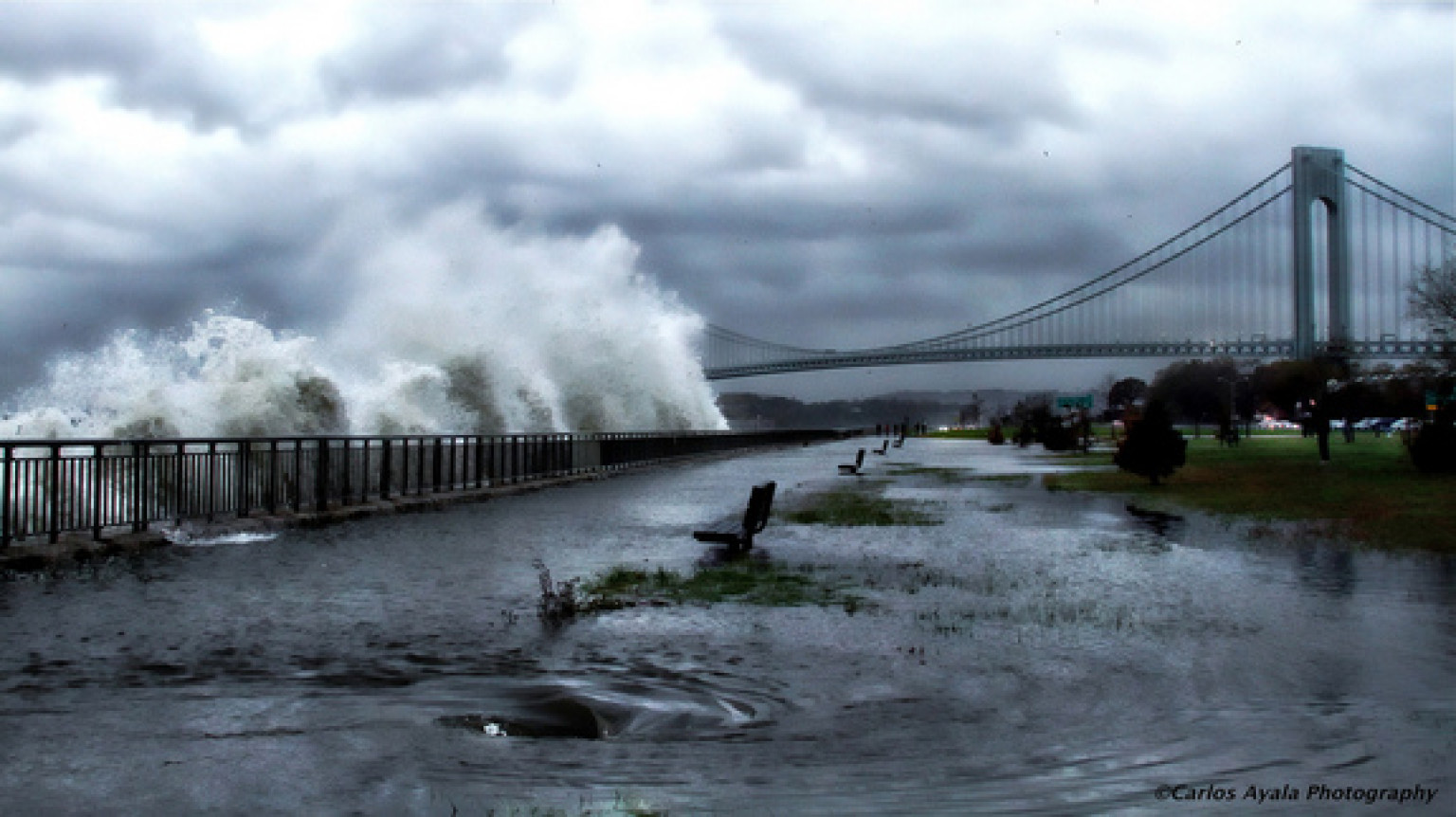
Hurricane Sandy Deadly to Dialysis Patients

Along with flood waters, Hurricane Sandy raised death rates among dialysis patients in New York and New Jersey.

An analysis of Medicare claims data found that 30-day mortality rates rose to 1.83% during Sandy, compared with 1.47% among those living in states unaffected by Sandy, and 1.6% among those living in New York and New Jersey a year before the hurricane hit.

Nicole Lurie, MD, MSPH, assistant secretary for preparedness and response at the Department of Health and Human Services, and colleagues reported their findings in the January issue of the American Journal of Kidney Disease.

End-stage renal disease (ESRD) patients also visited the emergency department more frequently during Sandy than they did in the other two comparison groups (4.1% versus 2.6% and 1.7%, P<0.001 for both).

And hospitalization rates were higher for these patients during the storm (4.5% versus 3.2% and 3.8%, respectively, P<0.001 and P<0.003).

“The research showed clearly that delaying dialysis can have devastating health effects for patients with end-stage renal disease,” Lurie said in a statement.

But preparedness procedures may have prevented those numbers from going any higher, she noted.

Just before Hurricane Sandy hit, state health officials encouraged dialysis centers to treat patients ahead of their scheduled visits — a practice called “early dialysis.”

Among 13,264 patients, almost 60% were given early dialysis ahead of the storm, either on that Saturday, Sunday, or Monday (Sandy’s worst impact came the evening of Monday, Oct. 29), indicating that the “preparedness practice of providing early dialysis … was widely implemented,” the researchers wrote.

“The good news is that we saw a lot of patients receiving dialysis before the storm hit,” Lurie said. “That type of advance planning by patients and their facilities should become routine nationwide.”

“Everyone involved should know what to do when their facilities might close,” she continued. “Patients should know where to go, and facilities should be able to provide a surge in early dialysis care so treatment is not delayed. At the end of the day, that helps people and their communities be more resilient.”

The study did note, however, that there was significant regional variation in delivery of early dialysis, suggesting some room for improvement.

“About 40% of patients did not receive early dialysis, which means there is still plenty of room for dialysis patient and facility improvement,” Lurie said. “I hope these findings serve as a rallying cry, not just for the dialysis community, but for all for people with any type of chronic health condition and their care providers to plan for emergencies.”