ADB creates contingent disaster financing for natural disasters

The Asian Development Bank (ADB) disclosed on Thursday that it has created a new financing mechanism to support developing countries in disaster preparedness and response. 

In a statement, ADB said the new contingent disaster financing (CDF) mechanism will strengthen disaster preparedness and provide quick-disbursing budget support following natural disasters.

ADB said the creation of the CDF was approved by ADB’s Board of Directors on Thursday. It aims to support the bank’s Strategy 2030 which aims to increase efforts in tackling climate change and disaster resilience.  

“CDF will provide a quick and flexible source of funds for developing member countries affected by disasters until funds from other sources become available,” said the Director General of ADB’s Strategy, Policy, and Partnerships Department Tomoyuki Kimura. “It will also help promote greater preparedness and risk management in developing member countries prone to disasters.”

The CDF will cover disasters triggered by natural hazards such as typhoons, floods, earthquakes, droughts, and tsunamis. 

It supports essential policy reforms to strengthen disaster preparedness that are to be completed before a natural disaster occurs. Once a CDF is approved for a country, it remains active until a disaster occurs. 

The country can then quickly access the approved financing to help relieve fiscal constraints for urgent relief and recovery efforts. This will prevent disruptive reallocations from priority budget programs.

“Where necessary, CDF disbursements can be accompanied by follow-up assistance through ADB’s other emergency or regular lending instruments to support recovery and reconstruction,” Kimura said.

ADB said the Asia and the Pacific, where its developing member countries are located, is the world’s most natural disaster-prone region. 

Between 2014 and 2017, countries in the region suffered 55 earthquakes, 217 storms and cyclones, and 236 cases of severe flooding, affecting 650 million people and causing about 33,000 deaths, according to the United Nations.

ADB is committed to achieving a prosperous, inclusive, resilient, and sustainable Asia and the Pacific, while sustaining its efforts to eradicate extreme poverty. In 2018, it made commitments of new loans and grants amounting to $21.6 billion.

Japan aims to boost disaster response with more efficient TEC Force

The land ministry is establishing a system to allow for the quick dispatch of workers with civil engineering and other expertise to areas hit by natural disasters, after a succession of torrential downpours and other large-scale calamities hit the nation in recent years.

The Land, Infrastructure, Transport and Tourism Ministry set up an organ in each of its nine regional development bureaus from Hokkaido to Kyushu in the current fiscal year to coordinate the expedited dispatch and training of members of the Technical Emergency Control Force.

 The TEC Force specialist group, which was created to quickly provide technical assistance to local governments affected by large-scale disasters, is tasked with assessing damage and implementing restoration work. It marked its 10th anniversary last year.

As of April, it had 12,654 registered members, many of whom are officials of regional development bureaus.

A total of 80,000 members have so far been sent to areas damaged by more than 90 major disasters, including the Great East Japan Earthquake and tsunami in March 2011.

Reflecting the recent increase in the number of large-scale disasters, members are sent to affected areas roughly 10 times per year, about double the annual figure when the force was established.

At first, the TEC Force provided assistance at the request of local governments, but after the March 2011 disaster, it began offering large-scale support immediately after disasters.

The number of personnel at regional development bureaus has continued to fall, making it difficult for those involved in developing and managing rivers, roads and other forms of infrastructure to concurrently serve as managers of TEC Force members.

To address this, the ministry in April spun off disaster-related sections at the regional bureaus to take charge of the TEC Force members. Each regional bureau now has a specialized team of about 20 for the task.

When a disaster occurs, the team makes the necessary arrangements with local governments, police and fire authorities, the Self-Defense Forces and other organizations or agencies to dispatch TEC Force members. When not responding to a disaster, members conduct training and educational programs.

In a related development, the government will hasten the process for designating seriously damaged areas as being eligible for larger state subsidies in order to facilitate their reconstruction. The ministry believes the swift dispatch of the TEC Force will help facilitate the survey work needed for the designation, ministry officials said.

The ministry is also considering adding specialists from the private sector to the TEC Force, such as engineers with architectural and land-surveying experience.

The TEC Force “needs more members if the possibility of large-scale disasters, such as a quake originating in the Nankai Trough, is taken into account,” a ministry official said, referring to the trough located off the Pacific coast.

The ministry plans to work out a set of specific measures to reinforce the TEC Force, including a new program to train members, starting in fiscal 2020.

Our planet is in crisis. But until we call it a crisis, no one will listen

‘It is time to update the language we use to better reflect the seriousness of global heating.’

When Senator Kamala Harris was asked about climate change during the Democratic debate in June, she did not mince words. “I don’t even call it climate change,” she said. “It’s a climate crisis.”

She’s right – and we, at Columbia University’s National Center for Disaster Preparedness, wish more people would call this crisis what it is.

The language we use to refer to the climate crisis has changed over time, often due to political pressures. In 1975, the geophysicist Wallace S Broecker published the first major paper on planetary heating – Climatic Change: Are We on the Brink of a Pronounced Global Warming? – and for a while the term “global warming” was the most common. But in the decades following, politicians and members of the media began to use the softer, more euphemistic term “climate change” to describe changing weather and atmospheric conditions.

That wasn’t an accident. In the early years of George W Bush’s first term as presidency, scientists were actually making serious progress in establishing overwhelming evidence that we were, in fact, facing a global crisis. Public opinion on climate change was shifting; Americans were curious about how worried they should be by the damage being done to our atmosphere.

Enter Frank Luntz, a renowned Republican pollster and strategist. Luntz was concerned that the Republican party was losing the communications battle. He advised Republicans to cast doubt on scientific consensus on the dangers of greenhouse gases and to publicly hammer home a message of uncertainty.

In 2002, Luntz wrote a memo to Bush urging him and the rest of his party to use the term “climate change” instead of “global warming”. Climate change sounded “less frightening”, he pointed out, “like you’re going from Pittsburgh to Fort Lauderdale”.

Luntz succeeded. “Climate change” began to eclipse “global warming” in the American vernacular, downplaying its menacing predecessor.

Technically, the term climate change makes sense. The climate is, indeed, changing. But the term is far too mild to describe the existential threat to the planet that these changes pose. Jeffrey Sachs, former director of the Earth Institute at Columbia University, agrees. “We should have a term that emphasizes the incredible cost and dangers,” he told us. “We do not need to be shy about this.”

Under the administration of Donald Trump, the situation is even worse. Now, instead of re-framing language about the climate crisis, Republican officials simply remove references to it entirely and put pressure on researchers and analysts who disagree.

It is time to update the language we use to better reflect the seriousness of global heating. “People do not understand the scale and pace of the climate emergency,” Jamie Henn, strategy and communications director for 350.org, an international climate campaign, told us. “This is not an issue with one future date where we will start to see effects. We may hit tipping points at any time in which we will see immediate problems.”

There is no longer any doubt that climate change is an unprecedented planetary emergency. And the terms we use to describe this crisis must deliberately reflect an appropriate sense of urgency.

The good news is that there is already some movement in this direction. Scientists, political leaders and the media have finally begun to abandon climate “change” in favor of “crisis” or “emergency”. This summer, The Guardian updated its style guide to designate “climate emergency, crisis, or breakdown” or “global heating” as better descriptors.

We applaud that decision and we hope that more journalists, politicians, and intellectual leaders will follow suit. The question is, in the current political climate, will the upgraded terminology result in definitive action? We hope so.

  • Caleb Redlener is an undergraduate studying public policy and communications at the Ohio State University and a summer intern at Columbia University’s National Center for Disaster Preparedness

  • Charlotte Jenkins is a master’s of public health candidate at the Mailman School of Public Health at Columbia and a graduate research assistant at Columbia’s National Center for Disaster Preparedness

  • Irwin Redlener directs Columbia’s National Center for Disaster Preparedness and is a professor at the Mailman School of Public Health at Columbia

As the crisis escalates…

… in our natural world, we refuse to turn away from the climate catastrophe and species extinction. For The Guardian, reporting on the environment is a priority. We give reporting on climate, nature and pollution the prominence it deserves, stories which often go unreported by others in the media. At this pivotal time for our species and our planet, we are determined to inform readers about threats, consequences and solutions based on scientific facts, not political prejudice or business interests.

More people are reading and supporting The Guardian’s independent, investigative journalism than ever before. And unlike many news organisations, we have chosen an approach that allows us to keep our journalism accessible to all, regardless of where they live or what they can afford. But we need your ongoing support to keep working as we do.

The Guardian will engage with the most critical issues of our time – from the escalating climate catastrophe to widespread inequality to the influence of big tech on our lives. At a time when factual information is a necessity, we believe that each of us, around the world, deserves access to accurate reporting with integrity at its heart.

Our editorial independence means we set our own agenda and voice our own opinions. Guardian journalism is free from commercial and political bias and not influenced by billionaire owners or shareholders. This means we can give a voice to those less heard, explore where others turn away, and rigorously challenge those in power.

source; theguardian.com

Disaster Preparedness Network Now Fully Operational

The Virgin Islands VHF Emergency Network is being strengthened with improved transmission capabilities and 75 new VHF handsets ahead of the height of the Atlantic Hurricane Season.

Emergency Communications Manager at the Department of Disaster Management (DDM), Jasen Penn said that in the coming weeks the department will be distributing handsets to critical locations around the Territory, such as fire stations, Customs, Immigration and offices on the Sister Islands.

Mr. Penn said, “Some of these offices, which are vital to making sure that different areas of the Territory maintain contact after an emergency, have been relying heavily on their mobile devices since Irma. The radio network is now much more resilient and we want to make sure that it’s accessible to those who need it ahead of the height of the Atlantic Hurricane Season.”

In addition to the new handsets, the Territory’s transmission network is poised to be improved with new or upgraded repeaters, the tower-top technology that sends signals between handsets.

“We have new a repeater to be installed on Sabbath Hill, which will improve communications between Tortola and Virgin Gorda,” Mr. Penn explained, adding that Jost Van Dyke and North Sound will also receive new repeaters, while the Challwell repeater, which facilitates communications with Anegada, is set to be upgraded.

Of the new handsets, 30 were donated by the Governor’s Office, and a further 45 were purchased with funds from the CDB Recovery and Rehabilitation Loan obtained by the Government following the impacts of 2017.

The department expects a full complement of participants for the land-based VHF Radio training course taking place today July 30 and Wednesday, July 31. Further radio training sessions are scheduled for select Government departments in August.

The VHF Radio Network is a critical component of the National Multi-Hazard Alert System managed by the DDM.

Building Resilience in Southeast Asia: Promoting risk reduction investments and innovative disaster risk finance solutions

Countries: Cambodia, Lao People’s Democratic Republic (PDR), Myanmar

Risks: River floods, urban floods, earthquakes, tropical storms, cyclones, landslides

Area of Engagement: Promoting resilience to climate change; Strengthening hydromet services and early warning systems; Deepening financial protection

In a region with a long tradition of coping with extreme water and weather variability, the Japan-World Bank DRM Program* supported disaster risk reduction, risk financing, and hydrometeorological systems and laid the foundation for a new disaster risk insurance facility.

REGIONAL CHALLENGES CALLING FOR A REGIONAL APPROACH

Despite a long tradition of coping with water and weather variability, floods, droughts and extreme weather events remain a serious challenge in the Southeast Asia region. Its ability to manage the increasing impact of disasters will have important implications on growth and development agendas.

Cambodia faces a variety of hazards, with floods, storms and droughts as the most prevalent. Typhoon Ketsana in 2009, as well as pervasive floods in 2011 and 2014, caused damages and losses of $132 million, $625 million, and $357 million, respectively. Roads are a particularly vulnerable yet critical sector for the economy and country’s growth.

Lao PDR experienced major typhoons in 2009 (Ketsana) and in 2011 (Haima), and severe flooding in 2013. Most recently in 2018, floods across the country caused $371.5 million in damages and losses, making it the most expensive disaster in the past 10 years. A large share of Lao PDR’s population is considered highly vulnerable to disaster impacts.

Cyclone Nargis was one of the worst disasters to hit Myanmar, causing large loss of lives and destruction. More recently, severe floods and landslides in 2015 are estimated to have caused production losses to the economy in 2015-16 of about 1.7 percent of 2014 GDP. Myanmar’s vulnerability is exacerbated by rapid and unplanned development, especially in cities.

LAYING THE GROUNDWORK FOR RESILIENT INVESTMENTS

Recognizing the links between development, sustainability, and resilience in Southeast Asia, the Japan-World Bank DRM Program provided a $2.5 million grant for Cambodia, Lao PDR, and Myanmar with the goal to help identify strategic investments and opportunities in disaster risk reduction, risk financing, and hydro-meteorological systems.

This grant pursued a multi-level approach to strengthen disaster and climate resilience at both the national and regional levels through analytics, advisory services, and capacity-building. The grant focused on priority country investments as well as activities which could improve regional collaboration on financial resilience and hydrometeorological services.

In Cambodia, analytics were used to examine opportunities to improve resilience of rural roads across different provinces including the use of green infrastructure solutions. In Lao PDR, analysis of benefits of investing in hydrometeorological services was conducted, accompanied by a policy note on opportunities to strengthen hydrometeorological services in the Mekong region. In Myanmar, a structural risk assessment of selected public facilities in Yangon was supported with concept drawings for seismic retrofitting. Priority drainage and flood risk management investments were also identified.

LESSONS LEARNED

Importance of analytics for decision making This program demonstrated that quality information is critical in being able to identify and prioritize investments to strengthen disaster resilience. Through analytics and knowledge exchanges, policy makers have been exposed to a range of tools and methodologies available to improve their understanding of disaster risk, and planning, implementing and maintaining their investments into resilience.

Understanding potential benefits of regional collaboration in hydromet services Regional collaboration can bring many benefits to the delivery of national weather, climate and hydrological services. Integration of the region’s hydromet systems provides opportunities to lower required investment while increasing accuracy of forecasts.

The grant contributed to the discussion and improved understanding of common challenges and opportunities which can inform future investments in this field.
Innovative regional solutions can provide an additional layer of financial protection This grant helped to lead the dialogue on financial resilience regionally, laying the groundwork to support the preparation of the Southeast Asia Disaster Risk Insurance Facility (SEADRIF). As part of this dialogue, a regional technical working group on disaster risk finance and insurance has been established and meets regularly on an annual basis. The creation of this catastrophic insurance pool will be the first of its kind in South East Asia.

Canada, EU and CDB collaborate on disaster risk management in Jamaica

KINGSTON, Jamaica – Forty-four residents of Savanna-la-Mar, Westmoreland in Jamaica are better able to help their communities in the aftermath of a disaster, following  a three-day training workshop on shelter management and initial damage assessment, part of a project being administered by the Westmoreland municipal corporation to build resilience to disaster risks and climate change impacts.

Organised by the municipal corporation under the Climate Change Adaptation and Risk Reduction Technology and Strategies to Improve Community Resilience (CARTS) project, the course was designed to equip community persons with first responder skills required in the event of a disaster.

Financing for the CARTS project is provided by the Community Disaster Risk Reduction Fund (CDRRF), a multi-donor trust fund with grant resources from Global Affairs Canada and the European Union, which is managed by the Caribbean Development Bank (CDB).

The three-day training initially targeted 30 people but met with so much interest that eventually 44 people were accommodated.

“Savanna la Mar being located on the coast makes it more vulnerable to certain climate impacts such as storm surge, flooding, sea-level rise and so on. Therefore, it is very important that we ensure that the residents can respond quickly and effectively in the event of a disaster,” said Shadae Allen, project manager for the CARTS project. It is expected that roughly 34,783 residents of Savanna-la-mar, consisting of 17,443 females and 17,340 males, will be impacted by the project.

The training was mainly conducted by the Office of Disaster Preparedness and Emergency Management (ODPEM). Participants were trained in diverse topics including the concept of risk management being, more than responding to disasters; the impact of hazards on buildings and infrastructure; and the importance of pre hazard assessments towards effective planning. Participants were also taken through practical steps for conducting an initial damage assessment.

On the shelter management side, the emphasis was placed on the role and responsibilities of the shelter manager as a problem solver in times of disaster.

Participants reported that they felt energised after the training sessions based on the quality of information presented.

“It was really a good training programme. We got lots of information to be better able to carry out our role as public health responders, pre and post-disaster.  We were also given further training to prepare us to be shelter managers if needed and we can also complete initial damage assessments if required,” said Anneka Tomlinson, from the Westmoreland health department.

Participants attending the shelter management and initial damage assessment course

Andrae Bailey, who represented a community-based organisaton in the Savanna-La-Mar area, was also pleased with the quality of the training.  

“The information was useful and the delivery method appropriate. I especially loved the visual aids in the initial damage assessment training as it gave a practical visual of what to look for when completing an initial damage assessment.  We also did participatory activities in groups to get hands-on experience with various issues. The information was relatable and the initial damage assessments aspect can be transferred even outside of disaster scenario as it is also applicable to everyday life,’ he said.

Following the training, the Westmoreland municipal corporation and ODPEM will maintain contact with the participants as well as update the parish list of persons on standby to serve as first responders. 

The recent initial damage assessment and shelter management training sessions form a part of the 2019 first responder training courses series being delivered in Savanna-la-mar between June and September.  Other courses include Search and Rescue, CPR and First Aid.

What makes International Standards interesting for National Disaster Management Authorities? – Opportunities and Challenges of engaging with NDMAs

The adoption of international standards in national disaster response is expected to improve the quality and coordination of humanitarian response and disaster preparedness at a national, regional and international level. The purpose of this report is to examine the main opportunities and challenges for engaging with National Disaster Management Authorities (NDMAs) and to look at how best to enable and support NDMAs to adopt international standards and principles in their national emergency response.

Using desk research as well as data from primary interviews, the report aims to further understanding on the main factors which enable or inhibit the adoption of international standards. While context analysis and good planning are key factors in supporting an effective process of advocacy to develop national standards for disaster response, this report aims to draw generalisable lessons for how organisations can approach or work with NDMAs, based on what has been successful in the countries that have adopted Sphere standards and principles in their disaster management policies.

The report is divided into six key themes. The first section, Engaging with NDMAs, sets up the framework of the report, and looks at how NDMAs are structured, how they function, and how they change or adopt new policies. Second, the Process of Contextualisation, looks at how existing processes in Sphere’s approach can be better utilised to overcome some of the main barriers to adoption of international standards by NDMAs. The remaining four sections set out some of the approaches, mechanisms and methods for best practice in successfully enabling NDMAs to adopt international standards in their national response. Each section includes key learnings, which inform the recommendations and suggestions for increasing future adoption of international standards.

One climate crisis disaster happening every week, UN warns

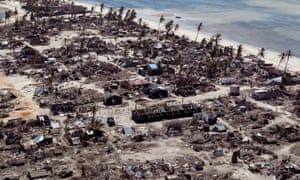
Aftermath of the damage left by Cyclone Kenneth in a village north of Pemba, Mozambique in May 2019

Climate crisis disasters are happening at the rate of one a week, though most draw little international attention and work is urgently needed to prepare developing countries for the profound impacts, the UN has warned.

Catastrophes such as cyclones Idai and Kenneth in Mozambique and the drought afflicting India make headlines around the world. But large numbers of “lower impact events” that are causing death, displacement and suffering are occurring much faster than predicted, said Mami Mizutori, the UN secretary-general’s special representative on disaster risk reduction. “This is not about the future, this is about today.”

This means that adapting to the climate crisis could no longer be seen as a long-term problem, but one that needed investment now, she said. “People need to talk more about adaptation and resilience.”

Estimates put the cost of climate-related disasters at $520bn a year, while the additional cost of building infrastructure that is resistant to the effects of global heating is only about 3%, or $2.7tn in total over the next 20 years.

Mizutori said: “This is not a lot of money [in the context of infrastructure spending], but investors have not been doing enough. Resilience needs to become a commodity that people will pay for.” That would mean normalising the standards for new infrastructure, such as housing, road and rail networks, factories, power and water supply networks, so that they were less vulnerable to the effects of floods, droughts, storms and extreme weather.

Until now, most of the focus of work on the climate crisis has been on “mitigation” – jargon for cutting greenhouse gas emissions, and not to be confused with mitigating the effects of the climate crisis. The question of adapting to its effects has taken a distant second place, in part because activists and scientists were concerned for years that people would gain a false complacency that we need not cut emissions as we could adapt to the effects instead, and also because while cutting emissions could be clearly measured, the question of adapting or increasing resilience was harder to pin down.

Mizutori said the time for such arguments had ran out. “We talk about a climate emergency and a climate crisis, but if we cannot confront this [issue of adapting to the effects] we will not survive,” she told the Guardian. “We need to look at the risks of not investing in resilience.”

Many of the lower-impact disasters would be preventable if people had early warnings of severe weather, better infrastructure such as flood defences or access to water in case of drought, and governments had more awareness of which areas were most vulnerable.

Nor is this a problem confined to the developing world, she said, as the recent forest fires in the US and Europe’s latest heatwave had shown. Rich countries also face a challenge to adapt their infrastructure and ways of protecting people from disaster.

“Nature-based solutions”, such as mangrove swamps, forests and wetlands which could form natural barriers to flooding should be a priority, said Mizutori. A further key problem is how to protect people in informal settlements, or slums, which are more vulnerable than planned cities. The most vulnerable people are the poor, women, children, the elderly, the disabled and displaced, and many of these people live in informal settlements without access to basic amenities.

Regulations on building standards must also be updated for the climate crisis and properly enforced, she said. One of the governance issues cited by Mizutori was that while responsibility for the climate crisis and greenhouse gas emissions was usually held in one ministry, such as the economics, environment or energy department, responsibility for infrastructure and people’s protection was held elsewhere in government.

“We need to take a more holistic view of the risks,” she said.

ASEAN, Direct Relief Boost Disaster Response Capacity in the Philippines

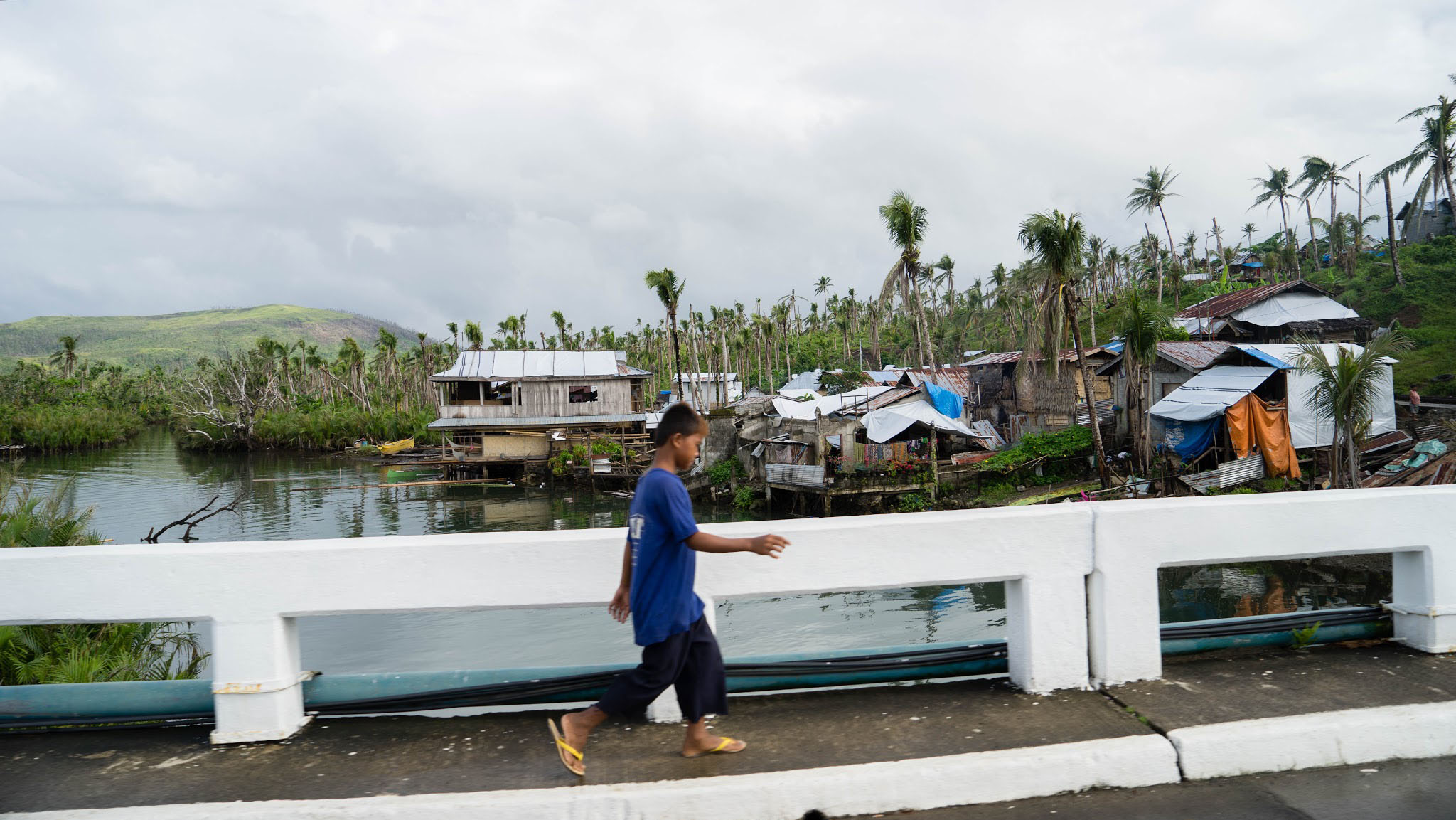
Typhoon Haiyan damage as seen in Cebu City, Philippines, in 2013. Direct Relief has long responded to disasters throughout Southeast Asia, and formally signed an agreement with ASEAN in 2016 to provide a channel for humanitarian aid during disasters. This week, Direct Relief and ASEAN's AHA Centre staff formally inaugurated a new emergency response warehouse in Manila that will enable rapid deployment of medical aid during future disasters. (Photo by William Vazquez for Direct Relief)

en ASEAN member countries were represented this week at the opening of a new disaster response center in the Philippines, spearheaded by the ASEAN Coordinating Centre for Humanitarian Assistance on Disaster Management, or AHA Centre.

To bolster the facility’s response capacity, global humanitarian aid organization Direct Relief committed $500,000 in funding for the procurement and stockpiling of essential emergency materials for deployment in emergencies throughout the ASEAN region.

“For disaster-prone areas, the lessons of preparation, resiliency, and prevention need not be learned again,” said Thomas Tighe, President and CEO of Direct Relief. “That’s why Direct Relief is so very pleased to support these important strengthening efforts with the AHA Centre, which will ensure more people receive support when they most need it.”

“Coordination, collaboration, and partnerships are the cornerstones of effective emergency response operations. It is for these reasons that we continuously expand and broaden our partnership with key players in the humanitarian sector,” said Adelina Kamal, AHA Centre Executive Director.

Kamal added that Direct Relief, which signed a formal agreement with ASEAN’s AHA Centre three years ago, is an important partner for AHA Centre on key initiatives, including during the Central Sulawesi earthquake and tsunami in Indonesia in 2018. “We are positive that this partnership will be one of the most enduring and successful engagements and for this, we are looking forward to a stronger collaboration with Direct Relief,” she said.

In addition to the strategic stockpile located in the Philippines, ASEAN is establishing a network of DELSA stockpiles in Malaysia and Thailand. Direct Relief is also funding and providing disaster relief items in both Malaysia and the Philippines, and has provided medical aid deployed to disasters by the AHA Centre, working with the Malaysian Air Force, from the Malaysian facility.

The new warehouse is strategically located in the Philippines and will enable rapid response to the region’s frequent natural disasters, including typhoons, flooding, landslides and earthquakes.

The Philippines is at high risk from cyclones, earthquakes, floods, landslides, tsunamis, volcanic eruptions, and wildfires. Since 1990, the Philippines has been affected by 565 natural disasters that have claimed the lives of some 70,000 Filipinos and caused an estimated $23 billion dollars in damages, according to the World Bank.

Working with ASEAN, the National Disaster Risk Reduction Management Council (NDRRMC), and the AHA Centre, Direct Relief will help ensure that high priority relief items are ready to go before a disaster occurs. Similar to Direct Relief’s Hurricane Preparedness Program, where strategic stockpiles of medical aid are pre-positioned in hurricane-prone areas, the strategic stockpiles in the ASEAN region will enable rapid response to disasters.

Lyft outlines its disaster response strategy

Lyft just illustrated how it will respond in the middle of a crisis. The company has introduced a Disaster Relief Access Program that promises support for people in affected areas. In situations when the roads are safe, the ridesharing firm will typically hand out free codes both through its own social network avenues as well as local news outlets, non-profits and Facebook’s Crisis Response Hub. It’ll also honor emergency declarations that affect road closures and pricing, including caps on Prime Time (read: surge pricing).

The company also promises to offer transportation help to first responders and volunteers. It’ll steer customers toward valuable resources as well, such as Airbnb Open Homes, United Way 211 info and shelter locations.

The disaster plan is part of Lyft’s larger City Works strategy aiming to support the community at large. While there’s clearly a public relations angle to all of it, this latest program could be particularly vital. If there’s a disaster, you don’t want to guess where help will come from. This could help you plan a retreat to safety, and make it clear when you’ll have to look for alternatives.