Skip to content

Category: Berita

Bring disaster preparedness down to communities – DILG exec

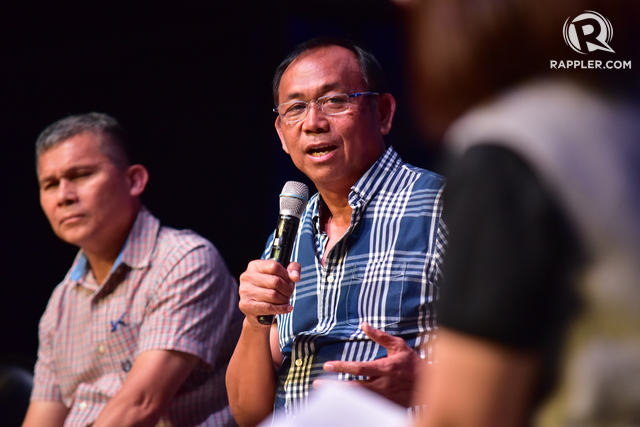
PREPARED. According to Cagayan governor Manuel Mamba, disaster preparedness needs to be instilled to communities. Photo by Alecs Ongcal/Rappler

MANILA, Philippines— Disaster preparedness needs to be brought down to the community level.

Austere Panadero, undersecretary at the Department of the Interior and Local Government (DILG), aired this sentiment on Saturday, July 8, at the Agos Summit on Disaster Preparedness. Panadero said the problem stems from changes in leadership in local government units (LGUs) – when disaster risk reduction and management (DRRM) officers, for example, come and go depending on the mayor. (READ: The role of LGUs, local councils during disasters)

May problema tayo sa LGU level. Every 3 years nagpapalit ng leadership, at sometimes kapag bago ang mayor, bago ang DRRM officer, and that’s why there are people who do not understand their job,” said Panadero. (We have a problem at the LGU level. Every 3 years, leadership changes, and sometimes when the mayor gets replaced, the DRRM officer comes with him. That’s why there are people who do not understand their job.)

Panadero pointed out that it questionable, for instance, that some LGUs seek help from national agencies just on the first day of a disaster.

As a solution, Panadero discussed Oplan Listo, the DILG’s capacity-development and disaster response program which initially involved giving the local government leaders manuals on how to respond to calamity so that they know what to do when disaster strikes.

Moving from the LGU level, Oplan Listo later extended down to the community and family level with manuals also tailored for civic groups and families.

Panadero emphasized that the expansion was because the preparation needs to go down to the family level and must not stay at the LGU level alone.

“At the end of the day it’s the behavior at the family level that leads to preparedness,” Panadero said.

Aside from this, even local governments have taken the initiative to provide disaster response frameworks that empower civic groups.

Cagayan experience

An example is Cagayan Governor Manuel Mamba whose province faced Super Typhoon Haima (Lawin) in 2014.

There were only 5 casualties in the province—a low number considering it was a super typhoon.

He said owes the success from volunteer groups he called agkakaisa, who are their “first responders,” numbering today at 144,000 all over Cagayan. They mobilized to prepare for the super typhoon when its landfall was announced.

He then initiated a “neighbor and force evacuation” program where vulnerable people were asked to evacuate, and those with stable homes were asked to take in evacuees.

PREPARED. According to Cagayan governor Manuel Mamba, disaster preparedness needs to be instilled to communities. Photo by Alecs Ongcal/Rappler

Kasama dito ang mga simbahan na binuksan ang kanilang mga pinto maging sa mga kababayan na hindi kaanib sa kanilang relihiyon (Included are churches that opened their doors to their countrymen who are not part of their religion),” Manuel said in the Agos forum.

Ever since this happened, Mamba shared, they have also been fostering a culture of volunteerism by incentivizing local government units who have “people empowerment offices” that connect with the volunteer groups.

“Each barangay [gets] P300,000 provided that people empowerment offices are in place,” Mamba said.

As a final word of advice for fellow local government leaders, Mamba said: “I’d go down to the [community] level; the barangay is too huge already. Para sa akin they’re the more efficient partner for me, ever since I was a mayor (For me they are more efficient partners, ever since I was a mayor).” – Rappler.com

Dewan: Penanggulangan Bencana Harus Satu Komando

Dewan: Penanggulangan Bencana Harus Satu Komando

TRIBUNPEKANBARU.COM, PEKANBARU – Penanggulangan bencana di Riau selama ini dinilai masih sangat jauh dari harapan. Walau ada Perda yang mengatur hal tersebut, yakni Perda tentang penanggulangan bencana alam yang sudah diproduksi pada tahun 2013 lalu, namun tidak terlaksana sampai sekarang, dan belum ada Pergubnya.

Oleh karena itu, pihak DPRD Riau kemudian menginisiasi agar Perda tersebut bisa direalisasikan, dengan mengajukan kembali perda tersebut, namun dengan perubahan, yakni menjadi Perda tentang Penanggulangan Bencana, dan tidak ada kata alam di dalamnya, sehingga sifatnya lebih umum.

“Dalam Perda yang kita ajukan ini, tidak ada kata alam di dalamnya, sehingga bencana yang ditanggulangi tersebut tidak hanya bencana alam, tapi juga yang lainnya, termasuk bencana karena ulah tangan manusia,” kata Yusuf Sikumbang, Senin (10/7).

Tidak hanya perubahan judul yang dilakukan, menurut Yusuf pihaknya juga melakukan perubahan dalam materi Perda tersebut, misalnya penekanan pada pengkoordian, kemduian koordinasi, dan pengendalian yang dilakukan oleh pihak Badan Penanggulangan Bendacana Daerah (BPBD).

“Dalam undang-undang jelas disebutkan bahwa ada 11 instansi terkait dan terlibat dalam tim penanggulangan. Selain itu, juga ada dilibatkan masyarakat secara langsung dalam tim tersebut. Kalau selama ini yang berjalan kan masing-masing saja. Harusnya satu komando, sehingga bencana bisa cepat ditanggulangi,” imbuhnya.

Dia menambahkan, dari kunjungan pihaknya ke DKI Jakarta yang sudah lama membentuk tim tersebut, menurut Yusuf sebanyak 50 orang yang tergabung dalam tim setiap kelurahan sudah terlatih dalam penanggulangan bencana. Sehingga masyarakat tidak perlu bingung jika terjadi bencana di sekitarnya.

“Kalau buat kita, setidaknya di kawasan rawan bencana dulu diterapkan, dibentuk tim terpadu yang terlatih khusus dan siaga di lapangan,” tuturnya.

Ditambahkannya, khusus untuk bencana kebakaran hutan dan lahan, tidak masuk dalam Perda tersebut, karena sudah ada Perda khusus yang dibuat sebelumnya. “Karhutla ada Perda khusus, karena penanganannya juga khusus,” ulasnya. (*)

Banjir dan Tanah Longsor di Jepang Menewaskan 18 Orang

Asakura, HanTer – Regu penyelamat Jepang melanjutkan pencarian mereka terhadap korban hujan lebat yang memicu banjir dan tanah longsor di Jepang barat daya. Bencana tersebut menewaskan sedikitnya 18 orang dan menyebabkan ratusan lainnya mengungsi.
 
Pihak berwenang memperingatkan akan kembali datang hujan yang lebat di kemudian hari yang memungkinan danya longsor susulan. Hujan lebat tersebut disebabkan udara bertekanan rendah di Samudera Pasifik, yang memasok udara hangat dan lembab ke garis awan hujan Jepang.
 
Media penyiaran NHK pada Minggu (9/7/2017) melaporkan bahwa sekitar 1.900 polisi dan tentara dengan menggunakan alat berat menerjang hujan, bergulat dengan potongan kayu dan lumpur yang memutus jalan.
 
Daerah Fukuoka dan Oita, menjadi daerah yang paling parah terkena bencana itu, di mana 18 orang tewas dan 14 lagi luka berasal dari daerah tersebut, NHK pun menyebut sekitar 570 orang terkucil dan lebih dari 20 orang belum diketahui keberadaannya.
 
“Menimbang perasaan orang-orang yang keluarganya hilang lantaran bencana ini, saya ingin menyelamatkannya sesegera mungkin,” tutur Kiyoharu Kawano yang merupakan salahsatu anggota pasukan pertahanan.
 
Sementara itu warga setempat menangani upaya pembersihan dengan penuh perjuangan. “Ini sulit, ini sulit,” kata pria tua, yang menarik gerobak dorong ketika hujan deras, membawa lumpur keluar dari restoran mie “ramen” tua yang terbuat dari kayu.
 
Seperti diketahui, Kota Asakura dilanda hujan hingga lebih dari 600 milimeter sejak Rabu, dan Hita digempur hujan hingga hampir 450 milimeter pada waktu yang sama, menurut badan meteorologi.
 
“Cuaca diperkirakan membawa 120 milimeter curah hujan ke wilayah Kyushu utara pada Senin siang dan 100 milimeter di wilayah Chugoku, Jepang barat,” kata badan meteorologi itu.


(Hermansyah)

DPR Anggap BNPB Lamban Peringatkan Bencana Dieng

Asap mengepul usai ledakan di Kawah Sileri Dieng, Jawa Tengah, Ahad (2/7).

REPUBLIKA.CO.ID, JAKARTA — Komisi VIII DPR RI meninjau lokasi Kawah Sileri Dieng, Banjarnegara, Jawa Tengah, untuk meninjau Pos Bencana Dieng. Anggota Komisi VII Khotibul Umam mengatakan, Komisi VIII melakukan pengawasan untuk melihat dampak fisik dan non fisik dari bencana itu.

“Dampak fisik seperti gunung meletus atau banjir yang terkadang menimbulkan korban sedangkan non fisik seperti Dieng ini yang berbahaya adalah asap beracun,” kata Khotibul dalam siaran pers yang diterima Republika.co.id, Selasa (4/7) siang.

Menurut dia, penanggulangan bencana yang harus dilakukan adalah merangkul ahli vulkanologi yang menguasai tentang gunung berapi dan asap beracun. “Selain itu, kita ingin BNPB juga punya program khusus untuk Dieng ini, karena Dieng ini banyak ditinggali oleh masyarakat Kabupaten Wonosobo dan Kabupaten Banjarnegara,” ujarnya.

Menurut dia, kawah Dieng pernah menimbulkan bencana besar yang mengakibatkan 20 korban luka. Namun masyarakat sekitar kawasan Dieng masih sulit untuk direlokasi, karena menganggap tanahnya merupakan tanah dari nenek moyang, sehingga untuk melakukan evakuasi dan relokasi tidak mungkin. “Oleh karena itu cara peringatan dini dari ahli-ahli vulkanologi ini menjadi penting,” kata dia.

Politisi PKB ini menilai kinerja BNPB sangat lambat dalam memberikan informasi mengenai pelarangan kawasan wisata yang tidak massive dan tidak tersosialisasikan dengan baik. Selain itu, masalah BNPB wilayah provinsi dan kabupaten, kata dia adalah tidak mempunyai alat yang cukup baik untuk mendeteksi berbagai macam bencana termasuk tanah longsor dan gas-gas beracun, yang punya adalah pusat namun pusat selalu terlambat

“Oleh karena itu, Komisi VIII akan mendorong tambahan anggaran untuk pengadaan alat-alat teknologi yang tujuannya untuk memberikan peringatan dini di kawasan-kawasan pegunungan rawan bencana seperti di Dieng ini,” ujar Khotibul.

Indonesia to establish disaster preparedness village in Dieng plateau

Jakarta (ANTARA News) – Minister of Social Affairs Khofifah Indar Parawansa revealed that the ministry is contemplating on establishing a Disaster Preparedness Village in the Dieng plateau area of Central Java Province.

“The preparedness village can help in the early detection of some areas that are prone to disasters,” Parawansa stated here on Monday.

The disaster preparedness village is being planned after a phreatic eruption of the Sileri Crater in the Dieng tourism area on last Sunday.

Parawansa said the ministry has evaluated the importance of establishing a disaster preparedness village in the area.

Parawansa added that according to the National Disaster Mitigation Agency, at least 323 districts in Indonesia are prone to natural disasters.

With regard to the Sileri Crater eruption, Parawansa noted that Disaster Preparedness Volunteers are being deployed in the area to assist in the evacuation process.

“We have readied some volunteers to assist with the evacuation service,” the minister said.

The volunteers are in charge of establishing a public kitchen and offering psychosocial treatment to people affected by the disaster.

A phreatic explosion occurred in the Sileri Crater of the Dieng Plateau Tourism Area at Banjarnegara District on last Sunday.

The eruption is noted to reach as high as 50 meters and occurred at 12 a.m. local time.

The eruption resulted in volcanic material being spewed as far as the Waterboom recreation parking lot. (*)

Why disaster preparedness is important

Now that it’s officially the “rainy season,” perhaps it’s time to review some lessons from the past and what they tell us about disaster preparedness. I recently attended the UN Global Platform for Disaster Risk Reduction conference in Cancun with a delegation led by Undersecretary Rick Jalad, director of the National Disaster Risk Reduction and Management Council. The message was pretty clear: The world (and the Philippines in particular) has made great strides in disaster preparedness, and the investment has paid

loss have yet to be contained because of the lack of relevant programs. Lives are saved, but people remain victims of and impoverished by disaster.

In September 2009, Tropical Storm “Ondoy” (international name: Ketsana) hit Metro Manila and neighboring provinces. Over a month’s worth of rainfall fell in just 12 hours, leaving more than 700 people dead and some 450,000 displaced. Damage was recorded at $1.09 billion. The absence of a warning system caught people flatfooted and unaware of the floods that ensued.

In November 2013, Supertyphoon “Yolanda” (international name: Haiyan) barreled into central eastern Philippines, making landfall in the provinces of Samar and Leyte. It was the strongest storm worldwide to ever make landfall in the recorded history of storm-tracking, with winds reaching 315 kilometers per hour and a storm surge of 4.6-7.0 meters (14-21 feet). Yolanda left 6,340 casualties and 1,058 missing and almost $3.0 billion in damage. Forecasts were made and typhoon warnings issued early. But because the people either ignored the warnings or didn’t take them seriously, the loss of life and damage were unprecedented because of the general lack of preparedness.

We founded the Philippine Disaster Resilience Foundation (PDRF) in 2009, after Ondoy, to basically focus on disaster response and recovery. Its original name was Philippine Disaster Recovery Foundation, but after Yolanda, we began to shift our strategy to disaster prevention and preparedness. In mid-2014, we decided to focus on resilience and changed our name to reflect this new thrust, while still keeping engaged in disaster response and recovery. We felt, like many others, that “an ounce of prevention was worth a pound of cure.”

One of our strategic decisions was to establish an Emergency Operations Center (EOC), which was envisioned to provide storm-tracking information as well as a map of hazard risks such as earthquakes, volcanic eruptions, and floods. By overlaying this data against maps indicating population and key facilities like airports, ports, roads, utilities, and other important infrastructure, we plan to mobilize disaster preparedness efforts well before typhoons hit.

As important as the hardware and software behind the EOC, we built a network of over 80 companies ready to mobilize before disasters. We organized these firms into eight clusters or committees on themes like Power and Energy, Water and Sanitation, Telecommunications, Resilient Infrastructure, Emergency Supplies, Finance and Insurance, Logistics, and Healthcare. We also jointly drew up a common manual of operations and organized periodic drills.

We built a prototype EOC in the central business district of Makati and began operating it in June 2016. We have completed designs for our main EOC to be located in Clark Special Economic Zone in Pampanga, and started construction last month.

It has been well documented that investments in preparedness can result in significant savings in relief and rehabilitation expenses. Since 2013, storms and typhoons have hit the Philippines (as they do 20–25 times a year). However, intensified focus on preparedness and prevention by both the government and the private sector have resulted in fewer casualties. Communities are now able to bounce back more quickly after a calamity. In our view, the results are clear: Disaster preparedness saves lives.

We now need to move to our next challenge: to use disaster risk reduction methods to cut economic losses and damage to homes, buildings and infrastructure.

Mudik Lebaran, BPBD Siapkan Posko Khusus Bencana

SOLO, KRJOGJA.com –  Antisipasi pohon tumbang yang dapat mengganggu kelancaran lalu lintas arus mudik dan balik Lebaran, Badan Penanggulangan Bencana Daerah (BPBD) Solo, menempatkan Posko khusus di dua titik. Selain relawan dan peralatan evakuasi pohon tumbang, Posko BPBD juga dilengkapi logistik, serta tempay beristirahat bagi pemudik untuk melepas lelah setelah menempuh perjalanan jauh dan melelahkan.

Kepala BPBD Solo, Eko Prajudi Nur Ali mengungkapkan dalam beberapa hari terakhir, cuaca Kota Solo acapkali diguyur hujan lumayan deras, sehingga  ancaman pohon tumbang bisa saja terjadi setiap saat. Terlebih, dari hasil pemetaan, populasi pohon besar dengan kondisi akar mulai melapuk cukup banyak, walaupun dalam beberapa hari terakhir, telah dilakukan antisipasi dengan penebangan sejumlah pohon berkategori tua dan lapuk.

“Sejumlah relawan siap bergabung di Posko BPBD untuk melayani pemudik yang memerlukan bantuan terkait dengan kebencanaan. Sedangkan peralatan yang disiagakan, antara lain, mobil resque, motor, peralatan tanggap bencana, logistik sampai gergaji mesin,” tandasnya.

Eko menambahkan bencana tidak dapat diprediksi sehingga kesiapsiagaan menjadi kunci utama untuk mengeliminasi sekecil mungkin dampak yang ditimbulkan. Dalam beberapa hari terakhir terus memantau perkembangan cuaca sebagaimana diinformasikan Badan Metereologi Klimatologi dan Geofisika (BMKG), radio komunitas, serta sumber informasi lain melalui pusat pengendali di lantai 5 Gedung Tawangpraja. (Hut)

Ini Faktor Banyaknya Angka Kematian Saat Mudik

Ini Faktor Banyaknya Angka Kematian Saat Mudik

Jakarta, Setiap tahunnya, ada saja pemudik yang meninggal dunia saat dalam perjalanan. Ternyata ada beberapa faktor yang menyebabkan hal tersebut.

Menurut Dirjen Pelayanan Kesehatan Kemenkes RI, Dr Bambang Wibowo, SpOG(K), MARS, saat temu media di Gedung Adhyatma Kemenkes menyatakan bahwa permasalahan tersebut karena adanya beberapa faktor.

Kecelakaan lalu lintas menjadi faktor utama terjadinya kematian saat mudik. “Nah ini juga ketertiban para pemudik, harus taat dan mematuhi rambu-rambu dan aturan lalu lintas,” ujar Dr Bambang.

Selain itu kesehatan pemudik juga menjadi salah satu faktor. Tidak sedikit pemudik yang memaksakan diri walau dalam keadaan sakit.

“Memang ada potensi-potensi yang bisa meningkatkan risiko kematian, seperti kejadian kemarin itu kan umumnya yang meninggal sudah ada penyakit yg menyertai dan sudah sakit sebelumnya,” tuturnya kepada detikHealth, Rabu (14/6/2017).

Maka dari itu Dr Bambang menyarankan untuk mempersiapkan kesehatan jelang mudik. “Maka yang dibutuhkan harus sehat betul. Kalau ngga sehat jangan dipaksakan. Kalau merasa kurang sehat periksa di pos kesehatan,” tambahnya.

Kurangnya pemahaman akan kesehatan dan keselamatan juga harus diperhatikan.

“Banyak anak atau bayi yang diajak naik motor, sebenarnya tidak mungkin dibawa naik motor. Orangtua harus mengerti bahwa jika ingin mudik semua harus sehat, aman, dan selamat sehingga bisa tiba ditempat tujuan. Bukannya baru separuh jalan, eh ngga sampai di tempat tujuan,” tutur dr Gita Maya Koemara Sakti Soepono, MHA selaku Direktur Pelayanan Kesehatan Primer Kemenkes di waktu yang sama.

Dr Bambang menghimbau agar semua masyarakat memahami pentingnya kesehatan dan keselamatan saat mudik, agar kematian saat mudik dapat berkurang setiap tahunnya.

Bencana Longsor di Bangladesh, 134 Tewas

Tim penyelamat mencari korban bencana di tengah timbunan lumpur setelah longsor melanda kota Bandarban, Bangladesh, Selasa (13/6).[AP][DHAKA] Hujan lebat yang terus menerus menyebabkan bencana tanah longsor di sejumlah wilayah Bangladesh, sejak beberapa hari terakhir. Pada Selasa (13/6), jumlah korban tewas telah mencapai 134 orang. Sebagian besar korban tewas terdapat di wilayah Rangamati, Chittagong, dan Bandarban.

“Kami belum dapat mencapai banyak tempat-tempat yang terkena bencana. Setelah hujan deras reda, kami akan mendapatkan gambar lengkap dari dampak kerusakan dan memulai pekerjaan rehabilitasi dengan cepat,” kata Reaz Ahmed, Kepala Departemen Manajemen Bencana, kepada kantor berita AFP.

Sejauh ini, operasi penyelamatan masih terhambat oleh cuaca buruk. Jaringan listrik dan telekomunikasi telah terputus, dan sebagian besar masyarakat tidak dapat melakukan kontak. Tim penanggulangan bencana telah ditempatkan ke daerah-daerah yang terkena bencana untuk memperkuat upaya pemulihan.

“Pekerjaan pemulihan masih berlangsung. Angka kematian dapat bertambah saat banyak daerah masih tetap terisolasi,” ujarnya

Pemerintah Bangladesh menyatakan sekitar 4.000 orang diungsikan ke 18 tempat penampungan di daerah bencana Chittagong, Rangamati, dan Bandarban. Militer, pemadam kebakaran dan telah dikerahkan untuk membantu upaya pemulihan.

“Kami telah mengungsikan 4.000 hingga 4.500 orang di penampungan. Lebih banyak lagi orang akan ditolong demi keselamatan. Kami sudah mengatur perawatan medis. Kami sediakan mereka makanan. Kami akan melakukan ini sampai mereka kembali ke rumah,” ujar Menteri Manajemen Bencana dan Pemulihan Mofazzal Hossain Chowdhury.

Menurut GM Adul Quader, Deputi Menteri Manajemen Bencana, daerah yang mengalami dampak terparah adalah Rangamati, tempat 88 orang tewas. Berikutnya adalah Chittagong, tempat 22 orang terkubur lumpur dan tertimpa pohon tumbang.

Di kabupaten Rangamati, daerah perbukitan yang berdekatan dengan perbatasan India, tanah longsor telah mengubur rumah-rumah penduduk. “Sebagian besar penduduk sedang tidur di rumah-rumah mereka tersapu begitu saja ketika terjadi longsor,” ujar kepala polisi setempat, Sayed Tariqul Hasan kepada AFP.

Juru bicara militer mengatakan beberapa personel tentara yang sedang membersihkan jalan tewas saat longsor susulan terjadi. Ribuan pasukan memang ditempatkan di Rangamati, tempat pemberontakan suku terjadi selama dua dekade terakhir, dan sejumlah kekerasan sporadis.

“Tentara itu dikirim ke jalan yang terkena longsor di kota Manikchhari ketika mereka terkubur oleh longsoran susulan,” ujar juru bicara angkatan bersenjata Letnan Kolonel Rashidul Hassan.[BBC/Al Jazeera/U-5]

DISASTER MANAGEMENT

Disaster Management (or Emergency management) is the creation of plans through which communities reduce vulnerability to hazards and cope with disasters. Disaster management does not avert or eliminate the threats; instead, it focuses on creating plans to decrease the effect of disasters. Failure to create a plan could lead to human mortality, loss of revenue, and damage to assets. Events covered by disaster management include acts of terrorism, industrial sabotage, fire, natural disasters (such as earthquakes, hurricanes, etc.), public disorder, industrial accidents, and communication failures.

Before proceeding let me mention some of major natural disasters faced by state of J&K in recent years.

1) Snow Blizzard at WaltenguNad (Kulgam district) February, 2005:

On 18th Feb 2005 a snow blizzard occurred in villages Waltengu Nad, Pachgam and Nigeenpora affecting 128 families consisting of 618 souls. During the incident 175 lives (54 men, 48 women and 73 children) were lost. In many cases full families were wiped out. 183 sheep/goats, 308 cows, 54 buffaloes and 5 horses perished.

2) Kashmir Earthquake, October, 2005:

On 8th October, 2005 a devastating earthquake of magnitude 7.6 resulted in 953 deaths and 418 injuries in J&K (also more than 80,000 deaths in PaK. This was one of the deadliest earthquakes in the sub-continent. 23,782 houses were fully damaged in the quake in J&K. 40.3% of the deaths comprised children below 10 years of age, thereby depicting their vulnerability and signifying the importance of school safety.

3) Leh Cloudburst and Flash floods, August 2010:

On the intervening night of August 5 – 6, 2010, Leh witnessed a devastative cloudburst followed by flashfloods. The unprecedented event resulted in the death of over 250 people and damage worth crores of rupees. The areas in and around Leh, especially Choglamsar, where people had constructed houses along the dry water course had no idea that the stream could get flooded and wash away everything whatever came in its way.

4) Cloud burst at Bagger (District Doda), June 2011:

A cloud burst occurred at Bagger in District Doda on 8th June 2011, where 17 structures got washed away and three people died. The dead bodies got washed away and have not been traced till date.

5) 2014 Kashmir Floods

In September 2014, the Kashmir region suffered disastrous floods across many of its districts caused by torrential rainfall .By 24 September 2014, nearly 277 people in India. According to the Home Ministry of India, several thousand villages across the state had been hit and 390 villages had been completely submerged. In actual figures 2600 villages were reported to be affected in Jammu and Kashmir, out of which 390 villages in Kashmir were completely submerged. 1225 villages were partially affected and 1000 villages were affected in Jammu Division. 

(Source ; Website of Department of Environment Ecology and Remote Sensing J&K)

Emergency Planning Ideals

If possible, emergency planning should aim to prevent emergencies from occurring, and failing that, should develop a good action plan to mitigate the results and effects of any emergencies. As time goes on, and more data becomes available, usually through the study of emergencies as they occur, a plan should evolve. The development of emergency plans is a cyclical process, common to many risk management disciplines, such as Business Continuity and Security Risk Management, as set out below:

•        Recognition or identification of risks

•        Ranking or evaluation of risks

•        Responding to significant risks

•        Tolerate

•        Treat

•        Transfer

•        Terminate

•        Resourcing controls

•        Reaction Planning

•        Reporting & monitoring risk performance

•        Reviewing the Risk Management framework

Phases and Personal activities

Prevention

It focuses on preventing the human hazard, primarily from potential natural disasters or terrorist attacks. Preventive measures are taken on both the domestic and international levels, designed to provide permanent protection from disasters. Not all disasters, particularly natural disasters, can be prevented, but the risk of loss of life and injury can be mitigated with good evacuation plans, environmental planning and design standards. Preventing or reducing the impacts of disasters on our communities is a key focus for emergency management efforts today. Prevention and mitigation also help reduce the financial costs of disaster response and recovery.

Mitigation

Preventive or mitigation measures take different forms for different types of disasters. In earthquake prone areas, these preventive measures might include structural changes such as the installation of an earthquake valve to instantly shut off the natural gas supply, seismic retrofits of property, and the securing of items inside a building. The latter may include the mounting of furniture, refrigerators, water heaters and breakables to the walls, and the addition of cabinet latches. In flood prone areas, houses can be built on poles/stilts. In areas prone to prolonged electricity black-outs installation of a generator ensures continuation of electrical service. The construction of storm cellars and fallout shelters are further examples of personal mitigative actions.

Preparedness

Preparedness focuses on preparing equipment and procedures for use when a disaster occurs. This equipment and these procedures can be used to reduce vulnerability to disaster, to mitigate the impacts of a disaster or to respond more efficiently in an emergency.

Local Emergency Planning Committees

Particular requirements of Local Emergency Planning Committees (LEPCs) include

•        Identification of facilities and transportation routes of extremely hazardous substances

•        Description of emergency response procedures, on and off site

•        Designation of a community coordinator and facility emergency coordinator(s) to implement the plan

•        Outline of emergency notification procedures

•        Description of how to determine the probable affected area and population by releases

•        Description of local emergency equipment and facilities and the persons responsible for them

•        Outline of evacuation plans

•        A training program for emergency responders (including schedules)

•        Methods and schedules for exercising emergency response plans

Response

The response phase of an emergency may commence with Search and Rescue but in all cases the focus will quickly turn to fulfilling the basic humanitarian needs of the affected population. This assistance may be provided by national or international agencies and organizations. Effective coordination of disaster assistance is often crucial, particularly when many organizations respond and local emergency management agency (LEMA) capacity has been exceeded by the demand or diminished by the disaster itself

Donations are often sought during this period, especially for large disasters that overwhelm local capacity. Due to efficiencies of scale, money is often the most cost-effective donation if fraud is avoided. Money is also the most flexible, and if goods are sourced locally then transportation is minimized and the local economy is boosted. Some donors prefer to send gifts in kind, however these items can end up creating issues, rather than helping. Medical considerations will vary greatly based on the type of disaster and secondary effects. Survivors may sustain a multitude of injuries to include lacerations, burns, near drowning, or crush syndrome.

Recovery

The recovery phase starts after the immediate threat to human life has subsided. The immediate goal of the recovery phase is to bring the affected area back to normalcy as quickly as possible. During reconstruction it is recommended to consider the location or construction material of the property.

The most extreme home confinement scenarios include war, famine and severe epidemics and may last a year or more. Then recovery will take place inside the home. Planners for these events usually buy bulk foods and appropriate storage and preparation equipment, and eat the food as part of normal life. A simple balanced diet can be constructed from vitamin pills, whole-meal wheat, beans, dried milk, corn, and cooking oil.One should add vegetables, fruits, spices and meats, both prepared and fresh-gardened, when possible.

International organizations Involved in Disaster Management

a) The International Emergency Management Society

b) International   Association of Emergency Managers

c) International Recovery Platform

d) The International Red Cross and Red Crescent Movement

e) Baptist Global Response

f) United Nations

g) World Bank

National Organizations Involved in Disaster Management in India

The National Disaster Management Authority is the primary government agency responsible for planning and capacity-building for disaster relief. Its emphasis is primarily on strategic risk management and mitigation, as well as developing policies and planning. The National Institute of Disaster Management is a policy think-tank and training institution for developing guidelines and training programs for mitigating disasters and managing crisis response.

The National Disaster Response Force is the government agency primarily responsible for emergency management during natural and man-made disasters, with specialized skills in search, rescue and rehabilitation. The Ministry of Science and Technology also contains an agency that brings the expertise of earth scientists and meteorologists to emergency management. The Indian Armed Forces also plays an important role in the rescue/recovery operations after disasters.

–         The writer is a final year Civil  Engineering Student