Waspadai Bencana, BPBD Siaga Selama Ramadan

LEBAK – Badan Penanggulangan Bencana Daerah (BPBD) Kabupaten Lebak, Provinsi Banten, memberlakukan siaga selama Ramadan guna mengurangi resiko kebencanaan agar tidak menimbulkan korban jiwa.

“Kami tetap mewaspadai bencana alam, seperti kebakaran, longsor, dan banjir,” kata Kepala Pelaksana Badan Penanggulangan Bencana Daerah (BPBD) Kabupaten Lebak, Kaprawi di Lebak, Senin (6/6/2016).

Selama ini, cuaca buruk masih melanda wilayah Kabupaten Lebak dan berpeluang terjadi bencana alam. Cuaca buruk tersebut dengan kapasitas curah hujan ringan dan sedang disertai angin kencang. Frekuensi curah hujan itu berlangsung antara 1,5 sampai 3 jam dan terjadi pagi, siang, dan malam hari.

Curah hujan tersebut, katanya, bisa menimbulkan banjir dan longsor. Terjadang cuaca kemarau sehingga rawan terjadi kebakaran permukiman. Bahkan, selama dua hari terakhir ini jumlah kebakaran hingga menghanguskan 20 kontrakan dan delapan kamar pondok pesantren.

“Kami memberlakukan siaga itu karena peluang bencana cukup berpotensi akibat cuaca buruk itu,” katanya.

Menurut dia, saat ini petugas dan relawan tangguh memberlakukan piket di Posko Utama BPBD dengan cara bergantian sekitar 10 orang per harinya. Selain itu juga mereka dilengkapi persedian peralatan evakuasi, seperti logistik, termasuk obat-obatan agar para korban bencana dapat ditangani dengan baik.

Peralatan kebencanaan itu antara lain perahu motor,mesin gergaji, pelampung, tenda, kendaraan operasional juga mobil dapur. Selain itu juga berkoordinasi dengan TNI, Polri, Tagana, PMI, Dinas Bina Marga, Dinas Kesehatan, Orari, Pers, aparat kecamatan dan masyarakat.

Fiji, Indonesia To Endorse Disaster Risk Management Pact

Government will today sign a memorandum of understanding with Indonesia on disaster risk management.

It underscores Government’s bid for improved bilateral relationships with its international counterparts in this sector.

The Minister for National Disaster Management Inia Seruiratu will sign the agreement with the head of the National Disaster Management Authority of the Republic of Indonesia Willem Rampangilei at the National Disaster Management office at around 11:30am in Suva.

Mr Rampangilei is also the chair of Association of Southeast Asian Nations (ASEAN) Ministerial Meeting on Disaster Management as well as a member of the Conference of the Parties to ASEAN Agreement on Disaster Management and Emergency Response (AADMER).

He was previously a deputy to Indonesia’s co-ordinating minister for culture and human development, and in charge of disaster impacts and social affairs.

At 1:30pm, he will depart Suva for a site visit at Queen Victoria School where the Indonesian military are carrying out Tropical Cyclone Winston rehabilitation work on the school.

The Indonesians offered to rebuild the badly-damaged boarding school under the Government’s Adopt a School programme.

Why ASEAN’s disaster management strategy must include gender

The ASEAN Agreement on Disaster Management and Emergency Response (AADMER) came into being in December 2009. It has played a tremendous role in enhancing regional and national capacities for disaster response in the region. The recent ‘ASEAN Vision 2025 on Disaster Management’ document provides thoughtful insights on how AADMER can move towards a more people-centred, sustainable and better-networked approach. But these suggestions do not directly address the disproportionate impact disasters have on women.

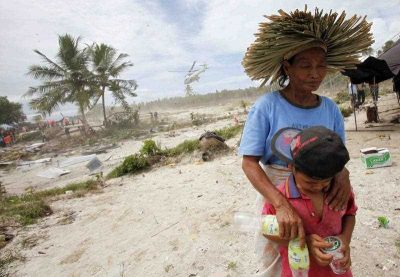
Survivors stand near the ruin of a house as a helicopter flies above the tsunami devastated village of Pororogat, South Pagai island, West Sumatra, Indonesia, 28 October 2010. (Photo: AAP).

The UN Security Council’s first resolution on the Women, Peace and Security (WPS) agenda was launched in October 2000. Although it was developed with the plight of women in conflict settings in mind, the WPS agenda itself is not just about conflict or even just about women. It is a transformative agenda that seeks to create sustainable peace, ensure greater participation and facilitate the move from gender inequality to gender justice. In its broader vision the agenda resonates with the objectives of the ASEAN Community post-2015 and is contiguous with ASEAN’s human rights agenda.

It is critical that the WPS agenda becomes an important component of disaster response planning and management. There is ample evidence that women are disproportionately affected both during disasters and in response settings. For example, an Oxfam report in 2005 highlighted how women and girls were extremely affected by the 2004 tsunami, stressing their disproportionately high mortality rates. A 2007 study on disasters in 141 countries revealed that gender differences in mortality rates were directly related to women’s economic and social rights, and that men and boys were given preferential treatment during rescue operations. Beyond the immediate effects, both women and girls suffered more acutely from shortages of food and economic resources.

The four pillars that bolster the WPS agenda — prevention, participation, protection, and relief and recovery — correspond to the objectives outlined in AADMER and could be adapted into its framework. To become a more effective tool, AADMER should incorporate an explicitly gendered perspective on disaster response.

AADMER does currently take into account vulnerable groups in disaster settings and has specific provisions for this purpose, like the inclusion of and consultation with these groups in planning and management. But the agreement does not explicitly mention any specific focus on the forms of vulnerabilities unique to women, including the increase in sexual and gender-based violence in post disaster settings. Instead ‘vulnerable groups’ mentioned in the agreement should be understood to implicitly include women.

Article 6 of the agreement aims to include local practices and knowledge into disaster management processes. But it does not acknowledge the active role many women can, and often do, play throughout the various stages of disaster response and rehabilitation like procuring food, clothing and shelter through their own informal networks before aid arrives. This locks women in a victim narrative and does not recognise their role as valuable actors in disaster management. The absence of an explicit gendered approach in AADMER hence reduces the sustainability of rebuilding and rehabilitation efforts.

Post disaster this can further increase women’s vulnerability and economic insecurity. Persistent gender inequalities are only exacerbated in a crisis setting. A gendered perspective on disaster planning and management may significantly reduce these risks.

There are various possible entry points to incorporate the WPS agenda in AADMER. Article 3 of AADMER, for example, outlines the need to extend disaster risk reduction efforts in order to incorporate sustainable development policies at all levels and involve all relevant stakeholders, including local communities. As mentioned earlier, Article 6 specifies the importance of strengthening community participation as well as promoting and utilising local knowledge and practices. This could potentially include formalising women’s ‘informal networks’, for example, through the creation of local women’s response teams. These articles provide avenues through which ASEAN could help develop more resilient communities.

Indonesia and the Philippines have already embarked on the WPS agenda through their specific WPS National Action Plans that address women’s protection during conflict settings and their participation in peace building efforts. This is reflected in a 2014 Indonesian Presidential decree and in the Philippines through the National Action Plan on Women, Peace and Security (NAPWPS). These could be ‘launching pads’ for incorporating the agenda in disaster settings as well. But for this to be successful it will be crucial that more developed ASEAN states assist their ASEAN neighbours in areas where they may lack the financial and technical capabilities or necessary skills and training programs.

Singapore, for example, can certainly step in to fill this void. Singapore could play a leading role in promoting and coordinating the WPS agenda in AADMER as well as creating strong monitoring and evaluating systems. Supporting research investigating gender sensitive early warning systems, and providing gender-sensitivity training for disaster response teams are two possible areas for greater collaboration and involvement.

What is also needed is the collection of greater disaggregated data at a regional level to facilitate a more nuanced picture of the gendered impacts of disasters across the region. It will also be necessary to further investigate how discourses on risk and safety following a disaster are shaped.

The integration of ASEAN into a single regional market through the ASEAN Economic Community compels Singapore to work towards greater stability in the region. In such an interconnected community disasters that happen elsewhere can have repercussions across the entire region. The increased movement of people following a disaster — as many succumb to desperate measures to survive due to heightened economic insecurity — can evolve into issues of national security, for example human trafficking, where Singapore becomes a crucial node in the system or a destination point. A disaster in one area has transnational implications.

Natural disasters are not discerning. They affect all: men and women, rich and poor. It will be imperative to support the WPS agenda using the AADMER platform to create a more disaster resilient region. This should be a key goal for Singapore as chair of ASEAN in 2018.

Tamara Nair is a Research Fellow at the Centre for Non-Traditional Security (NTS) Studies at the S. Rajaratnam School of International Studies (RSIS), Nanyang Technological University, Singapore.

Indeks Skor Bencana Alam Wonogiri Tinggi

WONOGIRI – Di level nasional, Kabupaten Wonogiri memiliki indeks skor 146 dan menjadi daerah berkategori tinggi dalam hal kerawanan bencana alam di Indonesia, utamanya bencana alam tanah longsor dan banjir, yang terjadi pada setiap musim hujan.

Demikian ditegaskan Asisten Sekda Wonogiri Bambang Haryadi, Kamis (2/6), ketika menjadi pembina apel latihan gladi siaga penanggulangan bencana alam yang digelar di Alun-alun Giri Krida Bakti di depan Kantor Bupati Wonogiri. ‘’Bencana alam memang tidak dapat diprediksi kapan terjadi. Tapi dengan menyiapkan tenaga terlatih siaga penanggulangan bencana, maka dampaknya dapat dieleminisasi,’’ tegas Bambang.

240 Bencana

Kepala Badan Penanggulangan Bencana Daerah (BPBD) Kabupaten Wonogiri Bambang Haryanto menyatakan, selama lima bulan terakhir, periode Januari-Mei 2016, di Wonogiri terjadi 240 bencana yang menimbulkan kerugian material Rp 3,39 miliar, terdiri atas bencana longsor 115 kali, banjir 28 kali, angin topan 87 kali, dan kebakaran 10 kali. ‘’Untuk latihan gladi penanggulangan bencana yang digelar satu hari di Alun-alun Giri Krida Bakti ini diiikuti 284 personel sukarelawan siaga bencana,’’ ujar Bambang Haryanto.

Para peserta datang sebagai perwakilan dari dinas dan instansi pemerintah, badan usaha, TNI, Polri, dan unsur terkait lain. Tampil menjadi instruktur pelatihan adalah para sukarelawan dari BPBD, PMI, SAR, TNI, dan Polri yang berkualifikasi sebagai pelatih.

Kepada para peserta diberikan simulasi penanggulangan bencana yang skenarionya dibuat untuk penanganan bencana banjir.

Utamanya ketika terjadi luapan air buangan dari Waduk Gajahmungkur Wonogiri karena hujan deras berkepanjangan dan menyebabkan volume air melebihi kapasitas tampungan. Para peserta juga dilatih mendirikan tenda, memasak logistik di dapur umum, cara taktis dalam melakukan komunikasi penanggulangan bencana, dan praktik pemberian pertolongan kepada korban bencana. (P27-85)

BNPB: Warga Sempat Panik Akibat Gempa 6,5 SR, Aktivitas Kini Normal

BNPB: Warga Sempat Panik Akibat Gempa 6,5 SR, Aktivitas Kini Normal

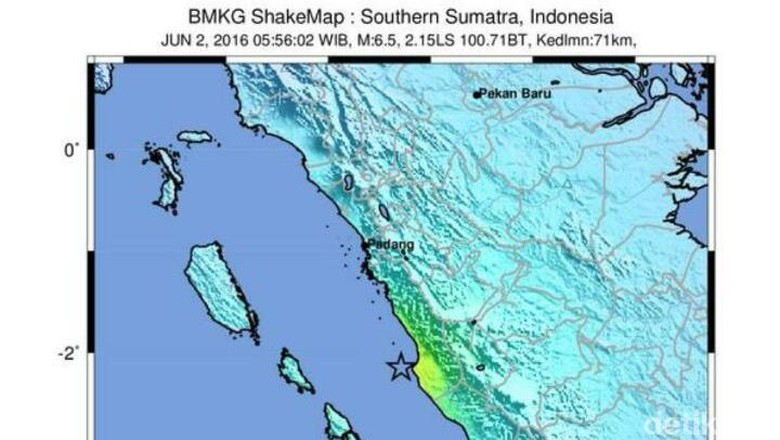
Jakarta – Gempa berkekuatan 6,5 SR mengguncang Pesisir Selatan, Sumatera Barat pagi ini. Warga di Sumatera Barat dan sekitarnya yang sempat panik kini sudah beraktivitas normal kembali.

“Masyarakat panik dan berhamburan keluar rumah. Hubungan komunikasi telepon dan listrik normal. Saat ini kondisi masyarakat telah normal. Belum ada laporan kerusakan,” kata Kepala Pusat Data Informasi dan Humas BNPB Sutopo Purwo Nugroho dalam keterangannya, Kamis (2/6/2016).

Posko BNPB telah mengkonfirmasi dampak gempa 6,5 SR ke beberapa BPBD yang terdampak. Beberapa daerah dilaporkan mengalami guncangan keras hingga sedang.

Guncangan gempa sangat keras dirasakan masyarakat di Kabupaten Pesisir Selatan dan Muko-Muko selama sekitar 20-30 detik. Tempat tidur dan peralatan rumah bergeser dari posisinya. Masyarakat panik dan berhamburan keluar rumah. Bahkan, ada sebagian masyarakat yang hendak mengungsi. Dampak kerusakan akibat gempa masih dalam pendataan.

Di Kota Padang gempa dirasakan cukup kuat. Masyarakat di wilayah pesisir Sumatera Barat, Bukit Tinggi, Padang Panjang dan sekitarnya juga merasakan guncangan gempa cukup keras.

Gempa juga dirasakan di Solok Selatan, Jambi, Bengkulu Utara, Kota Bengkulu, Padang Pariaman, Pekanbaru, Pasaman, Tanah Datar, dan beberapa daerah di Sumatera. BPBD saat ini masih mendata kerusakan yang terjadi.

“Gempa dipicu oleh aktivitas subduksi lempeng Hindia Australia dan lempeng Eurasia di zona benioff bagian atas. Posko BNPB telah menganalisis guncangan gempa dari BMKG, USGS dan GDAC,” papar Sutopo.

Berdasarkan peta guncangan gempa atau gempa dirasakan dari BMKG, maka intensitas gempa dirasakan di Solok, Painan, Muko-muko IV-V MMI (II SIG BMKG); Kepahiang, Padang Panjang III-IV MMI ( II SIG BMKG); Kabupaten Agam, Kabupaten 50 Kota III MMI (II SIG BMKG). SIG adalah Skala Intensitas Gempabumi yang dibuat oleh BMKG sesuai dengan kondisi Indonesia. II SIG berarti dirasakan banyak orang tetapi tidak menimbulkan kerusakan. Benda-benda ringan yang digantung bergoyang dan jendela kaca bergetar.

Sedangkan berdasarkan analisis guncangan gempa dari USGS (Badan Geologi Amerika) di Pesisir Selatan berintensitas VI MMI (kuat), sedangkan di Muko-Muko IV MMI (sedang). Potensi kerusakan akibat gempa hanya ringan. Sedangkan berdasarkan analisis dari Global Disaster Alert and Coordination System, guncangan gempa berintensitas VI MII (kuat) di Desa Gati Kabupaten Pesisir Selatan. Tingkat kerusakan yang ditimbulkan akibat gempa ringan. Hal ini disebabkan gempa yang terjadi adalah gempa dengan kedalaman menengah, dimana ciri gempa kedalaman menengah spectrum getarnya luas namun tidak menimbulkan kerusakan yang masif.
(imk/aan)

sumber: detik.com

BMKG: Gempa 6,5 SR di Sumbar Cukup Kuat Tapi Tak Timbulkan Kerusakan

BMKG: Gempa 6,5 SR di Sumbar Cukup Kuat Tapi Tak Timbulkan Kerusakan

Jakarta – Gempa berkekuatan 6,5 SR mengguncang Sumatera Barat. Gempa ini cukup kuat namun tidak mengakibatkan kerusakan.

“Mengacu parameter ini tampak bahwa gempa tersebut merupakan gempa menengah terjadi akibat aktivitas subduksi lempeng di zona,” ujar Kepala Bidang Mitigasi Gempa bumi dan Tsunami BMKG Daryono saat dihubungi detikcom, Kamis (2/6/2016).

Menurut Daryono, gempa ini memiliki efek permukaan yang cukup kuat. “Tetapi tidak menimbulkan kerusakan,” tambahnya.

Sebelumnya, gempa pertama kali tercatat pada pukul 05.35 WIB. Pusat gempa berada di sebelah barat daya Sumbar dengan jarak 79 km dengan kedalaman 72 km.

sumber: detik.com

Earthquake disaster management

It is indeed unsettling to note that when it comes to earthquake of a high magnitude, our disaster management preparedness is almost nonexistent. This is distressing as such a tremor in the Modhupur fault line will spell disaster for Dhaka, one of the most densely populated cities in the world. Experts at a seminar a few days ago said that an earthquake of 7.5 would kill around 1 lakh people, 1.6 lakh families would be displaced, not to mention the 72,000 buildings that would be razed to the ground in the capital alone.  

The ever-increasing density of population in the city and unplanned urbanisation over the last couple of decades has certainly increased our vulnerabilities. It, however, defies any sense of logic that despite repeated calls to demolish structurally unsafe buildings, no such measure has been taken to that effect. Equally perturbing is the non-implementation of the building code and the lack of monitoring of new structures at their planning stages. To make it worse, land-owners, the developers, the authorities concerned, it seems, are oblivious of the catastrophe that lies in the wait for us. 

It is better to be safe than sorry. Pulling down risky buildings, strictly enforcing the national building code and retrofitting important structures are the order of the day. It is also crucial to coordinate the disaster management efforts so that mock drills and other preparedness exercises can be seamlessly carried out. It is imperative that we prepare ourselves to promptly respond in case of eventualities. Also, appropriate acquisition of rescue equipments and gearing up operational modalities should be undertaken immediately.

Mitigasi Bencana Perlu Memperhitungkan Tata Ruang

JAKARTA, KOMPAS.com – Penanggulangan bencana merupakan salah satu visi pemerintah yang masuk dalam program Nawacita.

Pentingnya penanggulangan bencana ini secara paralel dapat mewujudkan kemandirian ekonomi dan menggerakkan sektor-sektor ekonomi domestik.

“Penanggulanan bencana dilakukan untuk melindungi pusat-pusat pertumbuhan ekonomi yang berisiko,” ujar Deputi Bidang Pencegahan dan Kesiapsiagaan Badan Nasional Penanggulangan Bencana (BNPB) Wisnu Widjaja saat “Workshop Karakterisasi Sumber Gempa Baru untuk Updating Peta Gempa Indonesia 2016” di Hotel Ambhara, Jakarta, Senin (30/5/2016).

Ia mengatakan, kerusakan dan kerugian yang ditimbulkan bencana alam membutuhkan upaya antisipatif untuk mengurangi atau meminimalisasi bencana di masa depan.

Dalam Rencana Pembangunan Jangka Menengah Nasional (RPJMN) 2014-2019, pemerintah juga diarahkan untuk menanggulangi bencana dan meningkatkan ketahanan pemerintah daerah, serta masyarakat dalam menghadapi bencana.

Sasarannya adalah menurunkan indeks risiko. Terutama, karena Indonesia berada di lingkungan ekonomi yang kian bertumbuh.

“Kita diharapkan bisa menurunkan risiko bencana di 136 pusat-pusat pertumbuhan. Kalau bisa melindungi pusat-pusat pertumbuhan, kita harapkan ekonomi tumbuh dan kerentanan di daerah lain bisa kita kurangi,” jelas Wisnu.

Dalam upaya tersebut, BPNB melaksanakan beberapa strategi utama, antara lain internalisasi mitigasi bencana dalam kerangka pembangunan berkelanjutan, koordinasi dengan Kementerian Agraria dan Tata Ruang atau Badan Pertanahan Nasional (ATR/BPN), dan peningkatan kapasitas daerah dalam penanggulangan bencana.

Kaitannya dengan Kementerian ATR/BPN sendiri adalah pemerintah perlu memperhitungkan pembangunan dalam penyusunan tata ruang.

Western Australia earthquake has strength of ‘atomic bomb’

An earthquake that shook Western Australia’s goldfields overnight had the strength of an “atomic bomb” blasting underground.

Three earthquakes hit near Norseman, including a magnitude 5.2 tremor reportedly felt as far away as Perth.

The first was a 4.9 magnitude quake about 6km under the surface hitting about 11.30pm local time, then the 5.2 was about an hour later and the last was a 3.2 magnitude tremor about 1.44am on Sunday.

Geoscience Australia senior seismologist Dan Jaksa said it was the largest event in WA since the magnitude five earthquake in Kalgoorlie in April 2010, which left several buildings badly damaged.

He said the quakes were caused by tectonic stress due to Australia’s continental plate moving about seven centimetres a year and the one that hit shortly after midnight was the equivalent to an atomic bomb going off.

“When we see a nuclear test occur, they’re generally a magnitude five,” Jaksa said.

Geoscience Australia asks the public to fill out surveys on their website whenever they feel tremors.

Jaksa said so far about 100 surveys had been filled since midnight, including reports of the quakes being felt in Perth and Esperance, hundreds of kilometres away.

Brodie Woods, who works at Norseman BP, said he woke up to the first tremor on Saturday night, thinking someone was trying to break into his house.

“The window in my bedroom was rattling like crazy,” he said.

Woods said he ran outside to see who was trying to get in – joining most of his neighbours who thought the same thing until they realised it was a quake.

He then thought it was a nearby mine blasting, but then there was another.

Claye Poletti, the owner of the Bottlemart Express Norseman Hotel, said the 5.2 felt “pretty severe”.

“It kept on shaking, shaking and shaking,” Poletti said.

He said the 1934-built character pub didn’t sustain any damage but the quake rattled the two-storey landmark.

“It rocked the old building. It shook pretty well.”

Poletti said dogs could be heard barking madly, but Shadow, his Staffordshire terrier, wasn’t too worried.

“He’s pretty tough – he probably thought it was a heavy train like everyone else did.”

Jaksa said the quakes were significant but common in WA, particularly in the Wheatbelt region.

However, he considers Australian earthquakes “among the most dangerous in the world” because they happen randomly.

“We’re just not used to them, they’ll come out of the blue and in random places, so we’re just not as prepared,” he said.

Jaksa said it was important to stay inside and get under furniture.

“To run outside is the most dangerous thing to do – the majority of deaths occur outside the buildings,” he said.

The department of fire and emergency services said it had not received any notifications of building damage.

People from as far away as Kalgoorlie and Esperance – both about 200km away – had phoned Woods telling him they had also felt the earthquake.