Separuh Wilayah Kabupaten Sampang Rawan Bencana

Separuh Wilayah Kabupaten Sampang Rawan Bencana

Sampang  – Tingginya intesitas hujan di wilayah Kabupaten Sampang selama bulan Februari nampaknya patut untuk diwaspadai.

Sebab, selain berpotensi menimbulkan bencana banjir, intensitas hujan yang cukup tinggi juga berpotensi mengundang datangnya bencana puting beliung dan tanah longsor.

Untuk itu pemerintah Kabupaten Sampang melalui Badan Penanggulangan Bencana Daerah (BPBD) setempat kini mewaspadai terjadinya puting beliung dan tanah longsor di 7 kecamatan yang berada di Sampang.

Sebab, berdasarkan catatan BPBD setempat, Sedikitnya ada empat kecamatan di Kabupaten Sampang saat ini yang berpotensi terlanda bencana angin puting beliung. Keempat kecamatan itu, masing-masing adalah Kecamatan Tambelangan, Kecamatan Robatal, Kecamatan Kedungdung, dan Kecamatan Karangpenang.

“Sedangkan kecamatan yang rawan longsor adalah Kecamatan Sokobanah, Ketapang, Jrengik dan Tambelangan,” kata Kepala BPBD Sampang Wisnu Hartono, Kamis (18/2/2016).

Dikatakan Wisnu, bencana puting beliung dan tanah longsor memang selalu mengancam daerahnya bersamaan dengan tingginya curah hujan.

“Selain puting beliung, kami juga mewaspadai terjadinya longsor di beberapa kecamatan yang berada didaerah perbukitan, meskipun sampai sejauh ini belum ada peristiwa tanah longsor,” imbuhnya

Dijelaskan Wisnu, data Badan Meteorologi Klimatologi dan Geofisika (BMKG) Surabaya menujukan, terjadinya angin puting beliung memang harus diwaspadai sebagai ancaman. Sebab untuk daerah Kabupaten Sampang, prakiraan pergerakan angin bisa mencapai 35 kilometer/jam.(sar/ted) (beritajatim.com)

Health worker steps up to the challenge of disaster response

Yacinta Julio Namacha is a project officer at the Malawi Red Cross Society in Blantyre.  Her expertise lies in community health, but when severe floods hit the country in early 2015, Yacinta stepped straight into an emergency response role thanks to training she received as a member of the Red Cross National Disaster Response Team.

When natural disasters strike, the need for staff and volunteers who are skilled in emergency response to support affected communities is immense. Often these staff must be brought in from outside the country. However, the International Federation of Red Cross and Red Crescent Societies (IFRC) has worked to establish National Disaster Response teams across southern Africa so that skilled staff can reach affected areas more quickly.  

Once the flooding started in southern Malawi, Yacinta was deployed to Chikwawa district to assist people who had been displaced. Many had lost their homes and livelihoods under the flood waters.  Yacinta was one of the first people on the ground, conducting needs assessments to determine what support was most needed.

“In Chikwawa, we went to the camps and sat with the people and asked them their problems and what they needed. The skills I got from being in [the National Disaster Response Team] assisted me in doing this during the emergency,” says Yacinta.

In 2014, Yacinta participated in National Disaster Response Team training that incorporated practical simulations of disaster situations. During the exercises, she learned how to conduct needs assessments, register beneficiaries, manage distribution of relief items, and plan for recovery. All of this knowledge was vital for her work in Chikwawa with the Malawi Red Cross Society.

After the needs assessment, Yacinta worked on registering and verifying beneficiaries in Chikwawa. She supported distributions and took charge of prioritizing vulnerable groups, such as pregnant women, the elderly, and children. Because of her training, she was able to direct other volunteers assisting with the emergency response to deal appropriately with vulnerable people.

“These people are vulnerable and they have already been affected psychologically. If you don’t treat them well, it means you are increasing the problem instead of assisting them. During our training, we learned how we can ensure their dignity is maintained,” says Yacinta.

Yacinta has since returned to her health officer position with the Malawi Red Cross Society, but she remains a valued member of the National Disaster Response Team. Her experience in Chikwawa, combined with ongoing training, helps ensure that she is ready to respond again should another emergency arise.

See more at: ifrc.org

Are Pharmacists Prepared for America’s Worst Natural Disaster?

“When, not if” is a repeated phrase experts use when they refer to the Cascadia subduction zone rupture, which will create North America’s worst natural disaster in recent history.

The Cascadia fault line—which may be lesser known than the San Andreas Fault, but has the potential to produce more damage—runs from the area around Cape Mendocino, California, through Oregon and Washington, and ends near Vancouver Island, Canada.

Pharmacists should be aware of this fault line because there is a 1 in 3 chance that a big earthquake with a magnitude of 8 to 8.6 will occur in the Pacific Northwest within the next 50 years, The New Yorker reported. The odds of the next full-margin rupture (between an 8.7- and 9.2-magnitude earthquake) occurring in the next half-century are about 1 in 10.

When the full-margin rupture occurs, the Pacific Northwest will experience not only a massive earthquake, but also a tsunami roughly 15 minutes later.

One of the most-cited quotes from The New Yorker article on the Cascadia subduction zone came from Kenneth D. Murphy, the Federal Emergency Management Agency (FEMA) regional administrator for Region X, who stated, “Our operating assumption is that everything west of Interstate 5 will be toast.”

On its website, FEMA describes the Cascadia subduction zone earthquake and tsunami situation as “one of the most complex disaster scenarios that emergency management and public safety officials face in the Pacific Northwest.”

Every 200 to 500 years, on average, an 8- to 9-magnitude earthquake occurs along the 800-mile territory, according to FEMA. The last major earthquake and tsunami occurred in 1700.

If the earthquake and tsunami had hit on February 6, 2016, at 9:41 AM, around 13,000 individuals would have died and 27,000 would be injured, FEMA told The New Yorker. The agency is currently planning a 4-day exercise in June to coordinate governmental agencies with the private sector on responses to this emergency situation.

Awareness and preparation are crucial for those residing in the Pacific Northwest. Here’s how pharmacists located in states on the West Coast can help prepare themselves and their patients for this natural disaster, starting with Washington State.

Washington
Michael Loehr, chief of emergency preparedness and response for Washington State, told Pharmacy Times that local and state emergency managers have led efforts to educate the public, business community, government agencies, and elected leaders about the Cascadia subduction zone rupture.

While Loehr did not have details on what percentage of homes or structures have been built or retrofitted to withstand earthquakes, he did note that efforts are continuing to retrofit critical infrastructure, especially bridges.

He described pharmacists as key health care providers who can play an important role in helping patients prepare for this disaster.

“Pharmacists can encourage their patients to create a disaster supplies kit, have all prescriptions written down in a safe place so that the list can be taken with the person in the event they need to evacuate, encourage patients to have contact information for health care providers readily available, and ensure to the greatest extent possible that an extra supply of critical medications can be maintained at home,” Loehr said.

source: pharmacytimes.com

Pemkab Aceh Selatan Terima Bantuan Alat Penunjang Bencana Alam

Prof Dr M. Mas'ud, secara simbolik memberikan bantuan kendaraan penunjang operasional penanggulangan bencana alam.

Nanggroe Aceh Darussalam Kementrian Sosial Republik Indonesia memberikan bantuan berupa alat penunjang operasional penanggulangan bencana alam kepada Pemerintah Kabupaten Aceh Selatan, NAD, Selasa (15/02/2016) siang waktu setempat.

Kondisi topografi Kabupaten Aceh Selatan yang terdiri dari dataran rendah, bergelombang, berbukit, hingga pegunungan dengan tingkat kemiringan sangat curam/terjal menjadikannya sebagai salah satu daerah yang rawan akan bencana alam.

Faktor alam serta seringnya terjadi bencana alam di daerah tersebut menjadi salah satu alasan penting mengapa Kementrian Sosial memberikan perhatian khusus berupa alat-alat penunjang operasional penanggulangan bencana alam.

Prof Dr M. Mas’ud, Staf Khusus Menteri Bidang Pengembangan SDM dan Program Kemensos, dalam hal ini mewakili Menteri Sosial memberikan kata sambutan, sekaligus menyerahkan bantuan secara simbolik kepada warga setempat di Kampung Siaga Bencana (KSB) yang berlokasi di Trumon Tengah, Kab. Aceh Selatan.

Anggota TAGANA sedang mencba satu dari tujuh dapur umum lapangan yang diberikan oleh Kemensos RI.
Bantuan yang diberikan antara lain, 1 unit RTU (Rescue Tactical Unit ), 7 Unit Dapur Umum Lapangan, 1 unit truk kayu, 1 unit tangki air, dan 21 unit motor trail.

“Dari total 514 kabupaten dan kota seluruh Indonesia, Aceh Selatan menjadi daerah yang mendapat perhatian khusus dari menteri sosial. Hal itu juga selaras dengan tugas pokok kementrian sosial, yaitu selalu ada dalam memberikan bantuan kepada warga miskin, terkena bencana alam, maupun bencana sosial.”

Tak hanya bantuan alat penunjang operasional, Kemensos turut serta dalam merehabilitasi rumah-rumah penduduk tak layak huni melalui program Rutilahu (Rumah tidak layak huni). Progrma tersebut ditujukanuntuk mewujudkan tempat tinggal yang layak bagi segelintir warga miskin di Aceh Selatan.

Saat ini telah ada lima puluh rumah di pantai timur dan utara yang telah direhabilitasi. Kedepannya jumlah ditargetkan mencapai sepuluh kali lipat dari jumlah saat ini atau sekitar lima ratus rumah.

Prof Dr M. Mas’ud, Staf Khusus Menteri Bidang Pengembangan SDM dan Program Kemensos berfoto bersama anggota TAGANA (Taruna Siaga Bencana).
Dalam hal penangulangan bencana, Kemensos mengajak masyarakat untuk proaktif ikut menanggulangi bencana melalu Tagana (Taruna Siaga Bencana). Tagana ialah perwujudan dari penanggulangan bencana bidang bantuan sosial berbasis masyarakat. Anggotanya merupakan relawan dari masyarakat yang memiliki kepedulian dan aktif dalam penanggulangan bencana bidang bantuan sosial.

“Situasi alam di Aceh Selatan terbilang aneh, bahkan cuaca terik seperti ini bisa tiba-tiba datang banjir bandang. Untuk menghadapi banjir kami membuat tanggul-tanggul besar untuk mencegah banjir. Dengan bantuan dari Kemensos sangat membantu tapi belum cukup bila mengingat luasnya wilayah Aceh Selatan” kata Sekda Aceh Selatan, Hermaini.

Lebih lanjut Mas’ud mengatakan bahwa tahun ini merupakan tahun kedua bagi Kementrian Sosial Republik Indonesia dalam bekerja keras membantu kehidupan sosial masyarakat Indonesia. Kedepannya ia berharap seluruh elemen masyarakat, TNI, Polri, dan lembaga lain untuk bahu membahu menanggulangi segala bentuk bencana alam maupun sosial yang terjadi di masyarakat.


Can Health Care Providers Afford to Be Ready for Disaster?

MORE than 200 people died in hospitals and nursing homes in Louisiana after Hurricane Katrina in 2005, leading to widespread agreement that health care preparedness in the United States needed dramatic improvement. One hospital, Memorial Medical Center, was so undone that two desperate doctors later said that they hastened the deaths of patients who had waited days in the heat for rescue.

The chaotic evacuations of more than 6,400 hospital and nursing-home patients in New York City after Hurricane Sandy in 2012 — where some were separated from their records and untraceable by their families for weeks — reinforced concern about the readiness of health care providers during emergencies.

Despite repeated calls for change, however, and billions of dollars in disaster-related costs for health care providers, federal rules do not require that critical medical institutions make even minimal preparations for major emergencies, from hurricanes, earthquakes and tornadoes to bioterrorist attacks and infectious epidemics such as Ebola and Zika.

“We’ve had way too many circumstances where the results are catastrophic,” said Karl Schmitt, a former division chief for public health preparedness in Illinois and founder of the consulting firm bParati. “Preparedness doesn’t put heads in beds, and if it doesn’t put heads in beds, it doesn’t bring in revenue, so it’s not going to get the C.E.O.’s attention.”

That may soon change. Industry experts are awaiting release of a federal rule that would make emergency preparedness a condition for a wide range of health care institutions to participate in the Medicare and Medicaid programs. More than 68,000 providers would potentially be affected, including hospitals, kidney dialysis centers, psychiatric treatment facilities, home health agencies and organ transplant procurement organizations. Among other steps, providers would be required to conduct regular disaster drills, have plans for maintaining services during power failures and create systems to track and care for displaced patients.

Those requirements were under development as early as 2007, during the Bush years. The government finally made public a draft of the proposed rule in 2013, describing it as an “urgent public health issue” and inviting public comments. But it still has not been finalized. As often occurs with disaster preparedness itself, other issues have taken precedence. “Preparedness of our hospitals rises to the fore each time a natural disaster (e.g., Hurricane Katrina) or significant pandemic (e.g., Ebola) occurs,” wrote Donna E. Shalala, a former Health and Human Services secretary, in prepared remarks for a Congressional hearing on combating biological threats on Friday. “We want to see more deliberate and systematic planning.”

The federal health official overseeing preparedness and response, Dr. Nicole Lurie, an assistant secretary at Health and Human Services, said the proposed rule could help build overall health system resilience and save lives. “Being ready and able to withstand disaster can benefit individual health care facilities and the local economy and helps the community as a whole recover faster.”

The proposed rule, however, appears stalled. Since Nov. 3, it has been parked at the Office of Management and Budget, undergoing a legally required review. A spokeswoman for the office said the 90-day review period had been extended.

Part of the reason for the yearslong wait may lie in the critical reaction to the proposal from health care groups, which argued that certain provisions, including testing backup power generators more frequently for longer periods (they have failed often in emergencies), were too costly and unnecessary.

“There was a lot of opposition to what they proposed,” said Robert Solomon, a division manager for building and life safety codes at the National Fire Protection Association, which developed its own disaster-emergency management standard and has urged the Centers for Medicare and Medicaid Services to defer to it.

In December, reviewers from the Office of Management and Budget discussed the rule with representatives of the American Health Care Association, which represents facilities that care for the elderly and disabled, and has challenged the cost estimates associated with the requirements.

Medicare’s calculations suggested a relatively modest impact: $8,000 on average for hospitals the year the rule takes effect and about $1,262 each year for skilled nursing facilities. But the association said that those figures were unrealistic because of factors like emergency overtime.

Others who commented on the proposal said they feared that the rules would be particularly burdensome for smaller facilities that have traditionally not been involved in emergency preparedness. “Each organization can only do so much based on their resources,” Mark Covall, president and chief executive of the National Association of Psychiatric Health Systems, said in an interview.

Ashley Thompson, a senior vice president at the American Hospital Association, said the group generally agreed with the proposal, but hoped Medicare would align its requirements with crisis preparedness standards developed by other bodies, including the Joint Commission, which accredits many American hospitals and other health institutions.

Mr. Schmitt said those resisting regulation were shortsighted. “It’s saying, ‘Look, if you want to care for the more vulnerable populations in America and you want to bill for these services, we’re just saying meet some minimum standards.’ ”

But girding for emergencies often seems to fall off the map as a disaster recedes. More than 45 years after the Sylmar earthquake killed dozens at California hospitals, for example, more than 250 hospital buildings rated most at risk of collapsing and endangering the public have yet to be retrofitted, replaced or removed from service. “If I never have a disaster and you make me invest, say, $100,000 or $500,000 in preparedness, I’ve lost revenue,” said Dr. David Marcozzi, an associate professor at the University of Maryland School of Medicine. “However, for the facility that is impacted and is able to continue treating patients, the return on investment is different. Tell me, how do you do a budget analysis on that?”

Dr. Marcozzi, a former director of the National Healthcare Preparedness Programs at Health and Human Services, recently left a position at Medicare, where he contributed expert advice to the group working on the rule. They were considering scaling back or revising it “to accommodate a lot of the stakeholders,” he said.

Part of the solution, he added, could be to create incentives for providers demonstrating preparedness, like higher Medicare reimbursements, increased credit ratings and lower insurance premiums.

The rule has a statutory deadline of three years from proposal to publication, and if it is approved, much of its strength will depend on how it is interpreted and enforced. “If this has political will, which unfortunately it hasn’t historically, it will get across the goal line,” Dr. Marcozzi said. “If it doesn’t, and other things encumber it, this will not get to final.”

source: nytimes

Antisipasi Banjir, Adira Insurance Bentuk Tim Tanggap Bencana

Peta wilayah potensi banjir di Jakarta dan Bodetabek pada Februari 2016.

Jakarta – PT Asuransi Adira Dinamika (Adira Insurance) telah membentuk tim tanggap bencana untuk mengantisipasi bencana banjir tahun ini. Dengan adanya tim tanggap bencana ini, diharapkan masyarakat bisa terbantu ketika banjir melanda.

“Setiap tahunnya, kami selalu membentuk tim tanggap bencana, terutama menjelang musim penghujan. Tim tanggap bencana Adira Insurance juga selalu berkoordinasi dengan tim bencana Danamon sebagai holding company kami,” ujar Guntur Pramudhya, Contact Center Department Head Adira Insurance dalam keterangan tertulis yang diterima Investor Daily, Senin (15/2).

Bantuan utama yang diberikan, kata Guntur, berupa evakuasi kendaraan ke lokasi yang lebih aman serta perbaikan kendaraan atas kerusakan akibat banjir, sesuai jaminan yang tercatat di dalam polis. Selain itu, lanjut dia, perseroan juga memberikan bantuan logistik bagi para korban banjir melalui posko-posko banjir yang ada.

“Terkait dengan proses evakuasi tersebut, kami selalu mengarahkan pelanggan untuk menghubungi call center Adira Care 1500 456 agar Pelanggan dapat segera memperoleh pertolongan dari kami,” ujar Guntur.

sumber: beritasatu

Seribu Lebih Korban Banjir Solok Selatan Terserang Penyakit

Seribu Lebih Korban Banjir Solok Selatan Terserang Penyakit

Padang – Warga mulai terserang penyakit sepekan setelah banjir dan longsor melanda sejumlah kabupaten dan kota di Sumatera Barat. Mereka diantaranya menderita penyakit kulit, diare, dan inspeksi saluran pernafasan atas (ISPA).

Kepala Dinas Kabupaten Solok Selatan, Novirman, mengatakan ada sekitar 1.362 warga yang sudah terserang berbagai penyakit itu sejak tiga hari setelah banjir dan longsor melanda. Kebanyakan menderita penyakit kulit.

“Hingga hari ini, ada sekitar 421 warga terkena penyakit kulit, 200-an menderita ISPA dan demam, selebihnya, diare, luka-luka, darah tinggi, asma dan penyakit lainnnya,” ujarnya, Ahad 14 Februari 2016.

Menurutnya, warga rentan terkena penyakit karena rumahnya digenangi lumpur pascabanjir. Mereka juga kekurangan air bersih.

Saat ini, kata dia, cuaca mulai panas, debu-debu pun bertebaran. Apalagi, alat berat mengangkat tanah dan kayu bekas banjir dan longsor di jalan. “Kami sudah bagikan 2.000-an masker ke masyarakat,” ujar Novirman lagi.

Dia juga mengatakan kalau Dinas Kesehatan setempat sudah membuka posko-
posko kesehatan di tiga kecamatan, yaitu Sungai Pagu, Pauh Duo, dan Sangir. “Kami juga mendapatkan bantuan obat-obatan dari provinsi,” ujarnya.

Kepala Bidang Penanggulangan Penyakit dan Penyehatan Lingkungan Dinas Kesehatan Sumatera Barat, Irene, mengatakan, korban banjir yang mengalami ISPA dan penyakit kulit terus bertambah. “Diare belum ada peningkatan,” kata dia.

ANDRI EL FARUQI

sumber: TEMPO.CO

Banjir Bandang Ancam Lereng Merapi-Merbabu

Banjir Bandang Ancam  Lereng Merapi-Merbabu

, KLATEN-– Pemerintah daerah diminta mengidentifikasi sungai-sungai di wilayahnya yang berpotensi menghadirkan bencana banjir bandang. Pemerintah dan juga masyarakat harus mengenalinya karena banjir bandang bersifat merusak (destruktif) dan berlangsung cukup cepat.

 “Sungai-sungai yang berhulu di lereng Gunung Merapi dan Merbabu serta di wilayah Dieng termasuk berkarakter banjir bandang,” ujar anggota Ikatan Ahli Kebencanaan Indonesia (IABI) Kelompok Kerja Banjir dan Kekeringan, Agus Maryono.

 Agus memberikan peringatannya itu dalam forum diskusi tentang banjir bandang di Klaten, Sabtu pekan lalu. Dalam forum itu, Kepala Bidang Pengkajian dan Penerapan Teknologi Pembuatan Hujan Unit Pelaksana Teknis Hujan Buatan BPPT, Tri Handoko Seto, mengungkap potensi bencana, seperti banjir bandang, tanah longsor, dan angin ribut, menjelang puncak musim hujan pada Maret mendatang.

 “Menguatnya angin di wilayah barat sejak Kamis lalu berdampak pada masifnya pertumbuhan awan di Indonesia bagian selatan, seperti Sumatera bagian selatan, Jawa, Bali, dan Nusa Tenggara,” ujar Tri.

 Terkait dengan kondisi itu, Agus menganggap perlu masyarakat mendapat banyak informasi khusus ihwal banjir bandang. Sungai berkarakter banjir bandang, ujar Agus, biasa berada di tekukan lereng tebing kritis dengan komposisi batuan lemah serta banyak timbunan material sisa tanah longsor dan pohon-pohon mati.

 Menurut dia, banjir bandang berpotensi memakan korban karena masyarakat sering tidak menyadari jika di daerah hulu sedang terjadi hujan deras dalam durasi lama. Selain memetakan sungai rawan banjir bandang, Agus menambahkan, pemerintah harus membuat sistem peringatan dini (early warning system).

Penjabat Bupati Klaten, Jaka Sawaldi, menyatakan pemerintahan setempat telah berupaya meminimalkan dampak banjir. Mereka meluncurkan Gerakan Kali Bersih yang melibatkan ribuan anggota masyarakat, relawan, TNI, Polri, BPBD, dan sejumlah satuan kerja perangkat daerah.

 Gerakan gotong-royong membersihkan sungai dari sampah yang dimulai sejak Sabtu lalu itu disebutkannya sudah menyasar sepanjang daerah aliran Kali Lunyu, Grogok, Jaliden, Kacang Ijo, dan Jalidin. “Dua pekan lalu banjir merendam belasan desa di Klaten. Penyebabnya adalah jebolnya sejumlah tanggul dan meluapnya sungai-sungai yang tersumbat sampah,” kata Jaka.

sumber: TEMPO.CO

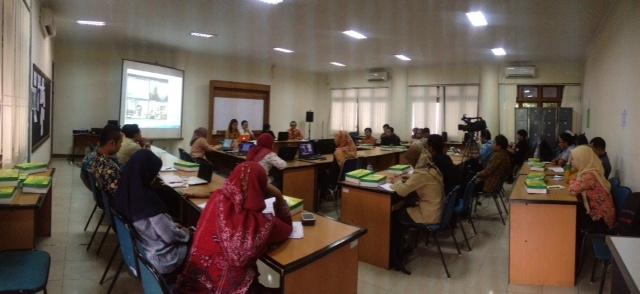
Reportase Diskusi Outlook Manajemen Bencana Kesehatan Tahun 2016

Description: C:\Users\Madelinaani\Downloads\IMG_8865.JPG

Selamat berjumpa kembali para pembaca website bencana kesehatan. Kemarin, kami mendapat pertanyaan yang bagus dari rekanan peneliti kebencanaan di Aceh, beliau bertanya apakah manajemen bencana kesehatan itu sudah tepat kita gunakan?. Kami menjawab, mengacu pada World Association on Disasater and Emergency Medicine maka dirasa itu sudah tepat, dimana mereka menyebut untuk berbagai bentuk kegiatan manajemen, kegiatan pelatihan, dan pendidikan untuk tenaga kesehatan dan mahasiswa menggunakan istilah disaster health. Maka kita coba mengadopsinya menjadi Disaster Health Management juga untuk menjelaskan mengenai manajemen bencana sektor kesehatan atau manajemen bencana kesehatan.

Menarik sekali, untuk mengumpulkan sektor kesehatan berkumpul membahas hal-hal bencana dan krisis yang berdampak pada sektor kesehatan. Hal ini telah dicoba oleh Divisi Manajemen Bencana, Pusat Kebijakan Manajemen Kesehatan, FK UGM dalam kegiatan Diskusi Outlook 2016 Kebijakan Manajemen Bencana Kesehatan di Indonesia pada Kamis, 21 Januari 2016 pukul 13.00 – 15.30 WIB lalu. Apa saja yang dibahas? Semua tentang bencana dan krisis yang berdampak pada sektor kesehatan, termasuk juga bagaimana sektor kesehatan mempersiapkan dan menghadapinya. Selain itu, bahasan mengenai peran rumah sakit, dinas kesehatan, LSM, dan perguruan tinggi kesehatan dalam menghadapi benacana dan krisis kesehatan. Pembaca sekalian, silakan simak reportase kegiatan tersebut pada link berikut Klik Disini

Kedepan kami akan menuliskan rangkuman diskusi tersebut dalam bentuk working paper dan kami membutuhkan saran dan tanggapan dari rekan sekalian. Untuk itu terus simak pengantar mingguan dari kami