Before the storm: Shifting federal disaster policy toward mitigation

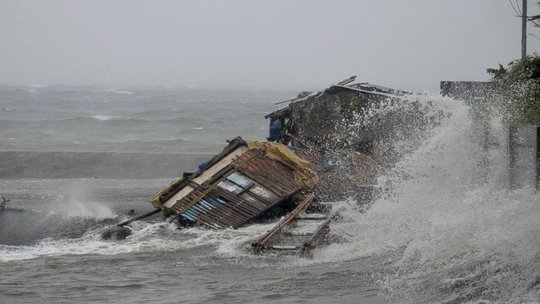
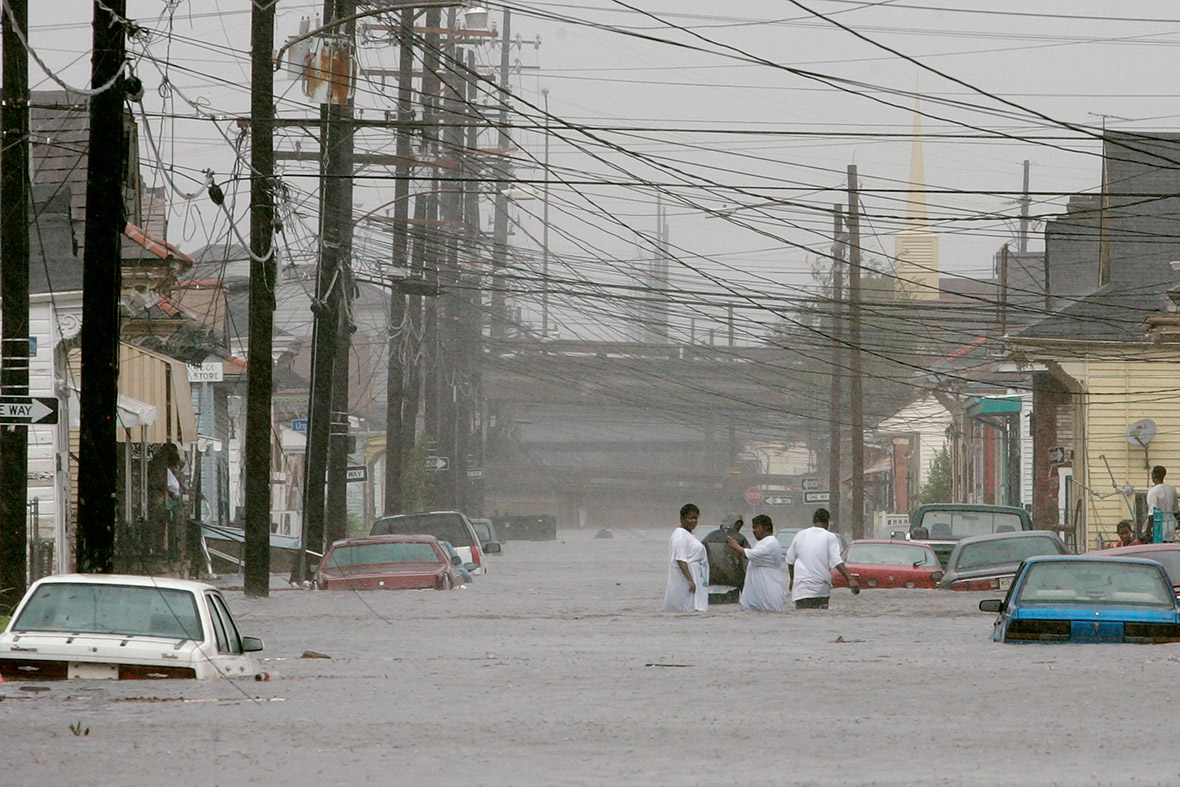
In recent years, we’ve seen natural disasters take a serious toll on our nation. Nearly a decade ago, Hurricane Katrina devastated New Orleans, killing more than 1,800 people and leaving some communities yet to completely recover. In 2012, Hurricane Sandy caused at least 162 deaths in the United States and damaged hundreds of thousands of homes. Beyond the human costs, these disasters have significant financial consequences. The Congressional Research Service has reported that Hurricane Katrina cost the federal government approximately $120 billion while Hurricane Sandy cost $60 billion. The years without disasters of that scale are expensive as well, often seeing the federal government spend between $2 billion and $6 billion.

The risks that natural disasters pose aren’t likely to go away anytime soon. As the Third National Climate Assessment points out: “Certain types of extreme weather events with links to climate change have become more frequent and/or intense, including prolonged periods of heat, heavy downpours, and, in some regions, floods and droughts.” Unfortunately, our federal policies aren’t as well suited for these problems as they should be. We focus our resources largely on responding and recovering from natural disasters after they’ve occurred—when we should focus instead what we can do before they do. We need to re-orient our policies, and do so in ways that will save lives and money.

When discussing homeland security, policy analysts generally talk about five mission areas: prevention, protection, mitigation, response, and recovery. In evaluating where to put resources—dollars and people, for example—public officials divvy them between these areas, deciding what’s appropriate given the threats and hazards they face. When dealing with terrorism, prevention is a focus, so we put some of these resources into activities such as intelligence gathering. Where natural disasters are concerned, prevention isn’t really an option so we focus our efforts on the other four areas.

At the federal level, this has largely meant funding response and recovery. FEMA, the federal agency most of us think of when we talk about natural disasters, spends much of its time assisting states and communities after they’ve been hit. In the wake of a major storm, emergency managers, firefighters, and law enforcement will conduct search and rescue operations, tend to the injured, clean debris, and start repairing roads and bridges, among other things. If the damage is severe enough, FEMA will pick up the tab for much of this work through its public assistance program and help people get back on their feet through individual assistance. Other agencies kick in as well. The Department of Housing and Urban Development, the Small Business Administration, the Department of Transportation, and a number of others all provide after-the-fact disaster assistance.

Helping communities rebuild is important, especially after they’ve been overwhelmed by a catastrophe. But in focusing on after-the-fact response and recovery, we haven’t done as much as we should before natural disasters hit. Mitigation is a prime example of this. It’s well established that there are a number of actions communities can take to reduce the impact of disasters. For example, well-designed building codes can ensure that structures can withstand the damage of earthquakes or floods; residential and community safe rooms can shield people from wind and debris; and homes can be elevated to reduce flood damage. These steps build resiliency against disasters and take people out of harm’s way. This means that there’s less to repair and rebuild— and less need for costly response and recovery efforts. One oft-cited figure estimates that for every dollar spent on mitigation, four are saved.

Currently, when the federal government assists with mitigation, it largely does so as part of its recovery efforts. That is, when helping rebuild after a disaster, FEMA and the Department of Housing and Urban Development will provide funding for communities to put together mitigation plans or buy and relocate structures in flood-prone areas, for example. This is good. But even better would be a concerted effort to promote mitigation before a disaster hits. There are several ways we can try to do this. One is simply to spend more money on such efforts. The President’s 2016 budget takes a step in this direction, proposing to increase funding for FEMA’s “pre-disaster” mitigation program from $25 million to $200 million. That’s still a long way from the billions that will go toward disaster relief, but it’s a start.

Another option is to shift funding in other grant programs toward mitigation. FEMA currently spends more than $1 billion a year on its terrorism-focused preparedness grants. These programs have been very successful in helping states and cities strengthen their ability to respond to attacks. Boston, for example, uses this funding to conduct its Urban Shield training exercises, which it credits for its quick response to the 2013 marathon bombing. But it’s time to consider opening these grants up to a wider range of purposes and encouraging recipients to direct a portion of what they get to mitigation.

Finally, the federal government should create incentives for states and localities to do more mitigation on their own. BuildStrong, a coalition of businesses and emergency managers, has been pushing for the adoption of the Safe Building Code Incentive Act for several years. This legislation would provide states with more assistance after a disaster if they have strong building codes in place beforehand. Inducements such as these could go a long way toward encouraging communities to consider mitigation. This is an achievable goal and one worth pursuing. By doing more before disasters hit, the federal government will have less to do after.

source: brookings.edu
Japan to host 3rd UN World International Conference from March 14 in Sendai

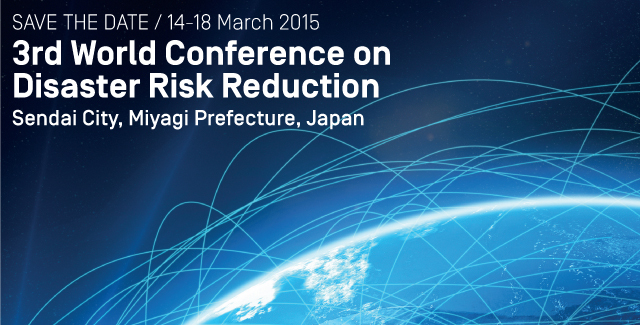
TOKYO: Japan would organize a five-day Third UN World Conference on disaster risk reduction here from March 14.

This was stated here by a senior official of the Cabinet office of the government of Japan while briefing the visiting media representatives to Japan from sixteen different development countries including Pakistan.

The Journalists from Indonesia, Thailand, Phillipne, Vietnam, Mayamar, Fiji, Sri Lanka, Pakistan, Bangladesh, Colombia, Chile, Brazil, Peru, El Salvador, Nicaragua and Iran were participating at the two-week progarmme at the invitation of Japan International Cooperation Agency (JICA) which started here from February 16.

The main objective of the program was to familiarize the financial activities and projects initiated by the JICA in different countries and share disaster management utilizing Japanese experience for building disaster resilient societies in developing countries.

Highlighting the objectives of the 3rd UN World Conference on Disaster Risk Reduction, the official said that more than 5,000 experts in the field of Disaster reduction management would participates besides attending by 40,000 visitors.

The official further said that during the conference the participants would review the implementation of HFA and adopt ion of a post -2015 framework (HF2).

The official said that Japan has a comprehensive disaster management plan including risk reduction.

The official said that the number of earthquakes with magnitude of 6.0 or greater occurred in Japan was 18.3 percent compared to 81.3 percent of the total worlds earthquakes.

The official further said that after World War II ,the biggest earthquakes had caused huge economic and human losses to Japan. Highlighting progress in laws and systems in disaster management acts since 1959, the official said that after typhoon Ise-Wan in Japan in 1961 Disaster countermeasures basic act (DCBA) was introduced.

The official said that after Nigata earthquake 1961, Act of earthquake insurance, in 1978 Miyagi-Ken Oki earthquake Amendment of building standard law was inacted in 1981, while Great Hanshin Awaji earthquake 0f 1995,amemdment of DBA and Act of promotion of earthquake proof retrofit of buildings was introduced.

Similarly , the official said that after Great East Japan Earthquake 2011,Tsumani resident city development act was inacted while in 2012 amendment of DCBA and further amendment in DCBA were made in 2013.

The official further told the participating journalists that Great east japan earthquake 2011 has caused 21,377 casulties while the number of collapsed and half collapsed buildings were 1,158,707.

The official said that Japan has learnt from these disasters and wanted to share it with other countries for disaster risk reduction.

Meanwhile a JICA representative on Disaster risk management said that around 90 perent of victims were citizens of the developing countries. He said that according to UNISDR, US $ 1.68 Trillion in economic losses due to major intensive global disasters from 2001-2011.

He added that according to UNISDR around (one) 1 million people died , 3 billion people were affected due to natural disasters after year 2000.

He said that having increase of natural disaster, Disaster risk reduction was inevitable not only to save human lives but to realize sustainable development and resilient society in the world.

He was of the view that US $ 0ne (1) investment in dister risk reduction saves US $ seven (7) in recovery efforts.

He urged the countries and their governments around the world for allocation of funds for diaster risk reduction as Japanese government had spent 5 percent of state budget to this sector from 1960 to 1970.

He added that natural disasters might affect the achievement of Millinumn Development Goals (MDGs).

He added that natural disters may directly affect to human life and Disaster risk reduction contributes to the realization of human security in the developing countries.

Later the participants of the JICA training programme visited the local Honjo Bosaikan ,Life safety learning center in the Tokyo Fire department and also participated in drill for disaster preparedness after a disaster.

Bosaikan (life safety center ) is a facility that enables everyone in Tokyo to experience simulated disasters thereby increasing their disaster knowledge and showing them what to do in case of an emergency.

The high technology disaster simulators make someone feel if they were in the middle of an earthquake , a storm , a fire or smoke.

Visit the WCDRR 2015 website

Copyright AFP (Agence France-Presse), 2015

6.5-magnitude quake hits off Vanuatu

Sydney (AFP) – A 6.5-magnitude earthquake struck off the Pacific nation of Vanuatu Thursday, the United States Geological Survey said.

The USGS reported that the quake hit at a depth of 10 kilometres (6.2 miles) about 149 kilometres from Vanuatu’s capital Port Vila.

The Pacific Tsunami Warning Center said there was no threat of a tsunami.

A second, smaller 5.1 magnitude quake hit the same area about 20 minutes later, the USGS said.

Vanuatu is part of the “Ring of Fire”, a zone of tectonic activity around the Pacific that experiences frequent earthquakes and volcanic eruptions.

The South Pacific island was jolted by a powerful 6.8-magnitude tremor in late January, but there were no reports of damage.

In 2013 the neighbouring Solomon Islands were struck by a tsunami after an 8.0-magnitude earthquake rattled the region. The tsunami killed least 10 people, destroyed hundreds of homes and left thousands of people homeless.

Japanese coastal towns evacuated as earthquake hits Pacific

Tsunami warning issued by Japan Meteorological Agency as residents of Iwate prefecture are cleared from homes, though no damage or injuries reported

Evacuations were ordered for towns closest to the coast in Iwate prefecture in Japan early on Tuesday morning after a strong earthquake with a preliminary magnitude of 6.9 was recorded off the country’s coast.

The Japan Meteorological Agency issued a tsunami warning and Japanese broadcaster NHK warned residents a one metre-high wave was expected to hit the coast of Iwate. The quake was measured at a depth of about six miles and shook much of north-east Japan even being felt in Tokyo, 430 miles away.

There were no immediate reports of damage or injuries. The Pacific Tsunami Warning Center in Hawaii said there was no danger of a Pacific-wide tsunami.

NHK later said that small tsunamis of about 10 centimetres were recorded about 45 minutes after the quake hit and warned people to stay away from the shore.

Tohoku Electric Power Co and Tokyo Electric Power Co, both of which operate nearby nuclear plants, reported no irregularities at their facilities after the quake. Unlisted Japan Nuclear Fuel Ltd also said there were no irregularities recorded at its nuclear fuel reprocessing facility or other plants in Aomori.

All 48 of Japan’s nuclear reactors remain offline after a March 2011 earthquake and tsunami, which triggered the Fukushima nuclear disaster in north-east Japan.

Disaster-prone communities should help plan infrastructure to weather storms

BANGKOK (Thomson Reuters Foundation) – Disaster-prone communities should be involved in planning their infrastructure to help ensure basic services can weather storms, floods and other disasters, researchers said.

Floods can contaminate drinking water with sewage, storms can knock down power lines and drought can shut down hydropower plants, the researchers, from six Asian countries, said at a meeting in Bangkok.

Power outages can be critical at hospitals, and cause hardship in sectors like the fishing industry, which relies on refrigeration to keep its catch fresh, said Maarten Akkerman of GreenID, a Hanoi-based NGO focusing on sustainable energy.

“Loss of electricity … forced seafood producers or fishermen to take their seafood elsewhere. They had to rent cars or storage space in other cities, which is costly,” said Akkerman, who conducted his research in Vietnam’s coastal city of Quy Nhon.

Storms and flooding could saturate wood, leaving it useless for cooking, he said, recommending alternatives such as industry waste being used for biogas cooking systems, as well as small-scale solar and wind power systems along coasts, or small hydropower systems in mountain streams.

“Vietnam has very centralized power – coal, gas and hydropower,” Akkerman said.

“Decentralized energy could help with energy access during natural disasters,” he added, noting that community level energy solutions would be more resilient in the face of climate change.

Several of the researchers – part of the Asian Cities Climate Change Resilience Network – had just started studies looking at ways to strengthen clean water supplies and sanitation in flood-prone areas.

They said community involvement in the planning and management of any solutions was key to ensuring the projects were sustainable.

In Bangladesh, for example, Habitat for Humanity worked closely with a slum community in the capital Dhaka that suffered frequent floods to solve their drainage and waste problems.

“The drains were plugged with plastic, paper, everything people threw on the ground,” said John A. Armstrong, the director of Habitat for Humanity in Bangladesh.

About a year ago, the NGO helped form a community water and sanitation committee that designed a waste management system that they could manage. They collected money from families, picked up garbage, and then cleaned and covered up the drains.

“This last season, they didn’t have any flooding. It wasn’t a problem,” Armstrong said.

(Reporting by Alisa Tang, Editing by Ros Russell)

source: http://www.reuters.com

Nicaragua Strengthens Disaster Preparedness

Managua, Feb 6 (Prensa Latina) Strengthening disaster preparedness remains today on the agenda of the Nicaraguan authorities, which will soon conduct evacuation practices in schools. According to the coordinator of the Communication and Citizenship Council, Rosario Murillo, such exercises will take place from next February 16 to 21.

Practices will begin on Monday of that week in the northern departments of Estelí, Madriz, Nueva Segovia, Jinotega and Matagalpa.

Schools of León, Chinandega and Managua will do it on Tuesday, and Masaya, Granada, Carazo and Rivas on Wednesday.

The rest of the week, correspond to departments as Boaco, Chontales, Rio San Juan, and the autonomous regions of North and South Atlantic.

According to the advisor to the President for Educational Affairs, Salvador Vanegas, drills will last about 11 minutes, while the training given to teachers will take several hours.

Recently Murillo said that such exercises should be repeated in the third week of each month, with the objective of maintaining teachers and students prepared for natural disasters.

‘This helps us to evacuate quickly, to face any eventuality,’ she said, recalling that Nicaragua is a country of high seismic risk.

The Central American nation is located in the so-called Pacific Ring of Fire, an area of more than 40,000 kilometers that concentrates most active volcanoes in the world and where telluric events happen more frequently and magnitude.

cite from: http://www.plenglish.com

Role of health emerges as vital concern ahead of UN disaster risk reduction conference

4 February 2015 – As Member States accelerate efforts to finalize the successor to “the world’s most encompassing framework” on disaster risk reduction ahead of a critical United Nations conference in Japan next month, the role of health in building community resilience has suddenly come front and centre in the negotiation process, the UN Office for Disaster Risk Reduction (UNISDR) said today.

The Hyogo Framework for Action (HFA), the outcome of the 2005 World Conference on Disaster Reduction, is the first plan to detail the work required from all different sectors and actors to reduce disaster losses.

Looking to update that landmark agreement at the upcoming Third UN World Conference on Disaster Risk Reduction, world leaders will head to Sendai, Japan, in mid-March to broker the “HFA2” and chart a global course on disaster risk reduction for the coming decade. Sendai lies at the heart of Japan’s Tohoku region, which bore the brunt of the 2011 earthquake and tsunami that led to the Fukushima meltdown.

But while measures to counter the devastation wrought by earthquakes and other natural disasters have formed the bulk of disaster risk reduction efforts until now, health issues are increasingly occupying a prominent space in global discussions.

“The human, social, and economic impact of epidemics such as Ebola, bird flu or HIV/AIDS can be as serious as an earthquake,” the UN agency explained on its website. “Health challenges also go hand in hand with other challenges that increase vulnerability to disasters, such as poverty and climate change.”

The establishment of health protections and awareness, UNISDR continued, can help communities strengthen their ability to weather the most comprehensive and forceful hazards and complement already outlined disaster risk mitigation efforts.

Last week, UN Member States met for a round of negotiations aimed at smoothing out differences in the HR2 draft ahead of the Sendai conference and reiterated four priorities to be detailed in the new framework, including understanding disaster risk; strengthening how institutions manage it; increasing investment in resilience; and enhancing preparedness to make response and recovery more effective.

In addition, delegates identified seven specific targets: reduce the disaster death toll; cut numbers affected by disasters; rein in economic losses; stem damage to critical infrastructure; scale up national risk reduction strategies; increase funding and international cooperation; and improve public access to early warning and disaster information.

Both the priorities and the targets, UNISDR said, would apply to health emergencies as well as other emergencies.

“We’ve never had quantitative targets before, and now we’re getting very close to such targets for economic losses and mortality,” Margareta Wahlström, Head of UNISDR, added. “There’s also an interesting discussion on defining affected people.”

SDSU professor using drones to prepare for disasters

How much damage was caused by an earthquake?… Did key roads buckle?… Did buildings topple?

It’s information first responders need to know. Now researchers at San Diego State University are developing a program that uses drones to help provide that information.

SDSU geography professor Doug Stow is leading the research, which involves taking pictures of key infrastructure such as bridges, dams and hospitals with the use of unmanned aerial systems or drones fitted with cameras and GPS monitors. GPS units track the exact location of the photo. After a disaster, another drone will use those GPS coordinates to photograph the exact same location and the change between the two photos can be used to determine the extent of the damage.

Stow says the information can be used to send resources to the areas in need and will be particularly useful in areas that first responders can’t reach.

Stow and his team recently received $500,000 in grant money from the National Science Foundation and Department of Transportation to conduct the two-year research project.

Philippines: Drivers of disaster resilience in Benguet

Benguet is not a stranger to natural disasters – from earthquakes to typhoons – which have resulted in the loss of lives in the province. Benguet’s experiences from these disasters cemented the belief that it is not enough to just be equipped when responding. Preparedness is equally important.

Meet some of the drivers of disaster resilience in the Province of Benguet. With the help of the World Food Programme’s (WFP) Disaster Preparedness and Response and Climate Change Adaptation (DPR/CCA) Projects, they are moulding Benguet into a province that is equipped to prepare for and respond to disasters.

The Government Champion

Typhoons are a regular occurrence in the town of Tublay. Mayor Ben Paoad has been the head of the municipality for the past eight years and has sat through the worst disasters the town has ever seen. By virtue of being situated on a mountainous area, landslides are the most common result of weather disturbances in Tublay – putting in jeopardy not only the people, but also the town’s sources of livelihood.

The year 2009 was a year of change in the municipality. In the wake of the disasters brought by Typhoons Ketsana (Ondoy) and Parma (Pepeng), WFP’s initial response was to assist in the rehabilitation of the town, but it didn’t stop there. Since then, Tublay has been part of WFP’s DPR/CCA projects such as Automated Weather Stations that provide the municipality with vital information regarding incoming weather disturbances; and slope stabilization that ensures the community’s safety and protects their farms. Capacity building initiatives also empower the community by making sure that they are ready to respond if a disaster strikes.

“WFP has been a big help in empowering our community,” said Mayor Paoad. “The next step is with us, and how we can improve upon this assistance further and how we can better prepare and involve our community as much as possible. That is what I wish to do in my last term as the Mayor of this municipality.”

The Farmer

In 2009, Typhoon Pepeng devastated most of the sources of livelihood in Benguet province. Fely Damilo, then a daycare centre teacher, saw it all happen. Now, five years later, Fely, who still teaches, got herself and her family involved in the slope stabilization and livelihood activities of WFP’s DPR/CCA programmes.

Benguet takes pride in producing export-quality Arabica coffee. However, producing coffee didn’t come without a challenge. According to Fely, only a few understand the significance of coffee to their livelihood and the importance of protecting the soil from landslides if intercropped with vetiver grass. “If we really want change, it should start in our way of thinking. We have to convince the people to think not only of the now, but for the long term. Because we’ll never know when a disaster will happen and when it does, we shouldn’t be uprooted anymore.”

The people of Benguet were used to a more traditional type of farming where the income is immediate. “But the problem is, traditional livelihood is no longer sustainable,” Fely said. “We need something that will stay with us in the long term. And the answer is here. It’s coffee.”

WFP provided the community with trainings and resources to utilize this growing livelihood. Fely and her family are helping make that transition and inspiring their community to also embrace coffee farming. “There is more to be done. But we are inspired. It will happen,” Fely smiled.

The Academic

When Dr. Alejandro Ciencia Jr. agreed for the WFP-supported Knowledge Training and Resource Center (KTRC) to be part of the Cordillera Studies Center in the University of the Philippines Baguio (UPB), he was not expecting to also be at its helm. But it was a pleasant surprise and now Doc Aly – as he is popularly called – is working hard to make sure people realize the importance of KTRC.

“I’ve always been a teacher. And I believe that teaching opens doors to educate and empower, especially making people aware that disasters could happen anytime, anywhere. They have to know what we can do about it,” Doc Aly explained.

The academe has been a vital partner in disaster preparedness and response initiatives. The KTRC aims to be a repository of knowledge where people could learn more about disasters, its impacts and how to mitigate and prepare for them. The Center also aims to reach out to the academe to develop studies that would be beneficial to disaster response.

“Of course there is much to be done, and we’re very excited. We’re looking forward to conferences, to more trainings, where we can add more knowledge into KTRC,” Doc Aly said. “And hopefully there will be more universities and fellows in the academe who will contribute to this venture. That will be very helpful.”

The Student

“Whenever I hear my parents’ stories about what takes place during typhoons, during volcanic eruptions, I am very scared. I don’t want anything like that to ever happen again.”

Rieyen Clemente is a 17-year-old Social Sciences student of UPB, majoring in History and minoring in Philosophy, who considers himself a big fan of KTRC. Owing to his mom’s experiences during the Mount Pinatubo eruption, he resolved that he will do his part to change the disaster preparedness landscape of the country.

Rieyen got involved with KTRC after seeing KTRC posters around the campus, and he was immediately inspired. He volunteered to be a Student Assistant in the center where he spends his time assisting people in their research, and doing readings of his own.

“My mom always says that the environment is like time. You cannot take it back after it has gone.” Rieyen said. “KTRC is a venue where people can learn more about the disasters of the past and the present. Learning about it allows us to know that we can do something about it when the time comes.”

“The youth can do a lot. I hope more would start realizing their power,” he added. “Many thanks to the World Food Programme and their partners for helping us further recognize the importance of being resilient to natural disasters.”

US surgeon: World can learn from PHL disaster preparedness ‘turnaround’

The world can learn from the turnaround of the Philippines’ disaster awareness as shown by its experiences with super Typhoon Yolanda (Haiyan) in 2013 and Typhoon Ruby (Hagupit) in 2014, a US surgeon who took part in the response to both disasters, said.

Michael Karch, a surgeon with Mammoth Hospital in Mammoth Lakes, California, said learning lessons from Yolanda and applying them during Ruby may have saved the lives of some 1.7 million Filipinos.

“The preemptive actions of the Philippine government, military, medical, and civilian sectors should serve as valuable lessons for the rest of the world as we collectively begin to embrace mass casualty education and preparedness on an individual, national, and international platform,” Karch said in a blog post.

Yolanda, which tore through the Visayas on Nov. 8, 2013, left more than 6,300 dead.

In contrast, Ruby – which, like Yolanda, packed powerful winds and posed a major threat – resulted in 18 deaths. The lower casualty count was in part due to massive evacuations in areas Ruby was projected to hit.

Karch said Yolanda’s destruction had been described as the “Night of 1,000 Knives,” due to the flying debris that “wreaked injury and death on the Filipino population.”

In contrast, he said, Ruby could be dubbed the “Night of a Million and a Half Flames” referring to 1.7 million plus people who survived the typhoon.

“Widespread public health and civil defense measures that had been established in the interim between Haiyan and Hagupit were initiated in the days before landfall,” he said.

Karch, who said he served as a team leader in Civilian Mobile Forward Surgical Teams (CMFSTs) in the aftermath of both typhoons, found certain patterns that he said are reproducible.

“Valuable lessons can be taken from each and applied to the next. The initial differences between the disaster response to Typhoons Haiyan versus Hagupit are striking. The simple fact that the Philippine government was able to evacuate more than a million and a half million citizens out of harm’s way is a testament to their dedication to learn and evolve as super storms occur on a more frequent basis,” he said.

“Although the response to Hagupit was not perfect, it was much improved from that of Haiyan. The use of progressive communication through social media and Short Message Service (SMS) texting played a large role in this success,” he added.

Karch likened the turnaround to super storms Katrina in 2005 and Sandy in 2013 in the US.

“As with Haiyan, the Hurricane Katrina experience was a glaring low point in terms of public opinion and confidence in governmental response to natural disaster. The government response to Hurricane Sandy showed marked improvement in pre-emptive planning and execution on the part of federal, state and city government,” he said.

“The recent Philippine Hagupit experience provides us with another opportunity to learn. Although no system is perfect, if the motivation to continually improve our national disaster response is a driving force, we must study all storms, especially those with successful outcomes, and determine how we can apply these lessons to our own public health and disaster preparedness programs,” he added. Joel Locsin/JDS, GMA News

source: gmanetwork.com