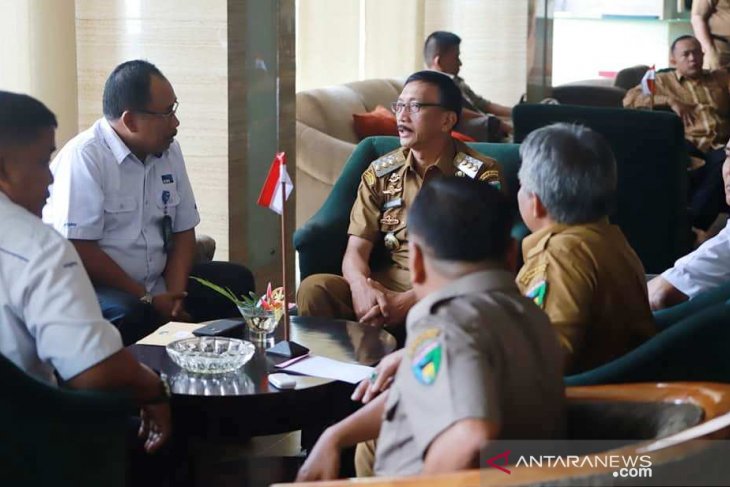
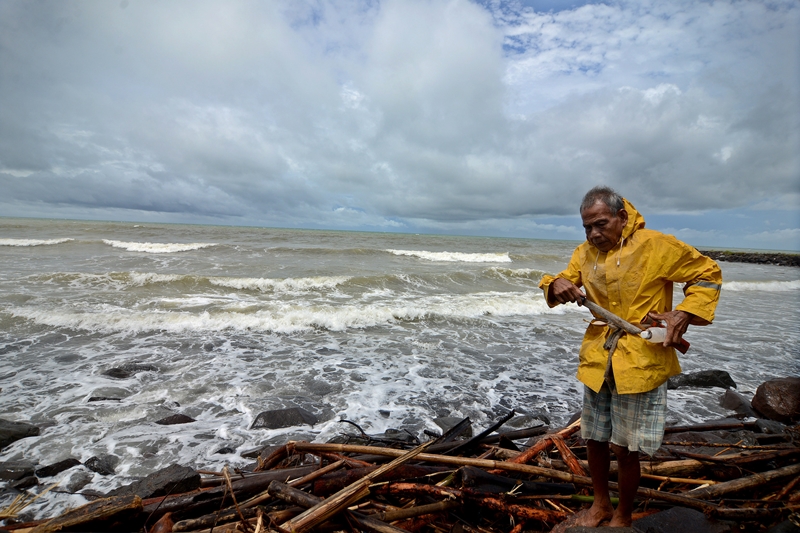
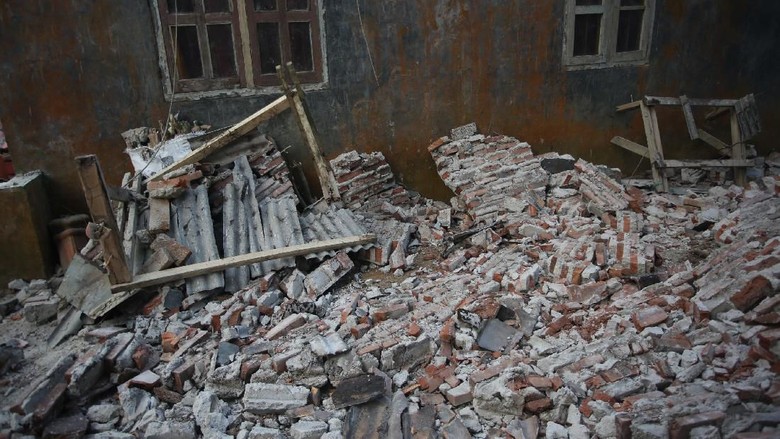
Melalui radio pemancar tersebut diharapkan berbagai program seputar mitigasi bencana di RRI bisa sampai ke masyarakat setempatPainan (ANTARA) – Lembaga Penyiaran Publik (LPP) Radio Republik Indonesia (RRI) Padang, Sumatera Barat, membantu mitigasi bencana di Kabupaten Pesisir Selatan dengan membangun radio pemancar.
“Untuk tahap awal ini, kami akan membangun radio pemancar di Pesisir Selatan sebagai sarana memberikan edukasi seputar mitigasi bencana,” kata Kepala LPP RRI Padang, M Lahar Rudiarso dihubungi di Painan, Senin (19/8).
Melalui radio pemancar tersebut, lanjutnya diharapkan berbagai program seputar mitigasi bencana di RRI bisa sampai ke masyarakat setempat.
“Di RRI ada Pro 3 yang menyajikan informasi mitigasi bencana yang diberi nama ‘Kentongan’, berikutnya program-program serupa akan dikemas lebih lanjut dan menarik oleh RRI Padang,” imbuhnya.
Selanjutnya, katanya, karena terdapat beberapa kabupaten/kota di Sumatera Barat pihaknya berharap kegiatan-kegiatan lanjutan tersebut diambil alih oleh pemerintah kabupaten setempat, baik dengan memberdayakan Aparatur Sipil Negara (ASN) atau masyarakat setempat.
“Di Gunung Kelud, Jawa Timur, hal serupa telah diaplikasikan dan saat ini program serupa dijalankan oleh komunitas yang secara berkelanjutan menginformasikan mengenai aktivitas berapi tersebut, kami berharap di Pesisir Selatan juga begitu,” katanya.
Sementara itu Bupati Pesisir Selatan, Hendrajoni didampingi Kepala Dinas Komunikasi dan Informasi setempat, Juneidi menyebutkan dalam waktu dekat pihak LPP RRI Padang akan berkunjung ke daerahnya untuk mematangkan rencana itu.
“Khusus lokasi pemancar kami mengajukan dua tempat, satu di Kecamatan Lengayang dan satunya di IV Jurai, nanti tim dari RRI yang akan menentukan tempat yang paling layak,” katanya.
Melalui bantuan tersebut pihaknya berharap dampak bencana di daerah setempat bisa diminimalkan.
“Pesisir Selatan menghadap persis ke Samudera Hindia kami benar-benar berharap bantuan ini bisa meminimalkan dampak bencana baik melalui informasi gempa bumi, penyediaan informasi peringatan dini tsunami dan lainnya,” katanya menambahkan.
Jakarta – Badan Nasional Penanggulangan Bencana (BNPB) melakukan sosialiasi Desa Tangguh Bencana (Destana) tsunami bersama tim ekspedisi dan telah menyasar 512 desa di 24 kabupaten/kota. Kegiatan ini bertujuan agar masyarakat lebih siap dalam menghadapi bencana tsunami.
“Kegiatan ini dalam rangka penguatan ketangguhan masyarakat dalam menghadapi bencana tsunami dan untuk pengembangan Desa Tangguh Bencana yang berada di sepanjang pesisir selatan Pulau Jawa,” kata Plt Kepala Pusat Data, Informasi, dan Humas BNPB Agus Wibowo dalam keterangan tertulisnya, Selasa (13/8/2019).
BPNB sebagai lembaga negara yang bertugas untuk mengoordinasikan upaya penanggulangan bencana, membuat langkah untuk melindungi masyarakat berisiko yang berada di desa/kelurahan tersebut. Ekspedisi ini juga melibatkan lima unsur (pentahelix), yaitu pemerintah, akademisi, masyarakat, lembaga usaha, dan media.
Ekspedisi ini terbagi dalam empat segmen, yaitu Jawa Timur, Jawa Tengah, Jawa Barat dan Banten, yang masing-masing segmen diikuti 200 orang. Dari target 518 desa, hanya tercapai 512 desa yang berhasil disosialisasikan tentang kesiapsiagaan dan potensi tsunami.
“42 ribu masyarakat yang kami datangi, lebih dari 3.700 orang perangkat desa yang kami berikan pemahaman bencana. Kendala di lapangan banyak kami alami, termasuk penolakan dari kepala daerah tersebut,” ucap Deputi Pencegahan BNPB Lilik Kurniawan.
Diketahui, ada 600 ribu lebih masyarakat yang tinggal di daerah rawan bencana tsunami. Fakta Tim Destana di lapangan menemukan tingkat kesiapsiagaan cukup baik bagi daerah yang sudah pernah mengalami tsunami, namun yang belum mengalami tsunami masih banyak yang belum paham dan tidak tahu kemana harus melakukan evakuasi.
“Selain itu, infrastruktur yang masih belum memadai untuk evakuasi. Dari timur Jawa ke barat, masih banyak daerah wisata, yang hampir sebagian besar tidak punya rambu peringatan tsunami. Hal ini sangat riskan bagi keselamatan pengunjung,” ucap Lilik.
Kepala BNPB Doni Monardo juga menggagas pembangunan monumen tentang peristiwa bencana alam yang sudah terjadi. Monumen itu ditujukan agar masyarakat mengingat peristiwa bencana alam. Menurutnya, bencana tidak dapat dihindari, namun bisa dikurangi risikonya.
“Konsep pentahelix merupakan sosialisai yang terbaik. Perangkat desa ini diharapkan dapat menjadi garda terdepan dalam memberikan sosialisasi kepada RW/RT dan keluarga, namun tetap memperhatikan kearifan lokal. Poinnya, masyarakat harus sadar potensi bencana yang ada, memahami dan mampu melakukan upaya pencegahan, dan masyarakat menjadi tangguh serta mampu dalam menyelamatkan diri dari bencana,” tutur Doni.
Selanjutnya, kegiatan ini akan dilanjutkan menjadi KKN tematik Destana dan bekerjasama dengan perguruan tinggi. Selain itu, ada dua buku mengenai tulisan ekspedisi dan foto perjalanan ekspedisi untuk berbagi pengetahuan kepada masyarakat lain.
INILAH, Lebak- Badan Penanggulangan Bencana Daerah (BPBD) Kabupaten Lebak, Provinsi Banten, mewaspadai 13 jenis potensi bencana.
Mengantisipasi hal tersebut, petugas kebencanaan dan relawan memberlakukan piket selama 24 jam dengan cara bergantian di Posko Utama Bencana.
“Semua petugas kebencanaan dan relawan siapsiaga untuk mengantisipasi potensi bencana itu,” kata Kepala Pelaksana Harian BPBD Kabupaten Lebak, Kaprawi saat dihubungi di Lebak, Minggu.
Potensi bencana tersebut berdasarkan kondisi alam dengan tofografi perbukitan dan pegunungan juga terdapat daerah aliran sungai (DAS), pesisir pantai, dan kawasan hutan yang luas.
Selain itu juga kondisi sosial masyarakat cukup kompleks dan terdapat perbedaan keyakinan, suku, bahasa dan adat.
Namun, beruntung Kabupaten Lebak tidak memiliki potensi bencana gunung merapi.
Dari 13 potensi kebencanaan itu antara lain tanah longsor, tsunami, kekeringan, banjir, banjir bandang, kebakaran hutan, erosi, cuaca ekstrem, gempa bumi, kebakaran gedung dan pemukiman, gelombang ekstrim/ abrasi, konflik sosial dan epidemi/wabah penyakit.
“Kami minta masyarakat tetap waspada guna mengurangi risiko kebencanaan,” ujarnya.
Menurut dia, untuk daerah rawan bencana banjir tersebar di 15 kecamatan, rawan longsor di 13 kecamatan dan rawan kebakaran hutan terdapat di dua kecamatan.
Sedangkan di wilayah Lebak bagian selatan yang merupakan daerah pesisir berpotensi terjadi gelombang tinggi, abrasi pantai serta gempa dan tsunami.
Untuk penanggulangan bencana alam itu dilakukan secara bersama-sama karena bentuk perlindungan sosial.
Apabila, terjadi bencana alam, seperti banjir, longsor, dan kebakaran pemukiman maupun hutan harus dilakukan bersama-sama dengan koordinasi untuk penyelamatan korban jiwa.
Selama ini, kata dia, pihaknya selalu menjalin koordinasi dengan TNI, Polri, Dinas Kesehatan, Dinas Sosial, relawan dan aparat kecamatan untuk memberikan pertolongan kepada masyarakat yang terkena bencana alam.
BPBD Lebak, kata dia, telah mempersiapkan peralatan evakuasi, diantaranya perahu karet, pakaian pelampung, perahu mesin, tenda, obat-obatan, logistik, kendaraan roda empat, dan sepeda motor.
Peralatan evakuasi ini, kata dia, kondisinya baik dan siap diterjunkan jika sewaktu-waktu terjadi bencana alam.
Disamping juga persediaan stok logistik terpenuhi untuk menghadapi bencana tersebut.
“Kami bergerak untuk melakukan evakuasi dan bantuan logistik , jika menerima laporan terjadi bencana alam,” katanya menegaskan.
Sementara itu,Camat Kalanganyar, Kabupaten Lebak, Yenni Mulyani mengatakan pihaknya meminta warga khususnya yang tinggal di daerah aliran Sungai Ciberang dan Cisimeut jika hujan terus menerus segera mengungsi ke tempat yang aman.
“Saya berharap dengan meningkatkan kewaspadaan itu tentu dapat menghindari korban jiwa,” katanya
Banten: Palang Merah Indonesia (PMI) meluncurkan program kegiatan pemulihan yang bertepatan dengan HUT ke-74 Republik Indonesia. Kegiatan ini digelar untuk membantu korban terdampak bencanatsunami Selat Sunda di Pulau Sangiang, Kabupaten Serang, Banten.
Kepala Divisi Penanggulangan Bencana PMI Pusat Arifin M Hadi menyebut momentum hari kemerdekaan sangat tepat bagi korban untuk kembali membangkitkan semangat. Duka yang selama ini membekas setelah bencana tsunami Desember 2018 harus perlahan dihapus.
“Program pemulihan ini dilakukan bertepatan dengan upacara peringatan Hari Kemerdekaan ke-74 Republik Indonesia yang digelar oleh masyarakat korban bencana tsunami di Pulau Sangiang,” kata Arifin seperti dikutip dari Antara, Minggu 18 Agustus 2019.
Bagaimana tanggapan anda mengenai artikel ini?
PMI mendorong pemberdayaan kapasitas masyarakat yang berada di Pulau Sangiang agar siaga dalam mencegah serta mengurangi dampak dan risiko bencara. Masyarakat terdampak dan terancam bencana harus dibekali dengan pengetahuan dan keterampilan yang memadai.
Dalam waktu yang sama Kepala Markas PMI Kabupaten Serang Abdul Basith menilai program pemulihan di Pulau Sangiang ini sangat penting. Menurutnya, pulau ini merupakan salah satu daerah terdampak bencana tsunami paling parah.
PMI terus berkomitmen mendampingi masyarakat Banten yang terpapar becana tsunami hingga dapat hidup normal kembali. Pendampingan tersebut mulai dari fase tanggap darurat hingga pemulihan pascabencana seperti saat ini.
PMI memusatkan pelayanan pada beberapa sektor seperti, instalasi air bersih, pipanisasi, pelayanan kesehatan, promosi kesehatan, dan program dukungan psikososial (PSP). PMI juga mendistribusikan barang bantuan seperti peralatan sekolah, peralatan bayi dan wanit, selimut, dan terpal. (Sandra Odilifia)
Semarangpos.com, PURWOKERTO — Aktivitas kegempaan Gunung Slamet, Jawa Tengah hingga kini masih fluktuatif. Demikian ditekaskan petugas Pos Pengamatan Gunung Api (PGA) Slamet Pusat Mitigasi Bencana Geologi (PVMBG) Sukedi.
“Berdasarkan pengamatan kami dari Pos PGA Slamet di Desa Gambuhan, Kecamatan Pulosari, Kabupaten Pemalang, aktivitas kegempaan Gunung Slamet masih fluktuatif. Kadang embusannya tercatat cukup tinggi, kadang berkurang. Demikian pula dengan amplitudo tremor menerus atau microtremor,” katanya saat dihubungi dari Purwokerto, Kabupaten Banyumas, Jawa Tengah, Jumat (16/8/2019).
Ia mengakui jika sejak hari Kamis (15/8/2019) hingga Jumat (16/8/2019) siang, amplitudo tremor menerus tercatat 0,5 mm-2 mm yang dominan 0,5 mm, sedangkan sebelumnya tercatat 0,5 mm-3mm dan dominan 2 mm. Meskipun ada tren menurun, dia menegaskan hal itu bukan berarti aktivitas Gunung Slamet mengalami penurunan sejak statusnya ditingkatkan dari Aktif Normal (Level I) menjadi Waspada (Level II) pada hari Jumat (9/8/2019), pukul 09.00 WIB.
“Kegempaan masih fluktuatif karena ketika muncul, naik, lalu turun lagi. Jumlah embusannya juga sama, kadang tinggi, kemudian turun lagi, begitu juga dengan amplitudo tremor, jadi masih fluktuatif meskipun kesannya dua hari ini lebih rendah dari sebelumnya,” tegasnya. Oleh karena itu, simpul dia, Gunung Slamet masih berstatus Waspada sehingga masyarakat dan wisatawan direkomendasikan untuk tidak beraktivitas dalam radius 2 km dari kawah puncak gunung terbesar di Jawa Tengah tersebut.
Lebih lanjut, Sukedi mengatakan berdasarkan pengamatan yang dilakukan pada hari Jumat (16/8/2019), pukul 00.00 WIB-06.00 WIB, Gunung Slamet terlihat jelas serta asap kawah bertekanan lemah teramati berwarna putih dengan intensitas tipis dan tinggi 25 m-50 m di atas puncak kawah. Sementara itu, pada pukul 06.00 WIB-12.00 WIB, Gunung Slamet tampak jelas dan tertutup kabut 0-I hingga kabut 0-II serta asap kawah bertekanan lemah teramati berwarna putih dengan intensitas tipis dan tinggi 25 m-50 m di atas puncak kawah.
“Dari sisi kegempaan, pada pukul 00.00-06.00 WIB tercatat sebanyak 320 kali kejadian embusan dengan amplitudo 2 mm-20 mm dan durasi 12 detik-50 detik, sedangkan tremor menerus terekam dengan amplitudo 0,5 mm-2 mm yang dominan pada 0,5 mm. Sementara pada pukul 06.00 WIB-12.00 WIB tercatat sebanyak 247 kali kejadian embusan dengan amplitudo 2 mm-18 mm dan durasi 15 detik-50 detik, sedangkan tremor menerus terekam dengan amplitudo 0,5 mm-2 mm yang dominan pada 0,5 mm,” katanya.
Dia mengimbau masyarakat yang bermukim di sekitar lereng Gunung Slamet untuk tetap tenang, selalu berkoordinasi dengan Badan Penanggulangan Bencana Daerah (BPBD) setempat maupun Pos PGA Slamet, dan tidak terpengaruh oleh berbagai isu yang tidak dapat dipertanggungjawabkan kebenarannya.
Sebelumnya, Sukedi mengatakan jika amplitudo tremor menerusnya makin tinggi, kondisinya akan lebih berbahaya karena makin besar amplitudo, berarti makin tinggi energinya. Kendati demikian, dia mengatakan jika tremor menerusnya meningkat, tidak serta merta status Gunung Slamet akan ditingkatkan karena harus didukung dengan parameter yang lain.
“Memang besaran amplitudo tremor menerus itu tidak bisa menjadi standar tetapi berdasarkan pengalaman tahun 2014, 5-10 milimeter itu sudah ada erupsi. Bahkan saat itu, amplitudo tremor menerus saat awal erupsi Gunung Slamet masih berkisar 0,5-10 milimeter,” katanya.
Menurut dia, tipe letusan Gunung Slamet yang berada di antara Kabupaten Banyumas, Purbalingga, Pemalang, Tegal, dan Brebes berupa freatik karena tidak mengeluarkan magma, melainkan uap air. “Meskipun tipe letusannya freatik, saat erupsi Gunung Slamet tahun 2014 diakhiri dengan keluarnya lava pijar, jarak luncurannnya mencapai 2,6 km-2,7 km dari kawah, menyebar, tidak satu arah, karena tipe erupsinya strombolian,” jelasnya.
SEATTLE — The company called One Concern has all the characteristics of a buzzy and promising Silicon Valley start-up: young founders from Stanford, tens of millions of dollars in venture capital and a board with prominent names.
Its particular niche is disaster response. And it markets a way to use artificial intelligence to address one of the most vexing issues facing emergency responders in disasters: figuring out where people need help in time to save them.
That promise to bring new smarts and resources to an anachronistic field has generated excitement. Arizona, Pennsylvania and the World Bank have entered into contracts with One Concern over the past year. New York City and San Jose, Calif., are in talks with the company. And a Japanese city recently became One Concern’s first overseas client.
But when T.J. McDonald, who works for Seattle’s office of emergency management, reviewed a simulated earthquake on the company’s damage prediction platform, he spotted problems. A popular big-box store was grayed out on the web-based map, meaning there was no analysis of the conditions there, and shoppers and workers who might be in danger would not receive immediate help if rescuers relied on One Concern’s results.
“If that Costco collapses in the middle of the day, there’s going to be a lot of people who are hurt,” he said.
The error? The simulation, the company acknowledged, missed many commercial areas because damage calculations relied largely on residential census data.
One Concern has marketed its products as lifesaving tools for emergency responders after earthquakes, floods and, soon, wildfires. But interviews and documents show the company has often exaggerated its tools’ abilities and has kept outside experts from reviewing its methodology. In addition, some product features are available elsewhere at no charge, and data-hungry insurance companies — whose interests can diverge from those of emergency workers — are among One Concern’s biggest investors and customers.
Some critics even suggest that shortcomings in One Concern’s approach could jeopardize lives.
The New York Times spoke with more than three dozen people, including current and former One Concern employees, board members, clients and investors; as well as experts in machine learning, catastrophe modeling and seismology. The Times also reviewed patents, contracts and communications with customers.
Now San Francisco, an early adopter, is ending its contract with the service, in part because of concerns about whether its predictions are trustworthy. “We can’t be cutting-cutting edge without knowing for sure that we can validate data,” said Mary Ellen Carroll, who leads the city’s emergency management department. The expense, she also said, was burdensome.
After Seattle balked at the cost, One Concern found a company, American Family Insurance, to fund the city’s use of the services. It has paid $250,000 since last year, according to One Concern. In return, American Family gets access to predictions and market insights that Peter Gunder, its chief business development officer, said could influence the “design of our insurance products as well as the pricing.”
Mr. McDonald said Seattle had alerted One Concern to the problems it discovered, including the unanalyzed commercial areas and errors in the seismic assessment of buildings. The building where Mr. McDonald works, for example, was made to withstand strong earthquakes, yet in simulations appeared heavily damaged. The model also often reported surprisingly high numbers of destroyed buildings because, Mr. McDonald realized, it mistakenly counted each apartment in a high-rise as a separate structure.
The company then revised its product twice, adding new sources of building data in Seattle, including satellite imagery, and updating its algorithms. That fixed some issues, but introduced others.
The Costco now appeared in the earthquake simulation, but “the entire University of Washington dropped out,” Mr. McDonald said. More troubling, each update produced vastly different damage predictions when simulating the same earthquake. City workers must now revamp nearly completed plans for sheltering earthquake-displaced residents that were developed using the original version, Mr. McDonald said. (Company leaders said that product iteration was common in Silicon Valley and helped customers.)
Barb Graff, Seattle’s emergency management director, said that, despite frustrations, the city would use the service — especially because it cost nothing. “It’s hard to look a gift horse in the mouth,” she said, adding that she viewed the partnership as a pilot project.
Some former workers also voiced misgivings, even while saying they saw promise in One Concern’s approach. Tom Logan, who interned at the company last year and recently completed his Ph.D. in engineering at the University of Michigan, is among nine former workers who spoke about their experiences. Dr. Logan said the salesmanship — such as claiming to estimate damage on each block with 85 percent accuracy within 15 minutes of an earthquake — was misleading, and it was dangerous for cities to rely too heavily on it.
“One of the major harms is the potential to divert attention from people who actually need assistance,” said Dr. Logan, who said his job offer at the company was rescinded after he raised concerns. “There’s a risk that more lives would be lost than what could otherwise happen” if expert experience was also relied upon, he said.
Ivan Porto Carrero, who oversaw a team of engineers at One Concern, said he was fired in June after speaking out against what he viewed as a company culture of dishonesty. He said the usual start-up attitude of “fail fast and try something new” was inappropriate to apply to disaster response because, “If you fail fast, people die.”
Ahmad Wani, 31, one of the company’s founders and its chief executive, said in interviews that he had repeatedly asked cities for better data about their buildings to improve accuracy.
He said he did not think that more people would die if a One Concern product made errors.
“We are in no way ever telling these first responders that we are replacing your decision-making judgment or capability,” he said.
He added that, as the reach of artificial intelligence expands, it remains difficult to convey concepts of uncertainty to officials who often do not have technical backgrounds and who want clear-cut answers.
He acknowledged that his company sometimes promoted products that were not yet available, but only after “we validate the science is going to work,” he said.
“Our mission is not to make money only,” Mr. Wani said, later adding, “We’re trying to save the world.”
An Alluring Premise
Mr. Wani tells a dramatic company origin story to underline his pitch that the world of disaster response is ripe for disruption.
While studying earthquake engineering at Stanford in 2014, he traveled home to India to get engaged in Srinagar. The Kashmir city flooded, with water rising to his waist in his family’s third-story apartment, he said.
The helicopters that arrived appeared to be rescuing people at random. Hundreds died.
Mr. Wani assumed the disorganization was a problem limited to the developing world. But when he returned to Stanford, he learned that after an earthquake in nearby Napa Valley, callers had overloaded the 911 system, frustrating rescuers who were trying to prioritize those in peril.
In classes that fall, Mr. Wani and other graduate students turned the problem into a project. Using crowdsourced ground-shaking reports from previous earthquakes, they trained a computer system to predict the areas of greatest impact so that responders would not have to rely on 911 calls.
The next year — after refining their algorithm with a database of building damage from the Napa earthquake — the students pitched their services to city emergency managers and venture capitalists. “They thought it was magic,” Mr. Wani said.
The company has since made further improvements and garnered $55 million in venture capital funding, a technology pioneer designation from the World Economic Forum, and big names to its investor list and board, including David H. Petraeus, the retired Army general and former C.I.A. director; Craig Fugate, a former head of the Federal Emergency Management Agency; and Judith Rodin, a former president of the Rockefeller Foundation.
Mr. Petraeus said that in deciding to back One Concern, he relied on the advice of experienced venture capitalists and Stanford graduates who had “a reasonable degree of confidence in it,” as well as his understanding of the “big ideas behind big-data analytics” and his impressions of the founders.
Japan’s second-largest property insurer, Sompo, also made a multimillion-dollar investment after an introduction by John Roos, a former United States ambassador to Japan who has a stake in One Concern. Sompo is paying for the start-up’s services in its first Japanese city, Kumamoto.
Officials in San Francisco were among the service’s earliest fans.
“I was totally blown away,” said Anne Kronenberg, the city’s former emergency management director. The city was using a free FEMA product, Hazus, to estimate earthquake damage. She found it technically demanding. One Concern’s product, by contrast, depicted block-by-block damage in a web browser and promised to refine predictions with artificial intelligence as on-the-ground reports were fed back into it.
Ms. Kronenberg persuaded the mayor at the time, Ed Lee, to support buying the services, which cost $148,000 for the first two years. The company’s predictions were to be used to “determine where our resources should be sent, without even going out with structural engineers and building folks,” Ms. Kronenberg said.
But Ms. Kronenberg retired last summer, and her replacement, Ms. Carroll, recently informed One Concern that the city was terminating the relationship, citing numerous problems. Another California customer, Los Angeles, has allowed its contract with One Concern to expire.
Earlier this year, Arizona became the first customer for a new One Concern product, which the company advertises as being able to project “inundation and impact levels up to five days in advance” of a flood. When asked how that was possible, Ben Colombo, the communications director, clarified that it required a five-day weather forecast. “Once we get that data about expected rainfalls, then we can start running our models,” he said.
Other technology companies, including Google and Fathom, are applying machine learning and other analytical techniques to flood forecasting, with the latter publishing results in major scientific journals.
One Concern also plans to begin marketing a wildfire-prediction product soon that it says will show where a blaze is and where it will move, information that will guide firefighting and evacuations.
Less Than Meets the Eye
Scientific researchers expressed doubts about One Concern’s products. The company has not published its results in peer-reviewed journals, meaning its products have not been independently assessed.
Mr. Colombo said One Concern guarded its methods for competitive reasons. “One could be doubting and cynical and say, ‘Look, do I just have to trust you guys?’” he said. “Yes.”
He said company leaders were, however, increasingly engaged in dialogue with academics.
Applying artificial intelligence to earthquake damage prediction entails significant challenges. Computers must train on large amounts of representative data in order to identify complex patterns, but highly destructive earthquakes are relatively rare, and features of the natural and built environment vary.
One Concern surveyed thousands of buildings after recent earthquakes in Indonesia, Mexico and Alaska, for example, but building methods and ground conditions there often differ from those in the company’s West Coast partner cities, experts said. Databases of building records and other inputs can also be outdated, biased or inaccurate.
Mr. Wani has repeatedly characterized his earthquake product as 85 percent accurate within 15 minutes. A public-relations representative hired by the company, Lauren O’Leary, offered a different figure: 78 percent accuracy when tested across three earthquakes in California and Washington.
In an interview, Mr. Wani struggled to explain the meaning and relevancy of the percentages, which refer to how often damage on a block is correctly categorized. “You know, we don’t even call it ‘accuracy’; we call it a ‘key performance indicator,’” he said.
Mr. Wani began again, before settling on this explanation: “If you have to send first responders to respond after the disaster for, let’s say, carrying out urban search and rescue, you’d be at least 78 percent or higher, or at least more than 78 percent accurate for doing that.”
Zachary Chase Lipton, an assistant professor at Carnegie Mellon University who studies machine learning, said the figure was meaningless without greater transparency, including about how the testing was done and whether the system outperformed simple predictors such as a building’s age. “If you just say ‘A.I.’ and are a little bit charismatic you can raise money now,” Dr. Lipton said.
Ralph Archuleta, a leading expert in how earthquakes affect ground motion, was even more dubious in reviewing One Concern’s claims. “Would I buy this product? No, not a chance,” he said.
A Leap of Faith
Dan Ghiorso, the recently retired fire chief of Woodside, Calif., was drawn to One Concern not only by its algorithms. He was taken by the company’s founders and their promise of success.
People who have worked with Mr. Wani say his role is that of a passionate and demanding visionary. Nicole Hu, the company’s 29-year-old chief technology officer, comes across as disarming and earnest, her clients say. And the third founder, Timothy Frank, 38, is an Air Force officer who juggled fatherhood and doctoral studies while starting the company.
According to the origin story Ms. Hu tells, the three were egged on by their professors and, lacking business backgrounds, spent months participating in a Stanford program that helped them refine a pitch and meet investors. Ms. Hu, who, like Mr. Wani, was born in India, speaks affectingly of the challenge of creating a start-up as young immigrants.
“We’ve grown pretty large, but it wasn’t very easy coming to where we are,” she said in a recent lecture at Stanford. “We really think we can enable a disaster-free future.”
In Woodside, a small town south of San Francisco, One Concern’s earthquake simulations were valuable, including showing that the soil beneath an important rescue route would probably liquefy in a major earthquake, Mr. Ghiorso said.
But that information could have been obtained without artificial intelligence — or any commercial product. A map of liquefaction zones, showing the risk to the roads, is available free from the state.
Similarly, One Concern’s earthquake simulations rely on FEMA’s free damage-prediction method known as P58, with calculations performed by another company, Haselton Baker Risk Group.
“They send us inventory information about what buildings are out there; then we run that method and send them predictions,” said Curt Haselton, the group’s chief executive. “It’s not A.I.”
The map’s demographic feature, used to highlight neighborhoods with high numbers of seniors and people with low income, is also widely available.
Mr. Wani said the typical emergency manager would not know how to look for the various data, which the product integrates and improves upon. “You’re now able to create a holistic emergency response plan taking into account all of these variables,” he said.
Ms. Hu, when speaking at Stanford, said the company was “very transparent” about the accuracy of its models. “In fact, that’s what cities love,” she said.
But some officials disagreed. “We would feel more comfortable if they submitted to a third-party review,” said Mr. McDonald, the Seattle official.
Troves of Data
Public safety agencies have tight budgets, and only a few have paid directly for One Concern’s services. The company has begun teaming up with insurers.
Mr. Ghiorso, the former Woodside fire chief, said he worried that One Concern’s analyses might lead the insurance companies to raise rates.
One Concern hopes to expand into capital markets by scoring cities and companies on their level of resilience, much as Moody’s “creates a credit rating, something is investment grade or junk grade,” said Joe Paluska, One Concern’s head of marketing.
The shift in the financial model “felt very deceitful” and left many employees feeling disillusioned, said Karine Ponce, a former executive assistant and office manager.
The company held a town hall with employees in July to discuss how its insurance partnerships promoted its mission of “saving lives and livelihoods,” Mr. Colombo said. “There’s not enough money in this space to truly achieve our goals without involving the private-sector finance.”
Mr. Wani said insurance companies had important roles in disaster mitigation and received predictions only down to the level of a census block, as opposed to public safety agencies, which could request data for specific buildings.
But representatives of the Japanese insurer Sompo said they believed they would receive the same data from One Concern as did partner cities. Using One Concern’s damage predictions, “we can make customized or optimized underwriting per customer or per building,” said Koichi Narasaki, Sompo’s chief digital officer and managing executive officer.
Mr. Wani said Sompo was a special case because the company insures cities against disasters and already has access to the cities’ data.
Natural disasters are part and parcel of living in a dynamic system like the planet Earth. But there are some things individuals and nations can do to help prevent unnecessary loss of life from them.
Here we briefly examine some things you can do in the event of a natural disaster. We also look at some of the strategies nations are taking help to predict and protect against them.
Can natural disasters be avoided?
Natural disasters are, unfortunately, something of an occupational hazard on our planet. While many are completely out of our control, e.g. earthquakes, volcanic eruptions, etc, we have slowly been able to develop methods of attempting to predict them.
Many others from droughts to floods can also wreak havoc in many vulnerable communities around the world.
But it should be noted that natural disasters are probably something of a misnomer. After all, if a hurricane hits a piece of uninhabited land we wouldn’t call it a disaster – it would just be considered the weather.
But we digress.
Today, partly thanks to the internet, traditional media, and social media ensure that the latest news of a natural disaster is broadcast almost in real-time.
The United Nations created a report on just this subject a couple of years ago. Called the WorldRiskReport 2011, it compared various countries around the world and ranked them by their relative ability to cope with extreme natural events.
“The WorldRiskIndex, developed by UNU-EHS, is the core feature of the report. The index calculates and compares risk values for 173 countries worldwide, and shows regions and countries that face a high disaster risk.
Countries are ranked based on four key components that take both natural hazards and social factors into account: exposure (to natural hazards and potential risks), susceptibility (likeliness of suffering harm, susceptibility as a function of public infrastructure), coping capacities (governance and capacity to reduce negative consequences of hazards) and adaptive capacities (capacity for long-term social change).” – United Nations University.
This report makes it clear that disasters are not a case of meteorological or geological phenomena. They can be perturbed by a country’s social structures and processes.
“Extreme natural events do not necessarily cause disasters, because risk not only depends on the hazard but is very much determined by social and economic factors,” explained the Scientific Head of the WorldRiskIndex project at UNU-EHS, Dr. Joern Birkmann.
It also highlights that while natural disasters are a real challenge to humans around the world, they don’t necessarily need to be disastrous. Better information provision, early warning systems, and well thought out disaster/rescue plans can really help avoid some of the worst outcomes of extreme natural events.
What is the problem with natural disasters?
Apart from the initial shock, deathtoll, and physical damage from a natural disaster (especially things like tsunamis, earthquakes, etc), there are some compounding issues that can elevate the death toll unnecessarily.
Serious “acts of God” can cripple vital services like utility supply, food supplies and other trappings of an established community. This can lead to further loss of life from disease, thirst, hunger and other secondary hazards from natural disasters.
For example, events like earthquakes can lead to the outbreaks of fires as gas lines and electrical lines are ruptured. This can be more dangerous than the initial event in question.
But there are other problems that can arise from serious natural disasters.
According to sites like restorationmasterfinder.com, here are some common additional issues communities will likely face in the aftermath of a natural disaster.
1. Mental health issues – Loss of loved ones, possessions, one’s home, etc, can seriously affect survivors mental health. This can lead to confusion, grief and even depression that will badly affect sufferer’s ability to think and plan clearly.
2. The spread of diseases – Epidemics of communicable diseases is a common secondary hazard from natural disasters. Disruption of food supplies, clean water, medical services, etc can seriously rout communities.
If serious enough, large amounts of unburied dead bodies can quickly further devastate a community from pathogens.
3. Other safety issues – People returning to their homes is another highly risky time after a natural disaster. Unsanitary conditions, pest infestation, chemical and gas leaks, structural weakness, etc of their previous homes can rack up death tolls unnecessarily.
4. They can seriously affect the local economy – Natural disasters can seriously disrupt local economies. So much so, that some can cost billions of dollars.
How can we prevent natural disasters in the future?
It is highly unlikely mankind will ever be able to prevent natural disasters in the future. But we can improve our odds of survival through better prediction and mitigation strategies.
Earthquake and volcano eruption prediction systems are already commonplace and are improving with each passing year. Following the devastating tsunami in Japan, for example, the country has managed to develop a highly robust and effective prediction system that they hope will prevent the loss of life from similar events in the future.
Another strategy a country can employ is to build defenses against certain natural disasters. The Netherlands, for example, has spent billions of dollars on an impressive sea wall to help prevent disastrous flooding of any land below sea level.
Source: Roberto Malden/Flickr
Countries that have been prone to natural disaster events, like Japan, have also developed building construction standards to help protect buildings from things like earthquakes.
But ultimately, disasters can strike at any time and place. We will likely never be able to prevent them in the future but can develop methods of reducing the loss of life, and assets, in an event’s aftermath.
Well thought out and tested disaster relief strategies can help save thousands of lives in the event of serious natural events.
What should you do in natural disasters?
If you find yourself unlucky enough to be in the wrong place at the wrong time, there are some basic things you can do to prevent further harm to you and your loved ones.
Do not return home until told to do so by the authorities;
If you smell gas don’t enter a space. If it is in your home, ventilate by opening windows and doors as a matter of urgency. This will also help remove any additional moisture in your home that can lead to toxic mold growth;
Wear protective gear when cleaning up after a disaster;
Only ever use a torch if you must return home. No naked flames!
Never touch any exposed cables or electrical wires (obviously);
Do not turn on the lights or any electrical equipment until you’re sure that there has been no damage to the electrical system in the home
Never use wet electrical appliances! Have household appliances and electrical devices serviced and sanitized before using them. Heating and cooling systems should also be carefully inspected and cleaned before being put back into service;
Rinse all hard surfaces with a garden hose, then scrub them with a heavy-duty cleaner and hot water. Use a solution of chlorine bleach and water for better disinfection. But never mix bleach and ammonia, it will produce toxic fumes;
Chuck away any upholstery or furniture that has been contaminated by sewage or stagnant water for more than 24 hours;
Clean all household items before using them;
Trust your gut – Throw away food and beverages that have been in contact with floodwater or smells or looks bad;
Always boil drinking water;
Keep children/pets away from stagnant water or areas not yet sanitized;
Use insect repellents to avoid vector-borne illnesses and stay away from wild or stray animals!
REPUBLIKA.CO.ID, PADANG – Badan Penanggulangan Bencana Daerah (BPBD) Provinsi Sumatera Barat menerima bantuan kapal cepat dari Badan Nasional Penanganan Bencana (BNPB) untuk memperkuat armada evakuasi kebencanaan di daerah itu.
“Kami memang sangat butuh kapal cepat yang bisa segera digerakkan jika terjadi bencana,” kata Wakil Gubernur Sumbar Nasrul Abit, Jumat (9/8).
Ia menyebut Sumbar memiliki laut dan danau serta daerah Mentawai yang berbentuk kepulauan. Karena itu armada evakuasi tidak hanya dibutuhkan di darat, namun juga di laut. Bantuan itu dinilai akan sangat mendukung kinerja BPBD Sumbar untuk penanggulangan bencana di daerah.
Kepala Pelaksana BPBD Sumbar Erman Rahman menginformasikan kapal cepat tersebut memiliki lebar sekitar 2,5 meter dan panjang 6 meter, dilengkapi dengan peralatan evakuasi, fasilitas air bersih dan sanitasinya.
Kapal dibekali mesin berkapasitas 2 X 200cc, global positioningsystem (GPS) untuk navigasi, kompas, alat komunikasi dan alat keselamatan lainnya. Ke depan kapal itu juga akan dilengkapi dengan peralatan medis agar bisa segera membantu jika terjadi bencana. Kapal itu sementara ditambatkan di Pelabuhan Muara Jalan Batang Arau, Berok Nipah, Padang.
Jakarta – Badan Nasional Penanggulangan Bencana (BNPB) memperbarui data korban tewas akibat dari bencana gempa bermagnitudo 6,9 di Pandeglang, Banten. Total korban tewas yang tercatat saat ini 6 orang.
“Jumlah total (korban) meninggal dunia 6 orang,” ucap Plt Kepala Pusat Data Informasi dan Humas (Pusdatinmas) BNPB Agus Wibowo dalam keterangannya, Minggu (4/8/2019).
Data yang dicatatkan BNPB itu terhitung per pukul 10.00 WIB. Selain korban tewas, BNPB juga mencatatkan adanya 3 orang yang mengalami luka serta 136 KK atau kepala keluarga yang terdampak gempa.
Korban tewas itu tersebar di sejumlah wilayah. Berikut datanya:
Kabupaten Pandeglang – Korban tewas 1 orang atas nama Sain – Korban luka 2 orang
Kabupaten Lebak – Korban tewas 3 orang atas nama Rasinah, Salam, dan Icha
Kabupaten Sukabumi – Korban tewas 2 orang atas nama Ajay dan Ruyani – Korban luka 1 orang
Gempa bermagnitudo 6,9 itu terjadi pada Jumat, 2 Agustus kemarin pada pukul 19.03 WIB. Getaran gempa terasa di sejumlah wilayah termasuk Banten, Jakarta, Lampung. Gempa itu sempat memicu potensi tsunami yang dikeluarkan BMKG.
TRIBUNNEWS.COM – Gempa mengguncang wilayah Banten, Jumat (2/8/2019) malam kemarin.
Gempa yang berkekuatan 6,9 ini, sempat berpotensi tsunami, tapi peringatan dini itu dicabut dua jam kemudian.
Setelah gempa yang menggoyang Banten dan terasa hingga sebagian Pulau Jawa, muncul kabar yang tak dapat dipertanggungjawabkan kebenarannya.
Pesan tersebut viral di media sosial.
Dalam pesan itu dikatakan akan ada gempa berkekuatan 9,0 pasca terjadinya gempa 6,9 di Banten.
“Jarak antar gempa (yang) semakin pendek dan tiba-tiba aktifnya gunung Tangkuban Perahu, bisa jadi merupakan indikasi akumulasi energi patahan Sunda ( Sunda megathrust) hampir mencapai titik kritis.
Jika atas seizin Allah SWT tercapai titik tersebut, gempa yang selama ini dikhawatirkan dengan besar, 9 skala Richter, berpeluang terjadi.
Bagi Jabodetabek, yang dikhawatirkan adalah aktifnya patahan tersebut memicu pula aktivitas patahan Baribas yang memanjang dari Pasar Rebo hingga Ciputat, serta patahan Lembang di Bandung.