Kecuali Tsunami, Banyumas Rawan Beragam Bencana

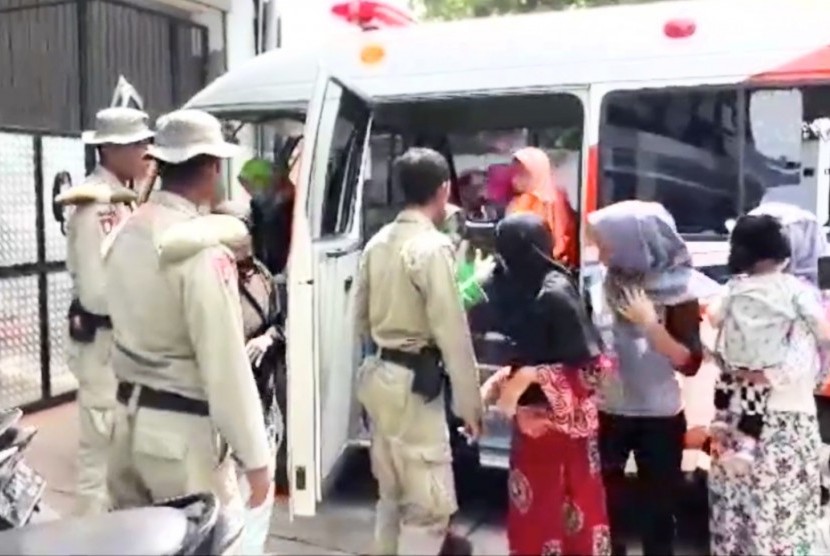
PURWOKERTO – Ratusan karyawan Rita Supermall Purwokerto panik ketika terdengar alarm tanda gempa bumi menyala. Suasana langsung berubah gaduh. Mereka nampak berlarian ke luar gedung untuk menghindari menghindari kemungkinan gedung runtuh. Bahkan ada yang harus dilarikan ke rumah sakit karena terluka. Itulah suasana yang terjadi saat simulasi bencana yang diselenggarakan Badan Penanggulangan Bencana Daerah (BPBD) Kabupaten Banyumas, Kamis (26/4) kemarin.

Kegiatan itu dilakukan dalam rangka peringatan Hari Kesiapsiagaan Bencana Nasional (HKBN) 2018. PENANGANAN :Anggota Tagana membantu anggota security service Rita Super Mall memadamkan api yang berkobar usai gedung diguncang gempa. Simulasi kesiapsiagaan bencana ini dilaksanakan serentak di Indonesia, dan di Banyumas sendiri di lakukan di tiga titik, yang salah satunya di gedung Rita Super Mall Purwokerto (26/4).

(DIMAS BUDI LANTORO MUKTI PRABOWO/RADARMAS) Kasi Pencegahan dan Kesiapsiagaan BPBD Banyumas, Catur Hari Susilo mengatakan, seluruh wilayah Banyumas rawan berbagai bencana alam, seperti gempa bumi, letusan gunung berapi, banjir, angin ribut, longsor dan berbagai bencana lainnya, kecuali bencana tsunami. Disebutkan, selain simulasi di wilayah kota Purwokerto yang dipusatkan di Rita Supermall, kegiatan serupa juga dilakukan di tiga lokasi lainnya. Antara lain di wilayah timur simulasi gempa bumi dipusatkan di Desa Watuagung, Kecamatan Tambak. Lalu ada dimulasi bencana banjir di wilayah utara digelar simulasi bencana banjir yang dipusatkan di sekitar Lokawisata Baturraden.

Terakhir, simulasi digelar di SMAN 1 Ajibarang yang dipusatkan untuk simulasi bencana gempa bumi.

“Ini menjadi salah satu imbauan kepada masyarakat Banyumas agar selalu siaga menghadapi potensi bencana alam yang bisa terjadi setiap saat. Pasalnya, semua jenis bencana sangat berpotensi di wilayah Banyumas,” tegasnya. Seperti yang tercatat di Indeks Risiko Bencana (IRB), dari 35 kabupaten atau kota di Jawa Tengah, Banyumas menempati peringkat kelima tertinggi yang berpotensi bencana alam.

Catur menambahkan dalam kegiatan simulasi kemarin, BPBD Banyumas menargetkan 2.500 orang mengikuti simulasi bencana HKBN. Dan fakta di lapangan ada 15 ribu orang yang mengikuti simulasi evakuasi mandiri bencana alam. “Sembilan puluh persen dilakukan mandiri oleh masyarakat, serta sisanya dibantu pemerintah dan sukarelawan bencana,” ujarnya. Selain diikuti berbagai elemen masyarakat, kegiatan kemarin juga diramaikan oleh sejumlah personel TNI, Polri, dan berbagai organisasi lainnya.(ely/bay)

Sumber: http://radarbanyumas.co.id

Japan partners with ASEAN countries on disaster insurance

TOKYO — Japan will work with Southeast Asian nations like Laos and Myanmar to provide immediate financing after natural disasters so that recovery funds can be quickly distributed.

The Southeast Asia Disaster Risk Insurance Facility will be announced in May at the annual meeting of the Asian Development Bank’s board of governors. Operations are slated to begin in 2019.

Participating countries will make the insurance payouts while Japan provides initial support through funding. The facility will invest funds it has accumulated and take out reinsurance from private insurers in Japan and elsewhere.

The facility is meant to provide rapid financial relief after typhoons, earthquakes and other disasters. In a flood, for example, it will determine payouts based on precipitation levels — a faster method than the current one that relies on on-site inspections to assess damage.

Japan’s Ministry of Finance has been working to set up the new insurance framework in Laos, Myanmar and Cambodia, and it could eventually be extended to other members of the Association of Southeast Asian Nations.

The facility aims to reduce financial risk in Southeast Asia, where large losses from frequent natural disasters could destabilize the finances of afflicted countries. A 2015 flood in Myanmar was estimated to cost $1.5 billion, for instance. Japan seeks to curb this risk by offering insurance expertise and financial support.

source: https://asia.nikkei.com

Scholar on Nuclear Disasters: ‘I Am Not Optimistic About Our Collective Future’

On the 32nd anniversary of the most destructive man-caused disasters in history, the explosion at the Chernobyl nuclear power plant in northern Ukraine, Sputnik discussed the liquidation of nuclear incidents throughout the world with Majia H. Nadesan, Risk Innovation Fellow in the Graduate Faculty of Hugh Downs.

Sputnik: In your view, how do politics affect such disasters as the Fukushima incident?

Majia H. Nadesan: Politics is an inevitable dimension of social life. Unfortunately, consolidated political power over critical decision-making can have catastrophic consequences, particularly when decision-makers are driven by singular logics that are intolerant of dissent.

We see in the case of nuclear energy how centralization of decision making power legitimized by symbolic appeals to national and economic security have produced never-ending catastrophes, illustrated best by Hanford in the US, Chernobyl in the Ukraine, Mayak in Russia, and Fukushima Daiichi in Japan.

Each of these catastrophes poisons air, soil, and water as toxic radionuclides migrate, bio-accumulate, and bio-magnify in biological life.

Although no authority will deny the hazards of radioactive activity and the challenges of nuclear waste management, the institutionally vested logic of nuclear, what Gabrielle Hecht referred to as “nuclearity,” routinely seeks to contain and trivialize representations of radiation risk. We saw this tendency toward trivialization in the WHO’s rush during the early stages of the Fukushima Daiichi disaster to declare no long-term health risks.

It is relatively easy to contain and trivialize representations of radiation risk because effects for all but the most extreme exposures are protracted and do not manifest equivalently across exposed populations because of variations across exposure forms and conditions and the contingencies of biological vulnerabilities. Most troubling, the transgenerational genetic and epigenetic effects of elevated exposure to chemically toxic and radioactive elements are studied least frequently of all and yet may pose the greatest risk to biological life.

Containment and trivialization of radiation risk are foundational to the symbolic logic of nuclear security, yet blind us to the hazards we’ve engineered into our infrastructures, as observed by Ulrich Beck.

Sputnik: What measures need to be taken to prevent these catastrophes from happening?

Majia H. Nadesan: Efforts to redress catastrophic risks must first and foremost acknowledge the scope and severity of hazards. Powerful governmental and corporate organizations vested in the nuclear industry and its symbolic logic of national security are often unwilling to take this first step and so we see efforts in the US to extend the operations of antiquated reactors and in Japan efforts to return Fukushima refugees to areas with still-elevated radiation levels.

Failure to acknowledge infrastructural hazards across the nuclear supply, utilization, and waste cycles promises more disasters and each one will contribute to the genotoxic load of radionuclides circulating and concentrating in the biological life upon which we depend.

Sputnik: What are your thoughts on the way the previous catastrophes were handled?

Majia H. Nadesan: It is quite instructive to compare how Chernobyl was managed as compared to Fukushima. There is little doubt that the Soviet deployment of hundreds of thousands of liquidators was on a scale that has not yet been surpassed. The Soviets also set the exposure level at a fraction (5 millisieverts) of the up-to-twenty millisieverts of annualized exposure now allowed by Japan’s government. However, many observers note that the autocratic nature of the Soviet system and the availability of space for relocating refugees contributed to the more aggressive mitigation and evacuation in Chernobyl as compared to Japan.

That said, I believe there has been a shift in the management of risk globally towards “adaptation” and “resilience.” The nuclear control paradigm has ceded the inevitability of accidents, but by forcefully trivializing risk, has created a symbolic rationale for requiring individuals and communities to adapt to increasingly contaminated environments. Risk reduction techniques are individualized in everyday decisions such as what food to eat and whether to allow your children to play outside or not as you adapt to your more contaminated environment.

Sputnik: In your view what are the most critical risks impacting disasters like Chernobyl and Fukushima?

Majia H. Nadesan: The most critical risks illustrated by the management of the Chernobyl and Fukushima nuclear catastrophe derive from the failure of learning and the attendant and deepening willingness of governments to individualize radiation risk management in the wake of radiological emergencies.

Together, the trivialization and individualization of risk management externalize nuclear’s costs and thereby preclude transparent comparative analysis of the risks and benefits of competing energy supply chains. More nuclear catastrophes are an inevitable outcome of this narrowing of options.

Sputnik: Certainly catastrophes of such proportion have led to governments improving their work in the nuclear industry, do you think there is any chance that a similar disaster may occur?

Majia H. Nadesan:  There is no doubt that more nuclear disasters are on the horizon as aging nuclear infrastructures are tested by earth’s forces, including earthquakes, volcanic eruptions, and climatic changes, and by the inevitability of human error and malice (e.g. cyber-attacks).

Chernobyl Exclusion Area

I suspect that although the incidents of severe accidents will increase, the public will hear less about these accidents. Driven by the logic of adaptation, governments across the globe are re-thinking allowable exposure levels. In addition to increasing exposures standards, governments may censor or otherwise limit access to data on measured pollutants. For example, we see in the US how the EPA’s Radnet System shutdown monitors and limited access to beta data in the months and years following the Fukushima disaster. The public’s right to know appears to be faltering.

Since radiation detection requires access to specialized equipment, controlling perceptions of radiation risk may be easier to achieve than controlling actual exposures.

I am not optimistic about our collective future.

The views and opinions expressed by Majia H. Nadesan are those of the analyst and do not necessarily reflect those of Sputnik.

Hari Kesiapsiagaan Bencana, Sukabumi Gelar Simulasi Evakuasi

Simulasi evakuasi korban bencana. (ilustrasi)

REPUBLIKA.CO.ID, SUKABUMI — Pemerintah Kota Sukabumi menggelar simulasi evakuasi mandiri di kawasan Terminal Lembursitu, Kota Sukabumi, Kamis (26/4). Kegiatan tersebut sebagai rangkaian dari peringatan Hari Kesiapsiagaan Bencana (HKB) nasional setiap 26 April.

Dalam acara tersebut, ditetapkan pula kelurahan tangguh bencana. “Upaya kesiapsiagaan ini terus didorong untuk mencegah timbulnya korban jiwa akibat bencana,” ujar Kepala Seksi Pencegahan dan Kesiapsiagaan, Badan Penanggulangan Bencana Daerah (BPBD) Kota Sukabumi Zulkarnain Barhami kepada wartawan.

Pada 2017 lalu, Badan Nasional Penanggulangan Bencana (BNPB) menjadikan 26 April sebagai HKB. Pada tanggal itu bertepatan dengan lahirnya Undang-Undang Nomor 24 Tahun 2007 tentang Penanggulangan Bencana.

Di Kota Sukabumi, ungkap Zulkarnain, momen HKB diisi dengan simulasi evakuasi mandiri. Acara ini melibatkan sejumlah unsur terkait seperti Palang Merah Indonesia (PMI), tagana, pramuka, dan masyarakat sekitar.

Intinya kata Zulkarnain, pada HKB ini dapat digerakkan latihan secara terpadu dalam menghadapi bencana. Sehingga harapannya dapat meningkatkan kesadaran, kewaspadaan, dan kesiapsiagaan masyarakat di daerah.

“Targetnya dapat mewujudkan masyarakat yang tangguh bencana. Khususnya di daerah yang rawan terjadi bencana,” kata dia.

Upaya kesiapsiagaan menjadi kunci keselamatan ketika terjadi bencana. Dalam artian, kesiapsiagaan yang dilakukan untuk mengantisipasi bencana melalui pengorganisasian serta melalui langka tepat guna dan berdaya guna.

Bupati Ajak Ubah Paradigma Penanggulangan Bencana ke Preventif

Bupati Jember dr. Hj. Faida, MMR., mengajak seluruh lapisan masyarakat untuk mengubah paradigma penanggulangan bencana yang selama ini dianut masyarakat.

Mengubah paradigma tersebut penting karena pada masa mendatang tantangan terhadap pelaksanaan tugas dan upaya penangulangan bencana semakin berat. Bencana yang terjadi secara intensitas dari tahun ke tahun pun mengalami peningkatan.

“Kita harus mengubah paradigma penanggulangan bencana yang selama ini bersifat reaktif atau responsif beralih kepada penanggulangan bencana yang bersifat preventif,”kata bupati, Kamis (26/4/2018).

Ajakan itu disampaikan dalam apel Hari Kesiapsiagaan Bencana Nasional 2018 yang berlangsung di Alun-alun Jember, yang mengangkat tema “Siaga Bencana Dimulai dari Diri Kita, Keluarga dan Komunitas“.

Hari Kesiapsiagaan Bencana Nasional merupakan peringatan lahirnya Undang-undang No. 24 Tahun 2007 tentang penanggulangan bencana.

Undang-undang ini merupakan perangkat hukum pertama yang mengubah paradigma penanggulangan bencana dari responsif ke pengelolalaan risiko bencana. Peringatan dilaksanakan setiap 26 April.

Penanggulangan bencana yang bersifat preventif, lanjut bupati, yaitu dengan membuka ruang yang lebih luas terhadap kegiatan-kegiatan pengurangan risiko bencana.

Lebih jauh bupati menjelaskan, berdasarkan sebuah hasil survei di Jepang, diketahui bahwa keselamatan seseorang pada saat terjadi bencana sangat ditentukan oleh kesiapsiagaan dirinya sendiri dan lingkungan di sekitarnya.

Oleh karena itu, untuk meningkatkan kesiapsiagaan tersebut perlu adanya gerakan aksi bersama untuk latihan kesiapsiagaan mandiri. Aksi ini untuk meningkatkan kesadaran, kewaspadaan, dan kesiapsiagaan seluruh komponen dalam menghadapi potensi bencana, khususnya di Kabupaten Jember.

Usai apel, digelar simulasi penanggulangan bencana. Simulasi ini melibatkan sekolah dan perkantoran di sekitar Alun-alun Jember. Bupati Faida dan Dandim 0824 Jember Letkol Arif Munawar juga terlibat dalam simulasi tersebut. (mutia/*f2)

Responding to Natural Disasters

At any given moment, millions of people are grappling with the lingering impacts of a natural disaster. Last year a series of massive earthquakes struck Mexico. Floods in India, Nepal and Bangladesh killed over 1,200 people. Historic wildfires raged across the state of California and a string of powerful hurricanes devastated U.S. cities from Texas to the Virgin Islands.

These large events commonly steal the media spotlight for only a short while before they are replaced with the next crisis. However, the effects of these disasters can linger for years after their memory has faded from the public eye. Periodic reminders about the ongoing state of disarray in disaster zones can be just as important to the recovery efforts as coverage immediately following the event.

It may be easy for most RIT sudents who have no direct connection to places like Houston or Puerto Rico to forget about their ongoing plight, but the university is home to over 18,000 students. For some members of our community, the effects of hurricanes and floods are not so difficult to remember at all.

“We’re a global community. We have people from everywhere, so when these types of things happen odds are there are going to be students here who are impacted in some way,” said Kerry Foxx, director of the RIT Center for Leadership and Civic Engagement (CLCE).

Even if no one we know has been directly impacted, when most people hear about a devastating natural disaster our first impulse is to help immediately in some way, often by giving money or material goods to help the relief effort. However, despite the urgency of the situation, if we don’t stop to think about the impact of our well-intentioned charity we may wind up doing more harm than good.

Coordinating the Relief Effort

In the U.S., large-scale disaster relief operations involve a collaboration between federal and state government, non-profit relief agencies, local leaders and survivors themselves. These efforts often include tens of thousands of volunteers and personnel that must be coordinated across dozens of organizations.

This hardscrabble network must establish itself in a disaster zone within a matter of days in order to find out what damages occurred and who needs help. Unfortunately, one of the biggest challenges to restoring order immediately after a disaster is all the help that floods into the affected area. Leaders in the disaster zone have to manage the often overwhelming influx of volunteers, financial capital and physical donations so that nothing gets lost on its way to survivors.

It takes some time to build up enough infrastructure to begin accepting large volumes of donated physical goods like canned food and bottled water, toiletries, building supplies or even furniture and clothes. All these goods are often needed and appreciated long-term, but when too many of them arrive in a disaster zone too quickly, it creates what relief personnel often refer to as “the second disaster.”

“After Hurricane Katrina, people were sending clothes down to the area and we know that most of them had to be destroyed because there was no infrastructure in place to get the clothes from the port to people who needed them,” Foxx said.

It’s not uncommon for volunteer centers to be forced into tossing out well-intended but poorly timed donations for lack of a place to store them. Disaster relief leaders generally recommend not donating anything in the first few days and weeks after a disaster except for money or, if you have specialized skills, your time. Sending the right thing at the wrong time can be worse than sending nothing at all.

“There comes a point in time when those types of things are helpful. It’s never in the immediate wake of a disaster,” Foxx clarified.

That’s why financially supporting experienced organizations which are part of the Volunteer Organizations Active in Disaster (VOAD) council is the best way to help initially. The American Red Cross, All Hands and Hearts and Habitat for Humanity are just a few of the major groups on the list. These organizations have the expertise, supply chains and connections to stretch your donated dollar as far as it can go.

Student Efforts

In the wake of past disasters, many RIT students have risen to the challenge and jumped aboard the effort to send financial support to recently afflicted areas. Greek life leaders have organized events to raise money, campus clubs like the Student Environmental Action League have run fundraisers and bake sales and the university has hosted Red Cross blood drives.

A number of students traveled in person to disaster zones in Texas and Florida to volunteer their time with RIT’s Alternative Spring Break program. Maria Lelie is a second year Business Management major minoring in Environmental Studies, who went to Houston and spent time with a woman whose home was destroyed when Hurricane Harvey hit the Gulf coast last fall.

“When we got there Benny [the client] was standing outside of her home so we got to meet her right away,” Lelie said. “She told us why her house looked the way it did, what happened to her, what her experience was in the hurricane. Then we just went in and started working.”

Something that’s often missed in the rush to help as many people as quickly as possible is the human element of any disaster. People don’t want to be treated like charity cases to be pushed efficiently through a system, and that kind of detached way of helping isn’t really what most volunteers are after. The relief organization Lelie worked with during her Spring break trip, Operation Blessing, understood this.

“Their one quote was ‘hope inspires healing,’” Lelie said. “They wanted us to talk to the homeowners a lot because it would give them hope and faith that they’re going to have their home restored. It comforts them, makes them feel like they’re not alone in the process.”

Some students, like fifth year Information Technology major Thomas Kurien, have gotten even more creative with their efforts to contribute. He used his Twitch videogame streaming channel, Thespacen3rd, as a platform for disaster relief after Hurricane Harvey.

“We have quite a few people in Texas as well as Florida,” Kurien explained. “Talking to them and listening to their hardships, I was like, ‘Enough is enough.’ I’ve got a pretty big community now, so we banded together to raise money for charity.”

Kurien reached out to other prominent streamers to coordinate a 24-hour streaming marathon. Together, they raised almost $12,000 for the American Red Cross’ hurricane relief fund.

Moving Forward

As the inevitable finger-pointing and political unrest surrounding the disasters continue, stories like these get to the heart of what natural disasters should mean to the world at large.

“When the time comes for a scenario like hurricanes or wind storms or whatever to happen to you, wouldn’t you want the same kind of help to get back up and running?” Kurien asked.

For survivors, the immediate aftermath is usually a time of incredible loss and uncertainty. But the silver lining of any disaster is the outpouring of support and the bonds that grow as people from every walk of life come together to heal devastating trauma. Cities that were the epicenter of widespread destruction become the focal point of renewed communities that spring up around the wreckage.

source: https://reporter.rit.edu/features/responding-natural-disasters-0

How to Avoid a Retirement Disaster

The $140 billion drop in the value of General Electric Co.’s stock price during the past year gets the full human interest treatment in the Wall Street Journal. I don’t want to minimize the deep individual suffering of those who had their retirement savings tied up in GE’s stock, but it is as good a time as any to examine a host of human failings. My hope is to help others avoid a similar fate.

The Journal sums up the scope of the problem this way:

The stock value lost by GE in the past 12 months is twice the amount that vanished when Enron Corp. collapsed in 2001 — and more than the combined market capitalization erased by the bankruptcies of Lehman Brothers and General Motors during the financial crisis. Longer term, GE’s market capitalization has fallen more than $460 billion since its 2000 peak.

This sort of thing has happened many times, as that paragraph indicates, and it will surely happen again. There are several forces that keep driving these errors. Recognizing and understanding them is crucial:

  • Survivorship bias: There is a natural tendency to evaluate the world around us based on what we see and remember. That can lead to a somewhat distorted view of how stocks behave over the long run.

    One of my favorite examples of this is the case of the forgotten and then found stock certificate. It resurfaces every few years. A classic example is the man who in 2000 discovered he owned EMC shares purchased for about $16,000 year earlier that now were worth about $5 million; a more modern example is a forgotten and rediscovered purchase of Bitcoins.

    The purported lesson is that if you just buy a good stock or asset, and forget about it for a few decades, you can become rich. I suspect that is what the GE employees (and all too many others) were thinking when they overweighted their retirement accounts with company stock.

    But here is the problem with this concept: These stories are only newsworthy when they show great wealth creation. To those who discovered dusty old shares of Enron or Lehman Brothers in 2015, no one would write the article “Local man finds worthless paper in attic.”

    This is a classic example of survivorship bias, and it can skew investor expectations for future returns of individual investments.

  • Failing to appreciate diversification: For a variety of reasons, people do not understand the value of having a broadly diversified portfolio. Perhaps they think it shows a lack of corporate loyalty to their employer; maybe it reflects a bit of a lottery-ticket mentality that perhaps your employer is the next Apple or Amazon or Alphabet (Google). Wishful thinking might suggest diversification is giving up a potential fortune.

    But every worker who gets company stock also gets a salary from that same employer. That is a very intense concentration of financial risk. For those workers, diversifying their company stock into broad indexes is the prudent approach. They won’t become Jeff Bezos, the world’s wealthiest person, but they will have happy, well-funded retirements. This is a rational and prudent trade-off (especially since almost none of us are going to become the next Jeff Bezos anyway).

  • Risk and reward are closely related: The flip side of all high expected returns is increased risk of lower returns. To me, this is the single most important rule of investing. To get better than average returns you must be willing to accept higher — sometimes much higher — levels of risk. This means that sometimes, you will receive lower returns and even losses. This is how investing works.

    The inverse is that if you want safety you must accept the inevitability of lower returns. Failing to understand these simple principles is the biggest error almost all individual investors make.

  • Failing to create a financial plan: All of this comes back to the basic question of why invest in the stock market in the first place. If your goal is to become rich, then (hopefully) you understand the odds, and sometimes the roll of the dice goes against you. But the more rational goal for most employees of big companies is to have more measured objectives: saving to buy a home, paying for the kids’ college, and most important of all, securing a comfortable retirement.

    If those GE employees had created a long-term financial plan, I believe it would have been obvious to most if not all that they were taking on more risk than was necessary to achieve those goals.

The fall in GE’s shares has caused many people a lot of pain. It could easily have been avoided.

This column does not necessarily reflect the opinion of the editorial board or Bloomberg LP and its owners.

To contact the author of this story:
Barry Ritholtz at [email protected]

source: https://www.bloomberg.com/view/articles/2018-04-23/how-to-avoid-a-retirement-disaster

Banjir bandang di Lampung Barat, tiga orang dilaporkan hilang

Banjir bandang di Lampung Barat, tiga orang dilaporkan hilang

Bandarlampung (ANTARA News) – Banjir bandang terjadi di Pekon Bumi Hantatai, Kecamatan Bandar Negeri Suoh, Kabupaten Lampung Barat, Senin sekitar pukul 15.30 WIB, mengakibatkan puluhan rumah terendam, dan tiga orang dilaporkan masih hilang.

Namun, menurut Kepala Bidang Pencegahan dan Keselamatan Badan Penanggulangan Bencana Daerah (BPBD) Lampung Drs AGP Madiono, berdasarkan informasi yang dihimpun dari lapangan, banjir sudah mulai surut.

Tim gabungan yang terdiri dari BPBD, PMI, TNI dan Polri tengah mencari korban hilang, yang menurut data ada tiga orang, ykani Aef (35), Siti Fadilah (25), Annisa Nanda (2).

Sekitar 60 rumah terdampak banjir itu, dan penghuninya sudah mulai membersihkan rumah mereka setelah banjir surut.

Badan Meteorologi, Klimatologi, dan Geofisika (BMKG) telah menyampaikan peringatan dini untuk mewaspadai kondisi cuaca buruk hujan lebat disertai angin kencang dan petir yang diperkirakan terjadi di sejumlah wilayah di Provinsi Lampung Senin hingga Selasa (24/4) pagi.

sumber: antaranews

Bandung Perlu Ini Agar Terhindar dari Banjir

BANDUNG, (PR),- Diperlukan penanganan bersama dalam upaya pengendalian banjir di kawasan Bandung raya. Kota Bandung butuh dukungan dari kawasan lain yang berbatasan untuk membuat area parkir air di masing-masing wilayah.

“Alangkah baiknya setiap kota dan kabupaten punya kolam retensi, itu sudah sangat membantu pengendalian banjir. Jadi satu sisi Kota Bandung melaksanakan pengendalian banjir, tetapi alangkah baiknya didukung wilayah lain,” tutur Kepala Bidang Pemeliharaan Dinas Pekerjaan Umum Kota Bandung, Tedi Setiadi, di Bandung, Senin 23 April 2018.

Seperti diketahui, Kota Bandung kembali diterjang banjir bandang dalam beberapa hari terakhir. Padahal, terdapat dua proyek besar peningkatan kapasitas gorong-gorong yang bertujuan melancarkan aliran air dari wilayah hulu saat hujan besar terjadi.

Walau demikian, dua gorong-gorong baru Sungai Citepus di kawasan Pasteur tak mampu menampung derasnya air. Dari temuan di lapangan, banyak batu besar yang terbawa arus dan menumpuk di kawasan Pasteur.

Tedi menjelaskan, petugas DPU Kota Bandung yang bersiaga saat hujan deras kemarin memang mendapati banyak bebatuan besar yang menghambat laju air di Pasteur.

“Dari kemarin sudah ada 3 truk kami yang mengangkut batu besar dari Pasteur. Setrasari juga banyak ditemukan batu besar. Kami siaga terus 24 jam, setiap hujan degdegan luar biasa. Besok juga masih belum selesai, masih banyak batu yang harus diangkut,” ujarnya.

Rencananya, DPU Kota Bandung akan segera mengerjakan proyek kolam retensi Sirnaraga sebagai upaya memarkirkan air. Dengan begitu, laju derasnya air menuju kawasan hilir bisa sedikit dikurangi.

Banjir Pagarsih

Derasnya banjir juga dirasakan warga Pagarsih. Banyak rumah terendam, hingga satu dinding rumah jebol dihantam air. Tedi mengatakan, basement Pagarsih untuk melancarkan air dari Sungai Citepus di Pasteur sudah berjalan sesuai fungsinya.

Akan tetapi, kata dia, laju banjir yang semakin cepat dan melewati permukiman warga di Pagarsih tertahan oleh penyempitan sungai di bagian hilir.

“Basement Pagarsih tidak masalah. Hanya saja setelah belokan ada penyempitan, dari bantaran sungai rumah penduduk, TPT (tembok penahan tanah/kirmir) jadi fodasi bangunan,” katanya.

Saat ini, kata dia, petugas DPU Kota Bandung sudah menganalisis area terdampak banjir Pagarsih dan akan segera ditindaklanjuti. 

“Makanya Bandung tidak berhenti mengendalikan banjir. Tim sudah ke lapangan. Penanggulangan kerja sama dengan rescue Dinas Kebakaran dan Penanggulangan Bencana, ada beberapa perbaikan, ada titik yang darurat di Kiaracondong, ada di Jatihandap, di Citepus saja ada 7 titik,” ujarnya.***

Kondisi Kawah-Kawah di Dieng Usai Gempa Guncang Banjarnegara

Kaldera raksasa gunung api purba, Dataran tinggi Dieng, Banjarnegara, Jawa Tengah. (Foto: Liputan6.com/Muhamad Ridlo)

Liputan6.com, Banjarnegara – Gempa berkekuatan 4,4 skala Richter (SR) yang mengguncang Banjarnegara, Jawa Tengah, dikhawatirkan bakal memantik aktivitas puluhan kawah di Dataran Tinggi Dieng.

Pasalnya, gempa tektonik dapat memicu aktivitas vulkanik yang bisa memantik kawah meletus atau setidaknya peningkatan aktivitas vulkanik, seperti kegempaan, baik embusan, tremor, hingga berpuncak pada erupsi.

Seperti diketahui, di Dieng, terdapat puluhan kawah aktif yang salah satunya baru saja meletus secara beruntun pada Juli 2017, Maret, dan awal April 2018 lalu, yakni Kawah Sileri.

Di luar Kawah Sileri, terdapat lebih dari 20 kawah aktif lainnya di Dataran Tinggi Dieng yang sebenarnya adalah kaldera raksasa gunung purba ini. Dari 20-an kawah aktif itu, 10 di antaranya dipantau secara simultan oleh Pusat Vulkanologi dan Mitigasi Bencana Geologi (PVMBG).

Kawah-kawah di Dieng itu, yakni Kawah Timbang, Sinila, Sikidang, Sileri, Ciglagah, Sibanteng, Pakuwojo, Sileri, Bitingan, Condrodimuko, dan Pagar Kandang. Sepuluh kawah ini mewakili keseluruhan kawah lainnya yang menjadi objek pantauan.

Kepala Pos Pengamatan Gunung Api Dieng, Surip mengatakan, tak terjadi peningkatan aktivitas vulkanik akibat gempa Banjarnegara, seperti gempa, peningkatan suhu, maupun perubahan komposisi gas di kawah-kawah tersebut. Kesimpulannya, kawah-kawah di Dieng tetap normal.

Begitu pula dengan Kawah Sileri yang baru saja meletus pada 2 April 2018 kemarin. Suhu Kawah Sileri terpantau normal, sekitar 73 derajat celsius. Gas-gas berbahaya, seperti CO2 terukur 0,04 persen volume atau jauh di bawah ambang batas normal 0,5 persen volume.

Tak terdeteksi pula adanya gas H2S dan SO2, serta tak terekam pula gempa tremor yang menandakan peningkatan aktivitas.

“Pasca-gempa itu tidak terlihat. Karena gempa-gempa yang muncul, seperti gempa vulkanik itu, tidak muncul. Bisa juga, tetapi pasca-gempa kemarin itu tidak terlihat sampai sekarang. Tektonik bisa memicu vulkanik, tetapi vulkanik tidak bisa memicu tektonik,” ucapnya, saat menjelaskan dampak gempa Banjarnegara terhadap kawah-kawah di Dieng, Kamis, 19 April 2018.

Kawah Sileri usai meletus pada 2 April 2018 . (Foto: Liputan6.com/BPBD Banjarnegara/Muhamad Ridlo)

Salah satu faktor tak terpicunya aktivitas vulkanik lantaran episentrum gempa berada cukup jauh dari titik kawah terdekat, yakni Timbang. Dari Kawah Timbang, episentrum gempa berjarak lebih dari 30 kilometer. Saat terjadi gempa, Rabu kemarin pun, getarannya tak terasa di pegunungan Dieng.

Sementara itu, di pusat pengungsian bencana gempa Kalibening, 2.104 orang mengungsi. Mereka terdiri dari 526 keluarga terdampak gempa Banjarnegara, yaitu di Desa Kasinoman, Kertosari, dan Plorengan. Ada pula yang mengungsi ke Desa Sidakangen, Kalibening.

Staf Kedaruratan dan Logistik BPBD Banjarnegara, Anis Hamidi mengklaim, distribusi kebutuhan pokok, terutama makanan telah dimulai sejak Rabu malam. Kebutuhan posko itu adalah, beras, mi instan, minyak goreng, gula, bumbu dapur, dan kebutuhan lainnya untuk Posko Tanggap Darurat Bencana Gempa Bumi Kalibening.

“Dari provinsi, dua truk tadi pagi sudah naik didorong ke atas. Tadi malam, untik selimut tikar, dan sebagian untuk makanan juga sudah naik,” Anis menjelaskan.

Terkait dengan penetapan masa tanggap darurat bencana gempa bumi selama tujuh hari, antara 18-24 April 2018, saat ini tim gabungan fokus pada penyelamatan barang berharga milik warga yang masih berada di rumah rusak akibat gempa. Selain itu, tim dan warga juga membersihkan jalan dan infrastruktur lain yang sempat terganggu akibat materiel bangunan yang roboh atau ambrol.

Data sementara Tim Reaksi Cepat (TRC) BPBD Banjarnegara, sebanyak 317 rumah rusak. Rinciannya, yakni di Desa Kertosari 62 unit, Kasinoman 217 unit, dan Desa Plorengan 37 unit. Di tiga desa tersebut, tiga masjid atau musala juga rusak. Gedung SMP Negeri 2 Kalibening pun rusak.

Sebanyak dua orang meninggal dunia dan 21 orang lainnya luka-luka dalam bencana gempa bumi ini.